In the kidneys, cyclophosphamide (CP) generation of inflammatory mediators, nitric oxide, growth factors, and cytokines, which play an important role in cellular stress response, are considerable (
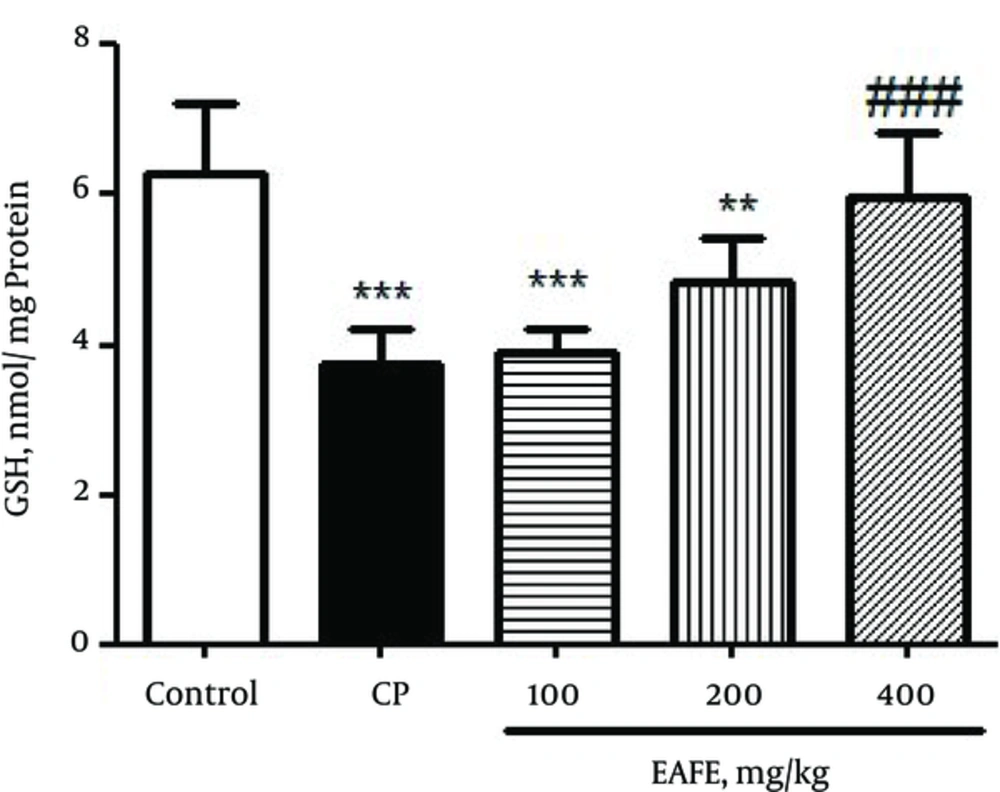
21). An oxidative stress was formulated from a disturbance between the generation of reactive oxygen species (ROS) and their elimination through antioxidant systems. The GSH either can be regarded as a non-enzymatic anti-oxidant through interplaying between ROS and SH group or may be implicated in the enzymatic detoxification response for ROS as a cofactor (
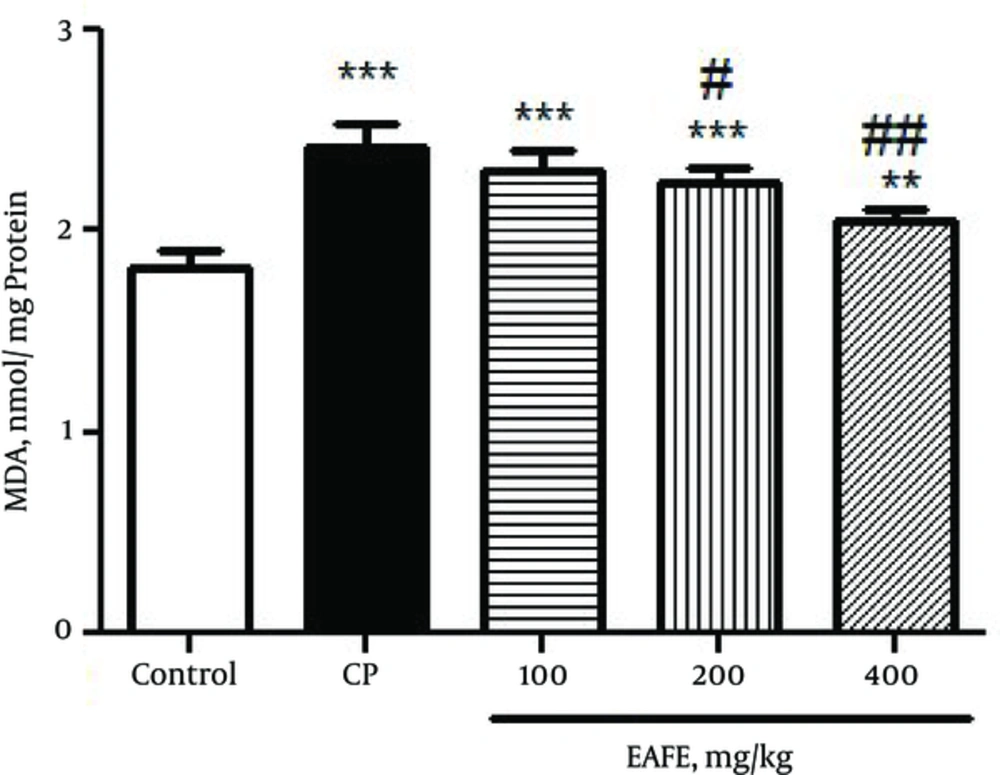
22). The MDA, an indicator of oxidative damage, increases in body after injection of CP, resulting in the ultimate damage to membrane lipids with the creation and diffusion of free radicals and raised uptake of oxygen, leading to the transformation of the double bonds in unsaturated lipid.
Previous studies showed that topical application of
E. angustifolia L. fruit extract to a wounded area could increase the content of hydroxyproline, an important factor in making collagen, in the tissue (
14,
23). In addition, another study showed that
E. angustifolia L. fruit extract has a significant effect on accelerating the wound healing process and reducing the inflammation and pain in rats (
14). In Iranian traditional medicine, dried powdered leaves of oleaster (Persian; Senjed) have been used as a remedy to control bleeding and accelerate the wound healing process (
14,
24). The result of another study suggests that after administration of the methanolic fruit extract of
E. angustifolia in rats with ethanol-induced gastric ulcer, a strong gastroprotective activity was observed as evidenced by histopathological examination and ulcer index determination (
25). Further studies assessed the pharmacological mechanism of action of
E. angustifolia extract in vascular and respiratory smooth muscle cells (
26). A previous study showed the effectiveness of aqueous extract of
E. angustifolia leaves, and its cardioprotective activity on induced ischemia/reperfusion was demonstrated in isolated rat heart. The results indicated that the leaves extract of
E. angustifolia has protective effects on myocardial ischemia-reperfusion injury that can be attributed to the increase in antioxidant activity by the extract in the myocardial tissues (
27). Several studies have shown that the use of an aqueous extract of
E. angustifolia fruit is effective in reducing the pain and inflammation in animal models as well as in patients with atherosclerosis. The extract has the ability to inhibit the activity of cyclooxygenase 1 and 2 enzymes and it seems to be a right candidate to become a good anti-inflammatory drug, as well (
28). The report of a previous study indicated that the effectiveness of extract of
E. angustifolia L. in reducing chronic pain and inflammation is comparable to that of chemical drugs such as non-steroidal anti-inflammatory drugs (NSAIDs), indomethacin, and dexamethasone (
26). The results obtained from another study suggest that the combination of ginger and
E. angustifolia extract is safe and can be effective in reducing pain in patients suffering from osteoarthritis (
29). In the study by Morris, the effect of water extract of
E. angustifolia L. was examined in rats with temporarily impaired memory and learning by scopolamine injection. The results showed that spatial learning and memory of the scopolamine-induced rats improved dose-dependently with an increase in the intake of
E. angustifolia water extract (
30,
31). In an experiment, the antioxidant and anti-tumor activity of different fractions of acetic ether extract of
E. angustifolia L. were studied. With the increase of concentration and polarity level of each sample, the antioxidant and radical scavenging activities increased.
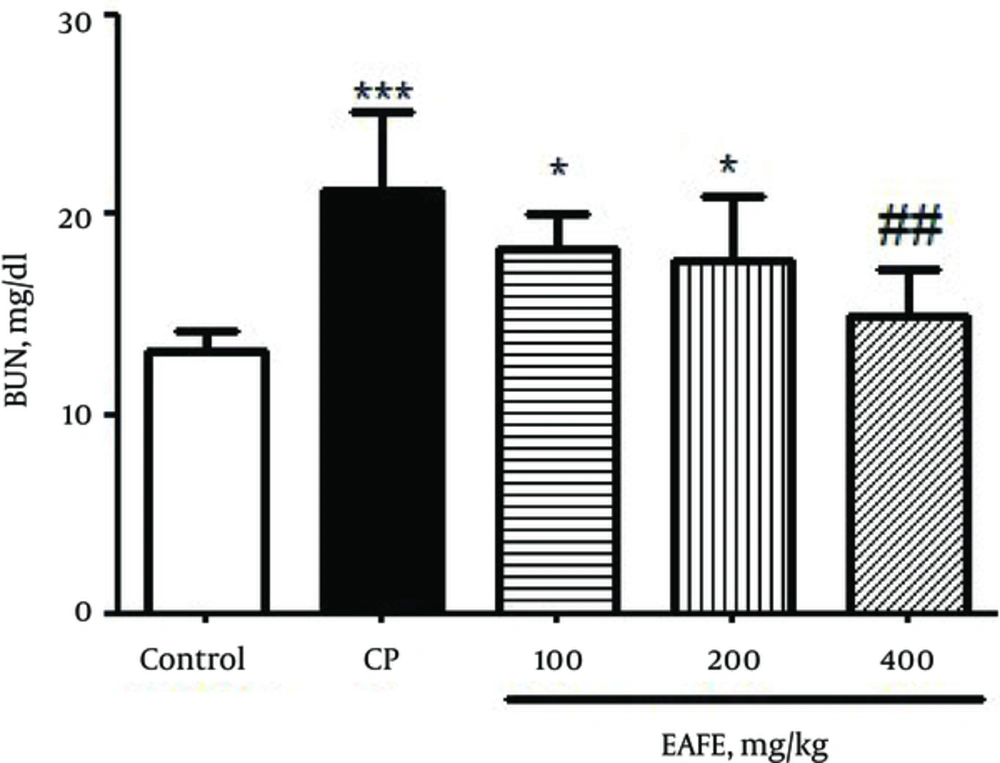
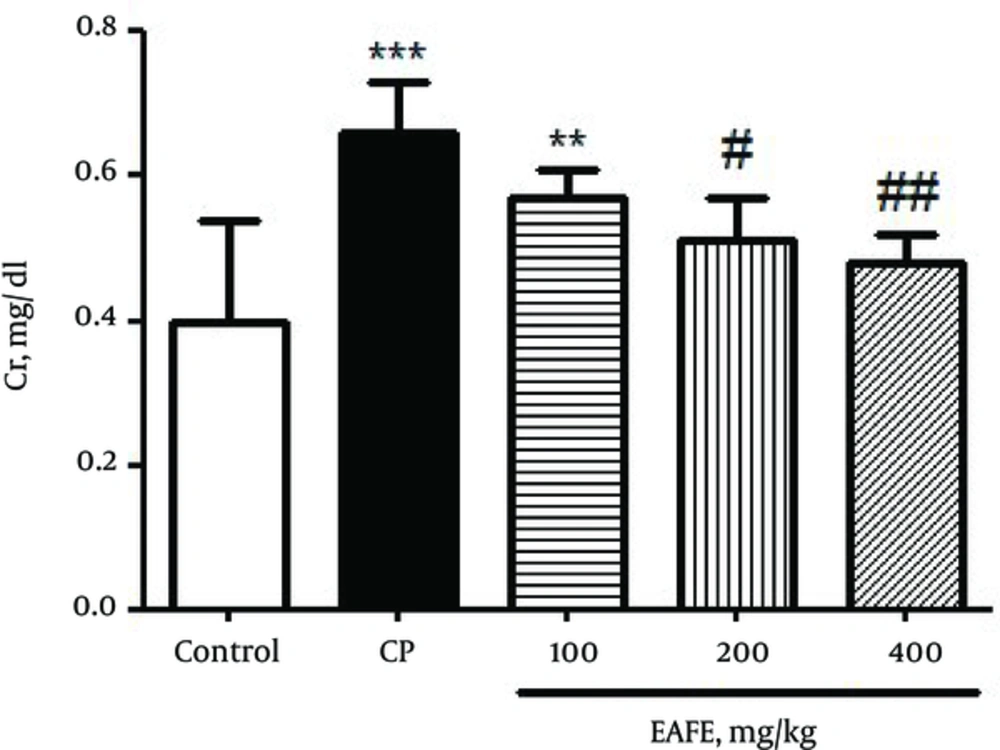
In the present study, hydroalcoholic crude extract of EAFE significantly inhibited the acute kidney toxicity induced by high doses of CP in mice, as shown by a reduction in BUN, creatinine, and MDA levels and an increase in GSH.
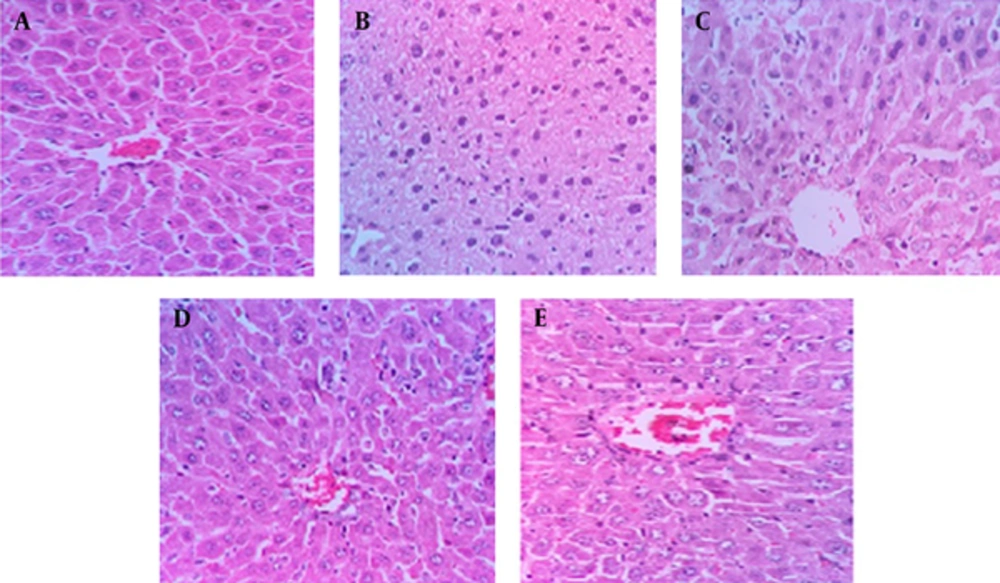
Furthermore, the protective effects of EAFE were confirmed by histopathological studies of kidney showing considerable improvements in proximal and distal convoluted tubules and atrophy of glomerular in pretreated groups. Our results demonstrated that the protective effects of EAFE were dose-dependent, and the best results were obtained in doses of 200 and 400 mg/kg. We believe that this protective effect is probably mediated by antioxidant and glutathione preservation effects of EAFE.
In conclusion, the results of the study indicated that hydroalcoholic extract of EAFE showed protective effects against CP-induced nephrotoxicity in mice.
We generated oxidative damage to the rat kidney utilizing CP. Research has been described that CP is a beneficial agent for the study of oxidative stress since its toxicity is mediated by free radicals. The current research showed that CP-induced oxidative stress was protected by EAFE administration. Nevertheless, main restriction in the current study was a phytochemical analysis to find the active ingredients of the plant extract.