1. Introduction
Robinow syndrome (RS) is an infrequent genetic condition that is characterized by a dysmorphic face, dental anomaly, short stature, mesomelic limb shortening, hand and foot anomalies and hypoplastic genitalia (1, 2). The facial traits include hypertelorism, wide palpebral fissures, wide nasal base, everted nares, with a broad and triangular mouth (3). The prevalence of this syndrome was expressed as 1:500,000 infants in the world. This is a new form of dwarfism with specific expression and diagnosis based on clinical demonstrations (4). The syndrome has two forms of inheritance: autosomal dominant RS (DRS) and (2, 5-7) autosomal recessive RS (RRS). The Autosomal Recessive Robinow Syndrome (ARRS) is the more severe form which is characterized by fusion of vertebrae and ribs, hemi-vertebrae, radial head dislocation, and has more mortality (7).
For the first time, Robinow reported this syndrome and then others described its further features. Many reports have shown that mutations in the ROR2 are the reason of two different pathologies: an autosomal dominant state of brachydactily type B and ARRS (8-11); however, Anthony D. Person et al. showed the mutation in WNT5A in autosomal dominant Robinow syndrome (12). The latest finding in Robinow syndrome was bilateral conductive hearing impairment with temporal bone hyperostosis (13). Other findings consist of renal impairment, skeletal and endocrinological abnormalities (14). Moreover, the association between RS and nevoid basal cell carcinoma syndrome was reported by C. Olivieri et al. (15). The Robinow syndrome has been reported from the Arab countries and other Asian countries, but has not been previously reported among the Iranian population (7, 16). This case is the first report of Robinow syndrome in Iran.
2. Case Presentation
A newborn boy (one day old) was admitted to our academic hospital for syndrome-like features, short legs and arms and mild tachypnea. He was a full term infant born by cesarean section and was the first offspring of his consanguine parents with no remarkable family history and no history of maternal drug consumption during pregnancy. Shortness of limbs was reported on fetal ultrasonography on the 24th gestational week (suspecting achondroplasia). At birth, his length, weight and occipito-frontal circumference (OFC) were approximately at the 10th percentile, while he had short arms and legs plus dysmorphic features. The dysmorphic face was characterized by low set ears, flat-saddle nose, hypertelorism , elevated tip of nose and fish mouth (Figure 1). He also had brachydactily and a micropenis (Figure 2).
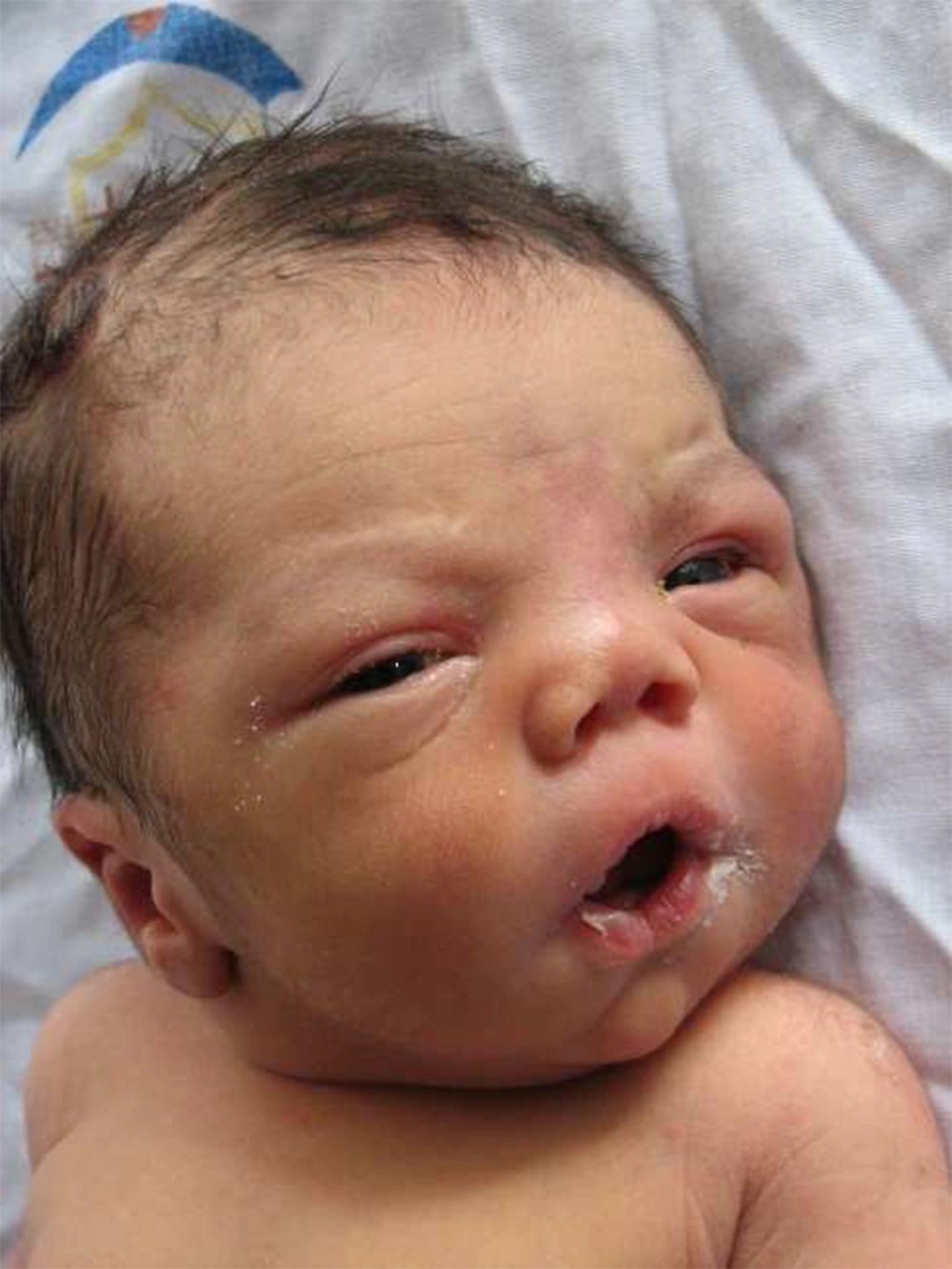
Figure 1.
Facial Manifestation of the Reported Case
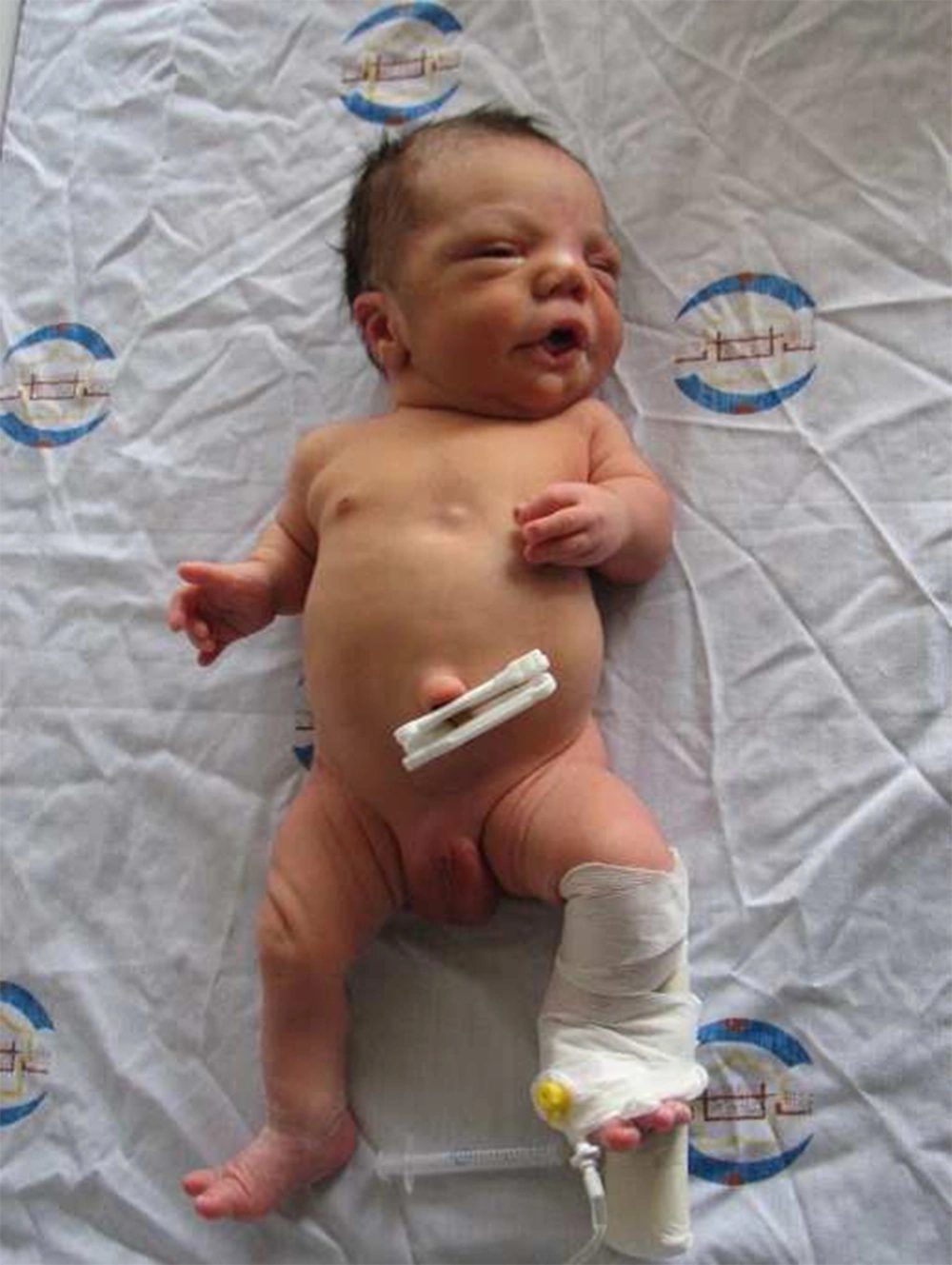
Figure 2.
Genitalia Anomaly and Brachydactily
The chest radiogram showed rib and vertebral deformities (Figure 3). Abdominal ultrasonography was normal, but cranial ultrasonography showed grade one intracranial hemorrhage in the right side that resolved without any problem. The echocardioghraphy showed mild to moderate tricuspid regurgitation and mild patent ductus arteriosus. All lab data were normal and no metabolic disorder was discovered. Diagnosis was established based on the criteria that were listed in the introduction.
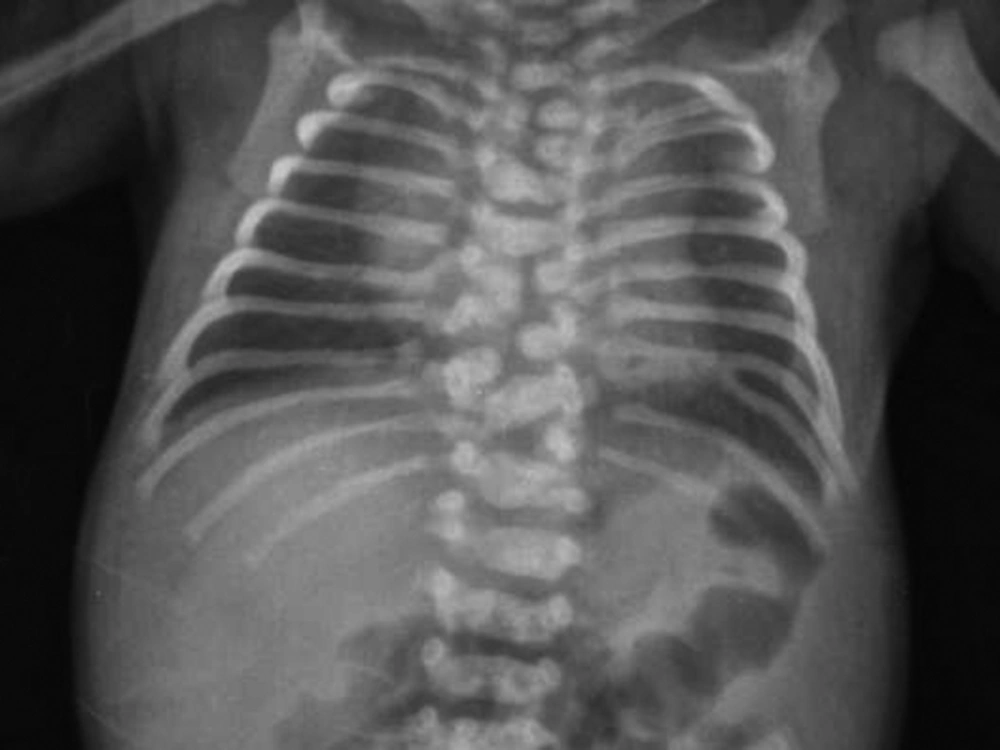
Figure 3.
Chest Radiogram and Rib Deformities
We referred the infant to a genetic laboratory, but the parents were unable to afford the genetic study for defining the mutations. The karyotype was also normal. The baby was discharged home with stable general condition.
3. Discussion
We report an Iranian case of Robinow syndrome that was diagnosed at birth. There are certain overlaps between achondroplasia and other dwarfism syndromes. This case presented with many features that could not be justified by the diagnosis of achondroplasia. The case had short limbs, but also demonstrated low set ears, flat-saddle nose, hypertelorism, elevated tip of nose, fish mouth, hypoplastic genitalia, rib and vertebral anomalies. Although such symptoms were not consistent with the diagnosis of achondroplasia, but the RS criteria described by Robinow seemed to be more congruent (1, 2). Due to high cost of genetic testing, the genetic abnormality was not revealed in this patient. Moreover, the type of genetic impairment is not important for treatment and or diagnosis of RS. The clinical and para-clinical signs are more severe in recessive type compared to dominant type (Table 1). Thus the present case appears to be a recessive type RS (2-4).
Table 1.
Two Types of Robinow Syndrome (Modified From Robinow 1)
| Autosomal Recessive | Autosomal Dominant |
|---|---|
| Shorter stature -2 SD or less | Height short or normal |
| Marked shortening of arms | Slight shortening of arms |
| Radial head dislocation | No radial head dislocation |
| Tented upper lip | Normal upper lip |
| 10% mortality | No excess mortality |
Skeletal malformations mentioned by Faith Tufan were present in this case, but we did not discover any renal and endocrinological impairment (14). Conductive hearing impairment with temporal bone hyperostosis is the latest finding in RS that was described by Dion F. Ejukenboom. Therefore, the hearing of this reported case should be assessed. In the study performed by Ejukenboom, hearing loss might have resulted from otitis media with effusion (13). In echocardiographic study of this patient, we found minor valve disease. Congenital heart disease in RS was also reported in another case presentation. The importance of this issue is the routine follow up of these patients regarding heart disease.
In this case report, we presented the first report of Robinow syndrome in Iranian population, in order to improve the science and epidemiology related to this disease. Prognosis of RS is mostly good, considering that more than 80% of patients have normal aptitude (17). Skeletal deformities can be corrected with surgical interventions. In case of simultaneous deficit of growth hormone, recombinant human growth hormone can be administered to stimulate the development of neonate (18).