1. Background
Herbal medicine constitutes about 75 - 80% of all medications consumed worldwide, mostly in developing countries (1). Herbal medications are taken for primary health care due to their cultural acceptability, good compatibility with the human body, and no serious side effects. Also, recently, there has been a remarkable rise in the consumption of these medications in developed countries (2). Aloe vera, commonly known as aloe, is a member of the Liliaceae family (3). Among different natural source supplements consumed as herbal medicine, Aloe vera and its major pharmacologic constituents, including Aloe-emodin, aloesin, aloin, acemannan, and emodin, are regarded as the main components in traditional medicine. Currently, Aloe vera has turned into a broad worldwide industry (4-6). In the food industry, Aloe vera is the main ingredient in the production of gel-containing health drinks (7). In the case of the cosmetic and toiletry industry, Aloe vera is the base material in the production of toiletry products like creams, lotions, soaps, shampoos, facial cleansers, etc. (8). In the pharmaceutical industry, Aloe vera is applied to making topical products, such as ointments and gel preparations. It is also used to produce tablets and capsules (9). In medicine, scholars have discussed the capability of Aloe vera gel (AVG) and whole leaf extract to improve the bioavailability of co-administered vitamins in some human subjects (10).
Several studies have also attempted to determine the immunomodulation, wound healing, anti-cancer, and antioxidant properties of Aloe vera (6, 11). In addition, the anti-tumor properties of Aloe vera have been demonstrated in numerous in vivo and in vitro studies to identify its bioactive pharmacological components (12-14). Aloe vera gel’s safety in cancer treatment has recently been assessed, showing promising results. It was shown that emodin suppressed the proliferation of the oral mucosa carcinoma cell line and decreased the BCL-2 protein expression (15). In addition, Aloe vera induced apoptosis in hepatocellular cells and reduced the expression of BCL2 and P53 genes (16, 17). Aloe emodin’s cytotoxicity in colon cancer cells is due to apoptosis (18). Also, the treatment of NIH3T3 cells with AVG may cause a delay in apoptosis (19). However, few studies have focused on the mechanism of Aloe vera cells in the HT29 cell lines. As a result, the present study was an attempt to fill in the existing gap in previous research.
2. Objectives
Therefore, the present study aimed to investigate AVG’s effect on the proliferation rate and the survival of HT29 as a gastrointestinal cell line.
3. Methods
3.1. Preparation of Aloe vera Gel
Fresh leaves of Aloe vera (L.) Burm. f. (syn. Aloe barbadensis mill.), the plant approved and cultivated in the Greenhouse of the Faculty of Agriculture, Tabriz University, was used in this study. The new plant was used according to a previously published method (23, 24).
We obtained fresh Aloe vera leaves from several plants and removed the rind. The clear pulp was extracted and centrifuged at 10,000 rpm for 30 minutes at 4°C. The supernatant was harvested and sterilized with chloroform (10% gel volume) and stored in the refrigerator at - 20 °C. The supernatant is considered an AVG.
3.2. Cell Culture
HT29 cells of the human colon cancer cell line were cultured in a low glucose Dulbecco’s modified Eagle’s medium (DMEM) (Gibco, USA) containing 10% fetal bovine serum (FBS) (Gibco, USA) and 1% penicillin-streptomycin (Sigma) at 37°C, with 5% CO2. Every 72 hours, the culture medium was changed. The inverted microscope was applied to investigate cell proliferation and morphology.
In the present study, the HT29 cells were counted and trypsinized (0.25% trypsin/ 0.2% ethylenediaminetetraacetic acid [EDTA]; Sigma, USA). In 6 and 96 well plates, 3000 cells / cm2 were seeded; the wells were divided into the control group and a treated group with different AVG concentrations. In the treated group, for the preparation of 5% AVG concentration, we kept the constant volume of 3000 μL of the medium. Therefore, we added 150 μL of AVG to 2850 μL of DMEM. Also, at 10% concentration, we added 300 μL of AVG to 2700 μL of DMEM. At 15% concentration, we added 450 μL of AVG to 2550 μL of DMEM. Finally, in preparation for 20% concentrations of AVG, we added 600 μL of AVG to the DMEM.
3.3. Determina tion of the Viability of the HT29 Cells
The HT29 cells were cultured on 96-well plates. After 48 hours, 200 mL of the DMEM medium and 20 μL of the 3-(4,5-dimethylthiazol-2-yl)-2,5-diphenyltetrazolium bromide (MTT) (5 mg /mL, Sigma, USA) yellow solution were added. The cells were incubated at 37°C. After four hours, 100 µL of dimethyl sulfoxide (DMSO, Sigma, Germany) was added to the wells to dissolve the formazan crystals. After 30 minutes in a dark room, we recorded the optical density with an ELISA reader at 540 nm.
3.4. Immunocytochemistry Staining Technique
The cells were cultured on the coverslip in 6 well plates. First, the supernatant was removed from the cells and washed with phosphate-buffered saline (PBS). Then, after emptying with PBS, the cells were fixed with 4% paraformaldehyde and washed every minute with PBS. After that, cells were incubated on coverslips in Tris-buffered saline to block the unspecified protein at room temperature for 30 minutes. Some anti-P53 antibodies (ScyTak, 1: 100) and primary BCL2 antibodies (BioGenex, 1: 100) were added to the buffer at 4ºC overnight. The next day, the samples were put at room temperature for about 30 - 40 minutes and then washed with PBS. In a humidified chamber, 100 μL of the secondary antibody (Biogenex, 1: 100) was added at 37°C for 30 - 60 minutes. Horseradish peroxidase enzyme (HRP) is a convenient tracer. It has been adapted to catalyze the conversion of colorless chromogenic substrates (DAB Chromogen, DAKO) into a brown substance seen under the microscope. We washed the coverslips with water for 10 minutes and visualized brown-colored DAB reaction products by light microscopy. Finally, the cells were stained with hematoxylin for 30 seconds. Coverslips were inversely mounted on slides and studied under the microscope.
3.5. Data Analysis
Data analysis for statistical significance was performed by one-way analysis of variance (ANOVA) with a post hoc Tukey test using GraphPad Prism 5 software. Data were expressed as mean ± SEM. Differences were considered significant if P < 0.05.
4. Results
4.1. Inverted Microscope
An Inverted microscope revealed mitotic cells (black arrows) in the peripheral part of the control HT29 colonies on day 2 and H & E staining on day 5 (Figure 1A and C ). Necrotic areas in the center of colonies (white arrow) were seen in the control group on day 5. The arrowhead represents the mitotic cells in the central part of the 10% Aloe vera group containing the colonies on day 2 (Figure 1B and D).
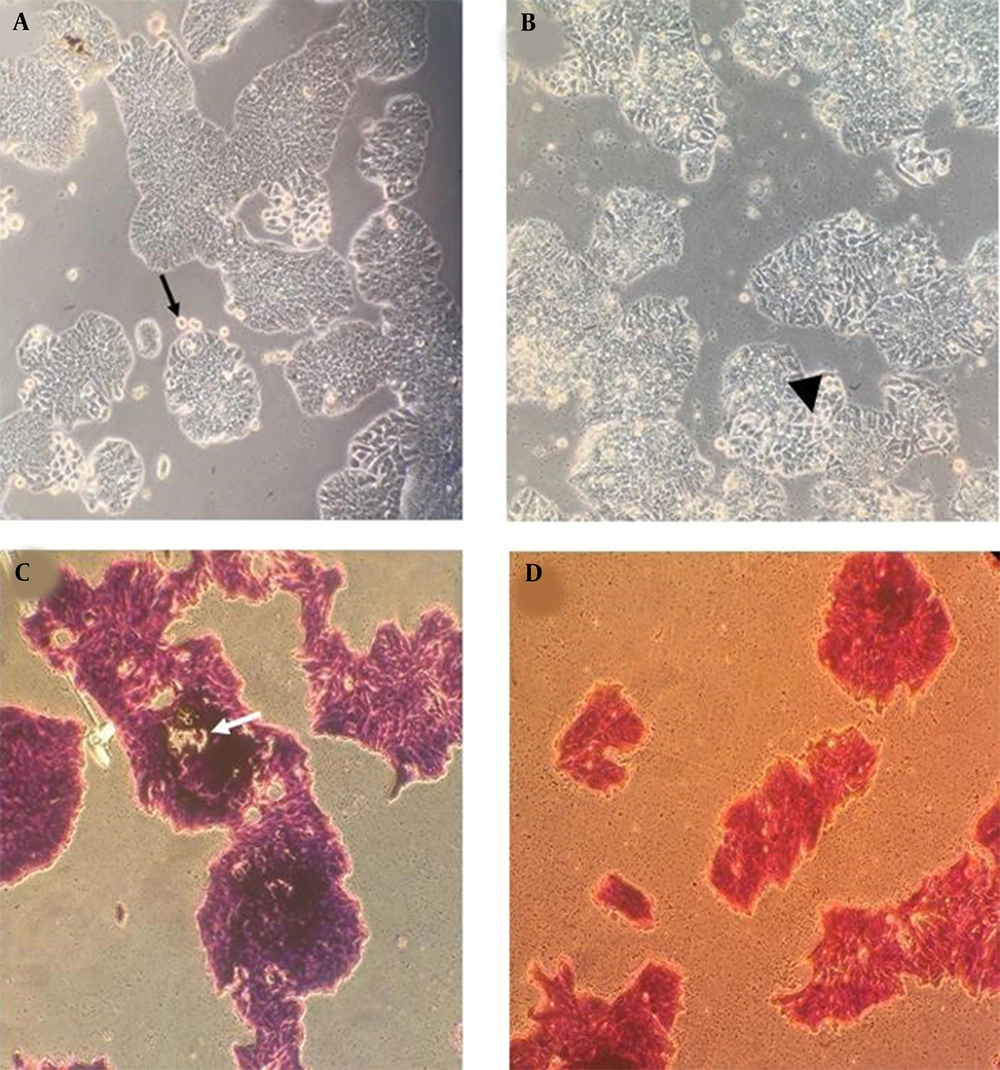
Figure 1.
Photomicrograph of the cultured HT29 cell line. (A) The control group was under an inverted microscope. (B) The Aloe vera-treated group under an inverted microscope. (C) The control group by H & E staining. (D) The Aloe vera-treated group with H&E staining. Magnification ×40.
4.2. The Cell Viability Effect of Aloe vera on the HT29
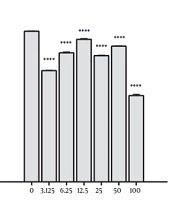
The results of the MTT-related optical absorption are represented in Figure 2. We observed that Aloe vera was not toxic to the HT29 cells at any dose. In the 10% concentration of AVG, the HT29 cells proliferated significantly more than the control group. Variance tests were homogenous, and the difference between the 5% Aloe vera group and the 10% Aloe vera group was significant P < 0.0001).
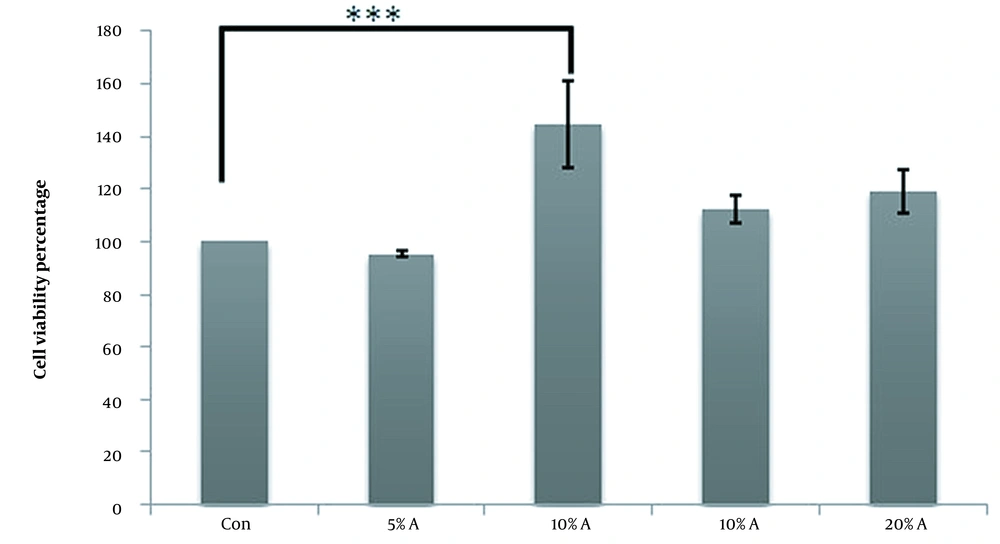
Figure 2.
The effect of Aloe vera gel on the HT29 cell line after 48 hours. Cell viability was determined by the MTT assay. The cell viability rate in the control group has been compared to Aloe vera concentrations (5%, 10%, 15%, and 20%). The 10% Aloe vera concentration significantly increased compared to other groups. Error bars represent the SEM (***P < 0.0001).
4.3. P53 and BCL2 Protein Expression by Immunocytochemical Staining
The results, therefore, demonstrated that the P53 protein expression level in the 10% Aloe vera-treated HT29 cells (Figure 3B) reduced compared to the control group (Figure 3A). No change was observed in the BCL2 protein expression level in immunocytochemical (ICC) staining between the control group (Figure 3C) and the 10% Aloe vera-treated HT29 cells (Figure 3D).
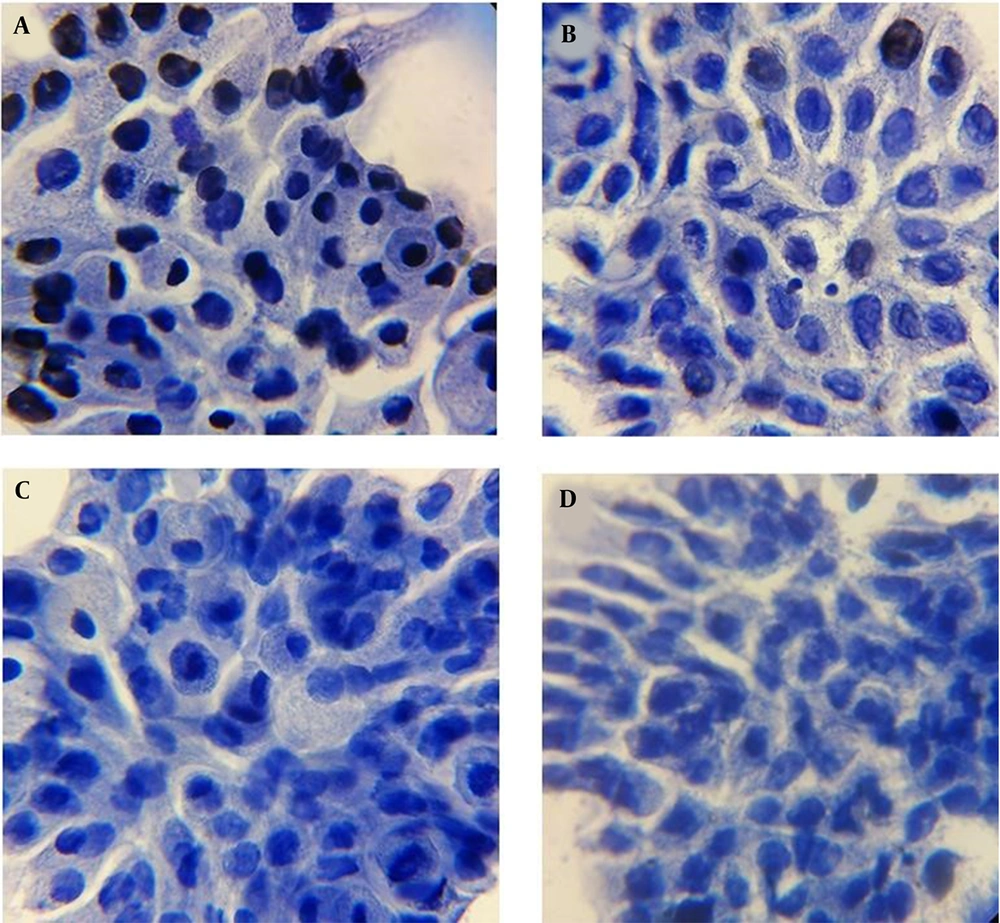
Figure 3.
Immunocytochemical staining of the cultured HT29 cell line. (A) The control group with P53 antibody. (B) The Aloe vera-treated group with P53 antibody. (C) The control group with BCL2 antibody staining. (D) The Aloe vera-treated group with BCL2 antibody staining. Magnification ×1000.
5. Discussion
The present study demonstrated that Aloe vera decreased the P53 protein expression level, and there was no change in the BCL-2 expression level in the HT29 cell line. Additionally, the results showed that the proliferation of the HT29 cells increased at the 10% Aloe vera concentration compared to the control group. We also observed a decreasing pattern of cell proliferation at 15% and 20% compared to the studies reporting high doses.
Numerous in vitro studies have focused on different cell lines. In these studies, scholars treated cervical cancer cells, HeLa cell lines, and breast cancer cell lines with MCF-7 cells with high concentrations (40%, 50%, and 60%) of the crude extracts of Aloe vera. They also showed that apoptosis resulted in reduced cell viability (25). This difference between the previous results and the current study is probably due to the lower concentrations (5%, 10%, 15%, and 20%) of AVG on the HT29 cell line. Hela and MCF-7 express the wild-type P53, while HT29 represents the mutant-type P53. It may be related to this property of cell lines. In this regard, it has been illustrated that the administration of aloesin could inhibit the ovarian cancer cell line growth rate compared to another cell line, such as MCF-7 (14). Besides, emodin decreased the BCL-2 protein expression and the proliferation of cells in oral cell carcinoma (12).
Several studies have also focused on the mechanism of Aloe vera against solid metastatic tumors (16, 17, 26). Modified Aloe vera polysaccharide, G2E1DS2, isolated from the cellulose-treated AVG, was shown to activate macrophages; it exhibits considerable anti-tumor activity once injected into the peritoneum of mice implanted with sarcoma cells (27). Similarly, the intraperitoneal administration of both enriched and industrial kinds of acemannan to mice cells led to a significant reduction of the tumor burden, thereby leading to the improvement of the survival rate (28).
Further, Aloe vera has been found to have chemopreventive and anti-genotoxic impacts on benzo [a] pyrene-DNA adducts. The primary culture medium treatment for rat hepatocytes with a polysaccharide fraction isolated from Aloe vera led to the time- and dose-dependent inhibition of benzo [a] pyrene-DNA adduct formation (29). In addition, the incubation of rat hepatocytes took place simultaneously with the consumption of Aloe vera and myocyte benzo [a] pyrene, leading to a significant reduction in the formation of DNA adducts. Oral administration of benzo [a] pyrene to mice was followed by the daily administration of Aloe vera. It significantly inhibited the formation of DNA adducts in several organs, including the liver, kidneys, and lungs. Aloe vera did not affect the cytochrome P450 levels in the liver. Further, there was a marginal increase in the liver glutathione S-transferase activity, thus suggesting that Aloe vera’s chemoprotective effects were realized by inhibiting benzo [a] pyrene absorption. Based on a follow-up screening of numerous plant polysaccharides to determine their anti-tumor-promoting effects, they found that using Aloe vera significantly inhibited phorbol myristate acetate-induced tyrosine kinase, ornithine decarboxylase, and superoxide formation (30).
Besides, from a clinical point of view, emodin existing in Aloe vera has anti-cancer properties. In cancer biology, the decline in cell death could result in tumor development rather than increased proliferation (31). Anti-cancer therapies have focused on the P53-BCL-2 relationship by determining the stimulation method and apoptosis time (32). It has been suggested that the P53 mRNA overexpression has no correlation with the clinical stage of colon cancer, probably its early expression (33).
Another mechanism for the anti-cancer property of Aloe vera is its antioxidant activity (11). Aloe vera acts as an antioxidant against free radicals. In addition, some scholars have argued that Aloe vera, as an inflammatory agent, can prevent prostaglandin products and transcription factors. It can also prevent the activation of lipoxygenase and cyclooxygenase enzymes. The immune system generally neutralizes free radicals with antioxidants (26). Acemannan stimulates the production of TNF and interleukin 1, leading to the inactivation of cancerous cells (34). The evidence of an immunological attack was shown by the significant rise in TNFα and the infiltration of lymphocytes. A reduction in tumor size was observed in recurrent spontaneous fibrosarcoma in pets and dogs treated with intraperitoneal and intralesional acemannan (35, 36), as well as in dogs and cats treated with surgery and radiation therapy in conjunction with acemannan (35). Other studies have introduced emodin as a preventing agent of tumor growth, which could reduce tumor volume and prevent metastases (37, 38). In addition, the antioxidant capacity of AVG has been found (39). The antioxidant capacity of Aloe-emodin prevents the cellular proliferation of the human colon carcinoma cell line by stopping the cycle of cells in the G2/M phase and preventing cyclin B1 (40). Antioxidant properties of Aloe vera were seen in Aloe vera dried leaf skin, but in this study, we used AVG due to publication use (41). It seems, therefore, that the AVG used in this study contained all biological constituents and acted differently compared to other studies administering one of the components of Aloe vera. Further investigation is required to confirm it.
In Akev´s study, there were four types of extraction: Aloe vera fresh leaf skin aqueous extract, AVG, Aloe vera fresh leaf skin methanolic extract, and Aloe vera dried leaf skin methanolic extract; however, in our study, we only extracted purified AVG. These differences between the previous results and the current study’s results could be due to different types of extraction. As shown in the results, the cytotoxic effect of AVG was the most, but the best result was achieved with a 50 μL concentration (42). It seems that only the AVG with the concentrations (5, 10, 15, 20) we used in this study could not demonstrate cytotoxic effects, as the present study did not show any cytotoxic effect. It is probably due to the antagonistic property between the constituents of Aloe vera and the low concentration of AVG. Therefore, more investigations are needed to evaluate each component of Aloe vera in different cell lines compared to the crude gel. The main limitation of this study was in the monolayer culture, so an in vitro 3D mass formation or an animal model of colon cancer is needed to evaluate the anti-colon cancer properties of Aloe vera. After in vivo experiments on the therapeutic components of Aloe vera, it may be shown to be a safe, accessible, and low-cost material for colon cancer patients; otherwise, it is contraindicated for such patients.
5.1. Conclusions
Aloe vera could reduce the P53 protein expression level in the HT29 cells. However, there was no change in the BCL2 protein expression after Aloe vera treatment. The anti-cancer effect of Aloe vera, however, requires further studies.