1. Background
Oral contraceptive pills (OCPs) are among the most widely used reversible contraceptive methods worldwide and are generally considered effective and well tolerated (1). However, concerns remain regarding their potential effects on psychological well-being, including depressive symptoms, anxiety, and mood changes (2, 3). Such symptoms have been reported as reasons for discontinuation among some users (4).
Evidence regarding the association between OCP use and psychological outcomes is inconsistent. Some studies have suggested an increased risk of mood-related symptoms (5, 6), whereas others have reported no association or even potential benefits in specific populations (7, 8). Psychological responses to OCPs may vary according to the formulation, duration of use, and individual susceptibility (9, 10). In addition, socioeconomic and contextual factors may influence both contraceptive use and symptom reporting; these factors are often underexplored, particularly in resource-limited settings (11-16).
This issue is especially relevant in Middle Eastern populations, where sociocultural norms, environmental stressors, and lifestyle factors may shape reproductive health behaviors and psychological outcomes (10, 17). In Yemen, evidence on the psychological and reproductive correlates of OCP use is scarce, despite its potential importance for clinical practice and family planning services (18, 19).
2. Objectives
This study aimed to assess the association between OCP use and psychological symptoms among women of reproductive age in Yemen. The specific objectives were to compare the prevalence of depression, anxiety, and mood swings between OCP users and non-users; identify associated sociodemographic and clinical factors; and examine the relationship between the duration of OCP use and psychological symptoms. Given the cross-sectional design, the study assessed associations rather than causal relationships.
3. Methods
3.1. Study Design and Setting
This cross-sectional study was conducted at Jiblah University Hospital, affiliated with Jiblah University for Medical and Health Sciences, Ibb Governorate, Yemen, between 1 December 2024 and 28 March 2025. The hospital is a referral center that provides outpatient gynecology and family planning services to urban and surrounding rural populations.
3.2. Participants and Sampling
Women aged 18 - 49 years who attended outpatient clinics during the study period were recruited using consecutive sampling during weekday clinic hours. Eligible participants were those able to provide informed consent and complete the interview. Women with severe cognitive impairment or conditions that limited reliable communication were excluded.
Current OCP use was defined as self-reported use within the preceding 3 months. Non-users were defined as women who had never used OCPs or who had discontinued use more than 3 months before the interview.
3.3. Sample Size
The sample size was calculated based on the detection of a mean difference of 1.5 points, with a standard deviation of 2.8, in a psychological symptom score between groups, using a two-sided alpha of 0.05 and 80% power. The minimum required sample size was 376. To account for potential missing data, 400 participants were recruited.
3.4. Data Collection
Data were collected using structured, interviewer-administered questionnaires in Arabic. The instrument was adapted from validated components and pilot-tested in 30 participants.
The questionnaire included the following domains:
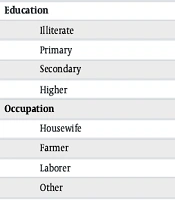
1) Sociodemographic characteristics: Age, education (illiterate, primary, secondary, or higher), occupation (housewife, farmer, labourer, or other), and income (low, middle, or high).
2) Clinical and reproductive history: Parity, body mass index (BMI, kg/m2), and self-reported chronic conditions, such as hypertension and diabetes mellitus.
3) Contraceptive history: Type of OCP, categorized as combined or progestin-only, and duration of use in months.
4) Psychological symptoms: Self-reported presence or absence of depression, anxiety, mood swings, and premenstrual syndrome.
3.5. Outcome Measures
The primary outcome was self-reported depression, assessed as a binary variable. Secondary outcomes were anxiety and mood swings, also assessed as binary variables. An exploratory composite score combining the three symptoms was evaluated but showed low internal consistency (Cronbach α = 0.585) and was not used in subsequent analyses.
3.6. Statistical Analysis
Data were analyzed using R version 4.2 (R Foundation for Statistical Computing, Vienna, Austria). Continuous variables were summarized as mean ± standard deviation and compared using independent t tests. Categorical variables were presented as frequencies and percentages and compared using the chi-square test or Fisher exact test, as appropriate.
Multivariable logistic regression models were constructed to estimate aORs and 95% CIs for depression, anxiety, and mood swings. Covariates were selected a priori based on clinical relevance and included OCP use, age, BMI, smoking status, Qat chewing, duration of OCP use, education (any formal schooling vs. illiterate), income (low vs. middle/high), parity, and working status (employed vs. housewife). All variables were entered simultaneously into each model.
Subgroup analyses comparing combined and progestin-only OCP users were exploratory and unadjusted. Spearman correlation was used as an exploratory measure of association between duration of OCP use and psychological symptoms.
Missing data were minimal (< 0.5% for all variables). Complete-case analysis was performed. A two-sided P value < 0.05 was considered statistically significant.
3.7. Ethical Approval
The study was approved by the Research Ethics Committee (Institutional Review Board) of Jiblah University, Faculty of Medicine and Health Sciences, Yemen (reference No. 35; approved 1 December 2024). Written informed consent was obtained from all participants before enrollment. The study was conducted in accordance with the Declaration of Helsinki.
4. Results
4.1. Participant Characteristics
A total of 400 women were included, comprising 216 OCP users and 184 non-users. Baseline characteristics are presented in Table 1. Oral contraceptive pill users had a significantly lower mean BMI than non-users (23.1 ± 3.5 vs. 24.5 ± 4.0 kg/m2; P < 0.001) and a lower prevalence of hypertension (2.8% vs. 7.6%; P = 0.048). Other baseline characteristics were comparable between the groups (all P > 0.05).
Table 1.
Baseline Characteristics of Study Participants by Oral Contraceptive Pill Use Status a
| Characteristic | OCP Users (n = 216) | Non-users (n = 184) | P Value |
|---|---|---|---|
| Age, y | 31.8 ± 6.9 | 33.0 ± 8.9 | 0.136 |
| Body Mass Index, kg/m2 | 23.1 ± 3.5 | 24.5 ± 4.0 | < 0.001 |
| Education | 0.481 | ||
| Illiterate | 43 (19.9) | 43 (23.4) | |
| Primary | 54 (25.0) | 35 (19.0) | |
| Secondary | 65 (30.1) | 57 (31.0) | |
| Higher | 50 (23.1) | 46 (25.0) | |
| Occupation | 0.141 | ||
| Housewife | 177 (81.9) | 138 (75.0) | |
| Farmer | 7 (3.2) | 13 (7.1) | |
| Laborer | 6 (2.8) | 3 (1.6) | |
| Other | 26 (12.0) | 30 (16.3) | |
| Income | 0.231 | ||
| Low | 26 (12.0) | 27 (14.7) | |
| Middle | 150 (69.4) | 112 (60.9) | |
| High | 37 (17.1) | 41 (22.3) | |
| Smoking | 57 (26.4) | 49 (26.6) | 1.000 b |
| Qat chewing | 118 (54.6) | 110 (59.8) | 0.349 |
| Hypertension | 6 (2.8) | 14 (7.6) | 0.048 |
| Diabetes mellitus | 8 (3.7) | 11 (6.0) | 0.406 |
a Values are expressed as No. (%) or mean ± SD.
b Fisher exact test. Other P values were calculated using the chi-square test or independent t test, as appropriate. Percentages are based on available data. Abbreviations: Qat, Catha edulis; SD, standard deviation.
4.2. Psychological and Reproductive Outcomes
Compared with non-users, oral contraceptive pill users had a significantly higher prevalence of depression (18.1% vs. 10.3%; P = 0.039), mood swings (51.9% vs. 40.2%; P = 0.026), and premenstrual syndrome (65.7% vs. 50.0%; P = 0.002) (Table 2). Anxiety and reduced sexual desire did not differ significantly between the groups (P = 0.225 and P = 0.948, respectively).
Table 2.
Psychological and Reproductive Outcomes by Oral Contraceptive Pill Use Status a
| Outcomes | OCP Users (n = 216) | Non-users (n = 184) | P-Value |
|---|---|---|---|
| Depression | 39 (18.1) | 19 (10.3) | 0.039 |
| Anxiety | 101 (46.8) | 74 (40.2) | 0.225 |
| Mood swings | 112 (51.9) | 74 (40.2) | 0.026 |
| Premenstrual syndrome | 142 (65.7) | 92 (50.0) | 0.002 |
| Reduced sexual desire | 66 (30.6) | 55 (29.9) | 0.948 |
a Values are expressed as No. (%). P values were calculated using the chi-square test.
4.3. Independent Predictors of Psychological Outcomes
In a multivariable logistic regression analysis (Table 3), OCP use was independently associated with higher odds of depression (aOR = 2.11; 95% CI, 1.09 - 4.11; P = 0.027). Higher education was associated with lower odds of depression (aOR = 0.37; 95% CI, 0.18 - 0.78; P = 0.009), whereas working status was associated with higher odds of depression (aOR = 2.55; 95% CI, 1.21 - 5.38; P = 0.014).
Table 3.
Multivariable Logistic Regression Analysis of Factors Associated with Psychological Outcomes a
| Predictors | Depression OR | P-Value | Anxiety OR | P Value | Mood Swings OR | P Value |
|---|---|---|---|---|---|---|
| OCP use (yes vs. no) | 2.11 (1.09 - 4.11) | 0.027 | 1.27 (0.82 - 1.96) | 0.289 | 1.47 (0.96 - 2.27) | 0.080 |
| Age, per year | 1.06 (1.00 - 1.12) | 0.065 | 1.03 (0.99 - 1.07) | 0.171 | 1.02 (0.98 - 1.06) | 0.419 |
| Body mass index, per kg/m2 | 0.94 (0.87 - 1.03) | 0.176 | 1.01 (0.95 - 1.07) | 0.717 | 0.95 (0.90 - 1.01) | 0.121 |
| Smoking (yes vs. no) | 0.54 (0.26 - 1.14) | 0.109 | 1.14 (0.69 - 1.87) | 0.615 | 0.95 (0.58 - 1.55) | 0.823 |
| Qat chewing (yes vs. no) | 1.45 (0.76 - 2.74) | 0.256 | 0.81 (0.52 - 1.26) | 0.354 | 0.96 (0.62 - 1.49) | 0.857 |
| Duration of OCP use (mo) | 1.01 (0.996 - 1.02) | 0.253 | 1.01 (1.002 - 1.016) | 0.014 | 1.01 (1.002 - 1.016) | 0.015 |
| Educated (any schooling vs. illiterate) | 0.37 (0.18 - 0.78) | 0.009 | 0.77 (0.44 - 1.35) | 0.359 | 0.69 (0.39 - 1.22) | 0.202 |
| Low income (vs. middle/high) | 0.91 (0.38 - 2.18) | 0.831 | 2.09 (1.13 - 3.86) | 0.018 | 1.37 (0.75 - 2.51) | 0.310 |
| Parity, per child | 0.93 (0.77 - 1.12) | 0.418 | 0.95 (0.83 - 1.09) | 0.497 | 1.03 (0.90 - 1.18) | 0.690 |
| Working (vs. housewife) | 2.55 (1.21 - 5.38) | 0.014 | 0.91 (0.53 - 1.55) | 0.722 | 0.96 (0.56 - 1.63) | 0.867 |
a Values are expressed as 95% CI. Abbreviations: OR, adjusted odds ratio; CI, confidence interval. All variables were entered simultaneously into each model. Continuous variables are expressed per unit increase. Missing data were handled using complete-case analysis.
Oral contraceptive pill use was not significantly associated with anxiety (aOR = 1.27; 95% CI, 0.82 - 1.96; P = 0.289). However, OCP use duration and low income were significantly associated with anxiety (aOR = 1.01 per month; 95% CI, 1.002 - 1.016; P = 0.014; and aOR = 2.09; 95% CI, 1.13 - 3.86; P = 0.018, respectively).
For mood swings, OCP use did not reach statistical significance after adjustment (aOR = 1.47; 95% CI, 0.96 - 2.27; P = 0.080), whereas duration of use remained significantly associated with mood swings (aOR = 1.01 per month; 95% CI, 1.002 - 1.016; P = 0.015).
4.4. Subgroup Analysis
Among OCP users, progestin-only formulations were associated with a higher prevalence of depression (24.6% vs. 10.3%; P = 0.015), anxiety (58.2% vs. 33.8%; P = 0.001), and mood swings (56.6% vs. 39.7%; P = 0.048) than combined formulations (Table 4). Other outcomes were comparable between the groups.
Table 4.
Psychological Outcomes by Oral Contraceptive Pill Formulation Among Users a
| Outcomes | Combined Pill (n = 68) | Progestin-only Pill (n = 122) | P-Value |
|---|---|---|---|
| Depression | 7 (10.3) | 30 (24.6) | 0.015 |
| Anxiety | 23 (33.8) | 71 (58.2) | 0.001 |
| Mood swings | 27 (39.7) | 69 (56.6) | 0.048 |
| Premenstrual syndrome | 52 (76.5) | 73 (59.8) | 0.068 |
| Reduced sexual desire | 23 (33.8) | 35 (28.7) | 0.782 |
a Values are expressed as No. (%). P-values were calculated using the chi-square test. Formulation data were available for 190 participants; comparisons are unadjusted.
4.5. Correlation Analysis
Among OCP users, duration of use showed weak, non-significant correlations with anxiety (ρ = 0.102; P = 0.136) and mood swings (ρ = 0.104; P = 0.129).
4.6. Missing Data
Missing data were minimal (< 0.5% for all variables). Complete-case analysis was applied for all analyses.
5. Discussion
In this study of women attending a university hospital in Yemen, OCP use was associated with a higher likelihood of self-reported depression after adjustment for measured confounders. In contrast, no independent association was observed between OCP use and anxiety or mood swings in the multivariable models. These findings suggest that the relationship between hormonal contraception and psychological symptoms is selective rather than uniform and may vary by outcome, formulation, and duration of use.
Our results are broadly consistent with portions of the existing literature, which has produced mixed findings on the mental health effects of hormonal contraception (20). Several observational studies and meta-analyses have reported an increased risk of depressive symptoms among OCP users, particularly shortly after initiation (10, 21-23), whereas others have found little or no association after baseline differences are considered (24, 25). Notably, some evidence suggests that, in specific subgroups, particularly women with significant premenstrual symptoms, OCPs may have mood-stabilizing effects (26, 27).
Differences across studies likely reflect variation in study design, population characteristics, contraceptive formulation, duration of exposure, and measurement of psychological outcomes. In this context, our findings align more closely with reports linking OCP use to depressive symptoms, while providing less support for a consistent association with anxiety or mood instability.
The pattern observed in our sample may also reflect confounding by underlying health and socioeconomic factors. Oral contraceptive pill users had lower BMI and lower rates of hypertension, suggesting a more favorable baseline health profile than non-users. Such differences may indicate selection effects or residual confounding because women who choose or are prescribed OCPs may differ in important ways from those who do not use them. Therefore, the observed association with depression may partly reflect unmeasured characteristics, including prior mental health status, health-seeking behavior, relationship context, or other social determinants of health.
Formulation type also appeared to matter. Clinical practice guidelines for general practitioners recommend combined oral contraceptives containing levonorgestrel and ethinyl estradiol as the first-line choice (28). In this study, progestin-only pill users tended to report higher rates of depression, anxiety, and mood swings than users of combined OCPs. Our findings align with previous reports by Wallis et al. and Ciarcia et al. (9, 29). Although this finding is biologically plausible, it should be interpreted cautiously because the subgroup analysis was exploratory and unadjusted. If confirmed in prospective studies, differences between formulations could reflect variation in the neuroendocrine effects of estrogen and progestin, including their influence on serotonergic and GABAergic pathways (30, 31). At present, however, these data are insufficient to support firm conclusions on comparative psychological effects by formulation.
Duration of use showed a small association with anxiety and mood-related symptoms, but the effect size was modest and its clinical significance remains uncertain. Evidence on the effect of OCP duration on psychological symptoms remains inconsistent; while some studies suggest an increased burden of symptoms over time (5, 32), others report no clear cumulative pattern (33). In our study, the observed associations could reflect biological adaptation, differential discontinuation among symptomatic users, or residual confounding rather than a direct dose-response relationship. Prospective longitudinal studies are needed to determine whether symptom patterns truly change with continued exposure or primarily reflect selective retention and reporting.
Several sociodemographic factors were also associated with psychological outcomes. Higher education was associated with lower odds of depression, whereas employment outside the home was associated with higher odds of depression. These findings are consistent with the broader literature showing that education may support coping resources and mental health literacy (14, 34), whereas work-related strain can increase psychological distress in fragile or resource-limited settings (9, 10). More generally, socioeconomic disadvantage has been linked to poorer mental health among women of reproductive age, underscoring that contraceptive exposure should be interpreted within a wider social context rather than in isolation.
The local context is also important. The high baseline prevalence of anxiety in both users and non-users likely reflects the burden of living in a conflict-affected setting marked by economic instability, insecurity, and limited access to mental health care (10). In such environments, symptoms may be amplified by chronic stress and may also be more readily reported during clinical encounters (14, 35). Although qat chewing was not independently associated with outcomes in the adjusted models, its potential neuropsychiatric effects have been reported elsewhere and may depend on frequency, dose, and cultural context (10, 36). These factors highlight the need to interpret reproductive health and mental health associations within the broader social and environmental conditions in which women live.
5.1. Study Limitations
This study has several limitations. Its cross-sectional design precludes causal inference and does not establish temporality between OCP use and psychological symptoms. Hospital-based sampling limits generalisability to the wider population, and self-reported symptoms were not assessed using standardized diagnostic instruments. The subgroup analysis by formulation was unadjusted and should therefore be regarded as exploratory. Although missing data were minimal, complete-case analysis may still introduce bias if data were not missing completely at random. In addition, unmeasured factors such as psychiatric history, duration of prior contraceptive exposure, and detailed hormonal composition may have influenced the observed associations.
5.2. Conclusions
Overall, OCP use was associated with a higher likelihood of self-reported depression, whereas associations with anxiety and mood swings were not statistically significant after adjustment. Longer duration of use was associated with anxiety and mood-related symptoms, although the magnitude of these effects was small and their clinical relevance remains uncertain. Educational level, employment status, and broader contextual factors also appeared to influence psychological outcomes, indicating that mental health among women of reproductive age is shaped by both contraceptive exposure and the social environment. These findings do not demonstrate causality, but they support the inclusion of psychological assessment in contraceptive counseling, particularly in high-stress, resource-limited settings. Prospective longitudinal studies using validated mental health measures are needed to clarify temporal relationships and disentangle hormonal effects from socioeconomic and psychosocial vulnerability.