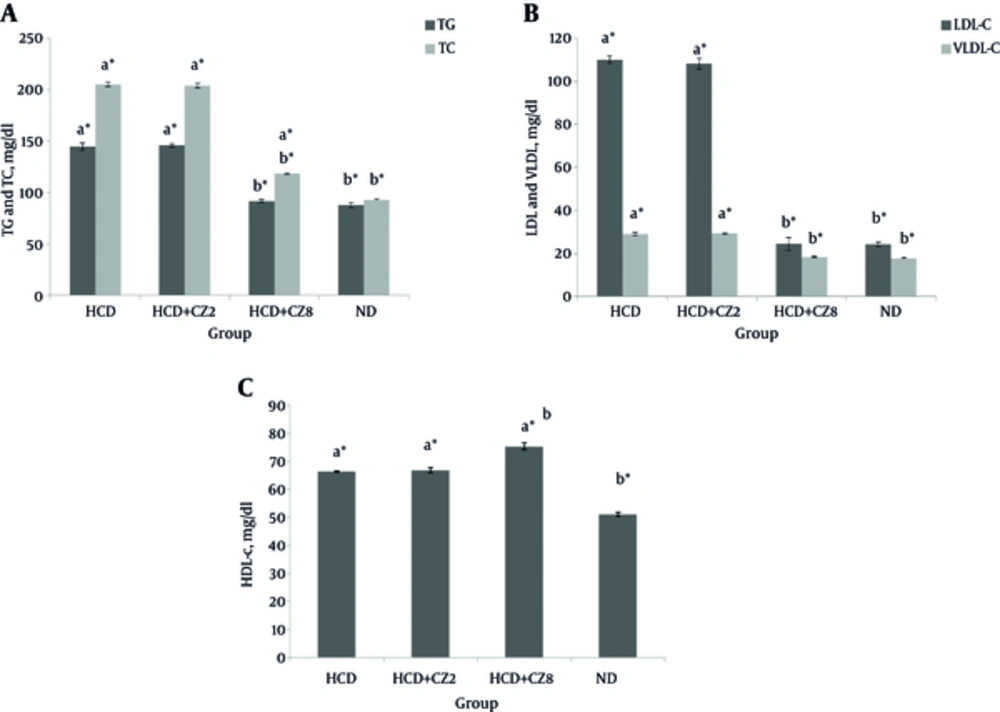
In the present study, four weeks of administering a hypercholesterolemic diet to male hamsters resulted in the development of hypercholesterolemia, while supplementation with cinnamon improved the lipid profiles. Elevation of serum LDL-c in the group that received HCD might have resulted in reduction of liver LDL receptors, which was supported by increasing the ΔC
T for the LDL-R gene; this could attributed to hypercholesterolemia itself. HCD also amplified the lipogenesis pathway, which increases TG, TC, free fatty acid, and phospholipids production (
28).
Amin et al. revealed that the administration of an HCD to male albino rats led to hypercholesterolemia induction (
23). After three and six weeks of this diet regimen, a significant increase was observed in serum TC, TG, and LDL-c concentrations (P < 0.05), while in both examined periods, HDL-c levels in the HCD group decreased in comparison to those of the ND group (
23). Although the effects of HCD on TC, TG, and LDL-c serum concentrations in that study were similar to those of our investigation, the changes in HDL-c levels were in contrast to our findings (
23).
Badalzadeh et al. reported that long-term cinnamon supplementation and regular aerobic training have synergistic effects on cardiac activities in rats (
29). The improvement in cardiac function through both cinnamon supplementation and regular training was associated with amelioration of serum lipid profiles (n = 6 in each group) (
29); this lipid-lowering effect was similar to the findings in our study.
Mang et al. studying type 2 diabetic patients, indicated that cinnamon did not have a significant effect on plasma lipid profiles (
30); this result is quite different from what we found in the present study. However, another study on an animal model of type 2 diabetes (high-fructose fed rats) showed lipid-lowering effects of cinnamon, which was consistent with our study (
31).
Lee et al. showed that treatment with cinnamon in rats with high-fat regimens reduced the cholesterol concentration through inhibition of hepatic 5-hydroxy-3-methylglutaryl-coenzyme-A (HMG-CoA) reductase (
32), whereas our study emphasized the hypocholesterolemic effects of cinnamon via upregulation of LDL-c by increasing LDL-R gene expression as another probable mechanism with the same results.
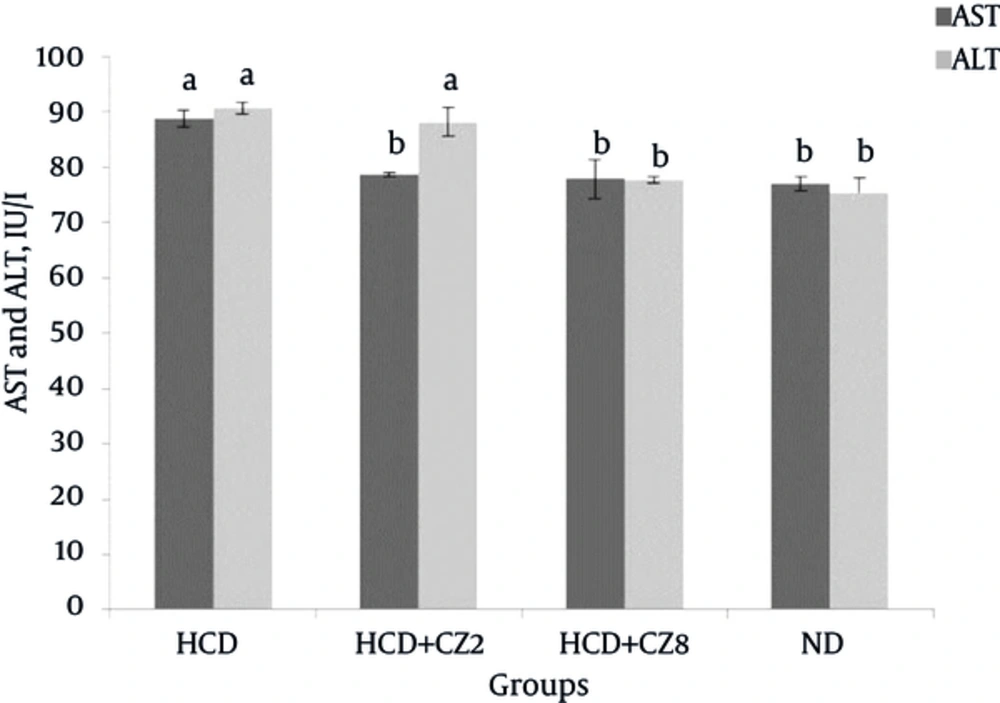
As has been reported in many studies, the liver transaminases (AST and ALT) are elevated significantly with a HCD compared with ND subjects, which may be the result of hepatocellular damage following hypercholesterolemia (
33,
34). Since ALT activity in the liver is higher than that of other tissues, this enzyme is used as a more specific marker for hepatocellular damage in comparison to AST (
35).
According to Amin et al. “Increased serum ALT and AST usually indicate hepatocellular damage and the most common presentation is fatty liver” (
23). In their study on mice, AST and ALT increased significantly, and three weeks of cinnamon treatment significantly decreased their levels, suggesting that cinnamon may play an important role in improving liver function (
23). Eidi et al.’s investigation indicated that CZ has protective effects in hepatocellular injuries induced by carbon tetrachloride in rats (
36).
Gandhi et al. showed that the continuous intake of green tea (2 g) along with cinnamon extract (2.5 g) significantly improved some lipid parameters such as TC, TG, LDL-c, and HDL-c, and moderately reduced body weight and body fat distribution without any vigorous lifestyle changes even in overweight people without any adverse personal habits (
37). Treatment of a HCD animals with 2 g CZ/100 g (HCD + CZ2 group) did not show any significant effects on lipid profiles and ALT in this study, but a significant reduction in AST levels was observed. In other words, the low dose of cinnamon could not provide protection against dyslipidemia and hepatic damage, even though LDL-R gene expression was elevated significantly compared with those of hamsters fed a HCD. It seems that low doses of CZ could not provoke the other mechanisms necessary for amelioration of induced hypercholesterolemia.
Rahman et al. administered a 35-day high-fat regimen to rats using a fatty mixture diet containing 15% powdered Cinnamomum cassia and compared the animals’ lipid profiles with those of a control group that did not receive Cinnamomum (
8). They reported significantly lower serum levels of TC, LDL-C, and TG in the treated group, while HDL-c levels were not significantly changed (
8). In the present study, the HDL-c level increased following administration of 8% powdered cinnamon for four weeks.
Javed et al. showed that CZ treatment decreased TC, LDL-c, and TG levels, and increased HDL-c levels in hyperlipidemic albino rabbits (
38). Hassan et al. have also shown similar results in diabetic subjects (
39). In contrast to these observations, Sambaiah et al. examined the effects of cinnamon on rats’ lipid profiles at a concentration proportional to what is used in human diets, and indicated that this treatment did not change the animals’ lipid profiles in a significant way (
40).
In spite of these reports, the precise mechanisms involved in the CZ effects on serum lipid improvement have not been definitively characterized in the literature. Since CZ contains dietary fiber at a relatively high level, it can decrease the lipid absorption in the intestine. On the other hand, CZ contains antioxidant vitamins that can augment lipid catabolism. Due to increases in insulin levels, an anabolic hormone with regulatory action in lipid metabolism has been reported following CZ treatment; it may also contribute to the reduction of lipid levels.
The hypolipidemic effects of some plant extracts may be due to decreases in hepatic-3-hydroxy-3-methylglutaryl-CoA reductase, cholesterol 7α-hydroxylase, pentose-phosphate pathways, or antioxidant activities (
3,
21,
24,
41,
42). Other mechanisms have also been reported. LDL-R gene expression could be one of the mechanisms involved in the scavenging of LDL-c; however, few researchers have studied this mechanism thus far. Although Venkatesan et al. emphasized the involvement of several mechanisms in LDL uptake, only one of the mechanisms was LDL-R gene expression (
43).
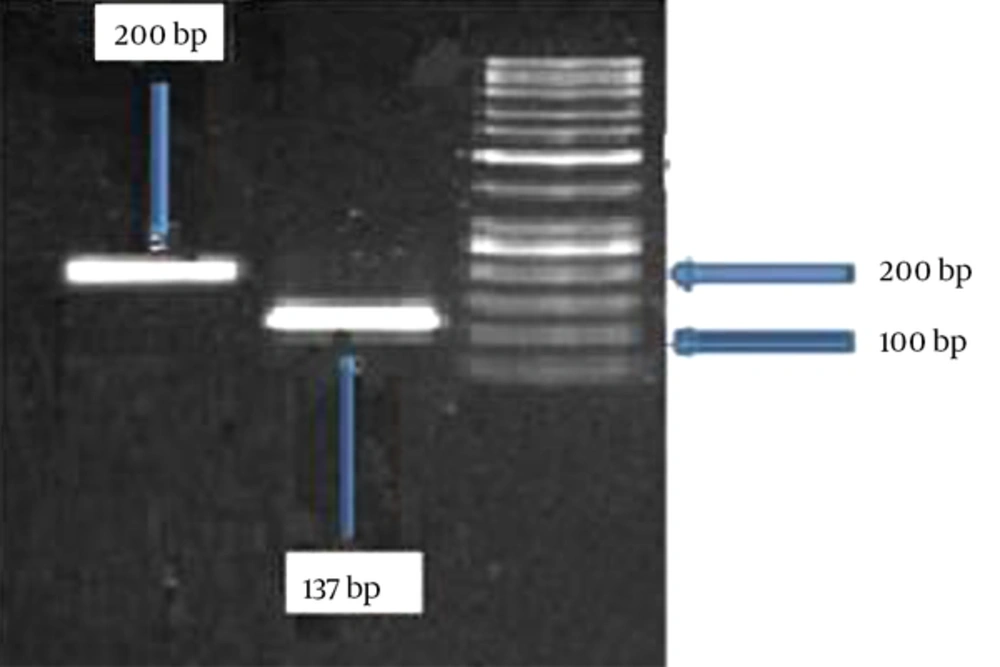
The present study demonstrated that cinnamon increased LDL-R gene expression in the livers of hamsters; hence, this could likely result in amelioration of dyslipidemia. We demonstrated that low doses of CZ could not provide protection against dyslipidemia and hepatic damage, although such doses could exert a significant 19.18-fold increase in LDL-R gene expression in HCD + CZ2 group. LDL-R gene expression was increased 20.79 fold in the HCD + CZ8 group, and this can justify the aforementioned amelioration in serum LDL-c and cholesterol levels.
Some reports indicated that the statins that inhibit HMG-CoA reductase gene expression can lower serum cholesterol levels, but taking these drugs for long periods of time and at high doses can lead to hepatocellular damage, rhabdomyolysis, and resistance as well as intolerance (
9-
11,
42). The findings in this study showed no changes in AST and ALT levels in the serum following higher doses of CZ consumption, indicating no harmful effects on the liver. However, da Cunha V et al.’s study indicated a reduction in HDL-c levels lower than the baseline (normal group); according to our experiments, HDL-c levels in hypercholesterolemic animals was higher than those of the normal group, and hence the results of our study were different (
44).
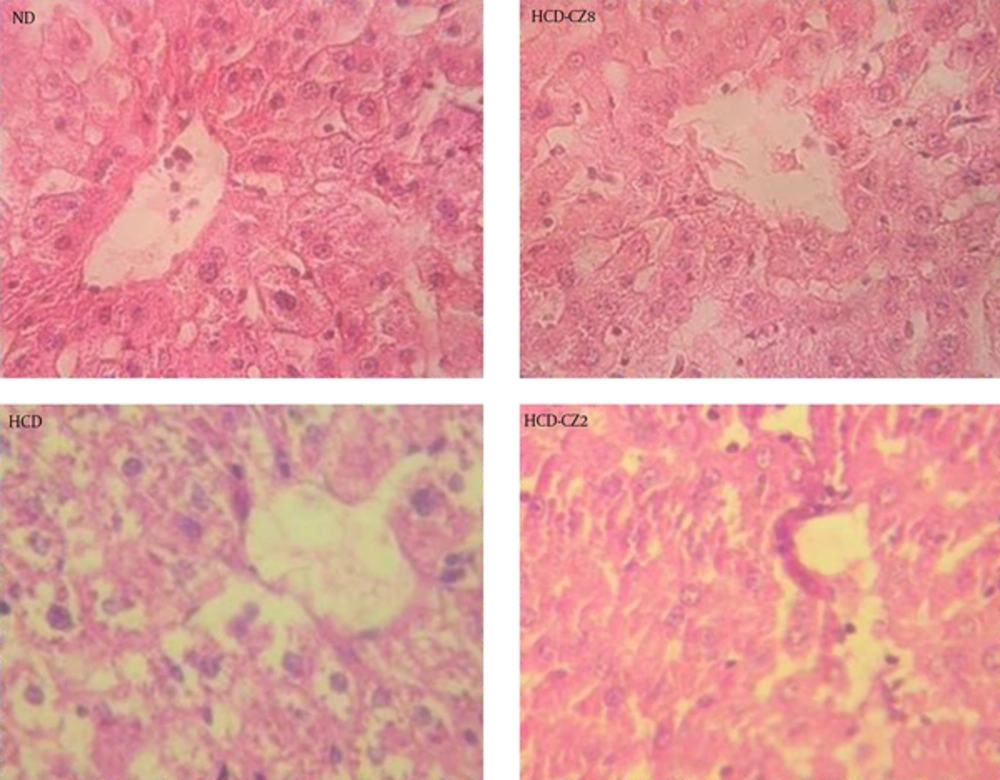
We found that HCD decreased LDL-R gene expression in the animal model of hypercholesterolemia, while treatment with cinnamon up-regulated its expression. In the present study, histological analysis indicated that hepatic steatosis scores in the group treated with cinnamon significantly diminished in comparison to those of the control (hamsters fed HCD); the change was obvious in the group that received higher CZ doses. These changes confirm the effectiveness of CZ on the amelioration of lipid profiles and the reversal of liver steatosis and fatty liver in a dose-related manner.
In summary, our results indicated that the supplementation of cinnamon results in protection against dyslipidemia and hepatic damage following the administration of a high cholesterol diet. Increases in the expression of the LDL-R gene following cinnamon consumption might be another mechanism that can explain the lipid-lowering activity. Also, the results of our biochemical analysis and histopathologic experiments confirmed no side effects for this herbal medicine; therefore, it can be suggested for use as an anti-hypercholesterolemic agent; however, more clinical studies on human subjects are required to reveal further details and confirm this generalization.