1. Background
Video-assisted thoracic surgery (VATS) was first applied in Italy in 1990 (1). VATS is a minimally invasive procedure and is used as an alternative to traditional muscle-splitting thoracotomy incisions (2). This technique is now well-established and more than 32% of lobectomies are performed via VATS (3).
Despite several advantages of VATS, such as reduced length of hospital stay, decreased blood loss, decreased pain, improved cosmesis, earlier return to normal life, and improved tolerance of chemotherapy, patients can still experience considerable pain (4). Previous studies have investigated the efficacy of different analgesics on post-VATS pain management (5, 6).
Pain management is an essential part of postoperative care. Postsurgical complications associated with ineffective pain control include cardiovascular and respiratory system complications (deep vein thrombosis, hypoxia, and atelectasis), longer hospital stays, and decreased patient satisfaction (7-12).
Opioids are the most common medications for pain control, and morphine sulfate and systemic fentanyl are the most common analgesic medications in VATS patients (13). Systemic opioids in analgesic doses create a high potential risk for respiratory depression, lethargy, and nausea and vomiting (N&V), and their analgesic effect during coughing episodes is unsatisfactory (13). Ketorolac is a non-steroidal anti-inflammatory drug (NSAID), and similar to other medications of this family, it has analgesic effects, thus reducing opioid consumption and its complications, such as respiratory depression (12, 14).
2. Objectives
The aim of the present study was to compare the analgesic effects of paracetamol and ketorolac in postoperative pain of VATS.
3. Methods
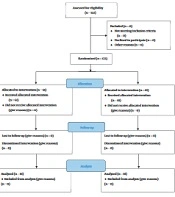
This double-blinded randomized clinical trial included 70 patients (age 18 - 65 years) who had American Society of Anesthesiologists (ASA) physical status classifications of I - II and were VATS candidates for lobectomy or segmentectomy due to lung masses at Daneshvari hospital, Tehran, Iran. The study design was approved by the clinical research ethics committee of Shahid Beheshti University of Medical Sciences. Written informed consent forms were signed by all of the participants after they were given details about the aim and procedure of the study. The exclusion criteria were heart failure, kidney or liver disease, drug or alcohol abuse, hypersensitivity to study medications, uncontrolled systemic disease such as diabetes, mental retardation, taking opioids or analgesics before the surgery, prolonged surgery duration (more than 4 hours), and severe hemorrhage (more than 1500 mL) (14). Patients who underwent local anesthesia were also excluded. All patients had no pain prior to the surgery.
The patients were randomly divided into two equal groups (ketorolac and paracetamol group, each n = 35) using randomization blocks (even numbers for the paracetamol group and odd numbers for the ketorolac group). All participants were pre-medicated with midazolam 1 - 3 mg IV, fentanyl 50 - 150 µg, 1.5 mg/kg propofol, and 0.6 mg/kg atracurium for induction of anesthesia. Anesthesia was maintained with isoflurane 0.5% - 1% and propofol 100 - 200 µg/kg/min. Anesthetic medications were adjusted to maintain mean arterial blood pressure (MAP) within 20% of baseline. To maintain hemodynamic stability, we used 20% more propofol for hypertension and intravenous ephedrine 5 mg every 3 - 5 minutes for hypotension. Clinical variables, such as MAP, O2 saturation, and electrocardiographic variables, were recorded in all patients, as well as demographic data and paraclinical measurements.
IV analgesia was administered at the end of surgery and before skin closure. Patients in the K group received ketorolac 30 mg IV stat and those in the P group received paracetamol 1 g IV stat at the same time. After that, the infusion rate was set to 4 mL/h using an infusion pump set to deliver the medication over 24 h. For the P group, each 1 mL of the intravenous analgesia contained 30 mg of paracetamol, while the K group received ketamine 0.9 mg/mL.
Pain scores using a visual analogue scale (VAS) as a primary outcome, as well as patient satisfaction scores, were evaluated and recorded in the recovery room and 2, 4, 8, 12, and 24 hours after drug administration. Pain assessments were done at rest and during coughing episodes. Patient satisfaction was measured using nominal scores for low, average, and high satisfaction.
Rescue analgesia using an injection of 0.05 - 0.1 mg of morphine sulfate was given to patients with VAS >3. The total dose of rescue analgesia was recorded and compared between groups as a secondary outcome. The patients and the nurses responsible for the pain evaluations were blinded to the group assignments.
All data were analyzed with SPSS 12 (SPSS Inc., Chicago, IL, USA). Descriptive statistics were reported as mean ± SD. Inferential statistics were done with chi-square and independent t-tests. Sample size was calculated based on a maximum allowable difference of 1 in VAS scores, as described in previous studies (17), and a power of 80%. P < 0.05 were considered statistically significant. This clinical trial was registered in the Iranian registry of clinical trials (IRCT2015062412642N14).
4. Results
The patients’ requirement was completed during three months. The anthropometric data for all 70 participants are presented in Table 1. There were 50 (71.4%) males and 20 (28.6%) females in the study population. Both groups were similar in terms of anthropometric data distribution, duration of anesthesia and surgery, and number of portal holes and chest tubes (Table 1).
Table 1.
Anthropometric Variables in Both Groups
| Variable | Group | P Value | |
|---|---|---|---|
| Ketorolac | Paracetamol | ||
| Gender | 0.597 | ||
| Female | 9 (25.7) | 11 (31.4) | |
| Male | 26 (74.3) | 24 (68.6) | |
| Age | 38.62 (17.033) | 41.58 (16.947) | 0.485 |
| Weight | 70.63 (10.102) | 74.80 (31.142) | 0.475 |
| Height | 173.03 (10.165) | 163.29 (27.207) | 0.063 |
| Duration of anesthesia | 155.97 (55.156) | 132.14 (70.097) | 0.119 |
| Duration of surgery | 121.49 (51.506) | 94.00 (66.208) | 0.057 |
| Number of portal holes | 0.5 | ||
| 1 | 13 (31.4) | 15 (42.8) | |
| 2 | 8 (22.8) | 9 (25.7) | |
| 3 | 14 (40.0) | 11 (31.4) | |
| Number of chest tubes | 0.667 | ||
| 1 | 24 (68.6) | 24 (68.6) | |
| 2 | 10 (28.6) | 8 (22.8) | |
| 3 | 1 (2.8) | 3 (8.5) | |
Laboratory variables (BUN, creatinine, ALT, and AST) were measured before and after surgery, and were compared between the groups (Table 2). In the comparison between before and after serum levels of creatinine, significant increases were seen in both the ketorolac (P = 0.05) and the paracetamol (P = 0.002) groups. Significant increases were seen in postsurgical measurements of AST and ALT in the paracetamol group (P = 0.003 and P = 0.02, respectively).
Table 2.
Comparison of Laboratory Variables Between Groups
| Variable | Group | Prior To Surgery | After Surgery | P Value |
|---|---|---|---|---|
| BUN | Ketorolac | 29.09 (11.526) | 28.23 (9.107) | 0.5 |
| Paracetamol | 30.58 (11.028) | 32.37 (10.536) | 0.1 | |
| P value | 0.588 | 0.083 | - | |
| Creatinine | Ketorolac | 1.334 (1.693) | 1.457 (1.521) | 0.05a |
| Paracetamol | 0.966 (.189) | 1.044 (.137) | 0.002a | |
| P value | 0.220 | 0.120 | - | |
| ALT | Ketorolac | 24.77 (7.232) | 26.54 (7.740) | 0.7 |
| Paracetamol | 25.21 (12.364) | 28.91 (10.942) | 0.003a | |
| P value | 0.857 | 0.299 | - | |
| AST | Ketorolac | 28.00 (32.426) | 22.57 (6.459) | 0.3 |
| Paracetamol | 23.18 (9.462) | 26.43 (9.217) | 0.02a | |
| P value | 0.415 | 0.047 | - |
aStatistically significant.
MAP, heart rate, and pain scores at rest and during coughing episodes were recorded in recovery and 2, 4, 8, 12, and 24 hours after surgery. There were no significant differences between the K and P groups in MAP and pain scores at rest on any of the evaluations (Table 3). The heart rate of patients in the K group was significantly higher than in the P group for all measurements except 24 hours after surgery (Table 3). Pain scores during coughing episodes in the P group were significantly higher than in the K group 12 and 24 hours after surgery.
Table 3.
Comparison Between Groups of MAP, Heart Rate, Pain, and Cough Scores During the First Postoperative Day
| Variable | Map | Heart Rate | Pain Score At Rest | Pain Score During Coughing Episodes | ||||
|---|---|---|---|---|---|---|---|---|
| Mean (± SD) | P Value | Mean (± SD) | P Value | Mean (± SD) | P Value | Mean (± SD) | P Value | |
| Recovery | 0.596 | 0.038a | 0.956 | 0.435 | ||||
| K | 86.451 (8.958) | 89.56 (12.577) | 2.29 (2.136) | 2.68 (2.47) | ||||
| P | 87.742 (11.026) | 83.46 (11.359) | 2.26 (2.160) | 3.11 (2.153) | ||||
| 2 hours after | 0.212 | 0a | 0.529 | 0.796 | ||||
| K | 83.509 (9.647) | 90.21 (12.924) | 2.34 (1.999) | 2.71 (2.29) | ||||
| P | 86.485 (9.944) | 77.80 (9.452) | 2.63 (1.767) | 2.57 (2.00) | ||||
| 4 hours after | 0.405 | 0.005a | 0.557 | 0.788 | ||||
| K | 83.114 (8.868) | 88.77 (14.902) | 2.37 (1.911) | 2.74 (2.27) | ||||
| P | 84.809 (8.029) | 80.06 (9.270) | 2.11 (1.728) | 2.89 (2.35) | ||||
| 8 hours after | 0.745 | 0.001a | 0.790 | 0.181 | ||||
| K | 83.123 (10.073) | 86.80 (12.4) | 1.86 (1.630) | 2.03 (1.88) | ||||
| P | 82.391 (8.686) | 77.94 (9.6) | 1.97 (1.932) | 2.74 (2.45) | ||||
| 12 hours after | 0.821 | 0.03a | 0.199 | 0.009a | ||||
| K | 81.685 (8.885) | 85.51 (11.6) | 1.31 (1.586) | 1.38 (1.41) | ||||
| P | 82.141 (7.541) | 79.89 (10.28) | 1.91 (2.228) | 2.71 (2.55) | ||||
| 24 hours after | 0.716 | 0.324 | 0.761 | 0.005a | ||||
| K | 85.152 (7.144) | 83.34 (6.633) | 1.89 (2.720) | 1.24 (1.87) | ||||
| P | 84.500 (7.441) | 85.59 (11.560) | 1.71 (1.903) | 2.77 (2.44) | ||||
aStatistically significant.
Seventeen (48.6%) and 9 (25.7%) of the patients in the K and P groups, respectively, did not require any morphine (P = 0.047). The mean doses of rescue analgesia in the K and P groups were 3.129 ± 4.27 mg and 4.38 ± 3.69 mg, respectively, without a statistically significant difference between the groups (P = 0.144).
Potential adverse effects were recorded and compared between the groups based on patient reports. The reported side effects with ketorolac and paracetamol, respectively, were headache (1, 0), nausea (3, 1), vomiting (1, 1), itching (1, 0), gastrointestinal bleeding (0, 0), respiratory distress (1, 1), atelectasis (4, 3) and fever (1, 0), without significant differences. All adverse effects were controlled with medications, such as intravenous ondansetron 4 mg for N&V.
The mean bleeding volume in the K group was significantly higher than in the P group (309.24 ± 263.3 vs. 273.44 ± 169.9, respectively; P = 0.001).
Patient satisfaction was classified as low, average or good (Table 4). There was no significant difference between groups in satisfaction scores (P = 0.175).
Table 4.
Comparison of Patient Satisfaction Between Groups (%)
| Satisfaction Classification | Group | P Value | |
|---|---|---|---|
| Ketorolac | Paracetamol | ||
| Low | 2 (5.9) | 7 (20.0) | 0.175 |
| Average | 11 (32.4) | 12 (34.3) | |
| Good | 21 (61.8) | 16 (45.7) | |
5. Discussion
Postoperative pain control is not only essential for early exercise, return to normal life, improvement of respiratory capability, and reduced respiratory complications, but also for humane reasons, as it may reduce fear and anxiety (8, 18).
Approximately one third of all lobectomies are currently performed with VATS, and despite less pain with VATS compared to open thoracic surgery, postoperative pain management is still important (3, 6).
Opioids and NSAIDs such as ketorolac are the most commonly used analgesics for pain control (8-11). Due to the potential adverse effect of opioids and NSAIDs, some authors have assessed the analgesic effects of acetaminophen and paracetamol (intravenous acetaminophen) on postoperative pain (8, 18). Zhou showed that 2 g of paracetamol had analgesic efficacy similar to that of 15 - 30 mg of ketorolac (19).
Our results showed similar analgesic efficacy between ketorolac (30 mg IV stat and 90 mg/24 h continuously) and paracetamol (1 g IV stat and 3 g/24 h continuously) in patients undergoing VATS, which is similar to Zhou’s trial (19). Pain scores were similar in both groups. The mean dose of morphine sulfate in the paracetamol group was insignificantly higher than in the ketorolac group.
In his study, Wang concluded that intravenous paracetamol did not reduce opioid consumption in patients undergoing bariatric surgery (7). Lee compared the efficacy of ketorolac, paracetamol, and paracetamol plus morphine on post-thyroidectomy pain management (8). None of the groups were superior to the others in pain control or dose of rescue analgesia, which is similar to our results.
In our study, the number of patients who did not require rescue analgesia in the ketorolac group was significantly higher than in the paracetamol group, but the overall patient satisfaction was similar between the groups, which supports Lee et al.’s findings (8).
In the present study, heart rates in the ketorolac group were significantly higher than in the paracetamol group for all measurements. A United States’ FDA Drug Safety Communication has announced that non-aspirin, non-steroidal anti-inflammatory drugs (NSAIDs) increase the chance of a heart attack or stroke (20). It seems that the use of ketorolac can be challenging in patients with cardiovascular disease, and this needs more evaluation with regard to cardiovascular changes.
Ketorolac has a known tendency to increase bleeding due to COX-1 inhibition, which can halt platelet aggregation (21). Although in our study there was no reported GI bleeding, the bleeding volume in the ketorolac group was significantly higher than in the paracetamol group. The greater bleeding volume in the ketorolac group may be the reason for the higher heart rate in these patients. Richardson et al. assessed 1,451 pediatric patients undergoing cranial surgery, and concluded that short-term ketorolac therapy was not associated with significantly increased bleeding on postoperative imaging or clinical evaluation (22). Jahangiri compared the efficacy of paracetamol and remifentanil for postoperative pain management in patients undergoing coronary artery bypass graft surgery, and showed better analgesic effects with paracetamol (23). Studies with larger study populations to control for confounding factors are needed.
Based on our results, serum creatinine was significantly increased after surgery, in the normal range, in both the paracetamol group and the ketorolac group, with no significant differences between them. This could be due to insufficient maintenance fluid therapy during the surgery. Liver enzymes were increased after the surgery in both groups, within normal range, and the increase was significant in paracetamol group, as this compound is metabolized predominantly in the liver. In the present study, we used the full therapeutic dose of paracetamol, which may explain the significantly increased liver enzymes in these patients.
Some evidence demonstrates that prophylactic paracetamol can reduce postoperative N&V (24). For ethical reasons, we did not have a placebo group, so we were only able to compare paracetamol’s effect on N&V with that of ketorolac. We found that the prevalence of N&V was similar in both groups. Another study described adequate analgesia using 1 g of paracetamol or 30 mg of ketorolac after parathyroidectomy, with fewer occurrences of N&V in the ketorolac group (25), which differs from our results.
Other potential adverse effects, such as headache, atelectasis, itching, and respiratory distress, were similar in both groups. We did not measure pain scores during physical activity or after more than 24 h, which was a limitation of this study.
In conclusion, paracetamol 1 g stat and a 3 g/24 h infusion is effective as ketorolac 30 mg stat and a 90 mg/24 h infusion in the management of coughing episodes, with good tolerability and a low incidence of adverse effects. However, 12 and 24 hours after starting the infusion, ketorolac was better than paracetamol at controlling post-VATS pain.