
1. Background
Idiopathic intracranial hypertension (IIH) represents an elevation in intracranial pressure lacking a discernible cause. Characterized by pathologically heightened intracranial pressure, papilledema stands as a hallmark of this condition, potentially leading to irreversible vision impairment if left untreated (1). Papilledema manifests in the majority of IIH cases, with its absence observed in only 5 to 6% of affected individuals (2). Obesity is associated with the disorder, predominantly affecting female patients, typically within their reproductive years. Given the widespread prevalence of the global obesity epidemic, there is speculation regarding an escalating incidence of IIH (3, 4). In the general population, the occurrence of IIH has doubled, with admission rates experiencing a notable surge of 442% between 2002 and 2016 (1). Recent studies underscore the significance of MRI findings in identifying atypical instances of IIH among patients lacking papilledema (5, 6). According to the updated criteria outlined by Friedman et al. for primary pseudotumor cerebri syndrome, the diagnosis of IIH involves the presence of papilledema while excluding hydrocephalus, intracranial masses, structural or vascular lesions, standard cerebrospinal fluid (CSF) composition, elevated opening pressure during lumbar puncture, and ruling out other treatable causes (7). Revised Friedman et al. criteria typically classify IIH as either with papilledema or without papilledema (7). In certain cases, an implicit diagnosis of idiopathic intracranial hypertension without papilledema (IIHWOP) may be considered. Nonetheless, a conclusive diagnosis is attainable only when at least three specified neuroimaging criteria are met, encompassing an empty sella, posterior globe flattening, peri-optic CSF space expansion, tortuous optic nerve, and transverse venous sinus constriction. Imaging for IIH is crucial, both for detecting signs of raised intracranial pressure and, more importantly, for excluding secondary causes (6, 7).
MRI findings do not consistently present specific evidence indicative of IIH. Hence, the risk of overdiagnosis can be mitigated by a meticulous individual or collective evaluation of these findings. The prevalence of IIH-associated incidental findings has surged with the widespread utilization of cranial MRI. Consequently, cases ostensibly related to IIH underwent further scrutiny. Among 296 patients undergoing MRI, approximately 49% displayed at least one incidental MRI observation suggestive of intracranial hypertension (8). Additionally, another study found that 39.5% of patients were overdiagnosed with IIH (9). Neuroimaging findings suggest IIH, but they are not conclusive. These findings on brain imaging should not prompt invasive treatment without other IIH symptoms, such as papilledema (10). Currently, our understanding regarding the frequency of radiographic markers suggesting intracranial hypertension in patients undergoing brain MRI remains limited. Furthermore, comprehensive studies investigating the presence and impact of papilledema among individuals displaying MRI signs of intracranial hypertension are lacking.
2. Objectives
This study aims to examine the prevalence and clinical relevance of incidental MRI signs suggestive of IIH in outpatients undergoing brain imaging and to explore their correlation with the occurrence of papilledema.
3. Methods
This prospective cohort study was conducted within the radiology department of a general academic hospital from 2020 to 2022. The study comprised 178 adult patients aged 18 and above who were referred for outpatient brain MRI. All patients aged 18 years and older scheduled to undergo brain MRI for any clinical reason were prospectively enrolled in the study using consecutive sampling. Individuals unwilling to participate or with secondary factors contributing to an increase in intracranial pressure, such as brain tumors, hydrocephalus, or cerebral sinus thrombosis identified on MRI, were excluded from the study. Data collection forms were systematically filled out during each patient's visit, encompassing details such as MRI clinical indications, age, gender, headache history, and prior instances of IIH. Moreover, patients' Body Mass Index (BMI) was computed subsequent to measurements of their height and weight.
The MRIs were conducted using General Electric 1.5-tesla scanners equipped with a head coil, with patients positioned in a supine posture. The MRI protocol encompassed axial T1-weighted sequences as well as axial, coronal, and sagittal T2-weighted sequences. Cases with suspected transverse sinus stenosis or optic neuritis warranted contrast-enhanced T1-weighted sequences. For patients undergoing contrast-enhanced imaging, intravenous administration of gadolinium-based contrast agents was performed at a dosage of 0.2 mL/kg body weight (0.1 mmol/kg). Additional sequences were implemented as necessitated by clinical indications and discerned MRI findings. MRI examinations were conducted by a radiologist possessing five years of experience.
To identify ten radiographic signs indicative of IIH, established criteria previously validated among IIH patients were utilized (11, 12). MRI findings associated with IIH, encompassing features such as empty sella, increased peri-optic CSF, tortuosity of the optic nerve, scleral flattening, cephaloceles, herniation of the cerebellar tonsils, optic nerve head (ONH) protrusion, enhancement of the ONH, enlarged Meckel's cave, and bilateral venous sinus stenosis, were evaluated using established diagnostic criteria. The transverse diameter of Meckel’s cave was measured on axial T2-weighted MRI images and recorded in millimeters. A diameter of 4.5 mm was used as the cut-off value for enlargement, based on previously published criteria (13). The optic nerve was evaluated for vertical tortuosity on sagittal T2-weighted images, and optic nerve sheath distention was assessed on axial T2-weighted images (13). Pituitary height was measured at the midline using sagittal T2-weighted images. The term 'empty sella' refers to a spectrum of imaging findings involving the bony sella turcica and the pituitary gland, ranging from mild superior concavity of the gland to near-complete flattening with CSF expansion into the sella (13, 14).
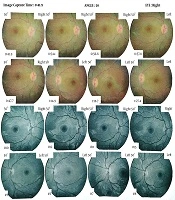
Fundus photographs were taken utilizing a tabletop nonmydriatic ocular fundus camera. A trained radiology resident captured images of each eye, concentrating on the optic disc. This process generally requires less than 5 minutes and causes minimal disturbance to patients' schedules. All fundus photographs were independently reviewed by a neurologist to confirm papilledema. In this study, fundus photography was performed using the method previously described (15). Finally, neurologists confirmed the diagnosis of papilledema in patients with abnormal fundus photographs.
Data analysis was conducted using IBM SPSS Statistics (Version 27). A comparative analysis between papilledema and imaging findings was carried out within two groups: Individuals with and without papilledema. Results were stratified according to the identification of the number of IIH MRI signs. Univariate analysis employed Fisher's exact tests and two-tailed unpaired t-tests, with a significance level of 0.05 deemed statistically significant. Based on the results of the Chen et al. study, which examines the frequency of IIH and its relationship with papilledema, taking into account the frequency of symptoms in MRI in cases with and without papilledema, values equivalent to the largest sample volume were considered. A confidence interval of 95% and study power of 0.8 were used to calculate the sample size. The sample size was 201 cases. Before the intervention, all patients provided informed consent, and the study received approval from the local university's Ethics Committee (IR.ZAUMS.REC.1400.385).
4. Results
Between 2020 and 2022, a total of 201 consecutive outpatients underwent clinically indicated brain MRI assessments, with the study team conducting initial eligibility screenings. Subsequently, 23 patients were excluded from the study due to unwillingness to participate. Consequently, 178 patients from the initial cohort fulfilled the eligibility criteria for inclusion in this study. Of this subset, 78% were identified as female (n = 139), with a mean age of 40.51 years, ranging from 18 to 68 years.
MRI assessments revealed that 73.5% of patients (n = 131) demonstrated at least one sign indicative of intracranial hypertension, with 2.24% (n = 4) exhibiting at least four such signs. Notably, our observations noted the presence of empty or partially empty sella in 88.2% of cases, prominent Meckel's caves in 20%, and cerebellar tonsil hernias in 14%. No cephalocele was identified. Concerning findings related to the orbit, 5.88% of cases (n = 10) exhibited increased peri-optic CSF, and only one patient (0.5%) displayed scleral flattening or ONH protrusion.
Among the cohort of 178 patients who underwent fundoscopy, five individuals (2.8%) presented with papilledema. Notably, within this subgroup, the predominant MRI signs of intracranial hypertension were observed: Empty sella (100%), optic nerve tortuosity (80%), enlarged Meckel's caves (60%), and increased peri-optic CSF (20%). However, none of these patients exhibited cerebellar tonsillar ectopia, scleral flattening, or ONH protrusion. All five patients with papilledema underwent contrast-enhanced MRI, revealing that three of them (60%) displayed bilateral transverse venous sinus stenosis (TVSS), while none exhibited enhancement of the ONH.
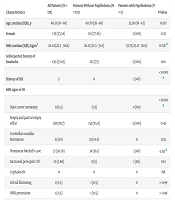
A significant relationship was identified between papilledema and optic nerve tortuosity, with 80% of patients displaying papilledema also presenting with optic nerve tortuosity. Conversely, no statistically significant correlation was observed between the factors of partial empty sella, cerebellar tonsil herniation, increased peri-optic CSF, flattening of the posterior sclera, or protrusion of the ONH with papilledema. Nevertheless, Meckel cave prominence and optic nerve tortuosity exhibited a statistically significant relationship with papilledema (Table 1).
Table 1.
Demographic Characteristics and Magnetic Resonance Imaging Findings of Study Patients a
| Characteristics | All Patients (N = 178) | Patients Without Papilledema (N = 173) | Patients with Papilledema (N = 5) | P-Value |
|---|---|---|---|---|
| Age; median (IQR), y | 40.51 (18 - 68) | 40.70 (29 - 68) | 32.20 (18 - 42) | 0.107 |
| Female | 139 (73.54) | 134 (77.45) | 5 (100) | 0.23 |
| BMI; median (IQR), kg/m2 | 26.42 (22.3 - 38.11) | 26.15 (22.3 - 33.4) | 32.73 (25.17 - 38.11) | 0.031 b |
| Self-reported history of headache | 130 (73.03) | 125 (73) | 5 (100) | 0.16 |
| History of IIH | 2 | 0 | 2 (40) | < 0.001 b |
| MRI signs of IH | ||||
| Optic nerve tortuosity | 11 (6.1) | 7 (4) | 4 (80) | < 0.001 b |
| Empty and partial empty sellae | 158 (88.7) | 153 (85.9) | 5 (100) | 0.42 |
| Cerebellar tonsillar herniation | 25 (14) | 25 (14.4) | 0 | 0.35 |
| Prominent Meckel‘s cave | 37 (20.78) | 34 (19.1) | 3 (60) | 0.02 b |
| Increased peri-optic CSF | 10 (5.88) | 9 (5) | 1 (20) | 0.15 |
| Cephalocele | 0 | 0 | 0 | NA |
| Scleral flattening | 1 (0.5) | 1 (0.5) | 0 | > 0.99 |
| ONH protrusion | 1 (0.5) | 1 (0.5) | 0 | > 0.99 |
Abbreviations: IQR, interquartile range; BMI, Body Mass Index; IIH, idiopathic intracranial hypertension; CSF, cerebrospinal fluid; NA, not applicable; ONH, optic nerve head.
a Values are expressed as No. (%).
b Significance levels: P < 0.05.
Within the study cohort, 43 patients underwent MRI with intravenous contrast, while 135 participants opted for MRI without contrast. Among those who received contrast-enhanced MRI, a singular case exhibited enhancement of the ONH, while three cases displayed evidence of TVSS. However, a significant relationship emerged between venous sinus stenosis and papilledema. All patients diagnosed with venous sinus stenosis also presented with papilledema. Moreover, within the subset of patients displaying papilledema, 60% exhibited venous sinus stenosis, a finding that achieved statistical significance (Table 2).
Table 2.
Characteristics and Contrast-enhanced Magnetic Resonance Imaging Findings of Study Patients a
| Characteristic | All Patients (N = 43) | Patients Without Papilledema (N = 38) | Patients with Papilledema (N = 5) | P-Value |
|---|---|---|---|---|
| ONH enhancement | 1 | 1 (2) | - | 0.71 |
| Bilateral TVSS | 3 | - | 3 (60) | < 0.001 b |
Abbreviations: ONH, optic nerve head; TVSS, transverse venous sinus stenosis.
a Values are expressed as No. (%).
b Significance levels: P < 0.05.
Table 3 outlines the correlation between the occurrence of papilledema and the quantity of MRI signs associated with IIH. A significant relationship is evident between the prevalence of papilledema and the observed MRI findings in the brain. As the number of identified MRI findings increases, the probability of establishing a link and strengthening the association with papilledema also increases, resulting in a significant correlation between papilledema and MRI findings. Despite this, the number of low signs is negligible.
Table 3.
Association Between the Prevalence of Papilledema and the Number of Magnetic Resonance Imaging Signs of Intracranial Hypertension a
| No. of MRI Signs of IH | All Patients (N = 178) | Patients Without Papilledema (N = 173) | Patients with Papilledema (N = 5) | P-Value |
|---|---|---|---|---|
| 1 | 131 (73.5) | 130 (73) | 1 (0.5) | 0.4 |
| 2 | 33 (19) | 33 (19) | 0 | > 0.99 |
| 3 | 10 (5.6) | 8 (4.5) | 2 (1) | < 0.001 b |
| ≥ 4 | 4 (2.2) | 2 (1.1) | 2 (1) | < 0.001 b |
Abbreviations: IH, intracranial hypertension; MRI, magnetic resonance imaging.
a Values are expressed as No. (%).
b Significance levels: P < 0.05.
5. Discussion
Of 201 patients with IIH signs on brain MRI, 23 individuals were excluded from the study. Among the remaining 178 participants, a total of five patients (2.8%) exhibited papilledema upon eye examination. Notably, our investigation unveiled a significant association between papilledema, optic nerve tortuosity, and Meckel's cave prominence. Specifically, 80% of patients with papilledema exhibited optic nerve tortuosity, while 60% displayed Meckel's cave prominence. However, no significant relationship was established between papilledema and factors such as cerebellar tonsil hernia, increased peri-optic CSF, posterior sclera flattening, or ONH protrusion.
Within the cohort, 43 participants underwent MRI with intravenous contrast, while the remaining subjects underwent MRI without contrast. Among the patients who received contrast-enhanced MRI scans, five were identified as having papilledema. Our study identified significant associations between papilledema and MRI findings consistent with IIH. This aligns with Wong et al., emphasizing correlations between clinical manifestations and radiological features (16). In our study, a notable correlation was identified between the presence of papilledema and the quantity of IIH indicators detected in brain MRIs. Notably, when three or more MRI features associated with IIH were present, a statistically significant correlation with papilledema emerged. This observation implies that as the count of radiologically identified findings increases, the probability of papilledema occurring and its linkage with IIH also intensifies. The results are similar to previous studies (5, 6, 8).
Based on our MRI data, the prevalence of papilledema notably increased from 20% to 40% in patients exhibiting three or more MRI signs associated with IIH. Comparatively, the BMI within the papilledema cohort was notably higher than that in the non-papilledema group. Despite no significant variance in the average age between the groups, the papilledema cohort demonstrated a slightly younger mean age, although this difference did not achieve statistical significance. Among the 130 individuals experiencing headaches, only five displayed papilledema, and none of the individuals without headaches showed papilledema. This distribution frequency suggests a lack of substantial association between headaches and papilledema, rendering it improbable to consider headaches as a definitive criterion or contributing factor for the presence of papilledema.
The principal findings of the study underscored the prevalence of IIH imaging markers in patients, even in the absence of papilledema. The recommendation from this observation suggests that initially, MRI should be guided by clinical examination. Clinical evaluation should precede imaging, and incidental imaging findings should be considered based on the patient's clinical history and examination. This is to identify patients who may require further invasive diagnostic procedures, such as a lumbar puncture.
Based on our findings, we observed that 88.2% of sella turcica cases were either empty or partially empty, a prevalence consistent with previous studies (17). While this syndrome was frequent among patients exhibiting papilledema, its high incidence in individuals without papilledema led to the conclusion that there is no substantial correlation between empty or partially empty sella and papilledema. Furthermore, the presence of an empty sella alone cannot definitively establish a diagnosis of IIH. It is more judicious to consider it as one element in a comprehensive assessment that considers a combination of symptoms.
Novel imaging markers, such as Meckel cave indentation and transverse diameter assessment, hold the potential to enhance the diagnosis of IH (18). Clinically suspicious cases of IIH can be identified using MRI parameters that encompass optic nerve tortuosity, Lateral Ventricular Index, and Caudate Index (19). Prioritizing an ophthalmic fundoscopic examination over a lumbar puncture is paramount in detecting papilledema. Managing symptomatic IIH does not mandate systemic IIH treatment unless the patient displays symptoms or presents with papilledema.
Our study protocol did not integrate lumbar puncture, as our primary objective did not involve assessing the predictive value of papilledema for elevated intracranial pressure. However, it is notable that three recently diagnosed patients underwent lumbar puncture during their clinical assessment, revealing CSF pressure levels exceeding the anticipated values. As a result, when managing individuals exhibiting IIH signs on MRI, emphasizing the significance of a fundoscopic examination for papilledema remains pivotal. Previously, lumbar puncture confirmation was recommended due to a modest sensitivity to radiologic IIH signs (20).
There exist two counterarguments to this premise. First, as demonstrated in a study by Bsteh et al., routine MRI reports often underestimate the IIH MRI features. Moreover, less experienced neuroradiologists might misinterpret these features or overcall them, particularly those that are less familiar or technically complex (21). Enhancing diagnostic precision involves reassessing MRI scans by a proficient evaluator. Furthermore, if a lumbar puncture is conducted subsequent to identifying radiological indications of IIH, numerous false negatives could arise; as noted in our work and also highlighted by Chen et al., identifying a combination of three or more MRI findings enhances the predictive capacity for detecting papilledema during fundoscopy significantly. Nonetheless, reliance on radiological findings alone does not yield highly accurate results (22).
Our MRI data showed that three or more MRI signs of IIH were significantly correlated with papilledema. However, Chen et al. found a correlation with two or more MRI signs (8). The study by Mallery et al. observed that employing three out of four specific imaging findings achieved almost 100% accuracy in diagnosing IIHWOP among adults experiencing chronic headaches and elevated CSF pressure (6). Notably, individuals diagnosed with IIHWOP do not face a risk of vision loss. Typically, non-emergent and conservative strategies are employed to address their condition (6, 22).
Key strengths of our study include its prospective design, encompassing a comprehensive range of IIH signs detected through MRI. In contrast to numerous earlier studies that retrospectively assessed the prevalence of IIH signs on MRI or focused solely on specific signs such as empty sella, our methodology adopts a forward-looking perspective. Notably, as papilledema does not serve as a predictor of increased intracranial pressure, lumbar puncture was not included in our protocol. However, it is worth noting that three previously undisclosed patients were identified who underwent lumbar puncture as part of their clinical management subsequent to an edema diagnosis. In each instance, CSF pressure surpassed anticipated levels. Therefore, for patients displaying signs of IIH on MRI, the execution of an eye fundoscopy to assess papilledema has been validated as a more favorable diagnostic measure compared to lumbar puncture.
In this study, MRI findings frequently indicated signs of IIH among patients undergoing brain MRI. However, these indicators were not consistently associated with papilledema. It's essential to highlight that the lack of a notable correlation between headaches and papilledema questions the concept of headaches as a definitive criterion for identifying papilledema. Additionally, our results emphasize the significance of prioritizing ophthalmic and fundoscopic examinations over lumbar punctures in detecting papilledema, particularly among patients exhibiting signs of IIH on MRI.
One limitation of our study is that MRI with intravenous contrast was conducted on only 43 patients (24%) based on specific clinical indications outlined in the imaging protocol. Consequently, there remains a possibility that transverse sinus stenosis might have presented more extensively across all patients. However, this limitation is rooted in our study's selection criteria, which favored patients undergoing contrast-enhanced MRI or venography. Thus, these criteria may have introduced bias into the findings, particularly concerning patients potentially afflicted with cerebral venous sinus stenosis or ONH enhancement.
Bedside undilated direct ophthalmoscopy has limited sensitivity for detecting papilledema in routine care; in emergency cohorts, relevant fundus findings were frequently missed unless non-mydriatic fundus photographs were obtained for review (EP sensitivity ~46% with photographs vs. near-zero when relying solely on ophthalmoscopy). Consequently, patients with IIH-related papilledema may be under-recognized on routine fundoscopy, particularly when edema is mild or asymmetric. Conversely, pseudopapilledema — most commonly from optic disc drusen — can yield false-positive impressions of disc swelling on ophthalmoscopy. Ancillary testing with OCT (including enhanced-depth OCT) and standardized fundus photography improves diagnostic accuracy by demonstrating features of true edema (e.g., subretinal hyporeflective space, smooth internal contour) and confirming drusen when present. Our diagnostic pathway therefore included dilated fundus examination with documentation and OCT when available, consistent with consensus guidance for IIH evaluation (23, 24).
Further research is required to determine the most effective combination of clinical manifestations and MRI indicators for accurately detecting papilledema. This research would play a crucial role in guiding the selection of urgent evaluations. Additionally, it is recommended that MRI scans utilizing venous contrast or venography be performed for all participants. This approach aims to comprehensively investigate venous sinus stenosis and ONH swelling, which are significant symptoms linked to IIH.
5.1. Conclusions
Our prospective study significantly contributes to elucidating the connections among IIH, papilledema, and MRI findings. In summary, our study established a noteworthy correlation between papilledema and distinct MRI findings, particularly optic nerve tortuosity and Meckel's cave prominence among individuals with papilledema. The occurrence of papilledema significantly escalates with the increasing number of MRI indicators associated with IIH. Notably, when three or more MRI features associated with IIH were present, a statistically significant correlation with papilledema emerged. These results emphasize the significance of thorough evaluations encompassing fundus examinations and MRI scans for diagnosing and managing IIH. There is a need for additional research aimed at refining diagnostic criteria and advancing patient care in cases of IIH.