
1. Background
Multiple Sclerosis (MS) is considered as the most common disease of the central nervous system, causing permanent disabilities in adults (1). Multiple Sclerosis is also regarded as a degenerative disease of the central nervous system that is chronic and progressive and characterized by destruction of myelin sheath in the brain and the spinal cord (2). In addition, MS is known as the second most common cause of disabilities in young adults after traffic accidents (3). The first demonstrations of MS usually arise at 20 to 40 years of age with symptoms, such as depression, anxiety, weakness, impaired vision, as well as imbalance (4). The cause of MS is unknown although there are theories about the impact of immunological, genetic, and environmental factors, as well as viruses (5). According to available statistics, about 2.5 million people around the world and 40 thousand individuals in Iran have this disease (6, 7).
Multiple Sclerosis often has a period of relapsing and remitting; during remission, there are usually no symptoms and emergence of symptoms are known as attacks (8). In this disease, damage to the myelin sheath can lead to cognitive disorders, spasms, depression, pain, and fatigue (9). Moreover, MS as a chronic disease with no permanent cure, no certain prognosis, and infliction at a young age can result in numerous psychiatric disorders in patients (10). In fact, studies conducted in this domain have shown that patients with MS experience higher levels of psychiatric disorders, such as anxiety and depression (11); for example, the results of the meta - analysis by Marrie et al. (2015) revealed that the rates of prevalence of anxiety, bipolar disorders, depression, and psychosis were equal to 21.9%, 5.83%, 23.7%, and 4.3%, respectively (12).
Among the problems affecting patients with MS is fatigue, which is also one of the most important factors influencing quality of life in these patients (13). In this respect, fatigue refers to the absence of adequate physical and mental energy leading to disruptions in daily living activities (14, 15). There are two main causes of fatigue, known as primary and secondary causes. The primary causes are associated with disease progression and due to damage to the central nervous system (16). The secondary causes refer to problems, such as depression, poor nutrition, sleep disorders, pain, infection, drug complications, and type of MS (17, 18). Fatigue in these patients, given that it is highly dependent on the person and its experience is different in individuals, is considered as a complicated and extremely incurable disorder. Due to the prevalence of this disorder, most people with MS complain about fatigue and its debilitating impacts on their daily life routines during outpatient examinations so that the given disorder can have an effect on fulfilling their jobs outside the house and accepting responsibilities for doing housework (19).
Fatigue can be somewhat controlled with medications, such as amantadine, however, it seems logical to use non - pharmacological methods to lower fatigue due to complications caused by medication therapy (8). These patients can certainly control fatigue, increase their abilities to perform daily activities, and develop adaptive behaviors provided that they are aware of non - pharmacological approaches that reduce fatigue. Access to health in chronic diseases is possible by making adjustments in various aspects of the patient’s life (20). Among the non - pharmacological approaches that can be used to alleviate fatigue are nursing interventions, such as the use of Roy’s Adaptation Model (8), progressive muscle relaxation (21), home - based pulmonary rehabilitation (22), self - management program (23), and Pilates in resistance and combined forms (24). Motivational interviewing is also one of the other non - pharmacological approaches employed to promote health status among patients with MS (10, 25).
Motivational interviewing is a patient - centered approach that enhances intrinsic motivation among individuals to change their behaviors via the investigation and resolution of ambiguities, whose benefits in the domain of health have been widely accepted (26). For the first time, motivational interviewing was introduced by Miller and Rollnick to treat addiction and, given its positive outcomes, it spread with a high speed in health promotion systems, especially chronic diseases, in which changes in behavior and giving motivation to patients are common challenges (27). In fact, motivational interviewing is a promising intervention for positive health behavior change in the domains of medicine, mental health, and psychiatrics. In addition to flexibility and applicability of this type of behavioral intervention in various behavioral domains, it is also applicable to individuals and groups. It can cover clients from children to the elderly and is also used as an independent treatment or in combination with other therapies and in various forms, such as phone, in - person, and web - based interviewing (28, 29).
This type of interview is comprised of four principles of Expression Empathy, Develop Discrepancy, Roll with Resistance, and Support Self - Efficacy, in order to establish relationships between patients and health workers and encourage patients to change their behaviors (30, 31). One of the benefits of motivational interviewing is that it firstly raises an important and common problem in all therapies, i.e. resistance to change in a direct manner, and then fixes this problem. Furthermore, this type of interview is a flexible method and can be used as an independent approach combined with other therapies (32).
2. Objectives
Given the prevalence of MS as well as the impact of fatigue on quality of life, the present study was conducted on the effect of motivational interviewing on fatigue in patients with MS in the city of Ilam, in Iran.
3. Methods
In the present quasi - experimental study, a total number of 70 patients with MS referring to Shahid Mostafa Khomeini Teaching Hospital in the city of Ilam (as the only center providing care to MS patients) were placed in two experimental (intervention; 35 patients) and (control; 35 patients) groups, using random allocation sampling. It should be noted that the samples were randomly allocated to both groups by picking up cards on which letters A and B had been written. That is, the patients were allocated to control or experimental (intervention) groups if they had picked up cards with letters A and B, respectively. All the cards were inside a sealed envelope and letters on them were not visible.
The inclusion criteria in this study were confirmation of infliction with MS by a neurologist, reading and writing literacy, age range between 18 and 65 years, residence in the city of Ilam, ability to communicate verbally, lack of any depression and anxiety based on patient records and interviews, scores or 21 or higher on the scale of Mini - Mental State Examination (33), receiving no treatments disrupting mental ability, memory, or thinking, and having no trouble communicating. The criteria for exclusion from the study were relapses of the disease during the study, unwillingness to participate in the study, and absence in interventions for more than one training session. To collect the data, the fatigue impact scale (FIS) was used. The given questionnaire contained 21 items in three physical, cognitive, and social dimensions. The highest score in this scale was 84 and higher scores indicated higher levels of fatigue. This questionnaire was designed in 1994 by Fisk to measure the impact of fatigue on daily activities (8, 33, 34).
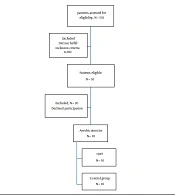
Motivational interviewing was conducted according to Miller and Rollnick’s Model for the experimental (intervention) group. Since most effective interventions in healthcare centers are better provided in groups based on this model and implementation of this type of interview in a group and in small clinical groups is better justified, the intervention in the present study was also administered in a group. For this purpose, the patients were placed in seven groups of five individuals and motivational interviewing was conducted, lasting between 45 to 60 minutes in five sessions (a total of 35 sessions over five weeks for all patients in the experimental and intervention group), and on a weekly basis for each group as shown in Table 1 (35). To track the interventions, a mobile or phone number was taken from the participants. The questionnaires were completed before the interventions and four weeks after the final training session by patients in the experimental (intervention) and control groups. In this study, seven patients in the experimental (intervention) group (three individuals because of relapses of MS and four individuals due to unwillingness to continue the study) and three patients in the control group (two individuals because of unwillingness to continue the study and one individual due to death) were excluded. Ultimately, the findings of this study were analyzed with 28 patients in the control (intervention) group and 32 patients in the experimental group.
Table 1.
Structure and Content of Motivational Interviewing
| Title of Session | Content of Session | |
|---|---|---|
| Session 1 | Introduction | Introduction and familiarity, group processing and objectives, dimensions of problem changes, change steps, and use of self-assessment commitment scale. At this stage, the patients got ready to do the motivational interviewing. |
| Session 2 | Feelings and emotions | In this session, feelings and emotions associated with life domains affected by MS were discussed. |
| Session 3 | Positive and negative aspects of behavior | Positive and negative aspects of MS were discussed. Moreover, gains and losses arising from changes in cognition were discussed. |
| Session 4 | Values | The nature of patients’ values, i.e. where they are and where they will be, were discussed. During this session, clarification, identification, and confirmation of reference values were carried out. |
| Session 5 | Final vision | In this session, helping situations to evaluate and enhance self-esteem and to conduct the final assessment were presented. |
This study was conducted after obtaining permission from the Council of Ethics in Research at Ilam University of Medical Sciences with the project code of 968044/130 and code of ethics in research (ir.medilam.rec.1396/164). Prior to the study, written informed consent was acquired from patients and it was explained that their participation or non-participation in the interventions would not have any positive or negative impacts on their treatment progression and their participation in this study will be of completely optional. The patients were also assured that the data from this study will be kept strictly confidential. To observe ethics in research following the intervention, the trainings of the experimental (intervention) group were presented to the control group in the form of training manuals. To analyze the data, descriptive (mean and standard deviation) and inferential statistics were used and significance level of less than 0.05 was considered.
4. Results
According to Table 2, 20 (71.4%) participants of the control group were male and eight (28.6%) were female. Of the patients in the test group, 20 (62.5%) of them were male and 12 (37.5%) were female. Regarding the marital status of the patients in the experimental group, 18 (56.3%) and the control group 19 (69.7%) were without spouses. Regarding the educational status of the participants, 24 (42.9%) individuals in the control group and 27 individuals in the case group had higher than diploma education. In the experimental group, the majority of patients 14 (43.8%) were students and in the control group, 11 (39.3%) were unemployed and students.
Table 2.
Demographic Features
| Demographic Features | Control, N (%) | Experimental, N (%) | P Value |
|---|---|---|---|
| Gender | 0.15 | ||
| Male | 20 (71.4) | 20 (62.5) | |
| Female | 8 (28.6) | 12 (37.5) | |
| Marital status | 0.08 | ||
| Single | 19 (69.7) | 18 (56.3) | |
| Married | 9 (32.1) | 14 (43.8) | |
| Education | 0.24 | ||
| Diploma and low literate | 4 (14.3) | 5 (15.6) | |
| Collegiate | 12 (42.9) | 18 (56.3) | |
| MSc collegiate | 12 (42.9) | 9 (28.1) | |
| Job | 0.09 | ||
| Employed | 3 (10.7) | 2 (6.3) | |
| Student | 11 (39.3) | 14 (43.8) | |
| Housewife | 3 (10.7) | 8 (25) | |
| Unemployed | 11 (39.3) | 8 (25) | |
| Age (Mean ± SD) | 35 (6.7) | 32.6 (5.57) | 0.35 |
Table 3.
Comparison of Patients’ Fatigue Before and After the Intervention
| Variable | Pre Intervention | Post Intervention | P Value |
|---|---|---|---|
| Score fatigue | |||
| Control | 63.28 (8.29) | 62.13 (7.69) | 0.45 |
| Experimental | 66.32 (10.87) | 41.75 (14.35) | 0.000 |
| P value | 0.10 | 0.01 |
According to the findings, there was no difference between the fatigue of the control group and intervention group before the intervention. However, after the intervention, the fatigue of the patients in the test group was reduced.
5. Discussion
The purpose of the present study was to investigate the impact of motivational interviewing on fatigue among patients with MS in the city of Ilam, during year 2017. The findings of this study showed that implementation of motivational interviewing could reduce fatigue in patients with MS in the experimental (intervention) group. The results of the investigation by Dashti Dehkordi et al. in 2014 aimed at examining the effect of motivational interviewing on depression in patients with MS and also revealed that conducting motivational interviewing for three sessions on a weekly basis and for one hour could lessen depression in patients in the experimental (intervention) group (10). In another study by Dashti Dehkordi et al. on patients with MS, implementation of motivational interviewing could similarly lead to health - promoting behaviors (25). In the investigation by Rame et al. on patients with cancer, the findings indicated that administration of phone - based motivational interviewing had alleviated fatigue among these patients (36). The results of the study by Bombardier et al. aimed at investigating the impact of implementing motivational interviewing on improving health - promoting behaviors, and showed that health - promoting behaviors of patients in the experimental (intervention) group, including physical activity, stress management, mental health, fatigue impact, and spiritual growth had significantly improved (37), which was consistent with the results of the present study suggesting the positive effect of implementation of motivational interviewing on reducing fatigue.
To the best of the author’s knowledge, no other studies aimed at investigating the effect of motivational interviewing on lowering fatigue in patients with MS were found. Thus, the results of the present study were compared with the findings of other investigations aimed at examining the impact of this type of intervention on improving health status of patients. In the study by Alidoust Ghahfarokhi, the effectiveness of implementation of motivational interviewing on adherence to treatment in hemodialysis patients was evaluated. In this study, five weekly sessions of motivational interviewing were held for 15 patients in the experimental (intervention) group. The results showed that the variables of weight gain, phosphorus, potassium, and creatinine had a significant increase after administration of the intervention and compliance with the treatment (35). Sobhani et al., in their study determining the impact of motivational interviewing on adherence to treatment in patients with sleeve gastrectomy, revealed that implementation of motivational interviewing for four weeks caused a rise in adherence and self - management behaviors and patients reached desirable weight loss and reduced postoperative complications; however, the implementation of this intervention had no effects on increasing the levels of physical activities in patients (38). Likewise, Rajabipour et al. in their study investigated the impact of motivational interviewing, using group discussion, on quality of life in patients with colorectal cancer and a permanent intestinal stoma. These interventions were conducted in groups (one group of 12 individuals and one group of 11 members), based on the practical book of Motivational Interviewing and in the presence of a psychologist, who was aware of motivational interviews, the nurse researcher, and a nurse familiar with ostomy. According to the findings and after the implementation of motivational interviewing, the scores of quality of life in the experimental (intervention) group significantly increased (29), which was in agreement with the results of this study on the impact of implementation of motivational interviewing on promoting the health status of patients.
In addition, other interventions have been performed to reduce fatigue in patients with MS, including the one used in the study by Hemmati Maslak Pak et al., aimed at investigating the effect of implementing a care program based on Roy’s Adaptation Model on fatigue in patients with MS. In the mentioned study, six training sessions were held for two months for patients and a significant reduction in fatigue was observed among these patients after the intervention (8). The results of the study by Jalalmanesh et al. determining the effect of progressive muscle relaxation technique on quality of sleep and fatigue in patients with MS also showed that the implementation of this technique for seven weeks could alleviate fatigue and improve quality of sleep among the patients (21). In another study, Tomruk et al., investigating the effect of Pilates on fatigue in patients with MS, concluded that the implementation of these interventions had reduced fatigue in these patients (39). In the study by Khayeri et al., the implementation of the Fordyce Happiness Model had similarly relieved fatigue in patients with MS (40), which was in line with the results of the present study suggesting the impact of motivational interviewing as a non - pharmacological technique on alleviating fatigue in patients with MS.
Among the limitations of this study was that only patients referring to Shahid Mostafa Khomeini Hospital as a teaching hospital in the city of Ilam had been selected, thus, lots of patients were likely to refer to other medical centers in other provinces and the results could not represent the entire community. For this reason, it is suggested that further research studies should be conducted in this domain, including all patients with MS in the city of Ilam as the study samples. The other limitation of this study was that 10 out of the 70 patients recruited in this study were excluded; thus, it is necessary to design interventions in further research in order to draw willingness of patients towards participating in the mentioned studies.
5.1. Conclusion
The findings of this study showed that implementation of motivational interviewing reduced fatigue in patients with MS; therefore, nurses are recommended to use this type of interview in giving daily care to patients and to provide the basis for promoting the health status of these patients. Moreover, it is suggested to include these techniques in nursing undergraduate courses to allow nursing students to become familiar with these types of non - pharmacological approaches aimed at alleviating fatigue from the beginning and during their studies.