
1. Introduction
Cardiovascular diseases (CVDs) remain the leading cause of morbidity and mortality worldwide, and dyslipidemia, defined as abnormal blood lipid levels, substantially contributes to this burden (1). Elevated levels of low-density lipoprotein cholesterol (LDL-C) and triglycerides (TG), together with reduced levels of high-density lipoprotein cholesterol (HDL-C), are closely associated with arterial plaque accumulation and increased risks of myocardial infarction and stroke (2, 3). Because managing these lipid abnormalities is important, lifestyle modifications, particularly exercise, are widely used as safe and accessible strategies to improve cardiovascular health. Among exercise modalities, combined training, which incorporates aerobic activities such as walking or cycling and resistance exercises such as weightlifting, is a promising approach for improving lipid profiles and overall metabolic health in adults (4, 5). Although the effects of aerobic or resistance training alone on blood lipids are well described, the effects of combining both modalities on these markers remain less clear (6). Some studies suggest that combined training may provide additional benefits, including increasing HDL-C and reducing LDL-C and triglycerides, but findings have been inconsistent (7, 8). Variations in training-program design, participant characteristics, and study duration appear to influence outcomes. Given the increasing use of combined training in both fitness and clinical settings, the available evidence should be synthesized to clarify its effectiveness (9). Specific training characteristics, including exercise intensity, duration, frequency, and the sequence of aerobic and resistance components, may modify lipid responses (5, 10). However, these program details are not always clearly reported, making it difficult to identify the most effective protocols. Baseline lipid levels, age, and sex may also influence responses to combined training, but these effects are not yet well understood (11). A more detailed assessment of these factors is needed to inform exercise recommendations to improve cardiovascular health. Although evidence increasingly supports the beneficial effects of combined training on lipid metabolism, heterogeneity in study designs, participant populations, and measured outcomes has limited firm conclusions (12). Most previous reviews have evaluated aerobic or resistance training separately, with less attention to the potential effects of their combination. In addition, inconsistent reporting of training protocols and limited subgroup analyses constrain understanding of which exercise prescriptions yield the greatest improvements (10, 13). Therefore, a systematic review and meta-analysis is needed to address these gaps and provide practical guidance for clinicians, trainers, and individuals seeking to reduce cardiovascular risk through exercise.
2. Methods
2.1. Search Strategy and Data Sources
To provide a comprehensive overview of the literature, we conducted a systematic search of multiple electronic databases in July 2024, in accordance with the PRISMA 2020 guidelines. The databases searched included PubMed, Scopus, and Google Scholar. Search terms combined exercise modalities ("aerobic," "resistance," and "high-intensity interval training") with lipid-metabolism terms ("HDL," "LDL," "triglycerides," and "total cholesterol"). Terms such as "effects," "impact," and "changes" were also used to broaden the search.
We also searched for ongoing or unpublished studies via ClinicalTrials.gov and the WHO trials registry, although only a few relevant records were retrieved. The initial search yielded 5,879 records. Details of the study selection process, as outlined in the PRISMA 2020 guidelines, are presented in Figure 1, which illustrates the flow diagram of studies included in this systematic review and meta-analysis. All references were imported into EndNote software, and duplicates (n = 1,490) were automatically removed. Titles, abstracts, and full texts were then screened manually to identify eligible studies.
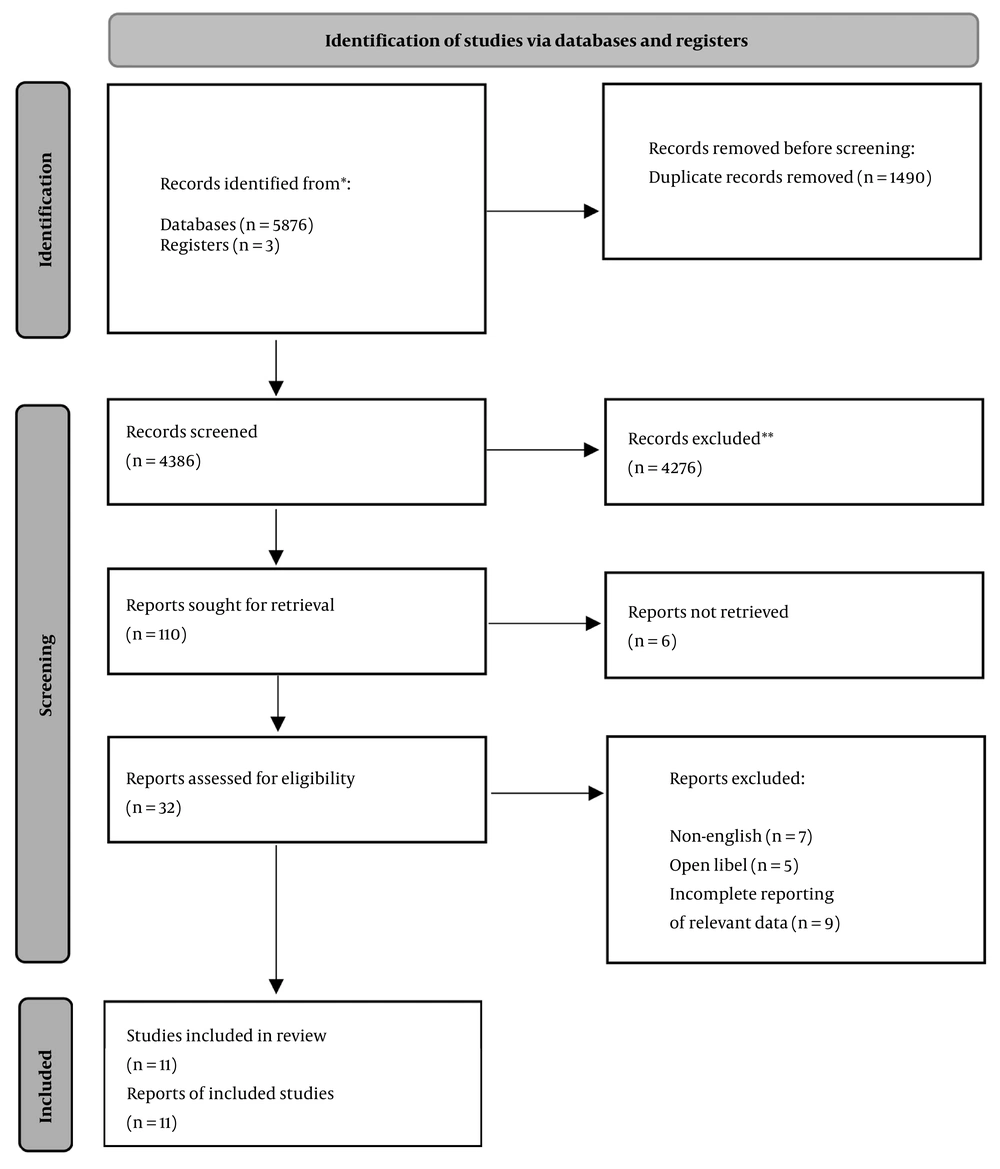
Figure 1.
PRISMA flow diagram of studies included in this systematic review with meta-analysis
2.2. Eligibility Criteria
The eligibility criteria were as follows:
1) Participants were adults aged 18 years or older without severe comorbidities.
2) The intervention involved a combination of aerobic and resistance exercise.
3) A sedentary or inactive control group was preferred; however, pre-post studies without a control group were included if they reported pre- and postintervention lipid data. A sensitivity analysis excluding these studies was performed.
4) Lipid-related outcomes, such as HDL-C, LDL-C, TG, or total cholesterol (TC), were reported both before and after the intervention.
5) The study had an interventional design (randomized or quasi-experimental).
6) Studies were excluded if they lacked sufficient statistical data, were non-English, or were purely observational.
7) Studies lacking sufficient statistical data, such as pre- or postintervention lipid values or measures of variance such as SD or SE, were excluded.
8) Non-English studies were excluded.
9) Purely observational studies, including cross-sectional, cohort, and case-control studies, were excluded.
10) Studies involving participants with severe comorbidities, such as cancer, advanced kidney or liver disease, type 1 diabetes, or cardiovascular events within the previous 6 months, were excluded.
11) Studies with exercise interventions that were not purely combined aerobic and resistance training, such as aerobic or resistance training alone or high-intensity interval training without a resistance component, were excluded.
12) Studies with intervention durations shorter than 4 weeks were excluded.
13) Studies lacking a clearly defined control group were excluded, except for pre-post studies handled separately as noted in the sensitivity analysis.
2.3. Data Extraction
Two researchers independently reviewed eligible studies and extracted relevant data into a structured spreadsheet. Extracted information included study design, country, sample size, participant characteristics, training-intervention details (type, duration, frequency, and intensity), and reported lipid-profile outcomes. In cases of disagreement, a third reviewer was consulted. To facilitate comparison, interventions were grouped by duration into four categories: 8, 10, 12, and 24 weeks.
Two independent reviewers performed study selection, data extraction, and risk-of-bias assessment; disagreements were resolved by a third reviewer.
2.4. Risk-of-Bias Assessment
The quality of the included studies was evaluated using the Cochrane Risk of Bias Tool, with assessment of randomization, allocation concealment, blinding, completeness of outcome data, and selective reporting. Although most studies clearly reported outcomes and maintained good follow-up, many did not provide details on randomization procedures or participant blinding, introducing potential sources of bias.
2.5. Statistical Analysis
All statistical analyses were performed using STATA software (version 15; StataCorp, College Station, TX, USA). For each lipid outcome, standardized mean differences (SMDs) with 95% confidence intervals (CIs) were calculated. Because variability was expected among studies in terms of population, intervention type, and duration, a random-effects model based on the DerSimonian and Laird method was used.
Heterogeneity was examined using the Cochran Q test, I2 statistics, and the H index. In addition, subgroup analyses were conducted according to intervention length to determine whether training duration influenced the magnitude of lipid-related changes. A P value of less than 0.05 was considered statistically significant. Given the small number of studies per outcome, formal publication-bias assessment (eg, funnel plot or Egger test) was not conducted.
3. Results
Table 1 provides a comprehensive summary of 11 intervention studies conducted across various countries that examined the effects of different exercise modalities on metabolic and inflammatory biomarkers.
Table 1.
Characteristics of Studies Included in the Meta-Analysis a
| Author (Year) | Country | Study Type | Sample Size | Intervention Group | Control Group | Variables Examined | Duration |
|---|---|---|---|---|---|---|---|
| Brandao et al. (2024) (13) | Brazil | Interventional (Non-randomized) | 14 | Combined physical training (75 - 90% 1RM + aerobic intervals) | No control group | BMI, weight, BSA, fat mass, waist/hip circumference, WHR, VO2max, speed at lactate thresholds, TMAO, sphingolipids, lipid profile (TC, HDL-C, TG), creatinine | 8 weeks |
| Oh and Lee (2023) (14) | South Korea | Interventional (Non-randomized) | 8 | Combined aerobic training (60 - 80% VO2max) + resistance training (TRX) | No control group | Body weight, fat, lipid profile (TC, TG, LDL, HDL), adiponectin, leptin, fasting glucose | 24 weeks |
| Sadeghipour and Mirzaei (2022) (15) | Iran | Interventional (Randomized) | 15 | WB-EMS + combined training | Sedentary control | Body fat %, waist circumference, lipid profile (TC, HDL, TG), body weight, lean body mass | 6 weeks |
| Hejazi et al. (2021) (16) | Iran | Interventional (Quasi-experimental) | 12 | Endurance-intermittent and continuous resistance training | Sedentary control | Weight, BMI, lipid profile, VO2max, coagulation (PT, PTT, fibrinogen, platelets, D-dimer), menstrual symptoms | 8 weeks |
| Amanat et al. (2020) (17) | Iran | Interventional (Randomized) | 15 | Aerobic training (60 - 75% HRmax), resistance training (60 - 80% 1RM), combined training | Sedentary control | Body weight, BMI, WHR, body fat %, muscle mass, BP, glucose, insulin, HOMA-IR, lipid profile, irisin-1, nesfatin-1 | 12 weeks |
| Soori et al. (2017) (18) | Iran | Interventional (Randomized) | 8 | Endurance (swimming), resistance training (40 - 60% 1RM), combined training | Sedentary control | Weight, BMI, WHR, body fat %, visfatin, ICAM-1, HOMA-IR, fasting insulin, lipid profile | 10 weeks |
| Azarbayjani et al. (2014) (19) | Iran | Interventional (Randomized) | 10 | Aerobic training (60 - 70% HRR), resistance training (70% 1RM), combined training | Sedentary control | Body fat %, WHR, HDL-C, insulin, insulin resistance, VO2peak, 1RM, BMI, weight | 12 weeks |
| Ossanloo et al. (2012) (20) | Iran | Interventional (Randomized) | 40 | Aerobic dance, step, and resistance training | Sedentary control | Body fat percent, lipid profile (TC, TG, LDL-C, HDL-C) | 12 weeks |
| Flores-Moreno et al. (2024) (21) | Mexico, Costa Rica | Interventional (Non-randomized) | 16 | Concurrent training | No control group | Glucose, lipid profile (TG, HDL-C, LDL-C, VLDL, cholesterol), liver enzymes (ALT, AST), oxidative stress (MDA), weight, BMI | 12 weeks |
| Takeshima et al. (2004) (22) | Japan | Interventional (Randomized) | 14 | PACE: aerobic training (70% HRmax) + hydraulic resistance | Sedentary control | Body mass, skinfolds, girths, flexibility, VO2max, blood lactate, HR, lipid profile, muscular strength | 12 weeks |
| Park et al. (2003) (23) | South Korea | Interventional (Randomized) | 10 | Aerobic training (6 days/wk), combined training (aerobic + resistance on alternate days) | Sedentary control | Weight, BMI, body fat %, lean mass, waist circumference, DBP, VO2max, fat volumes (SFV, VFV), VFV/SFV ratio, lipid profile, Apo A-I, Apo B | 24 weeks |
a Only the variables used in each study were included in the table.
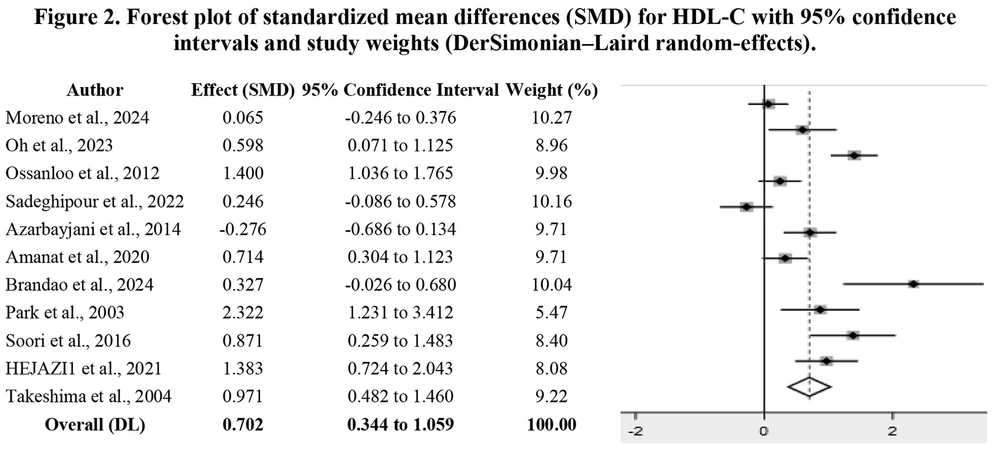
Combined training led to statistically significant improvements across all lipid parameters. Meta-analysis results for the SMD across 11 studies are summarized in Figure 2 and illustrated in Figure 2 (forest plot for HDL-C). Individual study effect sizes ranged from -0.28 to 2.32. The pooled overall effect size, calculated using the DerSimonian-Laird random-effects model, was 0.70 (95% CI: 0.34 to 1.06), indicating a statistically significant positive effect (z = 3.85, P < 0.001). Heterogeneity among studies was substantial and statistically significant. The Cochran Q test yielded a value of 71.44 (df = 10, P < 0.001), suggesting substantial variability beyond chance.
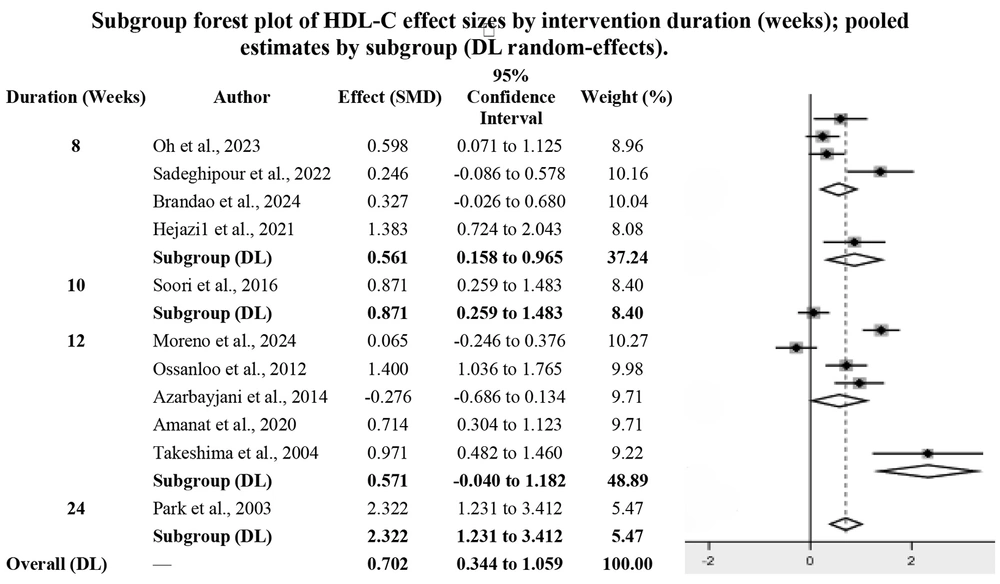
Subgroup analysis of SMDs and 95% CIs by intervention duration (in weeks) is presented in Figure 3. A random-effects model (DerSimonian-Laird method) was used to pool effect sizes within each subgroup, given moderate to high heterogeneity. Substantial between-study variability was observed in the 8-week (I2 = 69.8%) and 12-week (I2 = 91.9%) subgroups, whereas heterogeneity could not be assessed for subgroups with only one study (10-week and 24-week). Overall heterogeneity across all studies was high (I2 = 86.0%), supporting the use of a random-effects approach. Statistically significant between-group heterogeneity indicates that intervention duration may be a potential moderator of effect size.
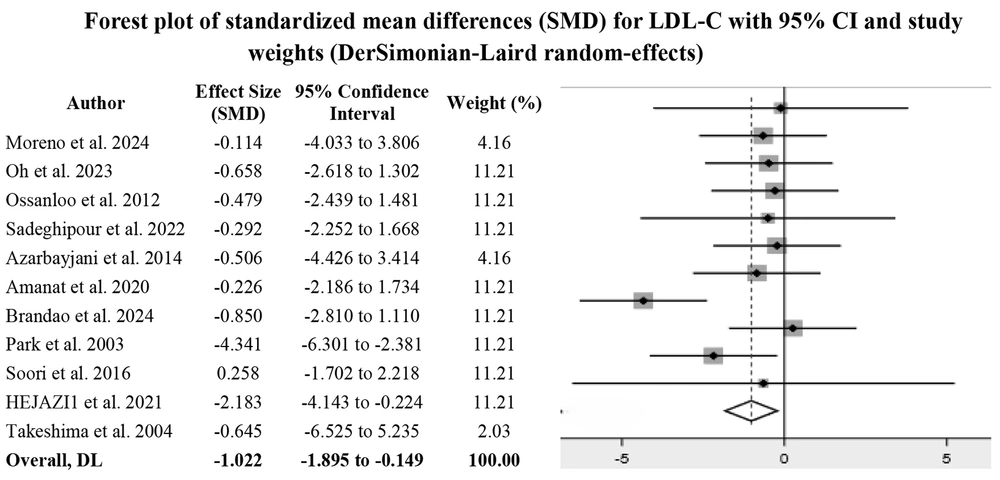
Meta-analysis results for the SMD across 11 studies are summarized in Figure 4 and depicted in Figure 3 (forest plot for LDL-C). Individual study effect sizes ranged from -4.34 to 0.26. The pooled overall effect size, calculated using the DerSimonian-Laird random-effects model, was -1.02 (95% CI: -1.90 to -0.15), indicating a statistically significant negative effect (z = -2.29, P = 0.022). Heterogeneity among studies was low to moderate. The Cochran Q test yielded a value of 15.91 (df = 10, P = 0.102), suggesting no statistically significant variability beyond chance. The I2 statistic was 37.1%, indicating moderate heterogeneity.
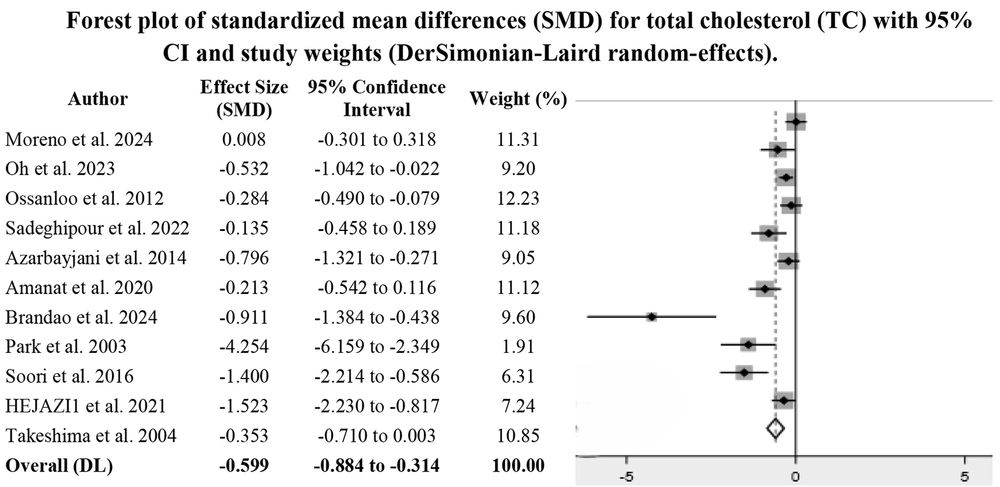
Meta-analysis results for the SMD across 11 studies are summarized in Figure 5 and shown in Figure 4 (forest plot for total cholesterol). Individual study effect sizes ranged from 0.008 to -4.25. The pooled overall effect size, calculated using the DerSimonian-Laird random-effects model, was -0.60 (95% CI: -0.88 to -0.31), indicating a statistically significant negative effect (z = -4.13, P < 0.001). Heterogeneity among studies was substantial and statistically significant. The Cochran Q test yielded a value of 49.60 (df = 10, P < 0.001), suggesting substantial variability beyond chance. The I2 statistic was 79.8%, indicating that approximately 80% of the total variation across studies was due to heterogeneity rather than sampling error.
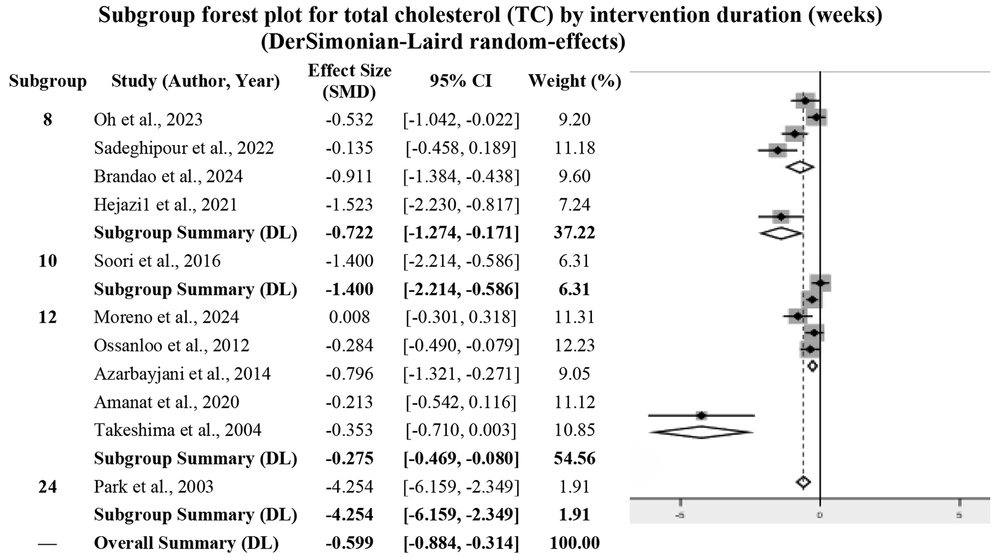
Subgroup analysis of SMDs and 95% CIs by intervention duration (in weeks) is shown in Figure 6. A random-effects model using the DerSimonian-Laird method was applied to estimate pooled effect sizes within each subgroup. Considerable heterogeneity was observed in the 8-week subgroup (I2 = 81.0%) and moderate heterogeneity in the 12-week subgroup (I2 = 45.1%). Heterogeneity could not be estimated in the 10-week and 24-week subgroups because only one study was included in each. Overall heterogeneity across all studies was high (I2 = 79.8%, P < 0.001), supporting the use of a random-effects model. A statistically significant between-subgroup difference suggests that intervention duration may moderate the magnitude of effect sizes.
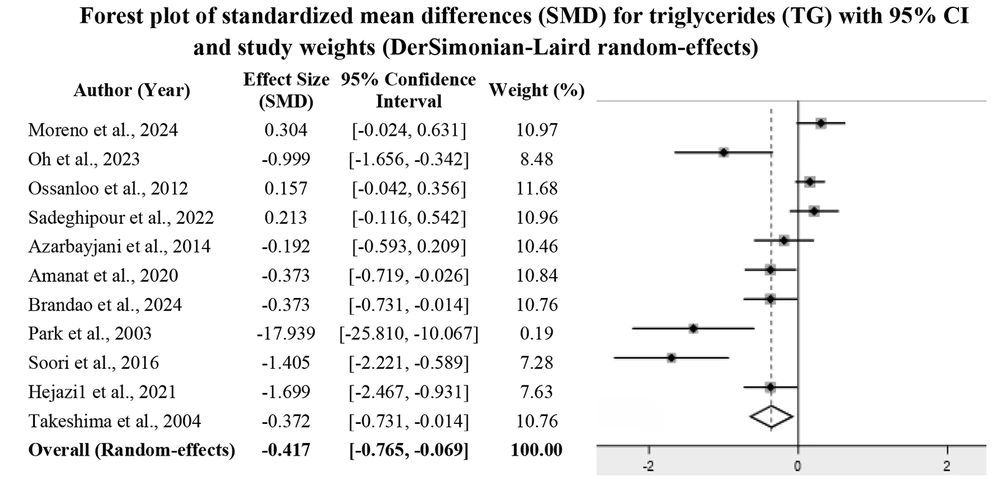
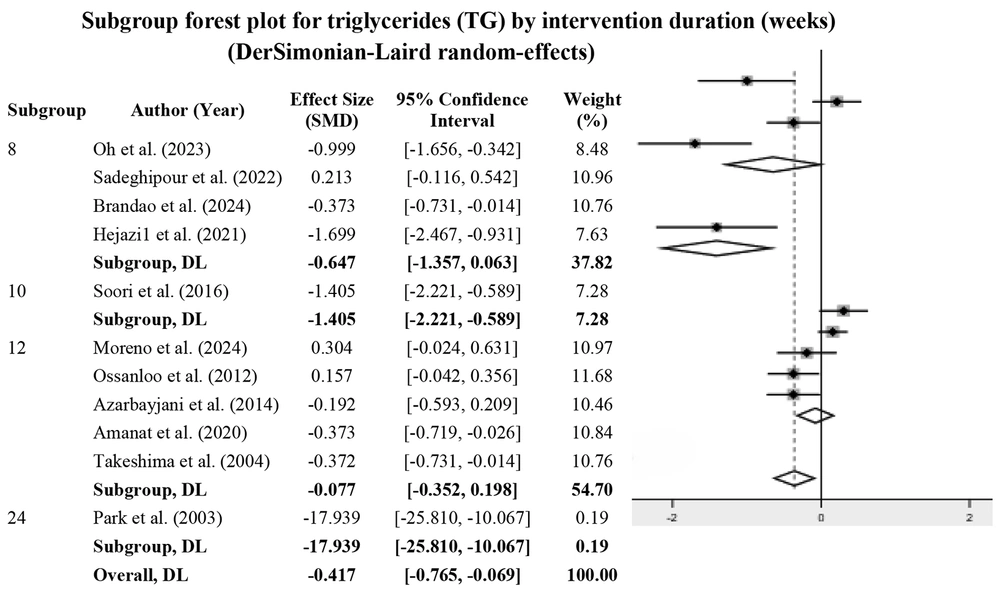
Meta-analysis results for the SMD across 11 studies are presented in Figure 7 and illustrated in Figure 5 (forest plot for triglycerides). Individual study effect sizes ranged from -17.94 to 0.30, with Park et al. (23) reporting a highly negative outlier. The pooled overall effect size, estimated using the DerSimonian-Laird random-effects model, was -0.417 (95% CI: -0.765 to -0.069), indicating a statistically significant negative effect (z = -2.347, P = 0.019). Heterogeneity across studies was substantial and statistically significant. The Cochran Q test yielded a value of 76.08 (df = 10, P < 0.001), suggesting considerable variability not attributable to random chance. The I2 statistic was 86.9% (95% CI: 42.6% to 94.4%), indicating that nearly 87% of the total variance was due to true heterogeneity. In addition, the H statistic was 2.76 (95% CI: 1.32 to 4.21), further supporting the presence of substantial between-study variability.
Subgroup analysis based on intervention duration (in weeks) was conducted using a random-effects model based on the DerSimonian-Laird method (Figure 8). Considerable heterogeneity was found in the 8-week subgroup (I2 = 88.7%) and moderate heterogeneity in the 12-week subgroup (I2 = 73.6%), indicating variability in effect sizes across studies. In the 10-week and 24-week subgroups, heterogeneity could not be estimated because only one study was included in each. Overall heterogeneity among all studies was high (I2 = 86.9%, Q = 76.08, df = 10, P < 0.001), justifying the use of a random-effects approach. Furthermore, a significant between-subgroup difference (Q = 12.45, P = 0.006) suggests that intervention duration may influence the magnitude of the observed effects.
A risk-of-bias assessment (Table 2) was conducted across 7 domains based on the Cochrane Collaboration criteria, including random sequence generation, allocation concealment, blinding of participants and personnel, blinding of outcome assessment, incomplete outcome data, selective reporting, and overall risk of bias. Most studies showed a high or unclear risk of bias in the domains of random sequence generation and allocation concealment, indicating potential limitations in the methodological rigor of the randomization process. In addition, blinding of participants and personnel was consistently rated as high risk across all studies, which may have introduced performance bias. However, selective reporting and incomplete outcome data were generally rated as low risk, suggesting adequate outcome reporting and follow-up in most cases. Overall, several studies were judged to have a high or unclear overall risk of bias, emphasizing the need for caution when interpreting the pooled results of this meta-analysis. Sensitivity analysis excluding the 3 studies without a control group (Brandao 2024, Oh and Lee 2023, Flores-Moreno 2024) yielded similar pooled effect sizes for all lipid outcomes (HDL-C: SMD = 0.65, P < 0.01; LDL-C: SMD = -0.89, P = 0.03; TC: SMD = -0.52, P < 0.01; TG: SMD = -0.35, P = 0.04), confirming the robustness of our findings.
Table 2.
Risk-of-Bias Assessment
| Studies | Random Sequence Generation | Allocation Concealment | Blinding (Participants and Personnel) | Blinding (Outcome Assessment) | Incomplete Outcome Data | Selective Reporting | General Risk of Bias |
|---|---|---|---|---|---|---|---|
| Brandao et al. (2024) (13) | H | H | H | U | L | L | H |
| Oh and Lee (2023) (14) | H | H | H | U | L | L | H |
| Sadeghipour and Mirzaei (2022) (15) | U | U | H | U | L | L | U |
| Hejazi et al. (2021) (16) | U | U | H | U | L | L | U |
| Amanat et al. (2020) (17) | U | U | H | U | L | L | U |
| Soori et al. (2017) (18) | U | U | H | U | L | L | U |
| Azarbayjani et al. (2014) (19) | U | U | H | U | L | L | U |
| Ossanloo et al. (2012) (20) | U | U | H | U | L | L | U |
| Flores-Moreno et al. (2024) (21) | H | H | H | U | L | L | H |
| Takeshima et al. (2004) (22) | U | U | H | U | L | L | U |
| Park et al. (2003) (23) | U | U | H | U | L | L | U |
4. Discussion
The present meta-analysis provides a comprehensive synthesis of current evidence regarding the effects of combined aerobic and resistance training on lipid-profile markers in adults. Overall, the results suggest a potentially favorable modulatory effect of combined training on lipid-profile markers; however, substantial heterogeneity, variations in study design, and methodological limitations warrant cautious interpretation. Specifically, HDL-C levels increased significantly after combined training (SMD = 0.70, 95% CI: 0.34 to 1.06, P < 0.001), suggesting a potential enhancement of protective lipid mechanisms. In contrast, markers of atherogenic risk, including LDL-C (SMD = -1.02, 95% CI: -1.90 to -0.15) and total cholesterol (TC; SMD = -0.60, 95% CI: -0.88 to -0.31), were significantly reduced, reflecting a beneficial shift toward a healthier lipid profile. Similarly, TG levels were reduced, with an overall pooled effect size of -0.42 (95% CI: -0.76 to -0.07, P = 0.019). Although lipid outcomes were primarily synthesized using SMDs, the observed reductions in LDL-C, total cholesterol, and triglycerides, together with increases in HDL-C, may have meaningful clinical significance because even modest improvements in lipid parameters are associated with reduced cardiovascular risk. However, because outcome reporting varied across studies, precise quantification of absolute lipid changes requires further investigation.
The beneficial effects of combined aerobic and resistance training may be explained by synergistic physiological mechanisms. Aerobic exercise enhances lipid oxidation, mitochondrial efficiency, and enzymatic activity related to lipid metabolism, whereas resistance training promotes increased lean muscle mass, improved insulin sensitivity, and elevated basal metabolic expenditure. Together, these complementary adaptations may contribute to more favorable lipid regulation than either modality alone. In addition to exercise-based interventions, other factors, such as diet and bioactive compounds, may influence lipid metabolism. Some studies have shown that nutritional strategies and supplements can improve lipid profiles. However, many of these findings are derived from animal studies or specific populations and may not be fully applicable to the general adult population. Therefore, combined aerobic and resistance training remains a practical and effective strategy for improving lipid profiles (24).
The results of this meta-analysis show both convergence and divergence with previous systematic reviews and meta-analyses in the field. Consistent with studies by Kelley et al. (25) and Wewege et al. (26), our findings support the beneficial effects of exercise, particularly combined training, on HDL-C elevation and reductions in LDL-C and triglycerides. These similarities may stem from shared methodological features, such as the inclusion of inactive adults or adults with dyslipidemia and structured, moderate- to high-intensity protocols (27). However, contrasts are also evident; for example, some earlier reviews, such as Kelley et al. (28), reported nonsignificant changes in LDL-C following resistance training alone, whereas our analysis found a significant reduction. This discrepancy could be attributed to the synergistic nature of combined training, which engages both aerobic fat oxidation and muscle-driven metabolic adaptations (15). In addition, differences in intervention duration, study quality, and participant characteristics across reviews likely contributed to these varying outcomes (14, 15). Overall, while this study aligns with much of the existing literature, its focus on well-defined combined protocols provides more robust evidence of their efficacy in lipid regulation.
This meta-analysis has several strengths, including adherence to PRISMA 2020 guidelines and a comprehensive search across high-quality databases (PubMed, Scopus, and Google Scholar), ensuring the robust inclusion of 11 interventional studies. The use of a random-effects model (DerSimonian-Laird) appropriately accounts for the observed heterogeneity (I2 = 79.8 - 86.9%), providing reliable pooled estimates for lipid outcomes, as supported by best practices in meta-analytic methodology (29).
However, limitations include significant between-study variability due to differences in intervention protocols and participant characteristics, as well as inconsistent reporting of training details, such as intensity and sequencing, which complicates direct comparisons. The substantial heterogeneity observed across several pooled analyses likely reflects differences in intervention intensity, program duration, exercise sequencing, participant metabolic status, age, sex, and baseline lipid characteristics. Variability in study methodology may also have contributed to inconsistent effect sizes. Future research should incorporate more detailed subgroup analyses to better clarify these moderating factors. In addition, the absence of a formal GRADE assessment may limit comprehensive evaluation of the overall certainty and strength of the evidence; future systematic reviews should incorporate such frameworks to enhance interpretative rigor. Furthermore, high or unclear risk of bias in randomization and blinding, as assessed by the Cochrane Risk of Bias Tool, may undermine the reliability of some findings, a concern echoed by Savović et al. (30). Future research should standardize exercise-protocol reporting, incorporate larger sample sizes, and stratify results by age, sex, and baseline lipid levels to enhance precision. Longitudinal studies with follow-up periods beyond 24 weeks are also recommended to assess the sustainability of lipid-profile improvements, aligning with evidence from recent trials such as Figueira et al. (31), who demonstrated lasting LDL-C reductions and HDL-C increases after a 26-week multicomponent exercise intervention. Despite the observed beneficial associations, the findings should be interpreted with caution. High heterogeneity across several pooled analyses indicates substantial variability in participant characteristics, intervention protocols, and study quality. In addition, the inclusion of small-scale studies and trials with unclear or high risk of bias may limit the robustness and generalizability of the pooled estimates. Three included studies lacked a parallel control group, which may overestimate intervention effects. However, sensitivity analysis confirmed that excluding these studies did not change the overall conclusions.
This systematic review and meta-analysis suggest that combined aerobic and resistance training may improve lipid profiles in adults and could contribute to cardiovascular risk reduction; however, further large-scale, high-quality randomized controlled trials are needed to confirm these findings.