1. Background
Affecting a substantial portion of women in their fertile years, polycystic ovary syndrome (PCOS) is a common disorder with both reproductive and metabolic dimensions. Reported global prevalence figures for PCOS are inconsistent, varying from 6% to 21%, largely due to differences in the diagnostic criteria applied (1). The condition is etiologically heterogeneous and is defined by the co-occurrence of at least two out of three cardinal features: irregular or absent ovulation, clinical or laboratory evidence of excess androgens, and the ultrasonic visualization of polycystic ovaries (2). Insulin resistance (IR) is a core pathophysiological driver that contributes to both the initiation and amplification of PCOS symptoms. Irrespective of their adiposity status, an estimated 35% to 80% of women with PCOS demonstrate insulin resistance. This metabolic dysfunction is linked to progressive weight gain and substantially heightens the predisposition to type 2 diabetes and metabolic syndrome within this patient population (3, 4). As a cornerstone of PCOS pharmacotherapy, metformin enhances insulin sensitivity, attenuates hyperandrogenism, helps restore regular menstruation and ovulation, and mitigates diabetes risk (5). However, its therapeutic benefits are often counterbalanced by adverse effects that correlate with dosage, notably gastrointestinal intolerance and impaired absorption of vitamin B₁₂ (6). Furthermore, a significant proportion of patients exhibit an inadequate response to metformin monotherapy, highlighting the need for more effective combinatorial approaches, especially in the context of optimizing outcomes for assisted reproduction (7).
The therapeutic landscape for PCOS has evolved to include newer classes of glucose-lowering agents that show promise for its associated metabolic dysregulation. Empagliflozin, an inhibitor of the renal sodium-glucose cotransporter-2 (SGLT-2), acts by reducing glucose reabsorption in the proximal tubules, thereby inducing glucosuria. This mechanism results in meaningful weight loss and favorable effects on cardiovascular parameters (8, 9). Linagliptin, a dipeptidyl peptidase-4 (DPP-4) inhibitor, works by potentiating endogenous incretin hormones. This promotes insulin secretion in a glucose-dependent manner and aids glycemic stability without significant impact on body weight, making it a candidate for normal-weight PCOS patients requiring metabolic intervention (10). Accumulating evidence suggests that a strategy combining metformin with these newer antidiabetic agents, such as SGLT-2 or DPP-4 inhibitors, may yield enhanced therapeutic outcomes for PCOS by leveraging complementary pharmacological actions. This multi-targeted approach addresses metabolic dysfunction through several concurrent pathways (11, 12). However, direct comparative evidence of these combinations, particularly in the specific population of infertile PCOS women preparing for intracytoplasmic sperm injection (ICSI), is lacking. This gap is critical because metabolic optimization prior to ovarian stimulation may influence oocyte quality and endometrial receptivity (13). Although metformin has been shown to improve ovulatory function in PCOS, the specific effects of combining it with either empagliflozin or linagliptin on body composition, biochemical markers, and endocrine profiles in PCOS patients preparing for assisted reproduction remain uninvestigated. This study was designed to fill this gap by providing a head-to-head comparison of these regimens in the context of ICSI.
2. Objectives
This study was designed to evaluate and compare the effects of empagliflozin combined with metformin and linagliptin combined with metformin versus metformin monotherapy and placebo on measures of body habitus, metabolic state, and hormonal milieu in infertile women diagnosed with polycystic ovary syndrome scheduled for intracytoplasmic sperm injection (ICSI).
3. Methods
3.1. Study Design and Setting
We conducted an 8-week, randomized, double-blind, placebo-controlled pilot trial at the Molood Infertility Clinic, affiliated with Zahedan University of Medical Sciences, Iran. The study was conducted in accordance with the Declaration of Helsinki. The study protocol received ethical approval from the Ethics Committee of Arak University (Code: IR.ARAKU.REC.1403.026) and was registered in the Iranian Registry of Clinical Trials (Code: IRCT20241027063520N1). All participants provided written informed consent before enrollment.
3.2. Participants
We enrolled 118 infertile women, aged 25 - 35 years, with a confirmed diagnosis of polycystic ovary syndrome (PCOS) based on the Rotterdam criteria. Participants met the classic diagnostic criteria for PCOS, as confirmed by a specialist gynecologist. Written informed consent was obtained from each participant. Participants were instructed to maintain their habitual diet and physical activity levels throughout the study and to abstain from starting any new medications. Exclusion criteria included: hypersensitivity to metformin, linagliptin, or empagliflozin; organic pelvic lesions; congenital adrenal hyperplasia; thyroid dysfunction; Cushing's syndrome; hyperprolactinemia; androgen-secreting neoplasms; type 2 diabetes mellitus (T2DM); use of medications affecting carbohydrate metabolism or hormonal analogs (other than progesterone) within two months prior to study enrollment; severe hepatic, pancreatic, renal, or gallbladder disease; abnormal serum follicle-stimulating hormone (FSH) levels; recurrent urinary tract infections or a history of gastrointestinal surgery (14).
3.3. Randomization, Blinding, and Allocation Concealment
A computer-generated randomization sequence (block randomization, block size of 8) was created by an independent statistician not involved in recruitment or assessment. The allocation sequence was concealed using sequentially numbered, opaque, sealed envelopes (SNOSE). Each envelope contained a card specifying the group assignment (A, B, C, or D). The study medications and matching placebos were prepared and packaged by the hospital pharmacy in identical blister packs labeled with the participant's study ID and period. Participants, investigators, clinical staff, and laboratory personnel performing the assays were blinded to group assignment throughout the study period and data analysis.
3.4. Sample Size Consideration
As a pilot and exploratory study, a formal sample size calculation was not performed. The sample size of 20 participants per group was chosen based on feasibility, resource constraints, and was consistent with the sample size used in our previous pilot trials in PCOS patients (15, 16). We acknowledge that this pilot sample size provides adequate power (80%) to detect large effect sizes (f = 0.4) in primary outcomes among four groups using one-way ANOVA (α = 0.05, two-sided), but it may be underpowered to detect smaller, yet clinically meaningful, differences.
3.5. Intervention Groups
1. Metformin group: Received generic metformin 500 mg twice daily.
2. Linagliptin-metformin (Melijent-M) group: Received linagliptin-metformin (2.5/500 mg, Alhavi, Iran) twice daily.
3. Empagliflozin-metformin (Synoripa) Group: Received empagliflozin-metformin (5/500 mg, Abidi, Iran) twice daily.
4. Placebo group: Received a matching placebo twice daily.
3.6. Outcome Measures
Primary Outcomes: 1) Change from baseline in serum anti-Müllerian hormone (AMH) level (ng/mL).
Secondary Outcomes: Changes from baseline in: anthropometric parameters (weight, BMI, waist circumference); glycemic profile (fasting blood sugar [FBS], fasting insulin, glucose-to-insulin ratio); lipid profile (total cholesterol, triglycerides, low-density lipoprotein cholesterol [LDL-C], high-density lipoprotein cholesterol [HDL-C], very low-density lipoprotein [VLDL]); hormonal parameters (luteinizing hormone [LH], follicle-stimulating hormone [FSH], LH/FSH ratio, total testosterone, estradiol [E2], prolactin [PRL], dehydroepiandrosterone sulfate [DHEA-S], leptin, sex hormone-binding globulin [SHBG]). Safety and tolerability were monitored throughout the study by recording adverse events, including genitourinary symptoms and gastrointestinal disturbances.
3.7. Clinical Evaluations
Changes from baseline in anthropometric, glycemic, lipid, and hormonal parameters were assessed before treatment and on the day of oocyte aspiration (8 weeks later). Body weight and height were measured using a calibrated digital scale (Seca 220; precision 0.1 kg) and a wall-mounted stadiometer, respectively. Measurements were taken with participants in light clothing after an overnight fast. BMI was calculated as weight (kg)/height (m²). Waist and hip circumferences were determined using a non-stretchable tape measure (Seca 201) following World Health Organization (WHO) guidelines. Fasting blood samples (8 mL) were collected at baseline and on oocyte aspiration day. Serum, separated by centrifugation (1500 × g, 10 minutes, room temperature; Hettich EBA 20), was stored at -70°C. Serum concentrations of biochemical and hormonal parameters were determined as follows: insulin, FSH, LH, testosterone, estradiol (E2), prolactin (PRL), anti-Müllerian hormone (AMH), and leptin were quantified using commercially available enzyme-linked immunosorbent assay (ELISA) kits. The kits were sourced from Monobind Inc. (USA; Cat# 2425-300 for insulin), Pishtaz Teb Diagnostics (Iran; Cat# PT-FSH-96, PT-LH-96, PT-TES-96, PT-E2-96, PT-PRL-96, PT-AMH-96 for the respective hormones), and BioVendor (Czech Republic; Cat# RD191001100 for leptin). Fasting serum glucose and lipid profile parameters — including total cholesterol, triglycerides, high-density lipoprotein cholesterol (HDL-C), and low-density lipoprotein cholesterol (LDL-C) — were measured using standard enzymatic colorimetric methods on a Hitachi 902 autoanalyzer (Japan). For all ELISA kits, the intra- and inter-assay coefficients of variation were confirmed to be below 8% and 10%, respectively.
3.8. Statistical Analysis
Statistical analysis was performed using IBM SPSS Statistics software, version 26.0. The assumption of normality for continuous variables was evaluated using the Kolmogorov-Smirnov test. All data are presented as the mean value plus or minus the standard deviation (Mean ± SD). Between-group differences in changes from baseline (delta values) for all parameters were analyzed using one-way analysis of covariance (ANCOVA) with baseline values as the covariate, followed by Bonferroni-adjusted post-hoc comparisons for pairwise group analysis. This method controls for potential baseline differences more robustly than simple ANOVA on post-treatment values. Effect sizes are reported as mean differences (MD) with 95% confidence intervals (CI). For all statistical tests, results were deemed statistically significant when the probability value (P-value) was equal to or less than 0.05 (P ≤ 0.05). Due to the exploratory nature of the study and the intercorrelation of many outcome measures (e.g., lipid fractions), a formal correction for multiple comparisons across all secondary outcomes was not applied, as it could overly increase the type II error rate in this pilot investigation. This is acknowledged as a limitation.
4. Results
4.1. Participant Flow and Safety/Tolerability
Of the 118 women initially screened, 38 were excluded prior to randomization due to not meeting the inclusion criteria (n = 25), declining to participate (n = 8), or meeting exclusion criteria (n = 5). Eighty participants were randomized. During the 8-week follow-up, 7 participants (2 from empagliflozin-metformin, 2 from linagliptin-metformin, 2 from metformin, and 1 from placebo) were lost to follow-up (due to personal reasons or relocation) and were replaced to maintain the target sample size of 20 per group for the per-protocol analysis. We acknowledge that this replacement strategy deviates from a strict intention-to-treat analysis, which is a limitation. Regarding safety, no serious adverse events were reported. Minor adverse events were noted: Transient mild gastrointestinal discomfort was reported by 3 participants in the metformin group and 2 in each combination therapy group. One participant in the empagliflozin-metformin group reported a single episode of mild genital discomfort, which resolved without treatment. No participant discontinued the study due to adverse events.
4.2. Anthropometric Parameters
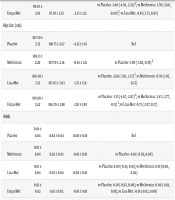
As indicated in Table 1, baseline demographic and physical characteristics, including age, height, and initial body weight, were comparable across all four study groups, with no statistically significant differences (P > 0.05). After the 8-week intervention, participants receiving empagliflozin-metformin showed a significant reduction in body weight compared to the placebo group (P = 0.015). The weight changes observed in the linagliptin-metformin and metformin-alone groups were not statistically significant. Similarly, the empagliflozin-metformin group exhibited a significant decrease in BMI relative to both the placebo and metformin monotherapy groups (P < 0.05), and a significant reduction in waist circumference compared to placebo (P < 0.05). No significant changes were observed in hip circumference or waist-to-hip ratio across any group. The empagliflozin-metformin group showed a significantly greater reduction in body weight compared to the linagliptin-metformin group (MD: -1.72 kg, 95% CI: -3.21 to -0.23; P = 0.019).
Table 1.
| Parameter and Group | Baseline | Post-treatment | Change from Baseline (Δ) | Pairwise Comparisons (MD, 95% CI) |
|---|---|---|---|---|
| Weight (kg) | ||||
| Placebo | 71.60 ± 5.74 | 72.75 ± 5.91 | +1.15 ± 1.89 | Ref. |
| Metformin | 70.91 ± 3.07 | 70.40 ± 3.28 | -0.51 ± 1.08 | vs Placebo: -1.66 (-2.87, -0.45) c |
| Lina-Met | 70.79 ± 5.27 | 69.87 ± 5.06 | -0.92 ± 1.45 | vs Placebo: -2.07 (-3.40, -0.74) d; vs Metformin: -0.41 (-1.74, 0.92) |
| Empa-Met | 70.30 ± 4.11 | 68.15 ± 5.06 | -2.15 ± 2.01 | vs Placebo: -3.30 (-4.71, -1.89) d; vs Metformin: -1.64 (-3.05, -0.23) c; vs Lina-Met: -1.72 (-3.21, -0.23) c |
| BMI (kg/m²) | ||||
| Placebo | 27.37 ± 1.35 | 28.01 ± 1.39 | +0.64 ± 0.21 | Ref. |
| Metformin | 28.11 ± 1.54 | 28.13 ± 1.64 | +0.02 ± 0.18 | vs Placebo: -0.62 (-0.78, -0.46) d |
| Lina-Met | 27.58 ± 1.94 | 27.33 ± 1.70 | -0.25 ± 0.31 | vs Placebo: -0.89 (-1.08, -0.70) d; vs Metformin: -0.27 (-0.46, -0.08) d |
| Empa-Met | 27.46 ± 1.58 | 26.58 ± 1.51 | -0.88 ± 0.25 | vs Placebo: -1.52 (-1.70, -1.34) d; vs Metformin: -0.90 (-1.08, -0.72) d; vs Lina-Met: -0.63 (-0.81, -0.45) d |
| Waist Circ. (cm) | ||||
| Placebo | 91.45 ± 4.59 | 92.30 ± 4.80 | +0.85 ± 1.02 | Ref. |
| Metformin | 90.50 ± 4.09 | 89.65 ± 4.13 | -0.85 ± 0.98 | vs Placebo: -1.70 (-2.55, -0.85) d |
| Lina-Met | 91.15 ± 3.17 | 89.45 ± 3.17 | -1.70 ± 0.89 | vs Placebo: -2.55 (-3.38, -1.72) d; vs Metformin: -0.85 (-1.68, -0.02) c |
| Empa-Met | 90.05 ± 2.01 | 87.50 ± 2.25 | -2.55 ± 1.12 | vs Placebo: -3.40 (-4.30, -2.50) d; vs Metformin: -1.70 (-2.60, -0.80) d; vs Lina-Met: -0.85 (-1.75, 0.05) |
| Hip Circ. (cm) | ||||
| Placebo | 107.50 ± 2.32 | 108.75 ± 2.67 | +1.25 ± 1.45 | Ref. |
| Metformin | 108.35 ± 2.20 | 107.70 ± 2.36 | -0.65 ± 1.21 | vs Placebo: -1.90 (-3.02, -0.78) d |
| Lina-Met | 108.40 ± 3.23 | 107.05 ± 3.03 | -1.35 ± 1.58 | vs Placebo: -2.60 (-3.85, -1.35) d; vs Metformin: -0.70 (-1.95, 0.55) |
| Empa-Met | 108.80 ± 2.62 | 106.70 ± 2.88 | -2.10 ± 1.89 | vs Placebo: -3.35 (-4.67, -2.03) d; vs Metformin: -1.45 (-2.77, -0.13) c; vs Lina-Met: -0.75 (-2.07, 0.57) |
| WHR | ||||
| Placebo | 0.84 ± 0.04 | 0.84 ± 0.04 | 0.00 ± 0.01 | Ref. |
| Metformin | 0.83 ± 0.04 | 0.82 ± 0.03 | -0.01 ± 0.01 | vs Placebo: -0.01 (-0.02, 0.00) |
| Lina-Met | 0.83 ± 0.04 | 0.83 ± 0.04 | 0.00 ± 0.01 | vs Placebo: 0.00 (-0.01, 0.01); vs Metformin: 0.01 (0.00, 0.02) |
| Empa-Met | 0.82 ± 0.02 | 0.81 ± 0.02 | -0.01 ± 0.01 | vs Placebo: -0.01 (-0.02, 0.00); vs Metformin: 0.00 (-0.01, 0.01); vs Lina-Met: -0.01 (-0.02, 0.00) |
Abbreviation: CI, 95% confidence interval; Lina-Met, linagliptin-metformin; Empa-Met, empagliflozin-metformin.
a Values are present as mean ± SD.
b MD = mean difference in change from baseline (Δ) between groups, derived from ANCOVA with baseline adjustment.
c P < 0.05.
d P < 0.01.
4.3. Biochemical Parameters
As shown in Table 2, all groups were well-matched at baseline with no significant differences in metabolic parameters (P > 0.05).
Table 2.
| Parameter | Baseline | Post-treatment | Change from Baseline (Δ) | Pairwise Comparisons (MD, 95% CI) |
|---|---|---|---|---|
| FBS (mg/dL) | ||||
| Placebo | 96.45 ± 4.11 | 99.40 ± 4.28 | +2.95 ± 2.01 | Ref. |
| Metformin | 98.40 ± 4.60 | 95.70 ± 4.64 | -2.70 ± 2.89 | vs Placebo: -5.65 (-7.89, -3.41) c |
| Lina-Met | 99.70 ± 5.40 | 93.85 ± 4.53 | -5.85 ± 4.12 | vs Placebo: -8.80 (-11.70, -5.90) c; vs Metformin: -3.15 (-6.05, -0.25) d |
| Empa-Met | 98.90 ± 6.30 | 94.05 ± 5.55 | -4.85 ± 4.01 | vs Placebo: -7.80 (-10.67, -4.93) c; vs Metformin: -2.15 (-5.02, 0.72); vs Lina-Met: 1.00 (-1.87, 3.87) |
| Fasting insulin (μIU/mL) | ||||
| Placebo | 17.16 ± 1.90 | 17.55 ± 1.43 | +0.39 ± 1.21 | Ref. |
| Metformin | 16.77 ± 2.30 | 16.01 ± 2.20 | -0.76 ± 0.98 | vs Placebo: -1.15 (-2.01, -0.29) d |
| Lina-Met | 17.05 ± 1.20 | 16.09 ± 1.38 | -0.96 ± 0.85 | vs Placebo: -1.35 (-2.18, -0.52) c; vs Metformin: -0.20 (-1.03, 0.63) |
| Empa-Met | 16.33 ± 2.21 | 15.13 ± 1.89 | -1.20 ± 1.05 | vs Placebo: -1.59 (-2.47, -0.71) c; vs Metformin: -0.44 (-1.32, 0.44); vs Lina-Met: -0.24 (-1.12, 0.64) |
| FBS/insulin ratio | ||||
| Placebo | 5.67 ± 0.61 | 5.68 ± 0.44 | +0.01 ± 0.38 | Ref. |
| Metformin | 5.94 ± 0.75 | 6.09 ± 0.87 | +0.15 ± 0.42 | vs Placebo: 0.14 (-0.15, 0.43) |
| Lina-Met | 5.85 ± 0.46 | 5.88 ± 0.54 | +0.03 ± 0.35 | vs Placebo: 0.02 (-0.26, 0.30); vs Metformin: -0.12 (-0.40, 0.16) |
| Empa-Met | 6.12 ± 0.73 | 6.29 ± 0.89 | +0.17 ± 0.41 | vs Placebo: 0.16 (0.01, 0.31) d; vs Metformin: 0.02 (-0.17, 0.21); vs Lina-Met: 0.14 (-0.05, 0.33) |
| Total cholesterol (mg/dL) | ||||
| Placebo | 186.54 ± 7.61 | 188.22 ± 8.03 | +1.68 ± 3.99 | Ref. |
| Metformin | 185.64 ± 7.56 | 182.57 ± 7.47 | -3.07 ± 4.12 | vs Placebo: -4.75 (-7.81, -1.69) c |
| Lina-Met | 185.10 ± 5.25 | 180.75 ± 6.59 | -4.35 ± 4.28 | vs Placebo: -6.03 (-9.06, -3.00) c; vs Metformin: -1.28 (-4.31, 1.75) |
| Empa-Met | 186.64 ± 8.08 | 179.05 ± 8.90 | -7.59 ± 5.11 | vs Placebo: -9.27 (-12.58, -5.96) c; vs Metformin: -4.52 (-7.83, -1.21) c; vs Lina-Met: -3.24 (-6.55, 0.07) |
| Triglycerides (mg/dL) | ||||
| Placebo | 158.30 ± 13.39 | 160.51 ± 12.61 | +2.21 ± 5.78 | Ref. |
| Metformin | 159.02 ± 12.36 | 155.09 ± 10.73 | -3.93 ± 7.05 | vs Placebo: -6.14 (-10.74, -1.54) d |
| Lina-Met | 160.18 ± 12.79 | 152.75 ± 8.31 | -7.43 ± 8.91 | vs Placebo: -9.64 (-14.92, -4.36) c; vs Metformin: -3.50 (-8.78, 1.78) |
| Empa-Met | 159.79 ± 10.65 | 149.40 ± 11.64 | -10.39 ± 7.66 | vs Placebo: -12.60 (-17.68, -7.52) c; vs Metformin: -6.46 (-11.54, -1.38) d; vs Lina-Met: -3.35 (-6.12, -0.58) c |
| LDL-C (mg/dL) | ||||
| Placebo | 93.37 ± 9.57 | 96.46 ± 9.53 | +3.09 ± 4.21 | Ref. |
| Metformin | 98.43 ± 7.49 | 92.01 ± 8.43 | -6.42 ± 5.98 | vs Placebo: -9.51 (-13.89, -5.13) c |
| Lina-Met | 97.16 ± 10.77 | 90.15 ± 8.82 | -7.01 ± 7.11 | vs Placebo: -10.10 (-15.02, -5.18) c; vs Metformin: -0.59 (-5.51, 4.33) |
| Empa-Met | 96.31 ± 10.36 | 89.11 ± 5.69 | -7.20 ± 8.02 | vs Placebo: -10.29 (-15.33, -5.25) c; vs Metformin: -0.78 (-5.82, 4.26); vs Lina-Met: -0.19 (-5.23, 4.85) |
| HDL-C (mg/dL) | ||||
| Placebo | 52.28 ± 5.18 | 50.09 ± 5.01 | -2.19 ± 2.11 | Ref. |
| Metformin | 48.27 ± 7.61 | 51.77 ± 5.57 | +3.50 ± 4.88 | vs Placebo: 5.69 (2.52, 8.86) c |
| Lina-Met | 46.53 ± 6.19 | 52.16 ± 5.34 | +5.63 ± 4.29 | vs Placebo: 7.82 (4.72, 10.92) c; vs Metformin: 2.13 (-0.97, 5.23) |
| Empa-Met | 47.89 ± 9.38 | 54.88 ± 5.99 | +6.99 ± 5.67 | vs Placebo: 9.18 (5.69, 12.67) c; vs Metformin: 3.49 (0.00, 6.98) d; vs Lina-Met: 1.36 (-2.13, 4.85) |
| VLDL (mg/dL) | ||||
| Placebo | 34.04 ± 3.79 | 33.02 ± 3.11 | -1.02 ± 2.45 | Ref. |
| Metformin | 33.53 ± 2.53 | 32.61 ± 2.60 | -0.92 ± 1.89 | vs Placebo: 0.10 (-1.57, 1.77) |
| Lina-Met | 32.01 ± 3.29 | 31.88 ± 3.18 | -0.13 ± 1.78 | vs Placebo: 0.89 (-0.77, 2.55); vs Metformin: 0.79 (-0.87, 2.45) |
| Empa-Met | 33.95 ± 3.45 | 30.71 ± 2.60 | -3.24 ± 2.55 | vs Placebo: -2.22 (-4.13, -0.31) d; vs Metformin: -2.32 (-4.23, -0.41) d; vs Lina-Met: -3.11 (-5.02, -1.20) c |
Abbreviation: CI, 95% confidence interval; Lina-Met, linagliptin-metformin; Empa-Met, empagliflozin-metformin.
a Values are present as mean ± SD.
b MD = mean difference in change from baseline (Δ) between groups, derived from ANCOVA with baseline adjustment.
c P < 0.01.
d P < 0.05.
Glycemic Profile: Both linagliptin-metformin and empagliflozin-metformin significantly reduced fasting blood sugar (FBS) versus placebo (P < 0.05). Metformin alone showed a non-significant reduction (P = 0.077). All active treatments significantly reduced fasting insulin levels compared to placebo (P < 0.05), with the most substantial decrease recorded in the empagliflozin-metformin group (P < 0.001). Only empagliflozin-metformin significantly improved the glucose-to-insulin ratio (P = 0.036).
Lipid Profile: Both combination therapies significantly reduced total cholesterol versus placebo (P < 0.05). Empagliflozin-metformin significantly increased HDL (P = 0.036) and significantly reduced LDL (P = 0.031) and triglycerides (P = 0.010) compared to placebo. VLDL levels did not change significantly in any group. The reduction in triglycerides was significantly greater with empagliflozin-metformin compared to linagliptin-metformin (MD: -3.35 mg/dL, 95% CI: -6.12 to -0.58; P = 0.013).
4.4. Hormonal Parameters
As detailed in Table 3, no significant differences in serum levels of FSH, LH, E2, PRL, DHEA-S, or SHBG were observed between any active treatment group and the placebo group after the intervention (P > 0.05). A non-significant decrease in the LH/FSH ratio was noted in the empagliflozin-metformin group versus placebo. In contrast, serum concentrations of anti-Müllerian hormone (AMH), leptin, and total testosterone were significantly lower in all groups receiving active drug therapy compared to the placebo group (P < 0.05). Furthermore, the empagliflozin-metformin combination led to a significantly greater reduction in these three parameters compared to metformin monotherapy (P < 0.05). Importantly, empagliflozin-metformin also led to a significantly greater reduction in AMH (MD: -0.62 ng/mL, 95% CI: -1.15 to -0.09; P = 0.018) and leptin (MD: -0.79 ng/mL, 95% CI: -1.45 to -0.13; P = 0.015) compared to the linagliptin-metformin combination.
Table 3.
| Parameter | Baseline | Post-treatment | Change from Baseline (Δ) | Pairwise Comparisons (MD, 95% CI) |
|---|---|---|---|---|
| Total testosterone (ng/mL) | ||||
| Placebo | 1.49 ± 0.51 | 1.66 ± 0.50 | +0.17 ± 0.22 | Ref. |
| Metformin | 1.38 ± 0.51 | 1.14 ± 0.44 | -0.24 ± 0.19 | vs Placebo: -0.41 (-0.62, -0.20) c |
| Lina-Met | 1.32 ± 0.48 | 0.89 ± 0.35 | -0.43 ± 0.25 | vs Placebo: -0.60 (-0.83, -0.37) c; vs Metformin: -0.19 (-0.42, 0.04) |
| Empa-Met | 1.21 ± 0.50 | 0.77 ± 0.39 | -0.44 ± 0.23 | vs Placebo: -0.61 (-0.83, -0.39) c; vs Metformin: -0.20 (-0.42, 0.02); vs Lina-Met: -0.01 (-0.23, 0.21) |
| AMH (ng/mL) | ||||
| Placebo | 6.84 ± 1.39 | 7.44 ± 1.48 | +0.60 ± 0.41 | Ref. |
| Metformin | 6.79 ± 0.86 | 6.47 ± 1.03 | -0.32 ± 0.38 | vs Placebo: -0.92 (-1.32, -0.52) c |
| Lina-Met | 7.04 ± 1.06 | 5.78 ± 0.91 | -1.26 ± 0.52 | vs Placebo: -1.86 (-2.30, -1.42) c; vs Metformin: -0.94 (-1.38, -0.50) c |
| Empa-Met | 7.27 ± 1.20 | 5.16 ± 1.01 | -2.11 ± 0.61 | vs Placebo: -2.71 (-3.18, -2.24) c; vs Metformin: -1.79 (-2.26, -1.32) c; vs Lina-Met: -0.62 (-1.15, -0.09) c |
| Leptin (ng/mL) | ||||
| Placebo | 23.61 ± 0.89 | 23.96 ± 0.82 | +0.35 ± 0.31 | Ref. |
| Metformin | 24.15 ± 0.94 | 23.20 ± 0.88 | -0.95 ± 0.41 | vs Placebo: -1.30 (-1.65, -0.95) c |
| Lina-Met | 24.05 ± 0.81 | 22.58 ± 1.03 | -1.47 ± 0.52 | vs Placebo: -1.82 (-2.20, -1.44) c; vs Metformin: -0.52 (-0.90, -0.14) c |
| Empa-Met | 24.30 ± 1.06 | 21.79 ± 1.10 | -2.51 ± 0.58 | vs Placebo: -2.86 (-3.26, -2.46) c; vs Metformin: -1.56 (-1.96, -1.16) c; vs Lina-Met: -0.79 (-1.45, -0.13) d |
| SHBG (nmol/L) | ||||
| Placebo | 38.31 ± 4.78 | 39.70 ± 4.90 | +1.39 ± 2.11 | Ref. |
| Metformin | 35.55 ± 4.30 | 37.93 ± 6.02 | +2.38 ± 3.45 | vs Placebo: 0.99 (-1.45, 3.43) |
| Lina-Met | 37.24 ± 6.20 | 40.65 ± 5.71 | +3.41 ± 3.89 | vs Placebo: 2.02 (-0.65, 4.69); vs Metformin: 1.03 (-1.64, 3.70) |
| Empa-Met | 36.08 ± 5.65 | 41.19 ± 5.48 | +5.11 ± 3.12 | vs Placebo: 3.72 (1.32, 6.12) d; vs Metformin: 2.73 (0.33, 5.13) d; vs Lina-Met: 1.70 (-0.70, 4.10) |
| Total testosterone (ng/ml) | ||||
| Placebo | 1.49 ± 0.51 | 1.66 ± 0.50 | +0.17 ± 0.22 | Ref. |
| Metformin | 1.38 ± 0.51 | 1.14 ± 0.44 | -0.24 ± 0.19 | vs Placebo: -0.41 (-0.62, -0.20) c |
| Lina-Met | 1.32 ± 0.48 | 0.89 ± 0.35 | -0.43 ± 0.25 | vs Placebo: -0.60 (-0.83, -0.37) c; vs Metformin: -0.19 (-0.42, 0.04) |
| Empa-Met | 1.21 ± 0.50 | 0.77 ± 0.39 | -0.44 ± 0.23 | vs Placebo: -0.61 (-0.83, -0.39) c; vs Metformin: -0.20 (-0.42, 0.02); vs Lina-Met: -0.01 (-0.23, 0.21) |
Abbreviation: CI, 95% confidence interval; Lina-Met, linagliptin-metformin; Empa-Met, empagliflozin-metformin.
a Values are present as mean ± SD.
b MD = mean difference in change from baseline (Δ) between groups, derived from ANCOVA with baseline adjustment.
c P < 0.01.
d P < 0.05.
5. Discussion
This study, to our knowledge, is the first to comprehensively evaluate and compare the efficacy of two distinct combination therapies incorporating metformin against both metformin monotherapy and a placebo in infertile women with PCOS undergoing ICSI. Current evidence indicates that 38 - 88% of individuals with PCOS present with overweight or obesity, conditions known to exacerbate both metabolic and reproductive dysfunction in this population (17). The anthropometric changes observed in our empagliflozin-metformin group are consistent with previously documented effects of SGLT-2 inhibitors on body composition. Several randomized clinical trials have reported that treatment with SGLT-2 inhibitors in overweight/obese women with PCOS leads to significant benefits in terms of weight reduction and fasting glucose metrics (8, 18-20). The mechanism of empagliflozin involves inhibiting glucose reabsorption in the kidneys, resulting in increased urinary glucose loss and stimulation of fat breakdown. This dual action produces a net caloric deficit of 200 - 300 kcal/day, ultimately leading to weight reduction and BMI improvement (21). The critical importance of weight management in PCOS treatment has been well-established, with even modest reductions capable of producing substantial clinical and metabolic benefits (22). The superior metabolic outcomes observed in our empagliflozin-metformin group, particularly regarding glycemic control and lipid profile enhancement, likely stem from this combined effect of weight reduction and improved insulin sensitivity.
Beyond mere weight loss, the specific molecular pathways engaged by these combinations are relevant to the scope of this journal. Empagliflozin, via SGLT-2 inhibition, may activate adenosine monophosphate-activated protein kinase (AMPK) in peripheral tissues — a key energy sensor also targeted by metformin (23). This synergistic AMPK activation could enhance fatty acid oxidation, improve mitochondrial function, and reduce hepatic gluconeogenesis more potently than either drug alone. Linagliptin, by inhibiting DPP-4, increases circulating levels of glucagon-like peptide-1 (GLP-1), which enhances glucose-dependent insulin secretion from pancreatic β-cells and may exert direct effects on ovarian steroidogenesis and inflammation through GLP-1 receptors expressed in ovarian tissue (24). Our findings of differential hormonal improvements (greater reduction in testosterone and AMH with empagliflozin-metformin) suggest that the weight-loss-independent, AMPK-centric pathway may more effectively dampen ovarian hyperandrogenism and potentially modulate follicular arrest compared to the incretin-focused pathway.
The observed reductions in insulin levels across combination therapy groups hold particular significance for PCOS pathophysiology. Hyperinsulinemia represents a key driver of ovarian hyperandrogenism through direct stimulation of theca cell androgen production (25). Our findings suggest that metformin-based combinations effectively address this fundamental pathophysiological mechanism. The concomitant reduction in AMH levels, potentially indicating improved follicular dynamics (26), alongside evidence from animal models demonstrating ovarian histological improvement with empagliflozin-metformin combination (27), provides compelling rationale for further investigation into endocrine effects of these regimens.
The superior lipid-modifying effects of empagliflozin-metformin merit special consideration. While rodent models have limitations in replicating human lipid metabolism (28, 29), our clinical data align with proposed mechanisms where SGLT-2 inhibition promotes lipolysis and reduces circulating triglyceride-rich lipoproteins, possibly via enhanced VLDL catabolism (29).
This study has several limitations. First, the sample size was relatively small and the study was designed as a pilot, limiting the generalizability of the findings and the power to detect smaller, yet clinically meaningful, differences between the active combination groups. Second, the intervention duration was short (8 weeks); longer-term studies are needed to confirm the sustainability and safety of these effects. Third, reproductive outcomes (oocyte and embryo metrics, pregnancy rates) were not assessed in this phase. The primary goal was metabolic/hormonal priming; the impact on assisted reproductive technology (ART) success requires dedicated investigation. Fourth, despite using ANCOVA, residual confounding from unmeasured factors (e.g., dietary composition, physical activity intensity) cannot be ruled out. Finally, the lack of adjustment for multiple comparisons across all secondary outcomes increases the risk of type I errors, and findings should be interpreted as exploratory.
5.1. Conclusions
This study demonstrates the superior efficacy of both empagliflozin-metformin and linagliptin-metformin over metformin monotherapy in PCOS patients undergoing ICSI, with the empagliflozin-metformin combination showing the broadest benefits across anthropometric, metabolic, and hormonal parameters. Furthermore, empagliflozin-metformin was statistically superior to linagliptin-metformin in reducing body weight, triglycerides, anti-Müllerian hormone, and leptin levels. These findings highlight key future directions: larger randomized trials with extended follow-up to confirm long-term safety and efficacy, investigation into the molecular mechanisms behind these benefits, and the development of personalized treatment algorithms based on individual metabolic profiles for PCOS management. Future trials should directly compare these combinations over longer durations and include clinical reproductive outcomes such as oocyte quality, embryo development, and pregnancy/live birth rates to establish a clearer hierarchy of efficacy and clinical utility.