
1. Background
The fertility role as the most important phenomenon determining demographic oscillations has caused the studies related to it to be of significant importance compared to other demographic phenomena (1, 2). Proper fertility acceleration (Tempo) is the average waiting time for a woman's next birth and has a significant role in family provision. A short pregnancy interval is associated with health and perinatal outcomes, including infant, child, and maternal mortality. Demographic policies should be to increase the fertility rate or at least maintain it in the current conditions, but this work should be accompanied by maintaining women's well-being, peace, and health, attention to education, and employment. The first birth represents the transition of a woman to motherhood. It has a vital role in the future life of every woman and is directly related to fertility. The interval between marriage and the birth of the first child in Iran reached 4.5 years, and the age of succession in 2018, and if the delay in having children increases, the fertility rate will decrease, and it is considered a kind of damage in the demographic field. On the other hand, a recent study in Kerman (Iran) showed that the average first birth interval was 2.5 years. Almost all women remember their first fertility. On the other hand, women who have very short intervals between pregnancies are more prone to complications such as premature birth, perinatal death, and intrauterine growth restriction in their first pregnancy (3-10).
It is more critical for health planners and families to study the dynamics of birth distance, identify the factors and their effects on the pregnancy interval and determine the optimal space (4). The optimal birth spacing, the distance between a child and his or her older or younger sibling, is not universally agreed upon. There is a general rule about the age gap between two children, which is that, from the point of view of education, the age gap between two children should be such that they can play together and understand each other (8).
According to previous studies, the best interval between deliveries is 23 - 28 months to prevent adverse perinatal outcomes (11).
The timing of first childbearing affects the number of children a woman will have during her reproductive period without active birth control; a woman who begins childbearing early in life tends to have more children than those who start late (12). With the decrease in population growth in recent decades, we will see a decrease in the young population in the future (1). According to the population reference bureau report, Iran is among the top twenty countries with the largest populations. However, the total fertility rate in Iran has decreased significantly (13).
Because a delay in the first birth can reduce a couple's fertility, it is essential to understand the factors that increase the distance between marriage and the first birth (7).
2. Objectives
This study focuses on the beginning of the family formation process, i.e. the transition to the first birth, investigating factors affecting the first birth interval (FBIN) using survival models. We also calculate the tempos of fertilities on first to third children in women of Semnan (Iran).
3. Methods
3.1. Study Population
This cross-sectional study investigated the fertility history of 600 married women aged 15 to 49 years in Semnan (Iran). Individuals were selected using a multistage random sampling method from the list of Health Centers in 2018 (April to October). At first, 18 Health Centers were selected, then households were selected systematically and randomly within each Health Center. Finally, a married woman (15 - 49 years) with at least one pregnancy was selected randomly within each household.
Trained interviewers went to the selected women's homes and completed the questionnaire, including their demographic characteristics and fertility history through face-to-face interviews. Women who did not agree to cooperate with the study and had no deliveries were excluded. Therefore, the final sample included 573 women. The histories up to the third pregnancy of each woman were included in this study.
A live birth in the first delivery was successful, and stillbirths or abortions were considered censored. The event time was defined as the interval between marriage and a live birth or censoring (months). The explanatory variables were age at marriage (year), the number of children expected (NCEX), mother and father education, mother occupation, father occupation, economic status, place of residence, and desire to have children (DHCH). The data have been collected in the form of a research project approved by Semnan University of Medical Sciences after being approved by the university's research ethics committee.
3.2. Ethical Considerations
This research has been approved by Semnan University of medical sciences (Ethical Code: IR.SEMUMS.REC.1396.278). Written informed consent was obtained from all the participants.
3.3. Statistical Analysis
The present study defined event time as the interval between marriage and first live birth or censored (months). In this case, Cox regression (proportional hazard model) is appropriate to assess the effect of variables on survival or hazard rate. We used the Log-rank test (14) to compare survival between different groups.
To answer the following question, how much is the fertility acceleration (Tempo) between births, and what factors affect the first birth interval? The tempo was calculated, and also we used the Cox model to select effective covariates.
Tempo is the mean waiting time for a woman's next delivery. If this time was long, it meant a low fertility rate and vice versa. There are different methods to estimate the tempo. Everyone uses the time gap between two births. Tukey's method was used in this research and calculated separately for each birth. This method is used by Rodriges and Hambgraft (15). The three averages will be used for calculating the tempo.
These three average is like (q1+q2+q3)/4, where q1,q2, and q3 are 1st, 2nd, and 3rd quarters of the time birth distribution. All analyses were performed using SPSS 17.0 with a significance level of %5.
4. Results
Out of 600 mothers, seven women did not agree to participate in this study, and 20 women were excluded from the study without giving birth. The median (first – third quartile) time of FBIN, the age of women and males at the first marriage were estimated to be 24.0 (12 - 44) months, 20 (18 - 23), and 25 (22 - 28) y, respectively. Also, the mean (SD) of the number of children expected was 2.19 (0.96). 27.1% of the mothers were under diploma, and fathers were 26.9%. 1.4% of fathers were jobless, and most mothers (73.8%) were housewives. Conversely, most mothers lived in urban (92.7%) and had a low desire to have children (73.3%). The results also showed significant differences between the median times to first birth in mothers' and fathers' education, mothers' occupation, and situations of desire to have children.
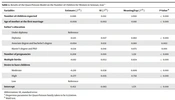
The proportional assumption for the Cox model was checked, and the final results are shown in Table 1.
Table 1.
Results of Cox Model on Time to the First Birth for Semnan Women
| Variables | Estimate, β∆ | SE, β∆ | Meaning/ Exp, β∆ | CI | P-Value |
|---|---|---|---|---|---|
| The number of children expected | 0.143 | 0.048 | 1.154 | 1.05 - 1.27 | 0.003 |
| Age of father at the first marriage | 0.040 | 0.009 | 1.041 | 1.02 - 1.06 | < 0.001 |
| Mother occupation | |||||
| Self-employment | 0.107 | 0.191 | 1.113 | 0.77 - 1.62 | 0.574 |
| Government employee | -0.317 | 0.105 | 0.728 | 0.59 - 0.90 | 0.003 |
| Housewife | Reference | - | - | - | |
| Desire to have children | |||||
| Moderate | -0.216 | 0.132 | 0.806 | 0.62 - 1.04 | 0.101 |
| High | -0.418 | 0.126 | 0.659 | 0.51 - 0.84 | 0.001 |
| Low | Reference | - | - | - |
Abbreviations: CI, confidence interval; SE, standard error.
The backward method was used to determine explanatory variables affecting the tempo. In the backward method, all factors were included in the model, and only the significant variables remained (16). Accordingly, only NCEX, father age at the first marriage (FAM), mother occupation, and DHCH had a significant effect on time to the first birth. The number of children expected and FAM decrease in the interval, and the rest variables increase in the interval. So, government-employee mothers are less likely to get pregnant than housewives (about 27%).
Table 2 shows the acceleration of fertility (Tempo) for three births in Semnan Women. Accordingly, the lowest estimated tempo is for third births (68.63 months), and the highest is for the first births (26 months).
Table 2.
Estimation of Tempo Index in Each Birth Order of Semnani Iranian Mothers Using Tukey's Method
| Birth Order | First Quarter | Second Quarter | Third Quarter | Tempo |
|---|---|---|---|---|
| First birth | 12.00 | 24.00 | 44.00 | 26.00 |
| Second birth | 36.00 | 60.00 | 83.00 | 59.75 |
| Third birth | 46.50 | 66.00 | 96.00 | 68.63 |
5. Discussion
This paper looked at the duration of the interval between births and the factors determinant of the first birth interval in Semnan City, Iran. We estimated the average waiting time for the next birth of a woman (the tempo of fertility). One of the differences between our study and other works is the tempo presentation for the first birth. We estimated the lowest tempo for third births and the highest for the first births because the interpretation of tempo is the opposite of its numerical ranks. In a 2014 study, the highest tempo was estimated for the sixth birthday (28.5 months) and the lowest for the seventh (60 months) (5). On the other hand, in a study in 2011, the highest tempo was shown for the sixth birthday (32.63 months) and the lowest for the second birthday (48.25 months) (17). The biggest difference between our work and two recent studies is the use of urban and rural women. Children with a large age difference (with a difference of 6 and 7 years) cannot play with each other, so even at older ages, parents have to play with the second or third child. That is, parents with 2 to 3 children with an age gap of 6 and 7 years should be said to have three children to play with each of them. If the distance is small, they play together (8). Also, some studies showed that intervals shorter than 36 months substantially increase the probability of spontaneous preterm delivery and adverse fetal and infant outcomes, which is much higher at intervals below 24 months and among younger women (18, 19). To reduce the risk of adverse maternal and child health outcomes, the most recent World Health Organization (WHO) recommendation for a healthy pregnancy interval is at least two years (24 months) or a birth-to-birth interval of 33 months (20). A recent study in Ethiopia showed that married women waited an average of three years for their first, second, third, and fourth child (21). In our study, those intervals (except the first) are larger than 36, and there isn't much to worry about.
Age at first marriage is an essential variable in most fertility studies because it indicates the onset of a woman's exposure to sexual intercourse and childbearing, and the increasing age of the mother plays a major role in reducing fertility (1, 22-25). Also, a study showed that in all regions, the risk of neonatal mortality was significantly higher for infants with mothers under 16 years of age; however, there was marked heterogeneity in patterns between regions (26).
But in our study, only the father's age at marriage had a significant (negative) effect on the gap of first delivery; because the Iranian people are very traditional, and the age of mothers and fathers have much relation as the results also show, increasing the age of marriage has led to a decrease in the interval between first births. This can be justified by the fact that a woman's fertility period is limited, and this time becomes more limited for women who marry later, so they try to give birth to their first child in a shorter time after marriage.
In addition, results indicate that the decrease in public sector employment, which is particularly appealing to women, may have contributed to the rise in fertility but is unlikely to be its main cause. We know that education is related to the governmental job. When women spend more time at school or at work, this is likely to affect the age of marriage and the length of time between marriage and first birth (23). Some studies have shown that reduced employment for women may lead to increased fertility (27, 28).
Economic status had not been signed at the interval of the first birth. This is consistent with the findings of some studies (7, 27). But a Korean study suggests that the government's policy to support childbirth may have led to increased fertility (29).
We could not find many studies on the first birth interval. On the other hand, there were more studies on other birth intervals. For example, two studies found a significant effect of parents' age difference, mother's education, mother's occupation, father's education, father's occupation, and gender of the first child on the second interval of birth (5, 17).
5.1. Conclusions
Due to the decrease in the number of births in the past several years and also the prediction of a decrease in the coming years, one of the ways to reduce the birth interval and, as a result, increase the fertility rate is to reduce the age of marriage among young people and in general to marry on time among young people. Therefore, the government must consider special privileges for mothers so that young women and men are more eager to have children.
5.2. Study Limitations
Some factors that may have a significant contribution to first birth intervals, such as menstrual status and age at menarche, were not considered. Examining the effect of these factors may be appropriate to better understand the dynamics of the time to the first birth after marriage in the country. In addition, it is necessary to conduct more studies in each region of Iran and investigate other factors not addressed in this research.
5.3. Study Application
Knowledge about the importance of FBIN should be conveyed more by health services to couples to help them manage child spacing and fertility.