
1. Background
Food insecurity is defined as follows: Uncertain or limited access to adequate nutritious and safe foods or uncertain or limited ability to acquire acceptable foods in socially acceptable ways (1-6). Food insecurity is common in developing countries and is associated to the physical well-being of the households (7). Today, more than 1 billion people are very poor and suffer from food insecurity worldwide (8). The world’s population is predicted to grow to approximately 9.2 billion by 2050. Food insecurity is an international concern because it weakens social and economic development, causes environmental demolition, raises the spread of diseases, and eventually, threatens global peace (9). Disease and malnutrition have an interaction in an important feedback loop, affecting food and nutrition security (10). Food insecurity can be both a by-product of and a precursor to poverty and disease. Individuals who are food insecure may eat cheap food, skip meals, and experience stress. Food security can help improve patients’ health in the long term and may reduce their need for clinical care (11). There are some biological mechanisms in which food insecurity and poor nutrition lead to poor health (12). Infectious agents and parasites can interfere in the equilibrium between the external and internal environment, determining major or minor actuation of factors related to the nutritional state. Host nutritional status has an important role in the susceptibility to viral infections, bacteria, and parasites. Infection accelerates the appearance of signs and symptoms of nutrition deficiencies in the undernourished individuals and can exacerbate the evolution of the infection process; they both interact synergistically and are a public health problem, mainly in areas of poor basic sanitation; poverty and ignorance also influence eating habits (13). Infections can lead to loss of appetite, decreased nutrient utilization, and efficiency of food, and increased energy requirements (14). Parasites are organisms that feed from other living organisms known as hosts. Parasites may be transmitted from host to host through consumption of contaminated water and food, or by anything that has touched the feces of the animal or the infected person (15). Intestinal parasites may be associated with anemia, a decrease in food intake, endogenous nutrient loss, and malabsorption. Although it is acknowledged that parasites may lead to malnutrition, the extent to that malnutrition itself causes increased parasite contamination (16).
Food insecurity is related to a range of poor health implications in adults, adolescents, and children. It also affects both physical and psychosocial health outcomes and leads to overall poorer health among food insecure households (17).
The prevalence of food insecurity in various regions of the world is different. In a systematic review and meta-analysis conducted in Iran, the prevalence of food insecurity in households was 49% (18). In Iran, no study has investigated the association between food insecurity and infectious and parasitic diseases. However, in 2 studies conducted in Iran, the prevalence of food insecurity in the patients with upper gastrointestinal cancers in Tehran, and in those with Type 2 diabetes in Shiraz was reported to be 69.17% and 66.7%, respectively (19, 20).
In Alaska, a high prevalence of public health influence of food insecurity in adults with a range of chronic diseases was found (21). In the United States and Canada, significant associations were found between food insecurity and poor or fair self-rated health and multiple chronic conditions. In Canada, the severity of household food insecurity was associated with poorer self-rated health and chronic conditions. The prevalence of most chronic conditions rose with worsening household food insecurity (22, 23).
Food insecurity is associated with a number of socioeconomic factors (21, 24). Food insecurity is the converse state and has important consequences for the nutrition and health of the individuals.
Women require special attention in discussions of food insecurity and its effect on nutrition, health, and behavior. Considering the traditional role of women as caregivers and preparers of food for the family, more support and attention should paid to them as a special group to evaluate the effect, consequences, and field for intervention in food insecurity (25).
This study aimed at determining the association between food insecurity and self-reported history of infectious and parasitic diseases among mothers in Zahedan, southeast of Iran.
2. Methods
2.1. Sampling Method
In the present cross-sectional study, 2160 households in Zahedan were investigated. The city of Zahedan was divided into 5 geographical areas (North, South, East, West, and Center). Two health care centers were randomly selected from each geographical area. Each Center covered a number of household blocks; the blocks were numbered systematically, and then, considering the sample size required, blocks were randomly selected to be included in the study.
2.2. Sociodemographic Data
History of infectious (acute/chronic) and parasitic diseases among mothers was assessed by asking them about the history of infectious and parasitic diseases in the last 3 months. Most mothers with positive response to these questions were visited by a physician or referred for laboratory tests to confirm their disease.
Sociodemographic data including ethnicity, employment status, age, and education level of mothers were collected through a general questionnaire in a face to face interview.
2.3. Household Food Insecurity
Food insecurity of the household was assessed through USDA 18-item food security questionnaire (26); this questionnaire was validated in some other studies conducted in Iran (27, 28). This questionnaire, which evaluated food security status of the households in the last 12 months, was completed through interviews with the mother or the person responsible for preparing food for the family; the maximum score of this questionnaire is 18. To determine food security of the households, based on the obtained score, the households were classified as follow: scores 0 to 2: food secure; 3 to 7: food insecure without hunger; 8 to 12: food insecure with moderate hunger; and 13 to 18: food insecure with severe hunger (24, 27).
2.4. Data Analysis
Data were analyzed using SPSS 20 (SPSS Inc. Chicago, IL, USA). The prevalence of food insecurity of the households and the self-reported history of infectious and parasitic diseases in mothers was determined. The association between household food insecurity with self-reported history of infectious and parasitic diseases in mothers as well as sociodemographic variables was assessed. Descriptive statistical methods and chi-square test were used. Finally, variables associated with food insecurity and self-reported history of infectious and parasitic diseases along with food insecurity variable in mothers were entered into logistic regression model. Significance level was set at < 0.05.
Because various factors may influence the status of household food security and some diseases including infectious and parasitic diseases and may also have a potential confounding effect on the relationship between food insecurity and the risk of these diseases, some of these factors such as ethnicity, employment status, age, and education level of the mothers were included in all models.
3. Results and Discussion
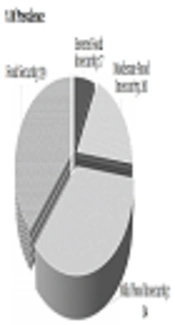
In the present study, food insecurity in the investigated households was 58.8%, food insecurity without hunger was 31.7%, food insecurity with moderate hunger found to be 19.7%, and food insecurity with severe hunger was 7.4%. The prevalence of self-reported history of infectious and parasitic diseases in mothers was 11.5% and 1.1%, respectively.
For statistical analyses, the different categories of food insecurity were integrated into 2 categories and then household food security status as food secure and food insecure was determined.
Due to the limited number of other ethnic groups present in the study, they were integrated into Fars ethnicity.
Statistical analyses were performed in several stages. First, the relationship between household food insecurity and history of infectious and parasitic diseases in mothers with mentioned variables were measured with chi-square test (Table 1).
Table 1.
Association Between Household Food Insecurity and Self-Reported History of Infectious and Parasitic Diseases in Mothers with Selected Variablesa
| Variable | Food Security Status | χ2 P Value | Self-Reported History of Infectious Diseases | χ2 P Value | Self-Reported History of Parasitic Diseases | χ2 P Value | Total | |||
|---|---|---|---|---|---|---|---|---|---|---|
| Food secure | Food insecure | Yes | No | Yes | No | |||||
| Maternal education | < 0.001 | 0.008 | 0.013 | |||||||
| Illiterate | 22 (14.5) | 130 (85.5) | 27 (17.8) | 125 (82.2) | 3 (2.0) | 149 (98.0) | 152 (100) | |||
| Elementary | 110 (24.0) | 348 (76.0) | 51 (11.1) | 407 (88.9) | 11 (2.4) | 447 (97.6) | 458 (100) | |||
| Secondary school | 138 (35.7) | 249 (64.3) | 51 (13.2) | 336 (86.8) | 3 (0.8) | 384 (99.2) | 387 (100) | |||
| High school and diploma | 286 (42.4) | 388 (57.6) | 82 (12.2) | 592 (87.8) | 3 (0.4) | 671 (99.6) | 674 (100) | |||
| University education | 335 (68.5) | 154 (31.5) | 38 (7.8) | 451 (92.2) | 3 (0.6) | 486 (99.4) | 489 (100) | |||
| Mother’s employment status | < 0.001 | 0.013 | 0.787 | |||||||
| Housekeeper | 664 (36.3) | 1164 (63.7) | 224 (12.3) | 1604 (87.7) | 19 (1.0) | 1809 (99.0) | 1828 (100) | |||
| Employed | 227 (68.4) | 105 (31.6) | 25 (7.5) | 307 (92.5) | 4 (1.2) | 328 (98.8) | 332 (100) | |||
| Maternal age, y | 0.467 | 0.095 | 0.975 | |||||||
| ≤ 26 | 289 (39.6) | 441 (60.4) | 97 (13.3) | 633 (86.7) | 8 (1.1) | 722 (98.9) | 730 (100) | |||
| 27 - 35 | 332 (41.5) | 468 (58.5) | 92 (11.5) | 708 (88.5) | 8 (1.0) | 792 (99.0) | 800 (100) | |||
| ≥ 35 | 270 (42.9) | 360 (57.1) | 60 (9.5) | 570 (90.5) | 7 (1.1) | 623 (98.9) | 630 (100) | |||
| Ethnicity | < 0.001 | < 0.001 | 0.071 | |||||||
| Fars (and other ethnic) | 723 (48.2) | 777 (51.8) | 143 (9.5) | 1357 (90.5) | 12 (0.8) | 1488 (99.2) | 1500 (100) | |||
| Baluch | 168 (25.5) | 492 (74.5) | 106 (16.1) | 554 (83.9) | 11 (1.7) | 649 (98.3) | 660 (100) | |||
| Total | 891 (41.2) | 1269 (58.8) | 249 (11.5) | 1911 (88.5) | 23 (1.1) | 2137 (98.9) | 2160 (100) | |||
aValues are expressed as No. (%).
Then, the association between household food insecurity with self-reported history of infectious and parasitic diseases in mothers was determined.
Based on the results of the chi-square test, there was a statistically significant association between household food insecurity and self-reported history of infectious diseases in mothers with ethnicity, employment status, and education level of mothers (P < 0.05), but the association with age of the mothers was not significant.
Also, a statistically significant association was obtained between self-reported history of parasitic disease in mothers and their education level, but the association between self-reported history of parasitic disease in mothers and their ethnicity, employment status, and age was not significant (Table 1).
Baluch ethnics had higher (74.5%) food insecurity than the Fars (51.8%), and also self-reported history of infectious diseases in mothers of Baluch households (16.1% vs. 9.5%) was higher (Table 1).
The highest prevalence of food insecurity (85.5%) and self-reported history of infectious diseases in mothers (17.8%) was observed in households in which the mother was illiterate. The highest prevalence of self-reported history of parasitic diseases was observed in mothers with elementary education (2.4%) and illiterate mothers (2.0%).
There was higher household food insecurity (63.7% vs. 31.6%) and self-reported history of infectious diseases in those mothers (12.3% vs. 7.5%) who were housewives (Table 1).
The assessment of association between household’s food insecurity and self-reported history of infectious and parasitic diseases in mothers, using chi-square test, revealed that this relationship was significant (P < 0.05). Mothers in food insecure households had higher self-reported history of infectious (76.7%) and parasitic diseases (87.0%) compared to mothers of food secure households.
The comorbidity of food insecurity with history of infectious and parasitic diseases in mothers was conducted by means of logistic regression model, and crude OR was determined (Table 2).
Table 2.
Crude OR for the Association Between Household Food Insecurity with Self-Reported History of Infectious And Parasitic Diseases in Mothers of Households (N = 2160)
| Variable | No. | Food Insecuritya | P Value | |
|---|---|---|---|---|
| No. (%) | Crude OR (95% CI) | |||
| Self-reported history of Infectious diseases (acute/chronic) | ||||
| Yes | 249 | 191 (76.7) | 2.54 (1.87 - 3.46) | < 0.001 |
| No | 1911 | 1078 (56.4) | 1.00 | |
| Self-reported history of Parasitic diseases | ||||
| Yes | 23 | 20 (87.0) | 4.74 (1.40 - 15.99) | 0.012 |
| No | 2137 | 1249 (58.4) | 1.00 | |
Abbreviations: OR, Odds Ratio; CI, Confidence Interval.
aReference category is: food secure.
Ultimately, variables associated with food insecurity and self-reported history of infectious and parasitic diseases in mothers along with food insecurity variable were entered into the logistic regression model. Significance level was set at < 0.05.
In the logistic regression model, food insecurity was positively and significantly associated with higher odds of self-reported history of infectious and parasitic diseases in mothers.
In the unadjusted model, food insecurity was associated with increased odds of reporting history of infectious (OR, 2.54; 95% CI, 1.87 - 3.46) and parasitic (OR, 4.74; 95% CI, 1.40 - 15.99) diseases in mothers (Table 2). This association remained after adjusting for the potentially confounding effects of ethnicity, employment status, age, and education level of the mothers. Adjusted OR for history of infectious diseases was 2.29; 95% CI, 1.66 - 3.18 (Table 3), and adjusted OR for history of parasitic diseases was 3.86; 95% CI, 1.07 - 13.93 (Table 4).
Table 3.
Adjusted Odds Ratio for the Association Between Household Food Insecurity and Self-Reported History of Infectious Diseases in Mothers of Households (N = 2160)a
| Variable | Food Insecurity | |
|---|---|---|
| Adjusteda OR (95% CI) | P value | |
| Self-reported history of infectious diseases | ||
| Yes | 2.29 (1.66 - 3.18) | < 0.001 |
| No | 1.00 | |
| Maternal education | ||
| Illiterate | 8.49 (4.93 - 14.64) | < 0.001 |
| Elementary | 4.93 (3.50 - 6.97) | < 0.001 |
| Secondary school | 2.85 (2.06 - 3.94) | < 0.001 |
| High school and diploma | 2.31 (1.75 - 3.05) | < 0.001 |
| University education | 1.00 | |
| Mother’s employment Status | ||
| Housekeeper | 1.57 (1.15 - 2.13) | 0.004 |
| Employed | 1.00 | |
| Maternal age, y | ||
| ≤ 26 | 1.08 (0.84 - 1.41) | 0.515 |
| 27 - 35 | 1.30 (1.02 - 1.66) | 0.032 |
| ≥ 35 | 1.00 | |
| Ethnicity | ||
| Fars (and other ethnic) | 0.67 (0.53 - 0.86) | 0.001 |
| Baluch | 1.00 | |
Abbreviation: CI, Confidence Interval.
aAdjusted for: education, employment status, age, ethnicity.
Table 4.
Adjusted Odds Ratio for the Association Between Household Food Insecurity and Self-Reported History of Parasitic Diseases in Mothers of Households (n = 2160)a
| Variable | Food Insecurity | |
|---|---|---|
| Adjusteda OR (95% CI) | P value | |
| Self-reported history of parasitic diseases | ||
| Yes | 3.86 (1.07 - 13.93) | 0.039 |
| No | 1.00 | |
| Maternal education | ||
| Illiterate | 8.60 (4.99 - 14.81) | < 0.001 |
| Elementary | 4.79 (3.40 - 6.75) | < 0.001 |
| Secondary school | 2.87 (2.08 - 3.96) | < 0.001 |
| High school and diploma | 2.34 (1.78 - 3.08) | < 0.001 |
| University education | 1.00 | |
| Mother’s employment status | ||
| Housekeeper | 1.59 (1.17 - 2.17) | 0.003 |
| Employed | 1.00 | |
| Maternal age, y | ||
| ≤ 26 | 1.11 (0.86 - 1.43) | 0.417 |
| 27 - 35 | 1.31 (1.03 - 1.67) | 0.024 |
| ≥ 35 | 1.00 | |
| Ethnicity | ||
| Fars (and other ethnic) | 0.65 (0.51 - 0.83) | < 0.001 |
| Baluch | 1.00 | |
Abbreviation: CI, Confidence Interval.
aAdjusted for: education, employment status, age, ethnicity.
Food security, described by availability of and access to adequate food, is an important social determinant of health. Therefore, food security is a highly important social determinant with a potential for wide public health impact (29).
In the present study, 58.8% of the households experienced food insecurity, 11.5% of the mothers reported history of infectious diseases, and 1.1% had a history of parasitic diseases in the last 3 months. Mothers who reported a positive history of infectious and parasitic diseases were more likely to be food insecure compared to those mothers who did not have a history of infectious and parasitic diseases.
In Iran, based on a systematic review, the prevalence of food insecurity in households is 49.0% (18). In a study conducted on the patients with upper gastrointestinal cancers in Tehran, having children less than 18 years, and low economic levels were independently and directly associated with food insecurity (19). In diabetic patients studied in Shiraz, food insecurity was significantly associated with economic status, education level, income, having a child under 18, family size, and number of children; however, there was not any significant association between food insecurity and age, occupation, marital status, family history of diabetes, high blood pressure, and heart disease (20).
In the U.S. NHANES, a study in Canadian population indicated that household food insecurity is associated with an increased nutritional vulnerability, poor health, and multiple chronic conditions among adults. Thus, regardless of household sociodemographic characteristics, most chronic conditions increased the odds of household food insecurity. The odds of household food insecurity were 1.43, 1.86, and 3.44 for adults with 1, 2, and, 3 or more chronic conditions, respectively, compared with adults without chronic condition (22).
In a study conducted on the US population, the association between food insecurity and self-reported hypertension was examined among adults aged 35 or older in 12 states. Researchers found a positive relationship between food insecurity and hypertension after adjusting for selected characteristics. In the unadjusted model, food insecurity was associated with an increased likelihood of reporting hypertension. This association remained after adjusting for age, sex, race/ethnicity, education, marital status, current smoking status, percentage of federal poverty level, and health insurance coverage (29).
In Uganda, the prevalence of parasite was 4.1% among participants older than 5 years and 3.9% among participants of all ages (30). In Australia, food insecurity was associated with poorer general health and increased use of health care (11).
When food insecurity exists, females are to report it twice as males (P < 0.01); and when females are food insecure and a member of a food-insecure household, they are more likely to report a disease (three times more than males) compared to males (17). Food insecurity increases the females’ risk of health problems, and it also increases the likelihood of a wider range of health problems in adults, because food insecurity is considered as a barrier to health protective behaviors such as healthy eating. Perhaps, the association between chronic illness and food insecurity is bidirectional (22). On a household level, existence of food insecurity may propose a high grade of vulnerability to a wide range of outcomes such as overall poor health status (31).
Infectious diseases have compounding effects on health. An infection may weaken immune responses and lower nutritious intake, causing a higher morbidity from a variety of communicable and non-communicable diseases. Affected subpopulations have lower access to health knowledge, treatment and services, which increases the risk of coinfection with other infectious diseases of the poor (32).
Managing chronic diseases for which significant relations were observed requires further expenses for medications, transportation, special dietary requirements, and other services. Although food security and chronic conditions are separate matters, they are associated in many ways. In the context of the fight against chronic conditions, food security may be combined with consuming sufficient food and making healthy choices to help prevent, reduce, or eliminate chronic non-communicable diseases. Food security may be one of the ways to address the fight against some of diseases, but it is not the only way. Having adequate food and the right combination of nutrients may reduce the onset of diseases, but may not prevent the manifestation of diseases in susceptible individuals. Food security represents a controllable environmental agent that may possibly bring about some positive results in the fight against diseases (33).
Exposure to most of the main diseases, which in turn interact with nutrition, can be reduced by preventive procedures such as environmental sanitation or immunization. Environmental sanitation reduces the exposure to gastrointestinal pathogens, improves housing, and reduces thronging, which are important in controlling respiratory tract infections and malaria to some extent. Moreover, water quantity and quality and sanitation may have a considerable impact on nutritional status through reduced morbidity, savings in maternal time and energy, and improved food production. Considering the lack of specific nutritional interventions, general health procedures can have an important effect on nutritional status. The incidence of gastrointestinal infections and parasitic infestations can be significantly reduced by improved sanitation and safe drinking water (14). Infectious diseases affect nutritional status, either specifically or through unspecific mechanisms such as anorexia, tachypnea, and vomiting (34). Inadequate household food security is the underlying problem of malnutrition and disease. Access to health services and environmental health situations relate to essential drugs and immunizations, safe water, sanitation, and housing. Inadequate or delayed treatment also prolongs disease occurrence and severity (16). Diseases influence nutrition status through loss or malabsorption of nutrients, and food security through the need for funds and human resources to care for sick individuals (13).
4. Conclusion
The findings pointed out that more than half of the households suffer from food insecurity and that some mothers reported a positive history of infectious and parasitic diseases.
Individual nutrition outcomes feedback affects health because individual’s vulnerability to infection or progression of disease can be altered by nutrition status (10). Maintenance of the nutritional state is highly important to strengthen the host and supply the elements for its defense and a better quality of life. In this sense, the patient’s approach must always involve the 3 following areas simultaneously: early nutritional support, specific treatment of infection, and restoration of the immune system (13).