
Fulltext
The Full text is available in PDF.
International Journal of Cancer Management
The Official Journal of Cancer Research Center (CRC), Shahid Beheshti University of Medical Sciences
Authors
Background: Chemotherapy by using agents such as etoposide is a common way for inhibition of tumors. This treatment is accompanied by many undesirable side effects. Calprotectin is an abundant protein in the neutrophil cytosol, it has growth-inhibitory and apoptosis-inducing activities against various cell types such as tumor cells. In this study to introduce calprotectin as a suitable substitute anticancer, its growth inhibitory effect on human gastric adenocarcinoma cell line (AGS) and human foreskin fibroblast cells (HFFF) is compared to etoposide effect on these two cell lines.
Methods: Calprotectin was purified from human neutrophil by chromatography methods. AGS and HFFF cell lines were used. These cells were maintained in RPMI 1640 medium supplemented with 10% FCS in a humidified incubator (37 ºC & 5% CO2). AGS cells (10000 cells per well) were exposed to the different concentrations of calprotectin and etoposide for 24 and 48 h. MTT assay was used for evaluation of cytotoxicity.
Results: Results indicate that calprotectin has more potent anticancer activity in comparison to the etoposide but it has nearly similar inhibitory effect on the proliferation of fibroblast cells.
Conclusion: Since calprotectin affect about 20 times more than etoposide on cancer cells, without any additional side effect, it can be concluded that it is a suitable candidate to be studied as anticancer drug.
© 2009, Author(s). This open-access article is available under the Creative Commons Attribution 4.0 (CC BY 4.0) International License (https://creativecommons.org/licenses/by/4.0/), which allows for unrestricted use, distribution, and reproduction in any medium, provided that the original work is properly cited.
Rashidi M, Seghatoleslam A, Namavari M, Amiri A, Fahmidehkar MA, et al. Selective Cytotoxicity and Apoptosis-Induction of Cyrtopodion scabrum Extract Against Digestive Cancer Cell Lines. Int J Cancer Manag. 2017;10(5):e8633. doi: https://doi.org/10.5812/ijcm.8633
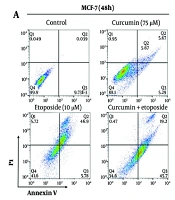
Jaberian Asl B, Afarin R, Hatami M, Dehghani Madiseh A, Roshanazadeh M, et al. Curcumin-Etoposide Synergy: Unveiling the Molecular Mechanisms of Enhanced Apoptosis and Chemoresistance Attenuation in Breast Cancer. Iran J Pharm Res. 2024;23(1):e150978. doi: https://doi.org/10.5812/ijpr-150978
Sadeghi F, Etebari M, Habibi Roudkenar M, Jahanian-Najafabadi A. Lipocalin2 Protects Human Embryonic Kidney Cells against Cisplatin–Induced Genotoxicity. Iran J Pharm Res. 2018;17(1):e124768. doi: https://doi.org/10.22037/ijpr.2018.2172
Lotfizadeh R, Sepehri H, Attari F, Delphi L. Flavonoid Calycopterin Induces Apoptosis in Human Prostate Cancer Cells In-vitro. Iran J Pharm Res. 2020;19(3):e124614. doi: https://doi.org/10.22037/ijpr.2020.113410.14283
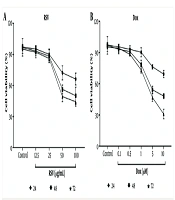
Ghorbani H, Amini K, Jamali B, Tarighi S, Nabiee M, et al. Resveratrol Enhances Chemosensitivity of AGS Gastric Cancer Cells to Doxorubicin: Focus on Drug Resistance Mechanisms. Compr Health Biomed Stud. 2025;3(4):e163408. doi: https://doi.org/10.5812/chbs-163408
Last Update: 3 weeks ago
Last Update: 3 weeks ago
Last Update: 3 weeks ago
Last Update: 11 hours ago
Last Update: 1 day ago
Last Update: 4 days ago