Leptin and adiponectin are adipokines which regulate the insulin sensitivity and energy homeostasis (
1). Leptin decreases the insulin sensitivity, while adiponectin increases it (
2). The plasma level of leptin is proportional to the body fat content and Body Mass Index (BMI) (
3,
4). On the other hand, unlike leptin, adiponectin systemic concentration is negatively related to adiposity (
5).
Leptin has been known as a key regulator of food intake and energy expenditure. This hormone transmits the signals of satiety and body fat stores to the brain, especially hypothalamus (
6,
7). Recent studies have also shown the existence of adiponectin receptors Adipo1 and Adipo2 in the hypothalamus and the involvement of adiponectin in the central regulation of appetite and energy homeostasis in rodents and humans (
8).
Moreover, leptin seems to transmit the information of metabolic status and energy stores of the body to the hypothalamus to control reproduction. Uncontrolled diabetes is associated with reproductive abnormalities and hypogonadotropic hypogonadism is frequently observed in models of experimental diabetes (
9). However, expression of leptin receptor in GnRH neurons is little or zero (
10); of course, there are some Kiss neurons in the hypothalamus, which express KiSS-1 mRNA. The KiSS-1 gene encodes 54, 14, 13, and 10 amino-acid peptides, known as kisspeptins (
11). Kisspeptins have been detected in various tissues, such as placenta, pancreas, testes, and central nervous system, and are known as a “molecular switch for puberty”. About 75% of GnRH neurons coexpress KiSS-1 (
12). These hypothalamic Kiss-1 neurons also express leptin receptor and have been suggested to modulate the reproductive function by increasing or decreasing GnRH secretion (
9). Hypothalamic KiSS-1 mRNA expression is significantly reduced in ob/ob compared to wild-type mice, while increased in ob/ob (leptin deficient) mice treated with leptin (
13). Moreover, administration of leptin increases hypothalamic KiSS-1 mRNA as well as LH and testosterone concentrations in hypogonadotropic diabetic male rats (
13). Convincing evidence proposes that leptin is able to modulate Kiss-1 expression in the hypothalamus (
9).
The effects of leptin are not restricted to the hypothalamus. Leptin receptor mRNA was also detected in rat islets and pancreatic β-cell line (
7,
14). The inhibitory effect of leptin on insulin secretion of pancreatic β-cells has been established in the previous studies (
7,
15). Since pancreatic beta cells express KiSS-1 and kiss receptor (
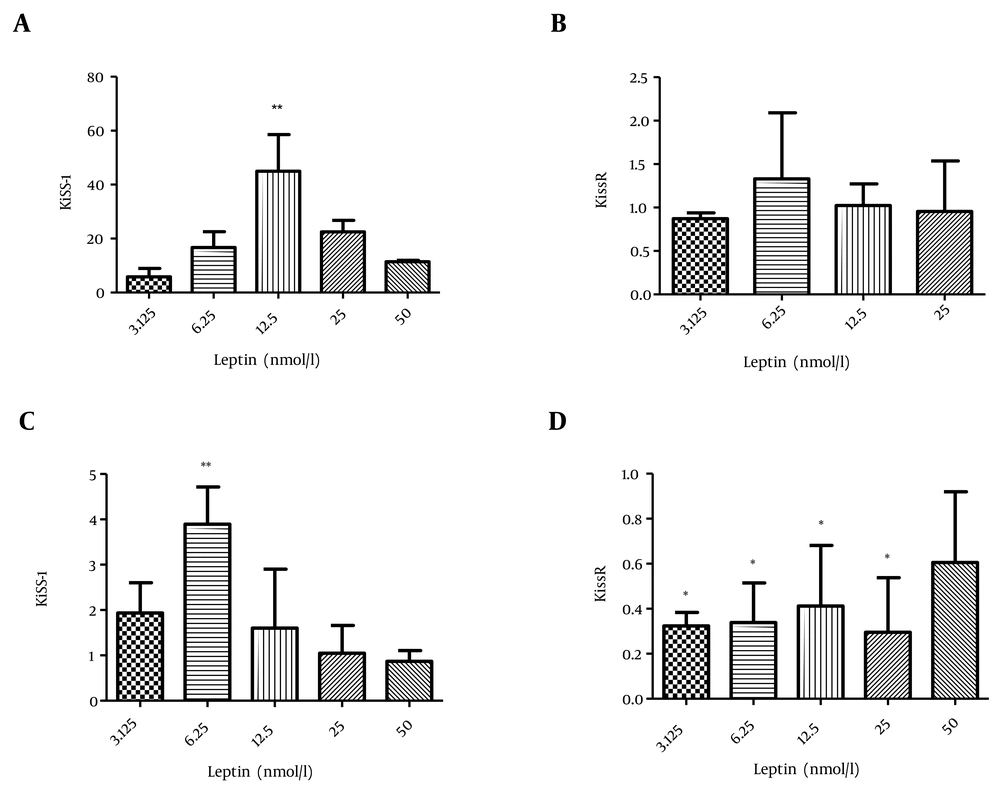
12), we hypothesized that the modulatory impact of leptin might be through Kiss-1 mRNA expression. To test this hypothesis, we evaluated KiSS-1 transcription in rat islets of Langerhans and CRI-D2 beta cell line after leptin treatment.
Moreover, Adiponectin has a role in controlling the reproductive system. Recently, the expression of adiponectin and its receptors has been confirmed in rat ovary and testis (
16). Moreover, adiponectin considerably inhibited GnRH secretion from GT1-7 hypothalamic GnRH neuron cells (
17). This hormone reduced the release of LH from rat pituitary cells, as well (
18). Recently, it has been shown that adiponectin inhibits KiSS-1 gene transcription in the hypothalamic GT1-7 neurons (
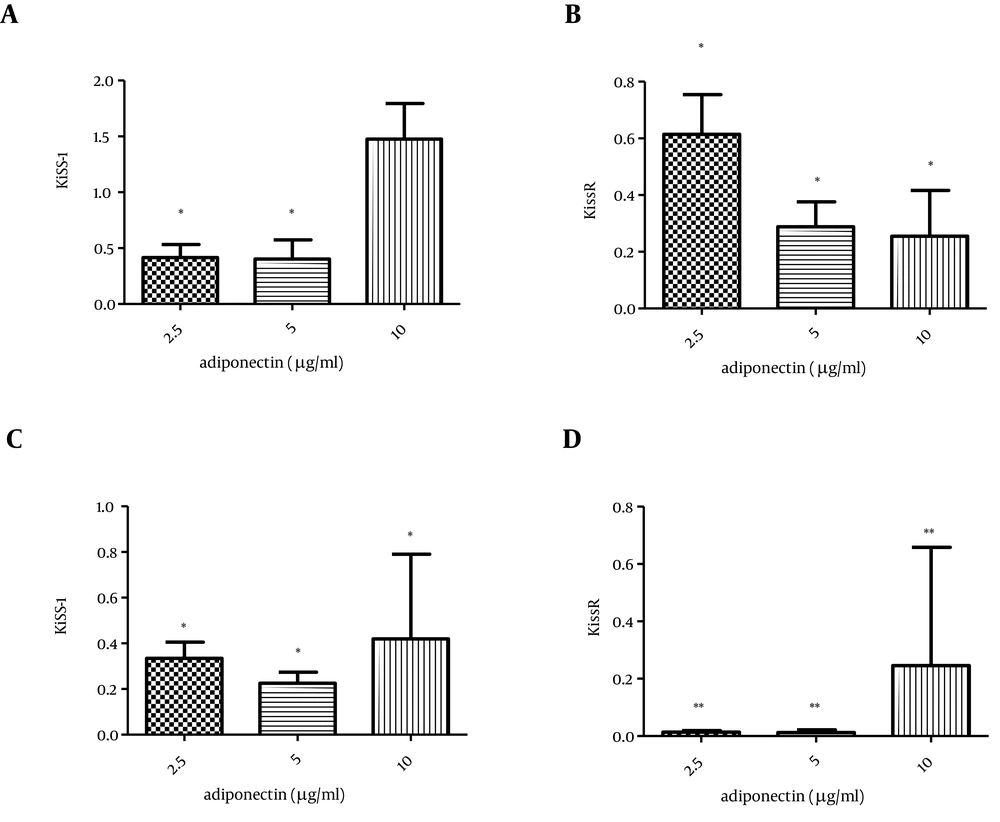
19).
Adiponectin receptors (AdipoR1/2) have been identified in the pancreatic islet cells (
20); however, functional effect of adiponectin and involvement of other molecules in adiponectin induced signaling are not completely understood.