1. Background
There is a growing interest regarding the role of religion/spirituality (R/S) in addiction (1). An increasing number of studies show a positive impact of religious beliefs in the prevention of addiction and the rehabilitation of substance abusers (2, 3). Population surveys show that religiosity is inversely associated with drug addiction (4, 5), and religious people are less likely to be involved in drug and alcohol abuse (6). Moreover, R/S is shown to be inversely associated with some of the risk factors of addiction such as social isolation, psychiatric disorders, depression, anxiety, and life dissatisfaction (6, 7). In drug-addict people, R/S can reduce the negative effects of stressful life events (8) and reinforce individual’s positive feelings and motivation to maintain abstinence (3). Unsurprisingly, several well-recognized addiction recovery programs such as Alcoholics Anonymous (AA) and Narcotics Anonymous (NA) are based on R/S concepts (9).
The religious commitment inventory-10 (RCI-10), a well-known measure of religiosity based on Worthington’s religious values model (10), is widely used in health research throughout the world. In this model, the extent to which someone relies on his/her religious rituals/beliefs and applies them in daily life is referred to as religious commitment. This commitment is a major factor in determining the positive and/or negative impact religion has on people. Based on this idea, Worthington et al. (11) developed the RCI-10 to be both a brief and comprehensive measure of religious commitment. The RCI-10’s items have been extracted from previous 62-item, 20-item and 17-item versions of the scale (11).
R/S plays a major role in the everyday lives of people in Iran. There is growing interest in studying the effect of religion on mental/physical health in Iran; however, little attention has been paid to the research on R/S in addiction (12), in spite of the fact that evidence shows an increase in the prevalence of alcohol abuse and drug addiction in this country (13, 14). We think the lack of research is partially due to the fact that only a small number of religious scales have been properly validated in Farsi (15), the official language of Iran, and none have been validated for use with substance abusers.
2. Objectives
The current study was designed to address this gap in research by evaluating the reliability and validity of the Farsi version of the RCI-10 in a sample of people with drug addiction.
3. Patients and Methods
3.1. Participants
Using a convenience sample, 120 substance abusers from several rehabilitation centers in Tehran, Iran, were approached, 116 of whom agreed to participate. All of them were Muslim and fluent in Farsi. Participation was anonymous and voluntary, and informed consent was obtained from all subjects before participation.
3.2. Measures
3.2.1. Religious Commitment Inventory - 10 (RCI-10)
The RIC-10 is a well-known measure of religiosity developed by Worthington et al. (11). This scale has 10 items that are scored on a Likert scale from 1 to 5 and assess the inter- and intra-personal religious commitment of individuals. The RCI-10 has been shown to be a reliable and valid measure of religiosity, mostly in Christian populations. Using the standard forward-backward method, the original English version of the RCI-10 was translated into Farsi. Initially, two bilingual psychologists translated the English version into Farsi. A single Farsi version then was created by comparing the two translations. The resulting Farsi version was translated back into English. This subsequent English version was compared to the original English version by a physician and a psychologist, independently. Comparison of these translations showed there were no significant differences between the two versions.
3.2.2. Duke University Religion Index (DUREL)
DUREL is a brief and inclusive measure of religiosity originally developed for use in large-scale studies (16). This five-item scale measures three main dimensions of religiosity: organized religious activities (ORA), nonorganized religious activities (NORA), and intrinsic religious (IR) activities (17). In this study, we used FDUREL, a validated Farsi version of DUREL (18).
3.2.3. Brief Trust/Mistrust in God Scale (BTMGS)
The BTMGS is a short, six-item measure of religiosity in which half of the items measure trust in God and half measure mistrust in God. Items are rated on a 5-point scale. The measure was developed based on the idea that belief in God could be both positive and negative. We used a Farsi version of the BTMGS that has been validated with Muslims (19).
3.3. Statistical Analyses
Reliability of the RCI-10 was assessed using Cronbach’s α coefficient (alpha > 0.7 was considered satisfactory). Validity was assessed by two methods. Convergent validity was studied by assessing correlations between the RCI-10 total score, the FDUREL, and the BTMGS subscales. Principal component analysis (PCA) with varimax rotation was used to assess the construct validity of the Farsi version. We selected those factors that had eigenvalues greater than 1.0 and item loadings equal to or greater than 0.5. Data analysis was accomplished using SPSS, version 20 (IBM Corporation, Software Group, NY, USA).
4. Results
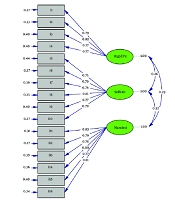
All the subjects were male and Muslims with a mean age of 34.29 years (SD = 7.95). Sixty-five of these participants did not finish high school, 44 were high school graduates, 5 had a graduate degree, and 2 did not report their education level. Cronbach’s alpha of the Farsi version was 0.85. Before the factor analysis, measures of the appropriateness of factor analysis were computed. The Kaiser-Meyer-Olkin measure of sampling adequacy was 0.84, and the Bartlett’s test of sphericity was statistically significant (χ2 = 408.01, P < 0.001), indicating that the sample was adequate and the variables were not correlated, so factor analysis could be done. Results of the PCA suggested a three-factor solution for the Farsi version of RCI-10. Factors 1, 2, and 3 had eigenvalues of 3.06, 1.96, and 1.74, which explained 30.64, 19.63, and 17.14% of the variance, respectively. Table 1 shows the factor loadings, means, and standard deviations for each item, and Cronbach’s alpha when the item was deleted. Correlations between Factor 1 and Factor 2 (r = 0.49, P <0.001), Factor 1 and Factor 3 (r = 0.46, P <0.001), and Factor 2 and Factor 3 (r = 0.45, P < 0.001) were significant.
Table 1.
RCI-10 Items, Factor Loadings, Descriptive Statistics, and Cronbach’s Alpha When Items Were Deleted
| Items | Factor Loadings | Mean | SD | Cronbach’s Alpha if Item Deleted | ||
|---|---|---|---|---|---|---|
| Factor 1 | Factor 2 | Factor 3 | ||||
| 1. I often read books and magazines about my faith. | 0.07 | 0.85 | -0.001 | 2.34 | 1.35 | 0.85 |
| 2. I make financial contributions to my religious organization. | 0.13 | 0.60 | 0.47 | 2.37 | 1.35 | 0.84 |
| 3. I spend time trying to grow in understanding of my faith. | 0.38 | 0.70 | 0.14 | 2.47 | 1.42 | 0.83 |
| 4. Religion is especially important to me because it answers many questions about the meaning of life. | 0.75 | 0.19 | 0.26 | 3.34 | 1.57 | 0.82 |
| 5. My religious beliefs lie behind my whole approach to life. | 0.60 | 0.38 | 0.17 | 3.10 | 1.45 | 0.83 |
| 6. I enjoy spending time with others of my religious affiliation. | 0.84 | -0.01 | -0.06 | 3.54 | 1.54 | 0.84 |
| 7. Religious beliefs influence all my dealings in life. | 0.82 | 0.16 | 0.23 | 3.10 | 1.47 | 0.82 |
| 8. It is important to me to spend periods of time in private religious thought and reflection. | 0.68 | 0.19 | 0.21 | 3.09 | 1.49 | 0.83 |
| 9. I enjoy working in the activities of my religious organization. | 0.32 | -0.08 | 0.82 | 3.34 | 1.52 | 0.84 |
| 10. I keep well informed about my local religious group and have some influence in its decisions. | 0.07 | 0.34 | 0.77 | 2.41 | 1.46 | 0.84 |
Table 2 presents the correlations between the RCI-10 total score, BTMGS, and FDUREL. The RCI-10 was significantly correlated with the FDUREL (r = 0.75, P < 0.001) and the trust subscale of the BTMGS (r = 0.26, P = 0.007).
Table 2.
Correlation Between the RCI - 10, BTMGS Subscales, and the Farsi Version of the DURELa
| Scales | 2 | 3 | 4 |
|---|---|---|---|
| RCI-10 | 0.26* | -0.13 | 0.75* |
| Trust in God subscale of BTMGS | 1 | -0.48* | 0.21* |
| Mistrust subscale of BTMGS | - | 1 | -0.04 |
| Fdurel | - | - | 1 |
a*P values < 0.05.
5. Discussion
To our knowledge, this is the first study evaluating the psychometric properties of the Farsi version of the RCI-10. The Farsi version had satisfactory internal consistency, comparable to the original English version (11). Factor analysis revealed a three-factor solution for the Farsi version of the scale. The original English version of the RCI-10, however, has been shown to have two highly correlated factors: Factor 1 consists of 6 items and has an eigenvalue of 6.20, explaining 62% of the variance, and Factor 2 is composed of 4 items and has an eigenvalue of 1.01, explaining 10.1% of the variance (11). These differences may be due to differences between the two sample groups. In the validation study of the original English version, construct validity was assessed with male and female college students and also with married Christian adults. In this study, however, all of the participants were male substance abusers who self-reported as Muslim. Further, most of our study participants had a low level of education (did not finish high school).
The following limitations should be considered in interpreting the results of this study. First, this study was conducted with a relatively small sample. Second, all the participants were male, substance abusers, and enrolled in rehabilitation programs. The results of this study thus may not be generalizable to other populations. Further studies need to be done to evaluate the test-retest reliability of the Farsi version of the RCI-10.
In sum, the results of this study, while preliminary, suggest that the Farsi version of the RCI-10 is a reliable and valid measure of religiosity, suitable for use in health research with Farsi-speaking populations.