1. Background
Crohn's disease (CD) is a chronic, relapsing inflammatory bowel disease that can involve the entire gastrointestinal tract (1). The incidence of CD is high in Caucasians in European and American countries, but with the change in diet structure and environment, the incidence of CD is also increasing in Asia (2). The pathogenesis of CD is complex, and the exact etiology is unclear. It is generally thought to be primarily related to genetics, immunity, environment, and other factors (1).
Previous studies have provided valuable clues that leptin is involved in the incidence of CD. Leptin is a 16-kDa non-glycosylated protein that is primarily produced by adipocytes, which is why it belongs to the group of cytokines that are commonly referred to as adipocytokines or adipokines. As a cytokine, leptin promotes inflammatory responses. It promotes the survival of naїve T cells and the production of tumor necrosis factor α (TNF-α) and IL-12 and facilitates Th1 cell differentiation and activity while inhibiting Th2 cells (3). Serum leptin levels are associated with a variety of infectious and immune-mediated diseases, such as systemic lupus erythematosus (4), rheumatoid arthritis (5), multiple sclerosis (6), and CD (7). Independent studies have revealed a strong upregulation of leptin expression in the mesenteric fat of CD patients. The presence of leptin in the mesenteric fat favors the polarization of tissue macrophages toward an anti-inflammatory phenotype (8, 9). Studies have shown that during the active stage of CD, leptin negatively regulates keratin 1 via signal transducer and activators of transcription 3 (STAT3) increasing macromolecular permeability, which may be one possible mechanism for the altered intestinal barrier in CD (10). Merigo et al. (11) found that glucose transporter 5 may be involved in lymphangiogenesis, which is a typical histological finding in the pathogenesis of inflammatory bowel disease. Subsequent studies by the research team demonstrated that leptin and leptin receptor were co-expressed with glucose transporter 5 in the colorectal mucosal samples of Ulcer Colitis (UC) and CD patients, suggesting the combined role of all 3 in the area of the colonic laminae (12). All studies have provided valuable clues that leptin is involved in the pathogenesis of CD.
2. Objectives
Till now, evidence regarding the association of leptin-related gene polymorphisms with CD remains very limited. However, leptin adipokines and their associated single-nucleotide polymorphisms (SNPs) have been claimed to be associated with susceptibility to autoimmune and inflammatory diseases in a number of studies (13, 14). Considering the important roles that leptin plays in inflammatory responses and CD, the purpose of this study was to conduct a case-control study to explore whether leptin gene polymorphisms are associated with susceptibility to CD in Chinese Han children, to estimate the population-specific predictive value of leptin genetic variation in CD.
3. Methods
3.1. Patients and Controls
We recruited a total of 228 unrelated Chinese participants between February 2019 and February 2021: 86 CD patients and 142 healthy control subjects. The healthy controls were selected from the children with matched age and gender and no gastrointestinal disease or any other systemic inflammatory or autoimmune disorders who underwent routine physical examination in the hospital health checkup centers. All patients were newly diagnosed using standard criteria (15) and hospitalized at the Children’s Hospital, Zhejiang University School of Medicine Inclusion criteria were having a complete clinical history, availability of biological materials, and being less than 17 years old; children with other gastrointestinal diseases were excluded. Clinical phenotypes were classified based on the World Gastroenterology Organisation (Pairs classification) (16). Their demographic and clinical data, including age, gender, body mass index (BMI), and perianal lesion, are presented in Table 1. The research protocol was carried out in accordance with the tenets of the Helsinki Declaration and was approved by the Ethics Committee of the Children's Hospital of Zhejiang University School of Medicine (code: 2019-IRB-109).
Table 1.
The Main Demographics and Clinical Characteristics of Cases and Controls Controls a
| Characteristic | CD Patients (n = 86) | Controls (n = 142) |
|---|---|---|
| Age at diagnosis | ||
| A1a | 22 (25.6) | 39 (27.5) |
| A1b | 64 (74.4) | 103 (72.5) |
| Mean ± SD | 10.2 ± 3.6 | 9.4 ± 2.5 |
| Gender | ||
| Girls | 27 (31.4) | 49 (34.5) |
| Boys | 59 (68.6) | 93 (65.5) |
| Disease behavior | ||
| B1 | 81 (94.2) | |
| B2+B3 | 5 (5.8) | |
| Disease location | ||
| L1±L4 | 9 (10.5) | |
| L2±L4 | 6 (7.0) | |
| L3±L4 | 53 (61.6) | |
| L4 only | 11 (12.8) | |
| Unclassified | 7 (8.1) | |
| BMI at diagnosis | ||
| Low BMI | 26 (30.2) | |
| Normal BMI | 60 (69.8) | |
| Perianal lesion | 23 (26.7) |
Abbreviations: CD, Crohn's disease; BMI, body mass index.
a Values are expressed as No. (%) unless otherwise indicated. The criteria of body mass index-for-age for boys and girls aged 0 - 18 years according to the reference (17). Also, of the 86 Crohn's disease patients, 23 were diagnosed with the perianal lesion.
3.2. Genotypic Analysis
Peripheral blood samples (1 mL) were collected into EDTA anticoagulant tubes. Genomic DNA was extracted from 200 µL of anticoagulated whole blood using a BioSpin Genomic DNA Purification Kit (BIOER Technology; #BSC06S1) according to the manufacturer's instructions. The concentration and purity of genomic DNA were detected using a NanoDrop 1000c spectrophotometer (Thermo Scientific). DNA integrity was then assessed using agarose gel electrophoresis (1%). The qualified samples of DNA were stored at −20°C until genotype analysis and then at −80°C for long-term storage. Four SNPs of the leptin gene were selected, including rs2071045, rs41457646, rs11761556, and rs2167270. Genotyping analysis was evaluated by multiplex polymerase chain reaction (PCR) combined with next-generation sequencing on Illumina X-10, a high-throughput genotyping platform of Shanghai BioWing Applied Biotechnology Company. The primers for leptin rs2071045 were 5’-AAAAGTCATAGGATTTGATCAGGC-3’ (forward) and 5’-TCCCCTTGGTAGGTTGAAAATAAG-3’ (reverse). The primers for leptin rs41457646 were 5’-GAAAAGAGGAGTTTCGAGGTAGAG-3’ (forward) and 5’-ATCAAACTTCTTTACCCTTCAAGG-3’ (reverse). The primers for leptin rs11761556 were 5’-GAAAAGAGGAGTTTCGAGGTAGAG-3’ (forward) and 5’-ATCAAACTTCTTTACCCTTCAAGG-3’ (reverse). The primers for leptin rs2167270 were 5’-GATCGGGCCGCTATAAGAG-3’ (forward) and 5’-AGCTATCATAGTCCAGAACTAAGC-3’ (reverse).
3.3. Statistical Analysis
Statistical analysis was performed using SPSS version 22 (SPSS Inc, Chicago, IL, USA). All SNPs were tested in concordance with the Hardy-Weinberg balance using a chi-square (χ2) goodness of fit test. The χ2 test (or Fisher exact test) was used to compare SNP allele and genotype frequencies between patients and controls. Allele and genotype frequencies were also compared between patients of differential age and gender, with and without clinical characteristics of CD. The odds ratio (OR) and 95% CI were used for relative risk estimation. P-values less than 0.05 were considered statistically significant.
4. Results
4.1. Patients’ Characteristics
Eighty-six CD patients (27 girls and 59 boys; mean age of 10.2 ± 3.6 years) and 142 healthy controls (49 girls and 93 boys; mean age of 9.4 ± 2.5 years) were enrolled in this case-control study (Table 1). According to the World Gastroenterology Organisation (Pairs classification), of the 86 CD patients, 22 (25.6%) were classified as A1a (less than 10-year-old children with CD) and 64 (74.4%) were A1b (10- to 17-year-old children with CD). Most CD patients had ileocolonic disease (L3 ± L4; 61.6%) and inflammatory disease (B1, nonstricturing and nonpenetrating; 94.2%). The body mass index was calculated on the basis of their height and weight at diagnosis according to the curves of BMI-for-age for boys and girls aged 0 - 18 years (17). The CD patients were divided into low BMI (30.2%) and normal BMI (69.8%) groups. In addition, of the 86 CD patients, 23 (26.7%) had perianal lesions.
4.2. Gene Polymorphisms in CD Patients and Healthy Controls
The 4 SNPs of the leptin gene genotyping results showed no significant deviation from Hardy-Weinberg equilibrium in the present study (P > 0.05). The genotype and allele frequencies of 4 leptin SNPs in cases and controls are shown in Figure 1. Patients with the G allele of leptin rs2167270 had a significantly higher risk of pediatric CD (83.7% of cases vs 72.5% of controls; OR, 1.947; 95% CI, 1.203 - 3.151; P = 0.006). Furthermore, of the 4 SNPs, rs2167270 showed a significantly different genotype distribution among children with CD compared with the healthy controls (GG genotype, 72.1% of cases vs 53.5% of controls; P = 0.021). In other words, patients with the GG genotype had a higher risk of developing pediatric CD (OR, 2.243; 95% CI, 1.262 - 3.987). Nevertheless, the allele frequencies and genotype frequencies of the other SNPs (rs2071045, rs41457646, and rs11761556) showed no significant difference between CD patients and healthy controls.
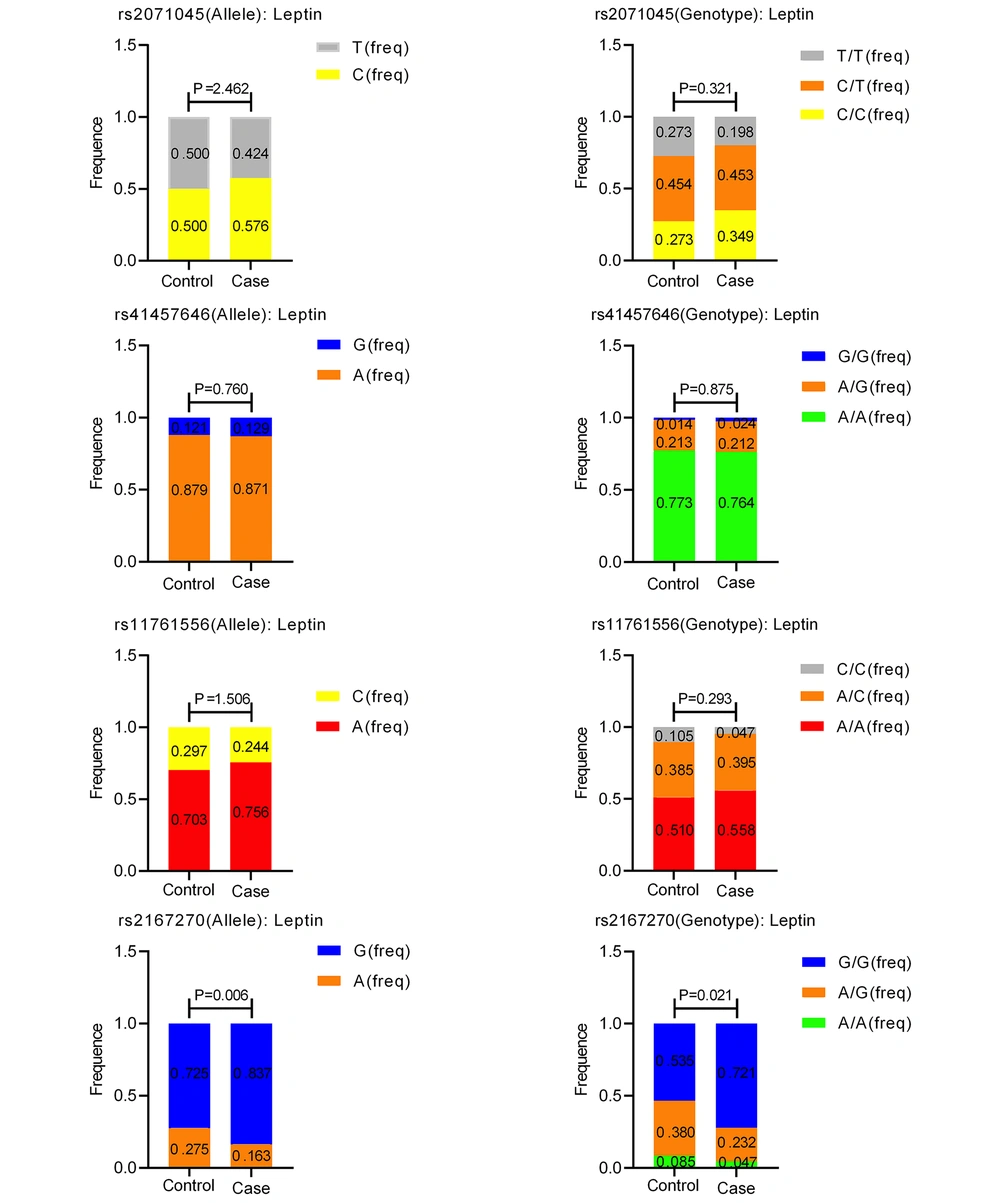
Figure 1.
Gene polymorphisms in Crohn's disease patients and healthy controls
4.3. Gene Polymorphisms in A1a and A1b Cases
As shown in Figure 2, the allele frequencies of the G allele in rs41457646 (100% in A1a vs 84.1% in A1b; P = 0.015) and A allele in rs11761556 (93.3% in A1a vs 71.8% in A1b; P = 0.013) were significantly different between the A1a and A1b groups. In addition, there were significant differences in the genotype frequencies of SNPs rs2071045 (CC genotype 58.3% in A1a vs 31.1% in A1b; P = 0.003), rs41457646 (GG genotype 100% in A1a vs 71.0% in A1b; P = 0.048), and rs11761556 (AA genotype 93.3% in A1a vs 47.9% in A1b; P = 0.003) between the A1a and A1b groups.
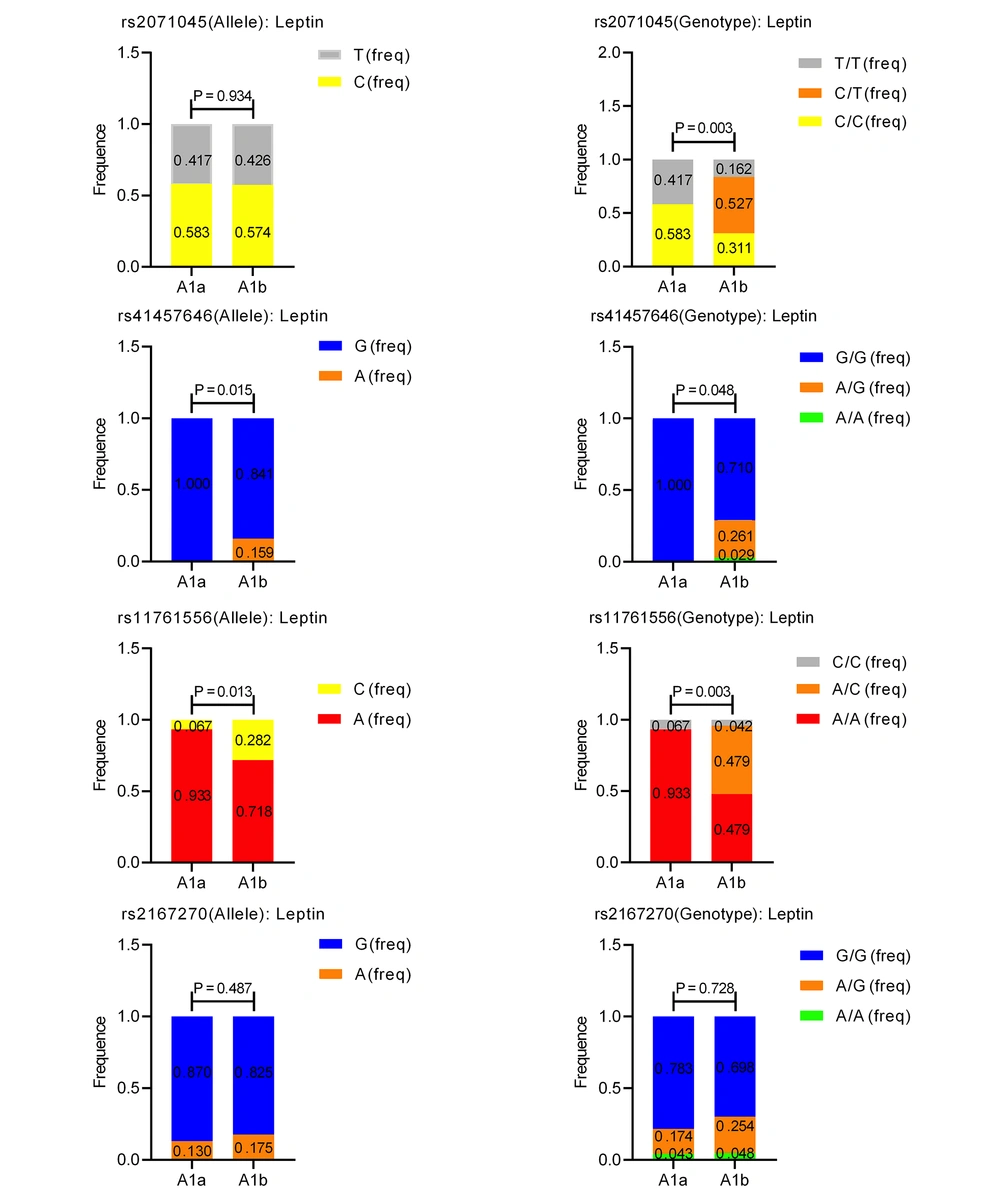
Figure 2.
Gene polymorphisms in A1a and A1b cases
Patients with the G allele and GG genotype of rs41457646 had an increased risk of developing pediatric CD in the A1a group (OR, 1.276; 95% CI, 1.172 - 1.389 and OR, NA; 95% CI, NA). Also, patients with the CC genotype of rs2071045 (OR, 3.690; 95% CI, 1.002 - 13.589) and patients with the A allele and AA genotype of rs11761556 in the A1a group had a higher risk of developing pediatric CD. Nevertheless, there were no significant differences in the allele of re2071045 and the genotype of rs2167270 between the A1a and A1b groups.
4.4. Gene Polymorphisms in Patients with or Without Perianal Lesions
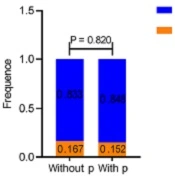
As shown in Figure 3, no significant differences in the allele and genotype frequencies of the 4 leptin SNPs (rs2167270, rs2071045, rs41457646, and rs11761556) were found between patients with or without perianal lesions (P > 0.05).
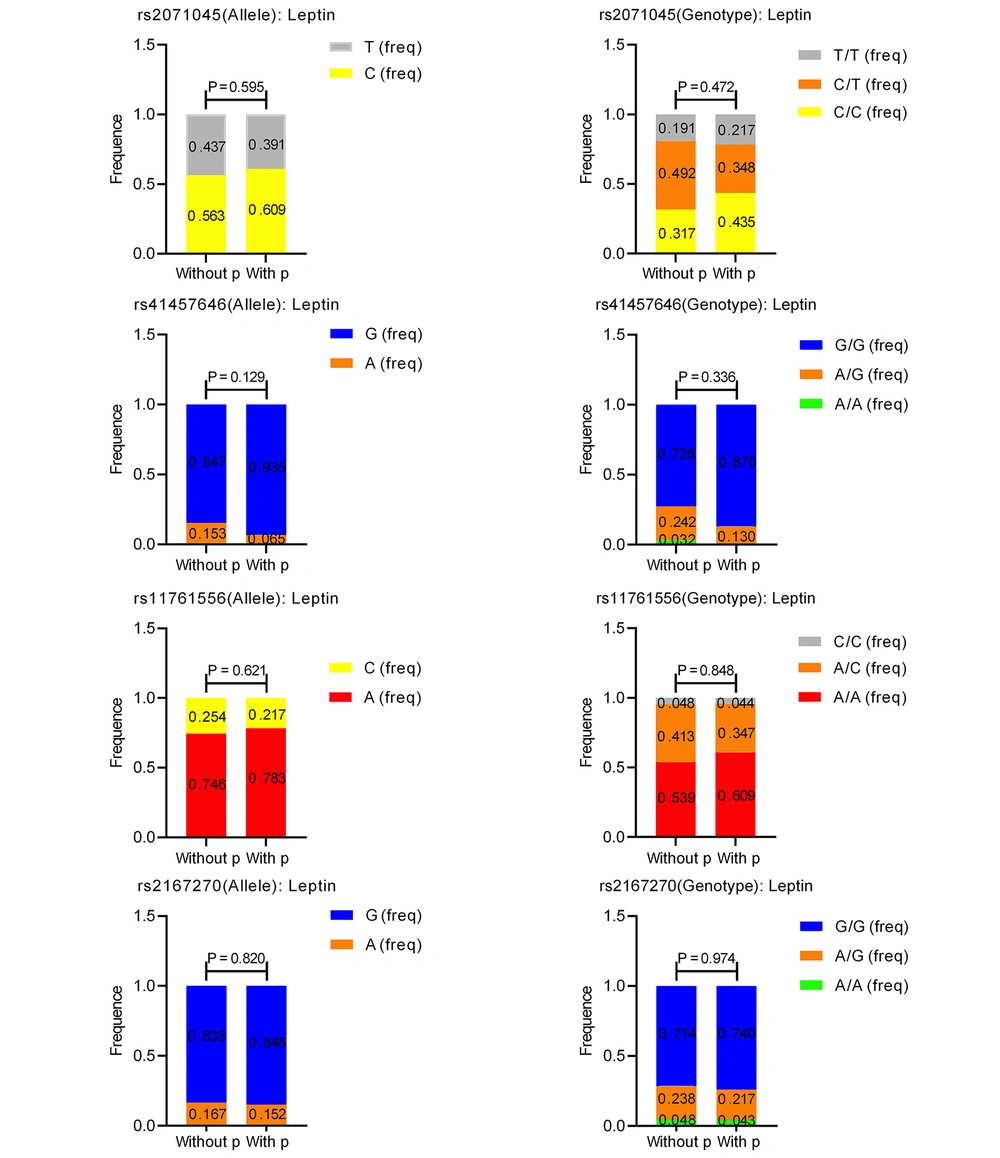
Figure 3.
Gene polymorphisms in patients with or without perianal lesions
4.5. Gene Polymorphisms in Low and Normal BMI Patients
Figure 4 shows no significant differences in allele and genotype frequencies for the 4 leptin SNPs (rs2167270, rs2071045, rs41457646, and rs11761556) between low and normal BMI patients.
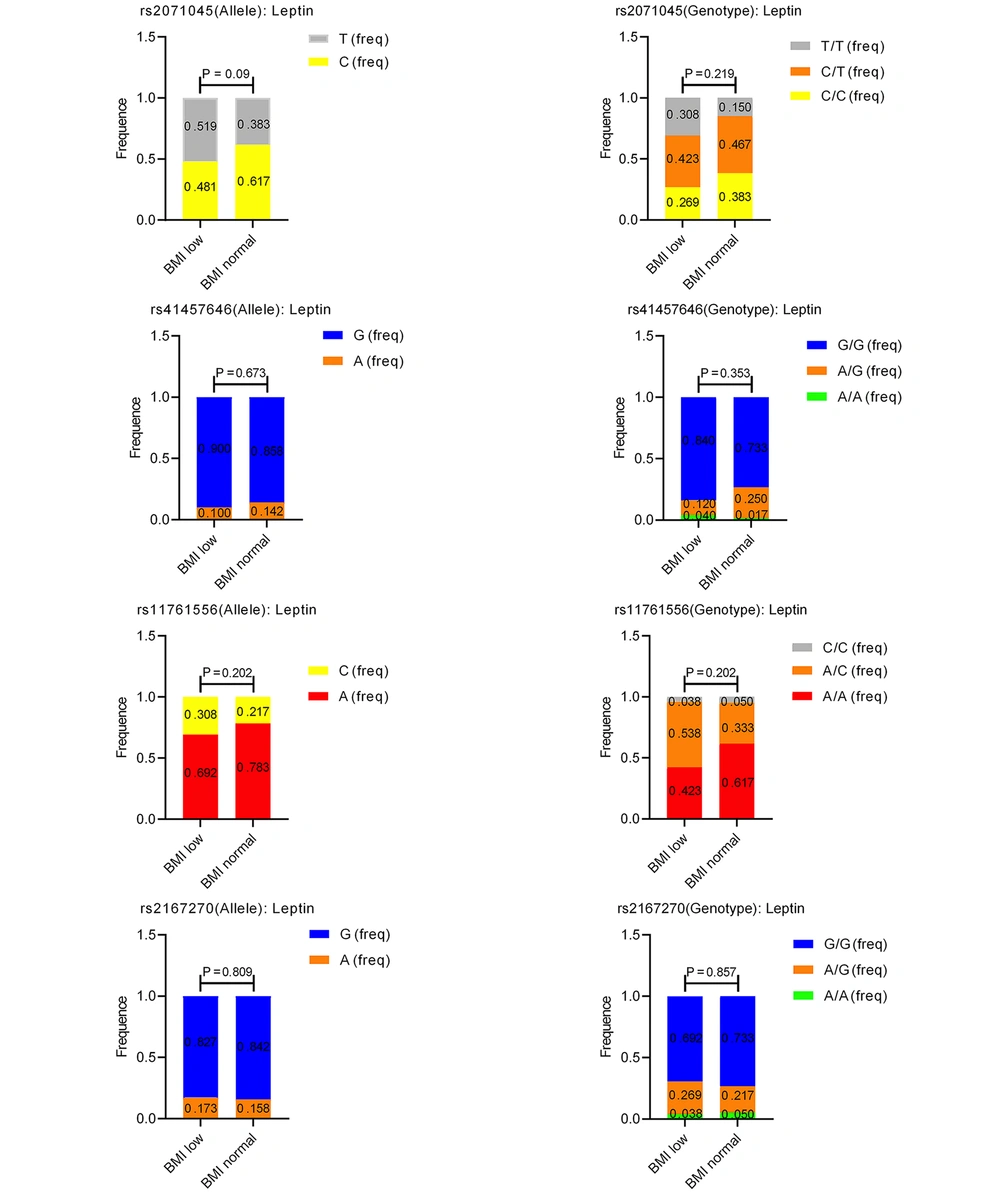
Figure 4.
Gene polymorphisms in low and normal body mass index patients
5. Discussion
The current relationship between leptin and CD is still very limited. Leptin is a protein hormone whose physiological functions include the regulation of the inflammatory response and immune function, the regulation of energy metabolism, the coordination of various hormone secretions, and the influence on human behavior and metabolism by acting on receptors in the central nervous system (18). For example, Hu et al. (10) found that angulin-1 expression, which regulates the localization of macromolecule barrier maintenance protein tricellulin, was downregulated after leptin treatment in the T84 and Caco-2 monomolecular layers of patients with active CD. This effect was completely blocked by the STAT3 inhibitors Stattic and WP1066––but only partially by JAK2 inhibitor AG490. Angulin-1 and leptin secretion are potential targets for intervention in CD to restore damaged intestinal barriers. It is, therefore, plausible that the rs2167270 polymorphism on leptin is associated with the prevalence of CD.
In the present study, we performed a correlation analysis of 4 SNPs (rs2167270, rs2071045, rs41457646, and rs11761556) on the leptin gene, and only the polymorphism in rs2167270 was significantly associated with the occurrence of CD in children; in addition, children with the GG genotype had a higher risk of developing pediatric CD (OR, 2.243; 95% CI, 1.262 - 3.987). Till now, fewer studies have shown that the polymorphisms of rs2167270 are involved in the prevalence of CD in children. Instead, the A allele and GG genotype of rs2167270 were more prevalent among atopic dermatitis patients (13). Aljanabi et al. (19) also showed that both the A allele and GA genotype of rs2167270 of the leptin gene are highly associated with the prevalence of prediabetes (P < 0.05). The different genotypes of SNP rs2167270 are thought to be associated with higher or lower expression of the LEP gene (20). On the other hand, previous studies have suggested that leptin is closely associated with digestive inflammation and plays an important role in the intestinal inflammatory response in patients with CD (21). Ziegler et al. (22) reported a very rare case of CD. In contrast to other CD patients, this patient exhibited systemic adipose tissue and leptin deficiency in addition to intestinal inflammation; when the patient was given rLEP, the inflammatory response (production of TNF-α) in immune cells increased, ultimately aggravating CD, which can be reversed by anti-TNF-α therapy. Thus, the finding that the GG genotype of rs2167270 represents a higher risk of CD in this study may help in the early diagnosis and risk prediction of CD.
In this study, the polymorphisms of rs2071045, rs41457646, or rs11761556 did not associate with the risk of CD (P ≥ 0.05). The C allele frequency of rs2071045 was 57.6% and 50.0% in the CD and control groups, respectively. The C allele frequency of rs2071045 was higher in the CD group than in the control group, but the difference was not statistically significant. The same situation was observed in the A allele frequency of rs11761556. One explanation for no statistically significant difference is the small number of CD patients enrolled in this study. We hope that more CD patients will be enrolled in future studies to get the exact answer.
In this study, patients with the G allele (or GG genotype) of rs41457646, patients with the CC genotype of rs2071045, and patients with the A allele (or AA genotype) of rs11761556 had a relatively early age of onset in the A1a group, implying that the allele or related genotype of the above SNPs exacerbated CD at an early age of onset. Here we only enrolled CD patients <17 years, then all the patients were divided into A1a (< 10 years) and A1b (10 to 17 years) groups. Compared to patients with late-onset CD (≥ 60 years), patients with early-onset CD (≤ 17 years) are more likely to develop a more aggressive form of the disease with perianal involvement and greater use of medication (23). In our opinion, the A1a group is more likely to develop a more severe form of CD. Thus, identifying the polymorphisms of rs41457646, rs2071045, and rs11761556 is meaningful for pediatric CD patients to predict whether additional treatments are necessary.
5.1. Conclusions
The GG genotype of rs2167270 represented a higher risk of CD. The polymorphisms of rs2071045, rs41457646, or rs11761556 did not associate with the risk of CD. The polymorphisms of rs41457646, rs2071045, and rs11761556 were highly associated with the early onset of CD (< 10 years). These findings expanded our knowledge of the important roles of leptin gene polymorphisms in pediatric CD. However, the study has some limitations. The sample size is not large enough to draw strong conclusions, and we cannot compare genotypes in more disease classifications. In addition, leptin and other cytokines expressed were not detected in serum. Larger multicenter studies are needed to further investigate the relationship between leptin and CD gene variants. Existing diagnosis tools will be updated as more information is learned from a larger population of children with CD, thereby greatly increasing the accuracy and sensitivity of diagnosis in pediatric CD patients.