
1. Background
Acute bronchiolitis (AB) is a leading cause of lower respiratory tract infection and hospitalization in infants and young children (1). It is particularly prevalent during the first year of life and imposes a substantial burden on healthcare systems worldwide (2, 3). Pathophysiologically, bronchiolitis is characterized by small-airway inflammation, mucosal edema, and increased mucus production, resulting in airway obstruction and impaired ventilation (4).
The clinical presentation of AB ranges from mild upper respiratory symptoms to severe respiratory compromise requiring intensive care support. Diagnosis is primarily clinical and is based on established criteria, as outlined in current clinical practice guidelines (5). Although most cases can be managed with supportive care, a subset of patients develop hypoxemia, feeding intolerance, or progressive respiratory distress requiring hospitalization or PICU admission (6). Despite the availability of various clinical scoring systems, accurately predicting disease progression remains challenging because of the heterogeneous and dynamic nature of bronchiolitis (5, 7). Consequently, there is growing interest in identifying objective, rapid, and low-cost biomarkers that may complement clinical evaluation. However, reliable laboratory biomarkers for the early identification of severe bronchiolitis remain limited, although recent studies have highlighted the role of inflammatory biomarkers in disease stratification (8).
In recent years, hematological and inflammatory markers have been increasingly investigated as potential predictors of disease severity, length of hospital stay, and clinical outcomes (9, 10). The HALP score is a recently introduced composite marker that integrates indicators of nutritional status and immune response and has demonstrated prognostic value across a range of inflammatory and malignant diseases (10).
The HALP score integrates hemoglobin, albumin, lymphocyte, and platelet measurements into a single composite index that reflects inflammatory status, immune function, and nutritional condition (5, 11, 12). In pediatric populations, the clinical relevance of the HALP score has been demonstrated across a range of disorders, including rotavirus gastroenteritis, acute appendicitis, hypoxic-ischemic encephalopathy, and prematurity (7-9).
2. Objectives
To our knowledge, the association between the HALP score and disease severity in pediatric patients with AB requiring PICU admission has not been investigated. Therefore, this study aimed to examine the relationship between HALP scores and the clinical severity of AB, evaluate its diagnostic performance in identifying moderate to severe cases requiring intensive care, and determine its prognostic value with respect to clinical outcomes. Accordingly, we assessed the potential role of the HALP score as a biomarker of disease severity and clinical outcomes in pediatric patients with AB.
3. Methods
3.1. Overview and Ethical Considerations
This retrospective cohort study was conducted in the PICU of Kütahya Health Sciences University Hospital in Türkiye. Patients who presented to the pediatric emergency department with complaints such as cough, wheezing, and rapid breathing; were diagnosed with respiratory failure; and were initially admitted to the PICU were included between April 1, 2024, and March 1, 2025.
All study data were obtained retrospectively from the hospital laboratory information system; therefore, no additional blood samples were collected, and the requirement for individual informed consent was waived. The study was designed and reported in accordance with the Strengthening the Reporting of Observational Studies in Epidemiology (STROBE) guidelines. Ethical approval was granted by the Non-Interventional Clinical Research Ethics Committee of Kütahya Health Sciences University on May 6, 2025 (decision number: 2025/06-26).
3.2. Study Population and Eligibility Criteria
A total of 104 healthy children aged 1 month to 2 years who presented to the Social Pediatrics outpatient clinic of Kütahya Health Sciences University Hospital for routine checkups and had no known underlying diseases at the time of evaluation were included as the control group. These individuals were matched to the patient group by age and sex, and their laboratory parameters were retrospectively retrieved from the hospital information system.
Bronchiolitis was diagnosed clinically according to the American Academy of Pediatrics (AAP) criteria (12). In infants aged 1 - 24 months, the diagnosis required at least 2 clinical features, including an increased respiratory rate (tachypnea), intercostal or subcostal chest wall retractions, and abnormal lung sounds, such as wheezing or crackles on auscultation (12-15) (Table 1).
Table 1.
Assessment of Clinical Severity of Acute Bronchiolitis a
| Parameter | Mild | Moderate | Severe |
|---|---|---|---|
| Feeding | Normal | Less than usual; can take more than 50% of usual daily oral intake | Not interested; can take less than 50% of usual daily oral intake |
| Apnea | No | No | Yes |
| Respiratory rate/min | < 50 | 50 - 70 | > 70 |
| Heart rate, beats/min | < 140 | 140 - 160 | > 160 |
| Retractions | Mild | Moderate | Severe |
| Cyanosis | Absent | Absent | Present |
| Oxygen saturation (%) | > 92 | 90 - 92 | < 90 |
| Respiratory support | None | HFNC/NIV | IMV or failure of non-invasive support |
| Clinical course | Stable | May require support | Deterioration/progression |
| Complications | Absent | Absent | Present, such as ARDS |
a Abbreviations: ARDS, acute respiratory distress syndrome; HFNC, high-flow nasal cannula; IMV, invasive mechanical ventilation; NIV, non-invasive ventilation.
Bronchiolitis severity was classified as moderate or severe based on predefined clinical criteria and the level of respiratory support required. In our tertiary intensive care unit, respiratory support is initiated according to the patient’s clinical status at presentation. Non-invasive modalities, including high-flow nasal cannula (HFNC) or non-invasive ventilation (NIV), are used as first-line therapy, with escalation to invasive mechanical ventilation (IMV) in cases of insufficient clinical response or clinical deterioration.
For the purposes of this study, severity classification was operationalized according to the highest level of respiratory support required during hospitalization, together with key clinical findings. Severe bronchiolitis was defined as the requirement for IMV at any time during the clinical course or the presence of at least one of the following: oxygen saturation < 90% on room air requiring continuous oxygen supplementation or signs of severe respiratory distress, including marked retractions, grunting, or apnea. Moderate bronchiolitis was defined as respiratory symptoms requiring hospitalization and supplemental oxygen, managed with HFNC or NIV without progression to IMV.
Patients were classified according to the most severe criterion met during their clinical course. Bronchiolitis severity was defined using a composite framework integrating clinical findings, respiratory support requirements, and disease course, as summarized in Table 1. This approach reflects real-world clinical practice and minimizes subjectivity in severity classification. Severity classification was performed retrospectively through a structured review of electronic medical records by the study investigators. In cases with multiple criteria, classification was based on the highest level of severity observed during hospitalization. All severity assessments were performed by 2 pediatric intensive care physicians, and discrepancies were resolved by consensus.
The study included patients younger than 2 years who were hospitalized and diagnosed with AB after clinical and laboratory evaluation by a pediatrician.
Participants were categorized into 2 groups: individuals with AB and healthy control subjects. Children with AB were further subdivided into moderate and severe bronchiolitis groups. The hematological, biochemical, and inflammatory indices of each patient were examined. These included hemogram parameters, including leukocytes (white blood cell [WBC] count), hemoglobin (Hb), and platelet count; biochemical parameters, including C-reactive protein (CRP), procalcitonin (PCT; ng/mL), and albumin; and the HALP score.
Data collected included age at admission, sex, past medical history, clinical presentation, and vital signs (heart rate and respiratory rate). For each patient, the clinical severity of AB, duration of PICU stay, need for respiratory support, high-flow oxygen therapy, and invasive and non-invasive forms of mechanical ventilation, along with their durations, were recorded.
The HALP score was calculated as follows: hemoglobin (g/L) × albumin (g/L) × lymphocyte count (cells/L) ÷ platelet count (cells/L) (16). For score computation, laboratory values obtained at the patient’s initial presentation to the pediatric emergency department, before intravenous access, hydration, or initiation of any systemic therapy, were used. When multiple blood samples were available, only the earliest measurement was included in the analysis.
Patients with severe immunodeficiency, prematurity, chronic lung disease (cystic fibrosis, bronchopulmonary dysplasia, etc), cardiac disease (congestive heart failure, cyanotic congenital heart disease, etc), and hematological diseases that may affect lung function and HALP score parameters, such as neurometabolic diseases, were excluded from the study population. Participants receiving treatment at an external healthcare facility, including patients receiving inhaled steroids/bronchodilators, systemic steroids, or intravenous hydration, were also excluded. This study involved analysis of data from children with moderate to severe AB admitted to a tertiary PICU.
A total of 140 children diagnosed with AB were initially screened. Of these, 40 patients were excluded based on predefined criteria, including prematurity or bronchopulmonary dysplasia (n = 18), prior inpatient treatment at another center (n = 10), neurometabolic disease (n = 6), suspected immunodeficiency (n = 3), dilated cardiomyopathy (n = 2), and heart failure (n = 1). Consequently, 100 patients met the inclusion criteria and were included in the final analysis. The participant flow is presented in Figure 1.
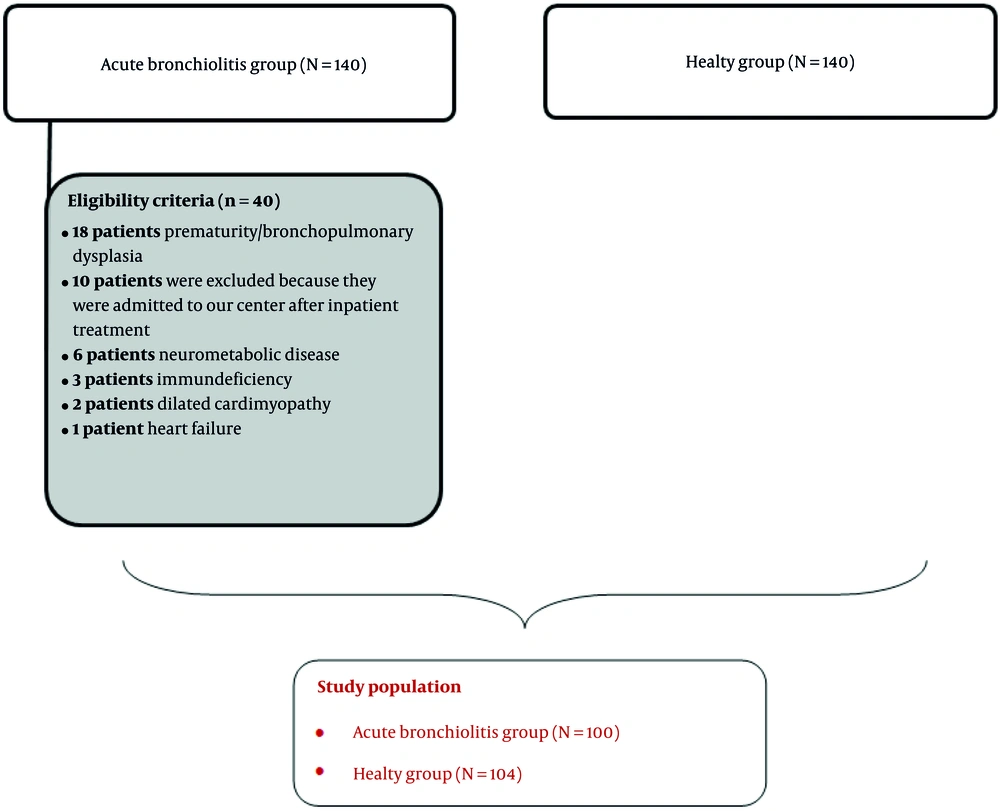
Figure 1.
Flowchart of patients included in the study
Clinical outcomes were predefined and extracted from electronic medical records for the index hospitalization. All time-based outcomes were measured in days. Total hospital stay was defined as the number of days from hospital admission to discharge. PICU stay was defined as the duration of admission to the PICU during the same hospitalization. Time to transition to room air was defined as the number of days from admission until discontinuation of supplemental oxygen support.
Duration of non-invasive ventilation was defined as the total number of days during which the patient received HFNC or NIV. Duration of IMV was defined as the total number of days on invasive ventilatory support. Total duration of respiratory support was defined as the cumulative duration of all respiratory support modalities. All outcomes were calculated based on the index hospitalization. Patients with incomplete outcome data, transfers to other institutions, or missing follow-up information were excluded from outcome analyses. Because length-of-stay and duration variables showed a non-normal distribution, non-parametric methods were used for group comparisons.
3.3. Statistical Analysis
Statistical analyses were performed using SPSS version 28.0 (IBM Corp., Armonk, NY, USA). Categorical variables were presented as frequencies and percentages, whereas continuous variables were summarized as mean ± standard deviation or median (minimum-maximum), as appropriate. The Kolmogorov-Smirnov test was used to assess the normality of the data distribution. Comparisons between groups were performed using the independent-samples t-test for normally distributed variables and the Mann-Whitney U test for non-normally distributed variables. Categorical variables were compared using the chi-square test.
Given the potential influence of confounding factors on HALP components, including age, sex, inflammatory burden, nutritional status, and possible bacterial coinfection, these variables were considered during analysis and interpretation. In particular, age and sex were evaluated descriptively, and inflammatory markers, including CRP and PCT, were examined to contextualize the findings. However, because of the retrospective design and relatively limited sample size, comprehensive multivariable adjustment for all potential confounders was not feasible; therefore, the results were interpreted with caution, and the possibility of residual confounding was acknowledged.
In addition to P values, effect sizes were considered to improve the clinical interpretability of between-group differences, and median differences were calculated for key variables. Because multiple laboratory parameters were evaluated, the potential for type I error due to multiple comparisons was recognized. Formal adjustment methods were not applied because of the exploratory nature of the study; accordingly, findings were interpreted conservatively. Where applicable, the number of observations (n) for each laboratory parameter was reported to account for missing data.
Receiver operating characteristic (ROC) curve analysis was performed to evaluate the discriminative performance of the HALP score. The optimal cut-off value was determined using the Youden Index. Sensitivity and specificity corresponding to the optimal cut-off were calculated. The area under the curve (AUC) was reported with 95% confidence intervals (CIs) to quantify overall diagnostic accuracy. The binary outcomes for ROC analyses were defined as AB versus control for diagnostic performance and severe versus non-severe bronchiolitis for severity assessment. All ROC analyses were conducted on the same dataset used to derive the cut-off values; therefore, the potential for optimism bias was acknowledged. Internal validation methods, such as bootstrapping or cross-validation, were considered; however, when not feasible, the risk of overfitting was explicitly acknowledged, and findings were interpreted conservatively. A P value < 0.05 was considered statistically significant. Because of the relatively limited sample size and the number of potential confounding variables, multivariable regression analysis was not performed. Therefore, no adjusted estimates are presented, and the findings should be interpreted as exploratory. Potential confounding effects, particularly those related to age and sex, could not be fully controlled.
4. Results
The study included 204 children aged 1 to 24 months, comprising 100 patients diagnosed with AB and 104 healthy controls. Regarding sex distribution, the patient group included equal numbers of males and females: 50 males (50%) and 50 females (50%). The control group included 54 males (51.9%) and 50 females (49%) (Table 2). The median age was 8 months (range, 4 - 23 months) in the control group and 7 months (range, 2 - 11 months) in the bronchiolitis group (Table 2). Although the median ages were similar, the age distribution differed between groups, with a wider range in the control group. Sex distribution was comparable between groups. Because age may influence hematological and biochemical parameters, including the components of the HALP score, this difference was considered a potential confounder in the interpretation of HALP-related analyses.
| Variables | Healthy group (n = 104) | Patient group (n = 100) | P-Value |
|---|---|---|---|
| Sex | 0.784 | ||
| Male | 54 (51.9) | 50 (50.0) | |
| Female | 50 (48.1) | 50 (50.0) | |
| Age at diagnosis, mo | 8 (4 - 23) | 7 (2 - 21) | 0.09 |
| Hemogram parameters | |||
| Hemoglobin, g/L | 122 (110 - 204) | 114 (71 - 173) | 0.001 c |
| WBC, ×103/μL | 9.35 (8.4 - 18.9) | 11.6 (10.8 - 36.5) | 0.031 c |
| Lymphocyte count, × 103/μL | 6.14 (1.2 - 11.61) | 3.13 (0.62 - 11.70) | 0.001 c |
| Neutrophil, × 103/μL | 2.24 (0.17 - 7.59) | 5.12 (1.6 - 29.24) | 0.001 c |
| Monocyte, × 103/μL | 0.66 (0.19 - 3.54) | 0.75 (0.2 - 4.26) | 0.359 |
| Platelet count, × 103/μL | 323 (162 - 448) | 330 (99 - 652) | 0.025 c |
| PDW | 9.9 (7.6 - 11.4) | 10 (7.6 - 9.8) | 0.769 |
| Albumin, g/L | 47 (35 - 52) | 40.5 (28 - 49) | 0.001 c |
| HALP score | 113.74 (10.9 - 225.9) | 49.7 (11.8 - 147.9) | 0.001 c |
a Values are expressed as No. (%) or median (IQR). Abbreviations: HALP, hemoglobin-albumin-lymphocyte-platelet; PDW, platelet distribution width; WBC, white blood cell.
b All laboratory parameters were available for all participants; no missing data were present.
c P < 0.05.
Among children diagnosed with AB, hemoglobin, neutrophil count, WBC count, and platelet count were higher than those in the healthy control group, whereas lymphocyte count, CRP level, albumin concentration, and HALP score were lower. The magnitude of these differences varied across parameters, with HALP showing a marked reduction in the bronchiolitis group (Table 2). No meaningful differences were observed between groups in monocyte count or platelet distribution width (PDW).
All tables and figures are presented in sequential order and cited at their first relevant mention in the text. Table 2 presents the demographic and laboratory characteristics of the study population. Table 3 shows laboratory findings and clinical outcomes according to disease severity. The ROC curve analyses illustrating the diagnostic and prognostic performance of the HALP score are shown in Figures 2 and 3.
| Variables | Moderate AB, n = 56 (56%) | Severe AB, n = 44 (44%) | P-Value |
|---|---|---|---|
| Hemogram parameters | |||
| Hemoglobin, g/L | 114.5 (71 - 173) | 112 (73 - 150) | 0.623 |
| WBC, × 103/μL | 10.98 (1.9 - 25.46) | 11.1 (1.8 - 29.5) | 0.354 |
| Lymphocyte count, × 103/μL | 3.43 (0.7 - 11.7) | 3.03 (0.62 - 9.47) | 0.250 |
| Neutrophil, × 103/μL | 5.17 (1.56 - 18.18) | 5.05 (7.8 - 21.24) | 0.811 |
| Monocyte, × 103/μL | 0.89 (0.14 - 3.92) | 0.5 (0.1 - 3.2) | 0.030 |
| Platelet count, × 103/μL | 308 (99 - 652) | 349 (178 - 587) | 0.094 |
| PDW | 10.5 (7.9 - 13) | 9.4 (7.6 - 14) | 0.005 |
| Acute-phase reactants | |||
| Albumin, g/L | 41.5 (33 - 49) | 40 (28 - 48) | 0.255 |
| CRP, mg/L | 10.4 (0.2 - 146) | 8.50 (0.2 - 103) | 0.942 |
| PCT, ng/mL | 0.2 (0 - 2.10) | 0.19 (0.05 - 8) | 0.325 |
| HALP score | 59.3 (16.7 - 147.9) | 40.5 (11.8 - 99.2) | 0.004 |
| Prognostic indicators, d | |||
| Total hospital stay | 5 (4 - 20) | 7 (5 - 35) | 0.001 |
| PICU length of stay | 4 (2 - 20) | 5 (2 - 29) | 0.001 |
| Time to room air | 4 (3 - 18) | 6 (3 - 30) | 0.001 |
| Total duration of respiratory support | 3 (1 - 16) | 5 (2 - 29) | 0.001 |
| Duration of non-invasive ventilation | 3 (1 - 11) | 5 (2 - 14) | 0.001 |
| Duration of invasive mechanical ventilation | 2 (1 - 5) | 3 (2 - 15) | 0.024 |
a Values are expressed as median (IQR). Abbreviations: CRP, C-reactive protein; HALP, hemoglobin-albumin-lymphocyte-platelet; PCT, procalcitonin; PDW, platelet distribution width; PICU, pediatric intensive care unit; WBC, white blood cell.
b No missing data were present for baseline laboratory parameters; however, outcome analyses were restricted to patients with complete follow-up data.
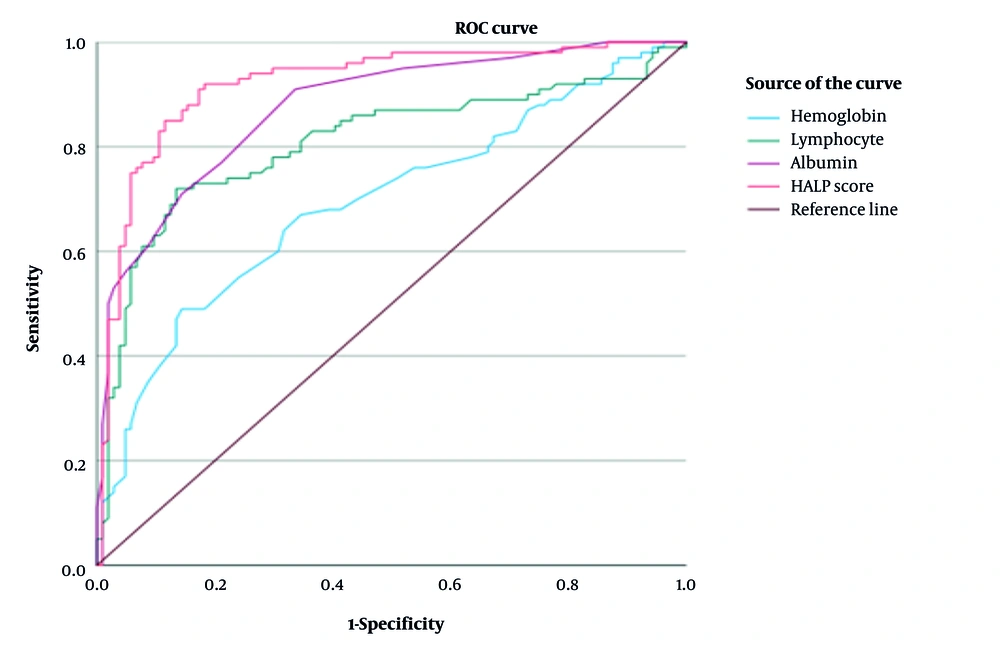
Figure 2.
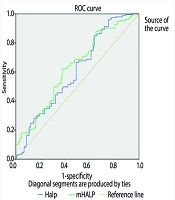
ROC curve of the HALP score for diagnosis of acute bronchiolitis. Receiver operating characteristic (ROC) curve for differentiating acute bronchiolitis from healthy controls (positive class: acute bronchiolitis). AUC, 0.88 (95% CI, 0.82 - 0.93); cut-off, 80.91; sensitivity, 85%; specificity, 88.5%; determined using the Youden Index.
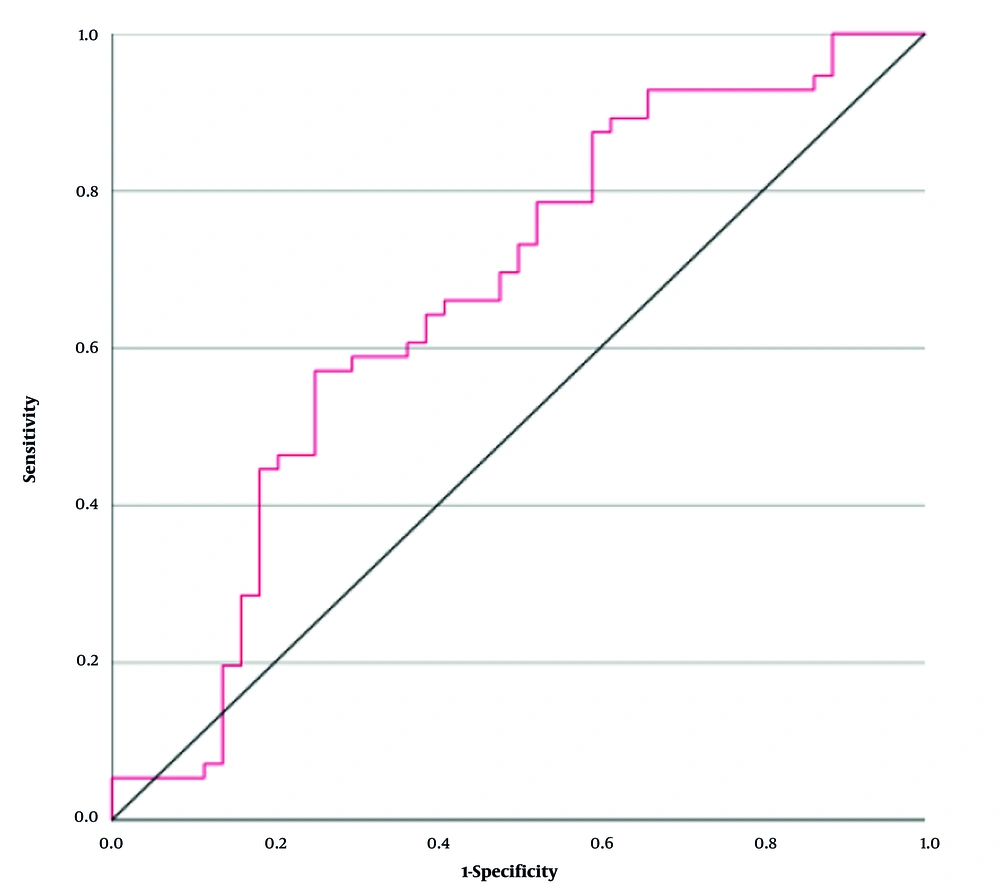
Figure 3.
ROC curve of the HALP score for discriminating severe versus non-severe acute bronchiolitis. Receiver operating characteristic (ROC) curve for differentiating severe from non-severe bronchiolitis (positive class: severe bronchiolitis). AUC, 0.67 (95% CI, 0.56 - 0.78); cut-off, 42.65; sensitivity, 57.1%; specificity, 75%; determined using the Youden Index.
When stratified by disease severity, children with severe bronchiolitis had lower HALP scores than those with moderate disease, with a median difference of approximately 18.8 units (59.3 vs 40.5). Monocyte count and PDW were also lower in the severe group; however, differences in other laboratory parameters were small and were not considered clinically meaningful (Table 3). Inflammatory markers, including CRP and PCT, were similar between groups, suggesting that differences in HALP were not solely explained by the measured inflammatory burden. Given the number of laboratory parameters evaluated, these findings should be interpreted with caution, and emphasis was placed on the magnitude and clinical relevance of differences rather than on statistical significance alone (Table 3).
Among children admitted to the PICU with a diagnosis of AB, 44 (44%) were classified as having severe disease and 56 (56%) as having moderate disease. Patients with severe bronchiolitis had significantly longer clinical courses than those with moderate disease. The median total hospital stay was 7 days in the severe group and 5 days in the moderate group, corresponding to a median difference of 2 days (P = 0.001). Similarly, PICU stay was longer in the severe group (median, 5 vs 4 days; median difference, 1 day; P = 0.001), and time to transition to room air was longer (median, 6 vs 4 days; median difference, 2 days; P = 0.001). Among patients classified as having severe bronchiolitis, the most common criterion was escalation to IMV (n = 20), followed by oxygen saturation < 90% requiring continuous oxygen supplementation (n = 15) and signs of severe respiratory distress, such as marked retractions or apnea (n = 12) (Table 4). Some patients met more than 1 severity criterion.
Table 4.
Distribution of Severity Classification Criteria in Patients with Severe Acute Bronchiolitis a
| Criterion | No. (%) |
|---|---|
| Invasive mechanical ventilation requirement | 20 (56.8) |
| Oxygen saturation < 90% | 15 (34.1) |
| Severe respiratory distress/apnea | 12 (27) |
| Failure of non-invasive ventilation (HFNC/NIV) | 20 (45.4) |
a Patients may have met more than 1 severity criterion; therefore, percentages may not sum to 100%. Abbreviations: HFNC, high-flow nasal cannula; NIV, non-invasive ventilation.
The total duration of mechanical ventilation was also longer in severe cases. The median duration of non-invasive ventilation was 5 vs 3 days (difference, 2 days; P = 0.001), and the median duration of IMV was 3 vs 2 days (difference, 1 day; P = 0.024). Severity classification was based on predefined criteria, including the requirement for IMV, oxygen saturation < 90%, and signs of severe respiratory distress. Patients in the severe group frequently met more than 1 of these criteria; however, classification was primarily driven by the highest level of respiratory support required.
When stratified by sex, the association between the HALP score and disease severity remained consistent in both male and female subgroups.
ROC curve analysis demonstrated good discriminative ability of the HALP score to differentiate AB from controls (AUC, 0.88; 95% CI, 0.82 - 0.93). The optimal cut-off value determined using the Youden Index was 80.91, yielding a sensitivity of 85% and a specificity of 88.5%.
For severity prediction (severe vs non-severe bronchiolitis), the HALP score showed moderate discriminative performance, with an AUC of 0.67 (95% CI, 0.56 - 0.78). The optimal cut-off value was 42.65, corresponding to a sensitivity of 57.1% and a specificity of 75% (Figure 3). Because the cut-off values were derived and evaluated within the same dataset, these results should be interpreted with caution because of the potential risk of optimism bias.
5. Discussion
The diagnosis of AB largely relies on the patient’s clinical presentation and physical examination findings, with laboratory tests and imaging studies used as supportive tools when clinically indicated (8). Acute bronchiolitis is characterized by airway inflammation with edema and increased mucus secretion, and antibiotic therapy is generally not indicated for its management (13, 14). Accurate assessment of disease severity is essential to guide treatment decisions and determine the need for hospitalization or intensive care. Recent studies have further emphasized the role of inflammatory biomarkers in predicting disease severity and clinical outcomes in bronchiolitis (8, 15).
In recent years, the HALP score, derived from hemoglobin, albumin, lymphocyte, and platelet parameters, has emerged as a novel indicator of systemic inflammatory burden and nutritional status. It is cost-effective, readily accessible, and easily calculated from routine laboratory data in clinical practice. Acute bronchiolitis is known to trigger a systemic inflammatory response, and interest in applying the HALP score to pediatric inflammatory conditions has increased (9). Previous research has shown that reduced HALP scores are associated with heightened inflammatory responses and compromised nutritional status, both of which have been linked to adverse clinical outcomes (9, 10).
The association between the HALP score and age remains controversial. Adult studies generally report decreasing HALP values with advancing age (16, 17), whereas pediatric data are limited and complicated by age-dependent hematological and biochemical variations. In our study, the population consisted of children aged 1 to 24 months, representing a relatively narrow age range; however, age-related variability in HALP components cannot be fully excluded.
During early childhood, nutritional status, immune system maturation, and metabolic demands play critical roles in susceptibility to infections. Hemoglobin and albumin, key components of the HALP score, are particularly relevant in pediatric populations. Anemia affects approximately one-third of children worldwide and has been associated with impaired immune function and increased susceptibility to respiratory infections (18).
Nevertheless, these factors may also act as potential confounders in the interpretation of HALP values. Therefore, the observed association between the HALP score and bronchiolitis severity should be interpreted with caution, as HALP may reflect not only disease-related inflammation but also underlying nutritional and physiological status.
Inflammatory processes can alter albumin synthesis and distribution, making serum albumin a marker of disease severity rather than nutritional status alone (19). In the present study, decreased hemoglobin and albumin levels contributed to lower HALP scores in children with AB and were associated with greater disease severity and longer hospital stays. Similarly, hypoalbuminemia is commonly observed in hospitalized children and has been linked to adverse clinical outcomes and an increased mortality risk (19).
Platelets also play a crucial role in inflammatory and immune processes, particularly in airway inflammation (20). Proinflammatory cytokines released during systemic infections stimulate platelet production and activation, leading to changes in platelet count and function (21). Consistent with previous studies, our findings demonstrated significantly higher platelet counts in children with AB than in healthy control subjects.
An increased WBC count and elevated CRP levels have been consistently reported in bronchiolitis and other inflammatory respiratory disorders (14, 22). The neutrophil-to-lymphocyte ratio is widely regarded as a reliable measure of both systemic inflammation and physiological stress (23). Previous studies have demonstrated its association with disease severity in community-acquired pneumonia (24). Consistent with these findings, increasing disease severity in our cohort was accompanied by higher neutrophil counts and lower lymphocyte counts, supporting the inflammatory basis of severe bronchiolitis.
Benli et al. (7) reported that the HALP score was effective in predicting both prognosis and complication risk in pediatric acute appendicitis cases. In adult patients, bronchiectasis exacerbations have been associated with increased WBC counts, neutrophil levels, and CRP concentrations, accompanied by reduced HALP scores and albumin levels compared with stable disease periods (25). Although the HALP score has been widely investigated in adult cohorts, evidence supporting its clinical utility in pediatric populations has only recently begun to emerge. To date, the association between the HALP score and disease severity in pediatric patients with AB admitted to the PICU has not been specifically examined. In addition, the HALP score demonstrated moderate discriminative performance in distinguishing severe from non-severe bronchiolitis, suggesting that although it may contribute to severity assessment, its discriminative capacity is limited when used alone and should be interpreted in conjunction with clinical findings.
Research conducted reported that hematological parameters and ratios derived from a complete blood count, as well as acute-phase reactants, were not effective in predicting YANKOT scores or the need for intensive care admission; however, these parameters were not compared with healthy controls.
Several limitations should be considered when interpreting the present findings. This study was a retrospective, single-center analysis conducted in a tertiary PICU, which may limit the generalizability of the results to broader pediatric populations, particularly milder cases managed in outpatient settings. In addition, the predominance of hospitalized patients and the exclusion of cases with incomplete data may have introduced selection bias. The relatively small sample size is another important limitation, as it may have reduced statistical power and restricted the use of more comprehensive analytical approaches. In particular, multivariable adjustment for potential confounders was not feasible. Given that factors such as age, sex, inflammatory status, and nutritional condition may influence both HALP values and clinical outcomes, the absence of adjusted analyses increases the likelihood of residual confounding. Therefore, the observed associations should be interpreted with caution. Although stratified analyses suggested a consistent relationship between the HALP score and disease severity across sex groups, these findings should be considered exploratory. Furthermore, the lack of standardized reference values for the HALP score in pediatric populations limits the clinical interpretability of the results. While HALP has been widely investigated in adult populations, particularly in oncology and chronic inflammatory conditions, evidence in pediatric settings remains limited. Taken together, these limitations indicate that the present findings should be considered preliminary. Future large-scale, prospective, multicenter studies incorporating standardized methodologies and appropriate multivariable analyses are needed to further clarify the clinical utility of the HALP score in pediatric AB. Therefore, the findings should be interpreted as hypothesis-generating rather than confirmatory.
5.1. Conclusion
The findings of this study demonstrate that the HALP score was associated with disease severity and clinical outcomes in children with AB. Lower HALP values were observed in patients with more severe disease and were associated with longer hospital stays. These results suggest that the HALP score may serve as a simple, readily available biomarker to support risk stratification in pediatric bronchiolitis. However, it should not be considered a standalone tool for clinical decision-making, and its interpretation should be integrated with clinical assessment and other relevant parameters. In our cohort, children with moderate-to-severe bronchiolitis requiring PICU admission had lower HALP scores, supporting its potential role as an adjunctive marker reflecting disease burden. Given the retrospective, single-center design and the lack of external validation of cut-off values, these findings should be interpreted with caution. Further prospective, multicenter studies are needed to confirm the clinical utility and generalizability of the HALP score in pediatric bronchiolitis.