1. Background
Pediatric heart failure is a complex clinical syndrome caused by ventricular dysfunction, volume overload, or pressure overload and remains an important cause of morbidity and mortality in children and adolescents (1). The reported incidence ranges from 0.87 to 7.4 cases per 100,000 children, and approximately 40% of affected patients ultimately undergo heart transplantation or die (2, 3). Although end-stage heart failure in children is relatively rare, it is associated with a high risk of mortality and considerable clinical uncertainty.
Symptoms of pediatric heart failure are often nonspecific. Parents typically undergo a long and complex process of seeking medical care, and the condition is often initially treated as a common illness, such as gastroenteritis or a cold. When a condition previously considered minor is suddenly diagnosed as end-stage heart failure, parents often experience a strong psychological and cognitive contrast (4, 5).
For children who cannot immediately receive heart transplantation or who are awaiting a donor heart, implantation of an LVAD has become an important life-sustaining treatment (6). Although LVAD technology has significantly improved survival outcomes, the decision to proceed with implantation is itself a high-risk and highly complex process (7).
In pediatric settings, treatment decisions are usually made by parents or legal guardians on behalf of the child (8). For children with end-stage heart failure, LVAD implantation involves high risk, technological complexity, and life-sustaining implications (9), and the decision-making process entails substantial ethical, emotional, and practical responsibilities.
In high-risk treatment decisions, parents are often required to decide whether to proceed with LVAD implantation while coping with emotional shock, an uncertain prognosis, and highly specialized medical information (10). Such decisions may alter the child's life trajectory and involve weighing multiple considerations, including survival probability, potential complications, quality of life, and family burden. Therefore, understanding parents' experiences and responses during high-risk treatment decision-making is important for improving communication strategies and decision support in clinical practice.
SDM is widely considered an ideal approach for high-risk medical decisions. SDM emphasizes information exchange, awareness of treatment options, clarification of values, and collaborative discussion between clinicians and families, with the aim of integrating medical evidence with family preferences to support informed and value-based decisions (11). However, implementing SDM is more challenging in clinical decisions that are high-risk, complex, and prognostically uncertain. When information is complex, emotional stress is high, time is limited, and value conflicts are present, it remains unclear whether SDM can be fully implemented in practice (12, 13).
Previous studies have primarily focused on LVAD decision-making in adult populations or have described the emotional experiences and psychological stress experienced by pediatric LVAD patients and their families during treatment (14, 15). However, in pediatric LVAD implantation, where treatment is complex and outcomes are uncertain, little is known about parents' decision-making experiences and how risk and uncertainty shape the implementation of SDM in real clinical settings.
2. Objectives
Nurses play an important role in explaining medical information, providing emotional support, and coordinating communication. Because of their continuous bedside presence, nurses are often among the first to recognize parents’ confusion about medical information and their emotional distress during the decision-making process. This study aimed to explore parents’ experiences of SDM during decision-making for pediatric LVAD implantation and to inform more supportive communication strategies and SDM support in pediatric nursing practice.
3. Methods
3.1. Participants
Purposive sampling was used to recruit parents of children with end-stage heart failure who had undergone LVAD implantation at the Cardiopulmonary and Extracorporeal Life Support Department of a tertiary children's hospital in Hangzhou, Zhejiang Province, between March and August 2025. The department specializes in advanced pediatric heart failure management and mechanical circulatory support. Participants were selected to ensure that they had direct experience with the decision-making process regarding LVAD implantation. The sampling strategy aimed to recruit information-rich cases, specifically parents who had actively participated in decision-making for LVAD implantation and were able to reflect on their experiences. No predefined stratification by parent role (e.g., mother or father) or variation in the child's clinical course was applied; however, parents with diverse family backgrounds and clinical experiences were included as they became available during recruitment.
Inclusion criteria were: 1) parents aged 18 years or older; 2) children clinically diagnosed with end-stage heart failure; 3) children who had completed LVAD implantation for at least one week; and 4) parents who were primary participants in the decision-making process for LVAD implantation. Parents were excluded if they had hearing or language impairments that precluded effective communication or a documented history of severe mental illness.
Sampling and data analysis were conducted concurrently. Data saturation was assessed iteratively during analysis and defined as the point at which no new codes, categories, or conceptual insights emerged from successive interviews. After the 10th interview, no substantially new information was identified, and two additional interviews were conducted to confirm saturation. A total of 12 parents were ultimately included. Saturation was therefore determined retrospectively based on ongoing data analysis.
3.2. Interview Guide Development
The interview guide was developed following a brief review of relevant literature and informed by the SDM framework proposed by Elwyn et al. (10-12), particularly the Team Talk, Option Talk, and Decision Talk components. Questions were designed to explore parents' understanding of the illness, awareness of treatment options, emotional responses, value deliberation, and perceived decision support. Two eligible parents participated in pilot interviews to assess clarity and relevance. Based on their feedback and team discussion, minor revisions were made to refine wording and sequencing. The alignment between the interview questions and core SDM constructs is summarized in Table 1.
Table 1.
Mapping of Interview Questions to SDM Constructs
| Interview Question | Core SDM Construct | SDM Phase |
|---|---|---|
| Q1. How did you understand your child's condition of end-stage heart failure? | Illness understanding; cognitive preparation | Team Talk |
| Q2. How did you first learn about LVAD implantation as a treatment option, and what was your understanding of it at that time? | Awareness of treatment options; information exchange | Option Talk |
| Q3. What were your initial feelings when you were informed that your child might need LVAD implantation? | Emotional response; decisional stress | Team Talk / Transition to Option Talk |
| Q4. How did you perceive the potential benefits, risks, and long-term impact of LVAD implantation? | Risk-benefit deliberation; outcome appraisal | Option Talk / Decision Talk |
| Q5. What factors did you consider when making the decision? | Values clarification; personal priorities; contextual influences | Decision Talk |
| Q6. What difficulties or uncertainties did you encounter during the decision-making process, and how did you address them? | Decisional conflict; uncertainty management | Decision Talk |
3.3. Data Collection
Data were collected through semi-structured interviews conducted either face-to-face or via secure video conferencing, according to participants' preferences. Face-to-face interviews were held in a game room within the department, whereas video interviews were conducted with parents in private home settings.
All interviews were conducted by two female researchers (Hongmei Zhu and Peiying Wang), both nursing researchers with formal training in qualitative research methods and prior experience conducting semi-structured interviews. Before data collection, the interviewers had no established relationship with the participants. During recruitment and before each interview, efforts were made to build rapport and establish trust. Before each interview, the study purpose was explained. With written informed consent, interviews were audio-recorded and lasted approximately 30 - 50 minutes.
The interview guide served as a flexible framework, allowing adaptation and probing to explore participants' experiences in depth. Field notes were taken to capture nonverbal cues. No substantial differences in content richness were observed between the interview modes.
3.4. Qualitative Data Analysis
The qualitative outcome of this study was a thematic understanding of parents' experiences of SDM during high-risk treatment decision-making for pediatric LVAD implantation.
Data were analyzed using inductive qualitative content analysis as described by Graneheim and Lundman (16), with reference to methodological guidance by Vaismoradi et al. (17). Interviews were transcribed verbatim by two researchers within 24 hours of completion to ensure accuracy. All transcripts were read repeatedly to obtain an overall understanding of the data.
Meaning units relevant to the study aim were identified, condensed, and labeled with initial codes. An initial coding framework was developed inductively from the data and iteratively refined as analysis progressed. Codes were compared for similarities and differences and grouped into subcategories, which were further abstracted into broader categories through continuous comparison with the original transcripts. Categories were then interpreted and integrated into overarching themes that captured patterns across the data. This stepwise process ensured a clear analytic pathway from meaning units to codes, categories, and final themes.
To enhance analytic rigor, two researchers independently coded a subset of transcripts at an early stage of analysis to develop and refine the coding framework. The remaining transcripts were coded by one researcher using the agreed framework, with regular team discussions to review coding consistency and resolve uncertainties. Discrepancies were discussed until consensus was reached. Categories were further interpreted and synthesized into overarching themes that captured latent meanings across the data. Theme development was guided by iterative comparison between categories and the original data to ensure conceptual coherence and faithful representation of participants' perspectives. Data analysis was conducted manually without the use of qualitative data analysis software. An audit trail was maintained to document coding decisions, category development, and theme generation throughout the process.
To enhance reflexivity during data analysis, the research team remained aware of their professional backgrounds and potential assumptions. Regular discussions were conducted to reflect on analytic decisions and minimize potential interpretive bias. Field notes and analytic memos were also used to document reflections throughout the analytic process.
During the interpretive phase, attention was given to how the emerging categories reflected elements of SDM, including information exchange, awareness of treatment options, and value deliberation.
3.5. Ethical Considerations
The study protocol was approved by the Ethics Committee of Children's Hospital Zhejiang University School of Medicine (2025-IRB-0068-P-01). Participants were informed about the study purpose, the voluntary nature of participation, confidentiality, anonymity, and their right to withdraw at any time. Informed consent and permission to audio-record interviews were obtained from all participants.
4. Results
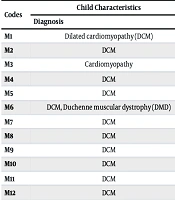
A total of 12 parents of children who underwent LVAD implantation participated in the interviews (Table 2). Four main themes and corresponding subthemes were developed through iterative analysis of the coded data, reflecting how SDM unfolded in a high-risk clinical context, from emotional disruption to value clarification and perceived support needs.
Table 2.
Children and Interviewee/Parent Characteristics
| Codes | Child Characteristics | Parent/Interviewee Characteristics | |||
|---|---|---|---|---|---|
| Diagnosis | Relationship to Patient | Age (y) | Occupation | Family Collaboration Mode | |
| M1 | Dilated cardiomyopathy (DCM) | Mother | 41 | Medical worker | Core division-of-labor |
| M2 | DCM | Mother | 46 | None | Core division-of-labor |
| M3 | Cardiomyopathy | Mother | 44 | None | Sole caregiver |
| M4 | DCM | Mother | 57 | General employee | Core division-of-labor |
| M5 | DCM | Mother | 40 | None | Core division-of-labor |
| M6 | DCM, Duchenne muscular dystrophy (DMD) | Mother | 41 | None | Core division-of-labor |
| M7 | DCM | Mother | 42 | None | Multigenerational collaborative |
| M8 | DCM | Mother | 44 | None | Core division-of-labor |
| M9 | DCM | Mother | 39 | Financial work | Multigenerational collaborative |
| M10 | DCM | Mother | 40 | General employee | Core division-of-labor |
| M11 | DCM | Mother | 42 | General employee | Core division-of-labor |
| M12 | DCM | Mother | 45 | General employee | Core division-of-labor |
4.1. Theme 1: Entering SDM Under Emotional Shock
Parents often described entering the decision-making process during a period of intense emotional distress. Many reported that their understanding of the child’s illness changed suddenly, from what they had initially believed to be a minor condition to a life-threatening diagnosis. Parents’ decision-making did not begin when LVAD was discussed; it began much earlier, when their understanding of their child’s illness was suddenly overturned. Before receiving a clear diagnosis, most parents described a prolonged and confusing process of seeking medical care. Early symptoms were often treated as minor illnesses, which made the final diagnosis of end-stage heart failure even more difficult to accept. This sudden change in illness understanding and the resulting emotional distress shaped how parents entered the SDM process.
4.1.1. Delayed Recognition and Cognitive Contrast
When the diagnosis was confirmed, parents experienced a sharp contrast between their previous assumptions and the reality of a life-threatening condition. Early symptoms were often interpreted as minor illnesses, which made the eventual diagnosis of end-stage heart failure particularly difficult to accept. This transition marked a sudden shift in how parents perceived their child’s condition and served as the emotional starting point for decision-making.
F1: "We have been treating stomach problems, doing blood tests and injections, but we never thought it was a heart problem. As soon as the doctor said heart failure, my heart collapsed."
F7: "When my son pressed his foot on a pit, my whole body collapsed. I said it was a serious illness. I had been treating it as a stomach problem before; I feel scared just thinking about it now."
F2: "He has been having gastrointestinal discomfort. He went to the Eighth Hospital (referring to Shanghai Eighth People's Hospital) and then to the Children's Hospital. No one expected that the blood supply to the heart was so poor. Suddenly they told us that the LVEF (left ventricular ejection fraction) was 13%. I was really shocked."
4.1.2. Psychological Distress Triggered by the Terminal Diagnosis
In addition to the shock of diagnosis, words such as "terminal" and "only option" intensified parents’ fear. Many described feeling panicked, confused, and helpless, and some reported being unable to process information effectively at that moment. This psychological state shaped how parents engaged in subsequent discussions about treatment options.
F5: "The doctor said that his illness was very serious. I collapsed completely, and I was thinking that the child was hopeless."
F9: "He said that he could only save his life, but could not cure it. My head was buzzing at the time, and I didn't dare to push the child in."
F7: "I told him that it was very serious as soon as I moved in, and he became seriously ill the same day. I was scared and panicked at the time, and I didn't know what to do next."
4.2. Theme 2: Negotiating Options Through Understanding and Trust
This theme reflects how parents navigated treatment decisions under uncertainty through a combination of limited understanding, reliance on professional communication, and experiential references. After the initial shock, parents entered a phase of trying to understand LVAD implantation. However, this process occurred under time pressure and emotional strain. LVAD was not merely a medical procedure; it was an unfamiliar technology that would change their child’s daily life. During this stage, SDM unfolded through repeated communication, clarification of treatment options, and ongoing negotiation of uncertainty.
4.2.1. Knowledge Gaps and Uncertainty Surrounding LVAD
For most parents, LVAD was a completely new concept. They had little prior knowledge of mechanical circulatory support, especially in children. The technical explanations, surgical risks, and discussions about long-term care created a substantial mental burden. Many parents said they struggled to fully understand how the device worked and what life would be like afterward. Searching online often increased confusion because the information was inconsistent.
F6: "We have never heard of artificial hearts before, and children have even less of them, so I'm very scared when I think of the risks."
F10: "I was scared to death when I searched the Internet. The information was all different, and I didn't know which one was true."
F2: "The doctor said that this is the only place in China that can accept it, so I felt that the child was too sick, and I was very panicked."
4.2.2. Trust Built Through Professional Communication
Because they could not fully understand all technical details, parents relied heavily on communication with doctors and nurses. Clear explanations, repeated discussions, and honest discussions of risks helped reduce uncertainty. Hearing that previous cases had gone well reassured them and increased confidence.
F4: "The doctor said that they had done 7 cases before and everything went well. We felt a little more at ease all of a sudden."
F11: "The doctors and nurses were very considerate and explained clearly, so we dared to make a decision."
F8: "They have been communicating with us, telling us the risks and how to do it. I feel that they are very trustworthy."
4.2.3. Peer Experiences as Concrete Reference Points
In addition to professional communication, peer experiences were important. Hearing about other children who had undergone LVAD implantation and returned to school or daily activities made the future seem more tangible and less frightening. These examples helped parents envision a possible positive outcome.
F9: "His father went to Beijing and Fuwai Hospital of the Chinese Academy of Medical Sciences and asked the same patients. They also said that artificial hearts can only be used, so we became more determined."
F1: "I also looked for cases of other children receiving artificial hearts on the Internet. Seeing others' recovery, I also see hope."
F3: "I heard that the previous children recovered well, and we are not so scared."
4.3. Theme 3: Clarifying Values Within SDM
This theme captures how parents clarified their values during decision-making, with survival emerging as the dominant guiding principle. As parents moved toward a final decision, they weighed multiple factors, including survival probability, financial burden, family responsibilities, and the child’s wishes. However, across interviews, survival consistently emerged as the dominant value. In this phase of SDM, parents clarified their values, with survival serving as the central priority guiding their final decision.
4.3.1. "Saving Life First" as the Central Guiding Belief
For nearly all parents, the primary decision logic was straightforward: if LVAD implantation offered a chance of survival, it should be pursued. Concerns about inconvenience, uncertainty, or long-term lifestyle adjustments were subordinated to the urgency of survival. Parents frequently described this belief as instinctive and nonnegotiable.
F9: "There is no other way except for an artificial heart. It can save his life, that's what I thought."
F3: "The first thing we thought about was that as long as the child can save his life, nothing else matters."
F1: "It doesn't matter if it is inconvenient to carry a bag (referring to the external artificial heart device that children need to carry with them after surgery, and parents often use a bag that can be worn cross-body). Saving his life is the most important thing."
4.3.2. Financial Burden as Secondary Yet Unavoidable
Although survival was prioritized, financial considerations remained significant. Parents openly acknowledged the substantial economic pressure associated with LVAD implantation and long-term treatment. Nevertheless, most described postponing financial worries in favor of immediate action.
F8: "I feel guilty when I don't have any money. My sister gave me a loan of 100,000 yuan, so I feel more at ease."
F1: "Borrow if you can, and save the child first."
F12: "One year of treatment will cost a lot, but this is not a reason not to do it."
4.3.3. Influence of Family Dynamics and the Child's Voice
Parents’ emotional confidence in their decision was influenced by the attitudes of spouses, grandparents, and, in some cases, the child. Support from family members reinforced determination, whereas hesitation increased anxiety.
F3: "The child said he would do it himself, which reassured us a lot."
F8: "Everyone in the family tried their best to support us, which made us more determined."
F5: "The child's grandmother is too old to take care of him, so I am even more afraid of hurting the child in the future."
F6: "The doctor said that the child's condition is not bad, and we suddenly saw hope."
4.4. Theme 4: Support Gaps and Ongoing Needs in Implementing SDM
This theme highlights gaps between parents’ support needs and the current structure of clinical communication and care. Throughout the decision-making experience, parents identified areas in which additional informational and emotional support would have been beneficial. While appreciating the efforts of healthcare professionals, they perceived gaps in structured guidance and continuity. These gaps reflected challenges in implementing SDM within a high-risk and complex clinical context.
4.4.1. Need for Structured and Comprehensive Information
Parents consistently expressed a desire for clearer, more systematic explanations regarding LVAD implantation. Rather than receiving information through fragmented conversations, they hoped for structured guidance that addressed preoperative risks, expected outcomes, lifestyle implications, and postoperative recovery trajectories.
F12: "We had no idea what would happen in the future, so we felt like we were making decisions in the dark."
F10: "I just hope there will be clear information that clearly explains the risks and benefits."
F7: "There are too few cases, and we can't find anything to compare with."
4.4.2. Emotional Reassurance and Psychological Containment
Beyond medical facts, parents described a profound need for emotional stability and psychological reassurance. Fear, guilt, and uncertainty were common, particularly during the period between diagnosis and the surgical decision.
F4: "I told my son that although we were unlucky, we were very lucky to have met Zhejiang University. The doctors and nurses were so considerate."
F5: "I was very upset at that time, and the nurse could calm me down with just one word."
F9: "It makes parents feel more at ease if they can go in and see their children."
4.4.3. Expectation of Coordinated and Continuous Support
Parents also emphasized the importance of continuity. Decision-making did not end with consent for surgery; rather, it extended into postoperative care and long-term management. Many expressed a desire for multidisciplinary explanations and a coordinated support system that connected preoperative preparation, postoperative care, and home management.
F1: "I hope there will be a complete set of guidance, from pre-operation to recovery."
F8: "I also hope that it will be explained to us by multiple disciplines so that we can have a better understanding."
F11: "I just hope someone can tell me what to do next."
5. Discussion
5.1. Overview of Findings
Guided by the SDM framework, this study explored parents' experiences of high-risk treatment decision-making for LVAD implantation in children with end-stage heart failure. Across the four identified themes, decision-making was not a simple comparison of risks and benefits but rather a dynamic process unfolding under emotional disequilibrium and situational pressure. Parents entered the decision-making stage under intense psychological stress. When facing unfamiliar technology and life-or-death choices, survival emerged as the central moral priority, and decisions were made despite gaps in available support structures. These findings are consistent with previous research showing that parents involved in high-risk medical decisions often experience strong negative emotions, uncertainty, and pressure, which may affect their decision-making ability and experiences (10, 18). Overall, this study highlights that decision-making in high-risk pediatric treatments is shaped not only by clinical information but also by emotional, relational, and value-related factors, offering practical insights for improving decision support in pediatric care.
5.2. Emotional Disruption as the Entry Point of Parental Decision-Making
This study found that parents often entered the LVAD decision-making process after a sudden disruption in their understanding of their child's illness. Before the diagnosis, many parents had interpreted symptoms as common childhood conditions. When they were suddenly informed that their child had end-stage heart failure and might require LVAD implantation, they experienced intense emotional shock and cognitive disorientation. This emotional disruption was not peripheral to parental decision-making but represented an important factor that may influence parents' participation in SDM. Previous studies have shown that strong negative emotions and uncertainty can weaken individuals' ability to process information (19, 20). The present study further found that, following a diagnosis of end-stage heart failure, parents were often drawn into treatment discussions while experiencing intense anxiety and shock, entering the stage of weighing treatment options before emotional adjustment had occurred. Many parents described feeling shocked, panicked, or unable to process information at the initial stage of decision-making. This condition may limit their ability to absorb complex information and articulate their values, thereby affecting their participation in SDM discussions. Therefore, in high-risk and highly uncertain treatment contexts, emotional support may play a foundational role in facilitating participation in SDM, rather than functioning merely as an additional component, with important implications for clinical practice.
5.3. Understanding, Trust, and Experiential Knowledge in Navigating Uncertainty
During treatment discussions, the high technological complexity of LVAD posed an important challenge to parents' understanding and the implementation of SDM. As reflected in Theme 2, parents navigated treatment decisions under uncertainty through limited understanding of LVAD, reliance on professional communication, and experiential reference points provided by other families. Specifically, subtheme 2.1 reflects parents' knowledge gaps, subtheme 2.2 highlights the role of trust, and subtheme 2.3 emphasizes peer experiences. Although SDM emphasizes sufficient information exchange and explanation of risks, parents frequently found it difficult to fully understand the device mechanism, surgical risks, and long-term management requirements in highly specialized clinical contexts (21). The present study further indicates that when information was difficult to fully absorb, trust became an important mechanism that allowed decision-making to move forward. This finding is consistent with previous studies identifying trust as an important facilitator of SDM in pediatric care (22). Parents did not simply accept recommendations passively. Instead, trust in the medical team was gradually established through repeated communication, explanation of risks, and sharing of previous clinical cases. Such trust does not replace rational judgment; rather, it provides psychological security when cognitive resources are limited, enabling parents to make decisions under conditions of uncertainty. In addition, experiences shared by other families offered concrete reference points for understanding abstract medical explanations, helping parents translate "technical risks" into imaginable everyday situations. These findings suggest that in contexts characterized by high uncertainty and technological complexity, parents' engagement in decision-making depends not only on the adequacy of information but also on the quality of interaction, communication experiences, and access to experiential reference points (23). Integrating structured peer support or experiential information into SDM support may therefore help parents better understand complex treatment situations and increase their confidence in treatment decision-making.
5.4. Survival as the Dominant Value in High-Risk Decision-Making
In the final stage of decision-making, parents weighed multiple practical considerations; however, Theme 3 showed that "prioritizing survival" consistently emerged as the central guiding principle. Within the SDM framework, the Decision Talk phase typically emphasizes balanced consideration of different values and preferences. However, in the life-threatening context of end-stage heart failure, parents did not weigh options in a fully balanced manner because survival dominated other considerations. Instead, decision-making was clearly centered on the core goal of survival (24).
Parents did not ignore surgical risks or financial burdens, nor the influence of family dynamics and the child's voice; rather, these considerations were typically subordinated to the immediate goal of survival in parents' accounts (25). This prioritization was not simply driven by emotional impulse but reflected a value hierarchy shaped by parental responsibility and moral commitment (26). In other words, in situations of extreme risk, parents' value clarification during SDM may be characterized by the dominance of a core value rather than the balanced comparison assumed in theoretical models. Recognizing this pattern may help healthcare professionals better respond to families' real concerns during communication and avoid misinterpreting parents' choices as insensitivity to risk or oversimplification of complex decisions.
5.5. Structural Gaps and the Need for Coordinated SDM Support
In high-risk pediatric treatment contexts, the implementation of SDM is influenced not only by parents' emotional states and value orientations but also by structural conditions within clinical care (22). As reflected in Theme 4, parents described needs related to structured and comprehensive information, emotional reassurance, and coordinated and continuous support. Specifically, subtheme 4.1 highlights the need for clearer and more systematic information, subtheme 4.2 reflects parents' need for emotional reassurance, and subtheme 4.3 emphasizes the importance of coordinated and continuous support across the care process.
The present study showed that although parents participated in decision discussions, relevant information was often provided gradually across different communication encounters, without a clearly structured pathway or continuous support. As a result, parents faced a substantial cognitive burden when trying to integrate complex treatment information, and the decision-making process did not always unfold with clear and continuous informational support. These structural constraints do not indicate the absence of SDM efforts but rather highlight the challenges of implementing SDM in real clinical environments. Particularly in situations where the child's condition is highly uncertain and treatment options are complex, the absence of staged communication, clear informational frameworks, and ongoing support mechanisms may lead parents to make decisions before they have fully integrated the available information. These findings suggest that in high-risk pediatric care, SDM should not be viewed solely as a communication approach; rather, effective SDM requires clear care pathways and coordinated team support.
It is important to note that this study was conducted in a highly specialized tertiary center with experience in pediatric LVAD implantation, which is not widely available in many regions in China. This context may have influenced parents' experiences. For example, the perception of this center as a leading or last-resort hospital may have increased parents' trust in the medical team and their willingness to accept high-risk treatment. In addition, the limited availability of alternative treatment options may have made survival the most important priority in decision-making. Therefore, while some findings, such as emotional stress, reliance on trust, and prioritizing survival, may also be relevant in other high-risk pediatric settings, the specific patterns observed in this study should be interpreted with consideration of the study context.
5.6. Implications for Nursing Practice
This study highlights several implications for nursing practice in high-risk pediatric treatment contexts. Emotional support should be considered a key component of SDM, as parents often enter the decision-making process under considerable psychological stress. Nurses, through their continuous presence at the bedside, are well positioned to recognize parents' emotional distress and cognitive burden and to provide timely reassurance and staged explanations. In highly technological treatments such as LVAD implantation, translating medical terminology into clear language and checking parents' understanding may help reduce uncertainty and support meaningful participation in decisions. SDM should also be supported as an ongoing process through multidisciplinary communication and appropriate peer-support resources.
5.7. Limitations
This study has several limitations that should be considered when interpreting the findings. The study was conducted in a single tertiary children's hospital, which may limit the transferability of the results across different healthcare systems and cultural contexts. In particular, this hospital represents a highly specialized center for pediatric LVAD implantation, which may not reflect the situation in other hospitals. This context may affect parents' access to information, their trust in healthcare professionals, and their decision-making process. Therefore, caution is needed when applying these findings to other settings with different levels of resources and clinical experience.
5.8. Conclusions
This study provides insight into how SDM unfolds in real clinical settings during pediatric LVAD treatment decisions. Parents' decisions were not based on a simple comparison of risks and benefits but developed gradually through the interaction of emotional shock, unfamiliar technology, and situational pressures. Survival consistently emerged as the central guiding value, while trust and relational communication helped sustain parents' engagement under conditions of uncertainty. The findings indicate that SDM in high-risk pediatric care is characterized by emotional involvement, relational dynamics, and structural constraints, highlighting the complex context in which parents make treatment decisions.