Percutaneous aspiration and sclerotherapy is the first-line treatment option for symptomatic simple renal cysts(
1). Percutaneous aspiration is a simple, safe and minimally invasive procedure. Simple drainage without sclerotherapy is associated with a high recurrence rate of 40-80%. Percutaneous sclerotherapy using a sclerosing agent provides more satisfactory results than aspiration alone (
2). In aspiration alone, the destruction of epithelial cell lining will not happen and the epithelial cells will continue secreting fluid cyst. In other words the cyst fluid re-accumulates (
4). Secretory epithelial lining the cyst wall must be destructed in order to prevent recurrence. For this purpose, various sclerosing agents such as bismuth-phosphate (
9), tetracyclin hydrochloride (
10), acetic acid (
11), povidone-iodine (
12), n-butyl cyanoacrylate and iodized oil (
13), ethanolamine oleate (
14), OK-432 (
15) and minocycline hydrochloride (
16) have been used after the cyst fluid aspiration. Ethanol is the most commonly used sclerosing agent. Chemical properties of ethanol, leading to necrosis of epithelial cells lining the cyst wall will produce more obstacles. Secretory cells are rapidly inactivated by ethanol, but penetration of the fibrous capsule takes four to twelve hours. In this way, destruction of cysts occur without affecting the renal parenchyma. Ethanol as a sclerosing agent has been mentioned in the literature, and there are studies that have reported success rates of over 90% (
1,
2,
4). Akinci and colleagues treated 98 simple renal cysts with percutaneous ethanol sclerotherapy with a single session technique (
2)
At the end of the first year follow-up, the reduction rate in cyst volume was 93.1%. In 17 patients, the cyst disappeared completely, and 83% of the patients had clinical improvement in the symptoms (
2). Zerem et al. (
17) treated 85 patients and 92 cysts with percutaneous ethanol sclerotherapy. Recurrence of only six cysts occurred at the 24-month follow-up. Mohsen et al. (
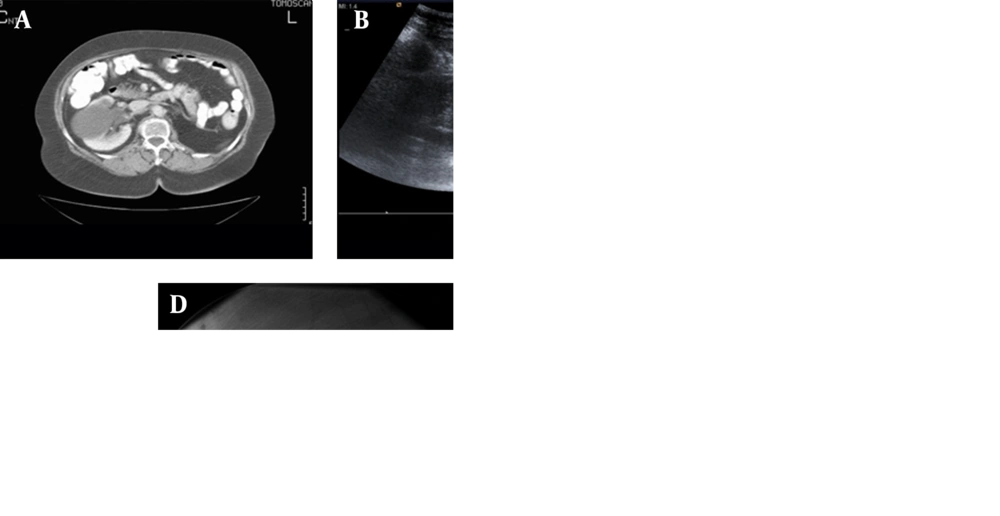
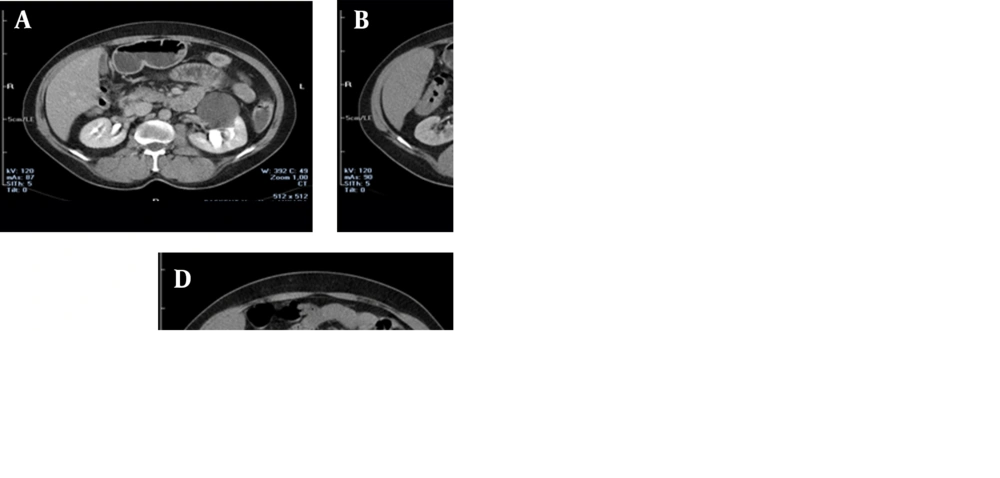
18) treated 64 cysts of 60 patients using sclerotherapy with 95% ethanol. In 84% the method provided complete resolution. In our study, percutaneous cyst aspiration and ethanol sclerotherapy of 88 cysts was applied. Reduction in the size of the cyst occurred in all 75 patients and 88 cysts after the procedure. In 57 cysts, 80% reduction took place in the volume of the cyst after the procedure out of which 31 had a 60-80% decrease in size. Percutaneous ethanol sclerotherapy in the treatment of symptomatic simple renal cysts were considered as successful (P < 0.001). Our success rate was similar to other studies. In the study conducted by Ozgur et al. (
4), a number of patients developed recurrence during follow-up while a sclerosing agent was not used for any of them. In our study, no recurrence or increase in the cyst volume was reported during follow-up. We think that this is due to the usage of ethanol as the sclerosing agent.
The single session of sclerotherapy with ethanol in the literature reported high success rates. There are also studies indicating that multiple session sclerotherapy is a more effective method of treatment. Hanna and Dahniya have shown increased success rates after two sessions of ethanol sclerotherapy. The recurrence rate was 80% in the group on which only aspiration was carried out and 32% in the group on which percutaneous aspiration and single-session ethanol therapy was performed. No recurrence occurred in the group on which ethanol sclerotherapy was carried out twice. The high success rate of sclerotherapy with ethanol depends on the injection by increasing the amount of contact time (
7). Fontana and colleagues used the three-time ethanol injection method. The amount of ethanol used in the treatment was up to 30% of the volume and did not exceed 60 ml per each cyst treatment. Free drainage method of the cyst was used. As a result, recurrence of the cyst occurred in two patients and 68 cysts had complete resolution. The higher success rate in this study was based on the higher ethanol concentration at the cyst wall. The higher ethanol concentration results in the greater destruction of the epithelial tissue. Ethanol penetrates the fibrous capsule slowly that is important in preventing systemic complication (
19).
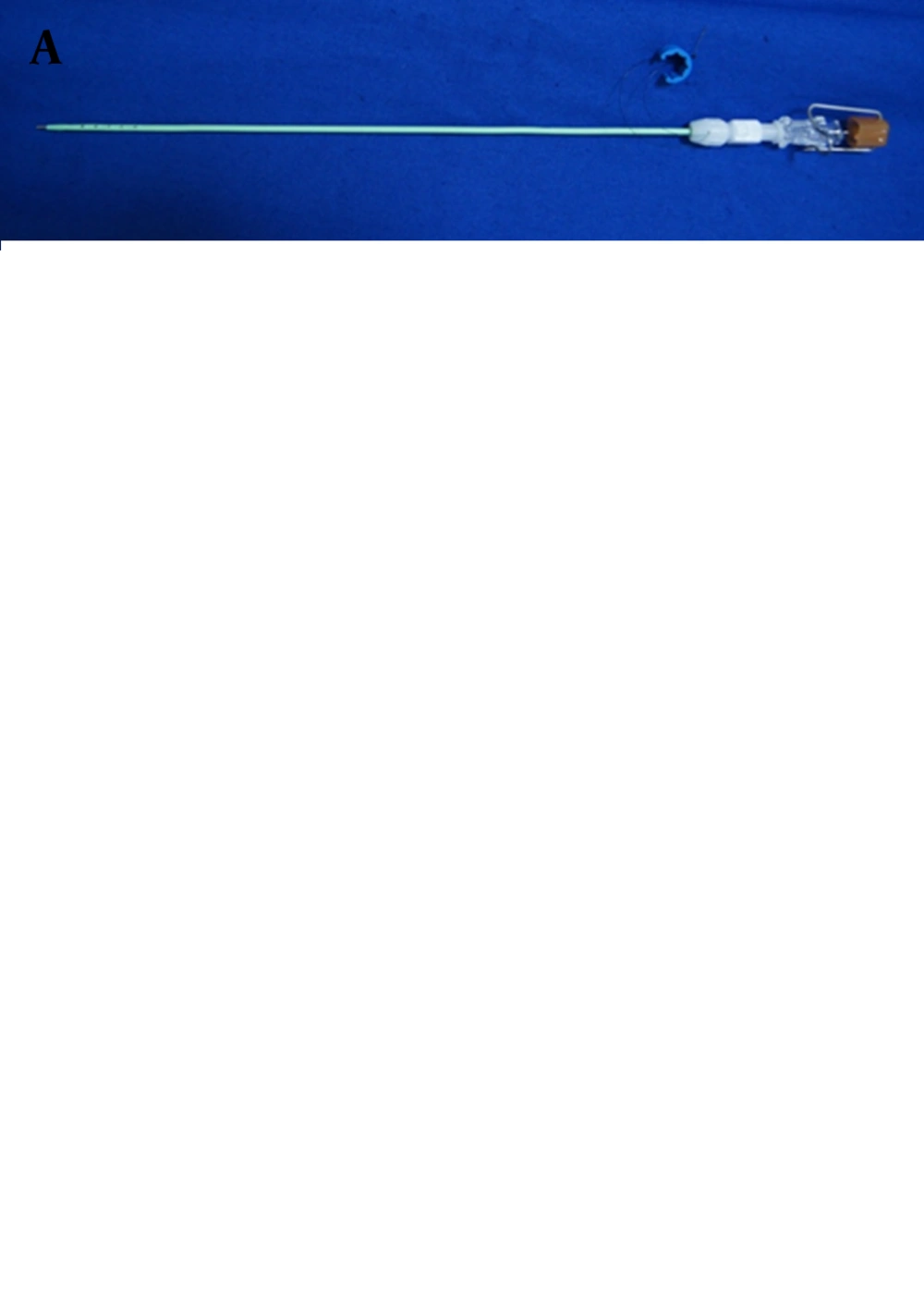
There were limitations in this study. Four of the 88 cysts had treatment with 8F caliber catheter. The number of patients was not enough for the comparison. In other words, there was not enough data to compare the choice-lock catheter and the 8F catheter. The second limitation was the pain scoring system. This is a retrospective study and we did not have a scoring system for the treatment outcome related to pain. But now in our clinic we use the pain scoring system and check before and after the procedure.
In conclusion, percutaneous aspiration and ethanol sclerotherapy is an effective way of treatment of simple cysts. Our study is the first paper that describes the usage of trocar technique and choice-lock catheter.