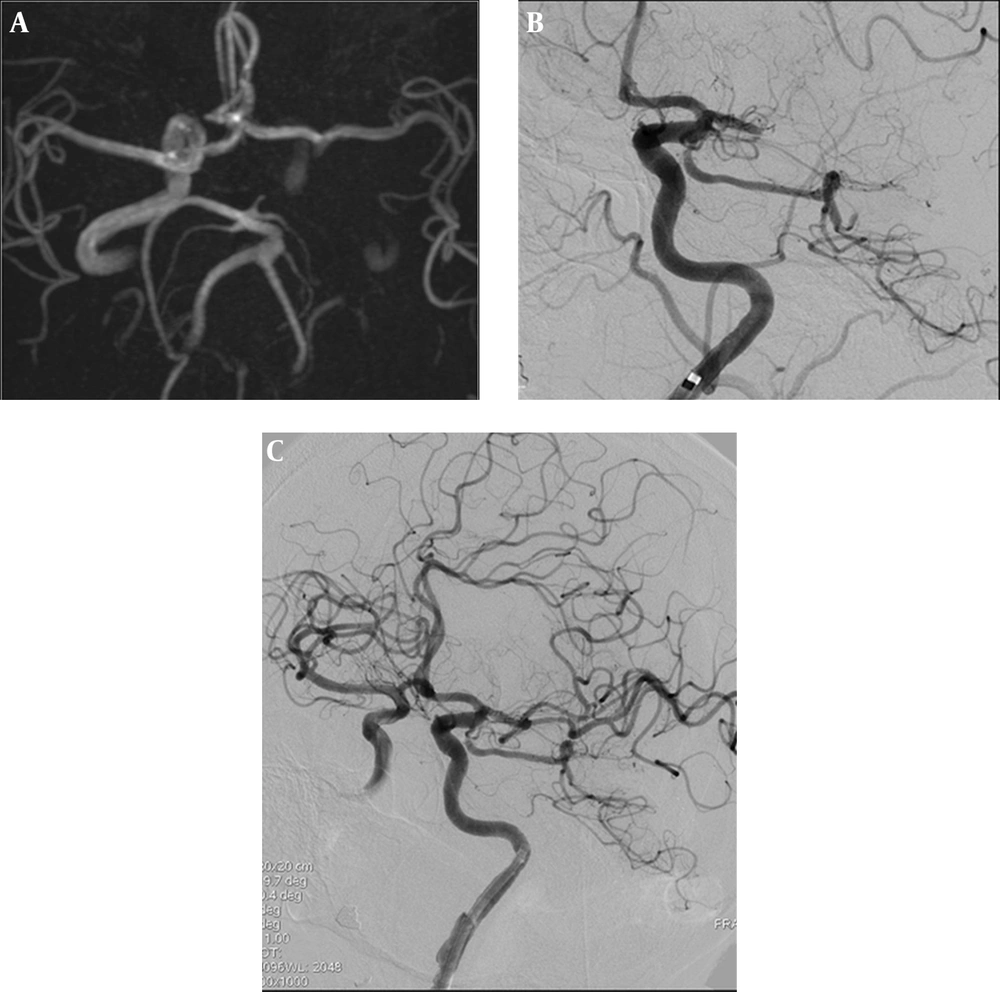
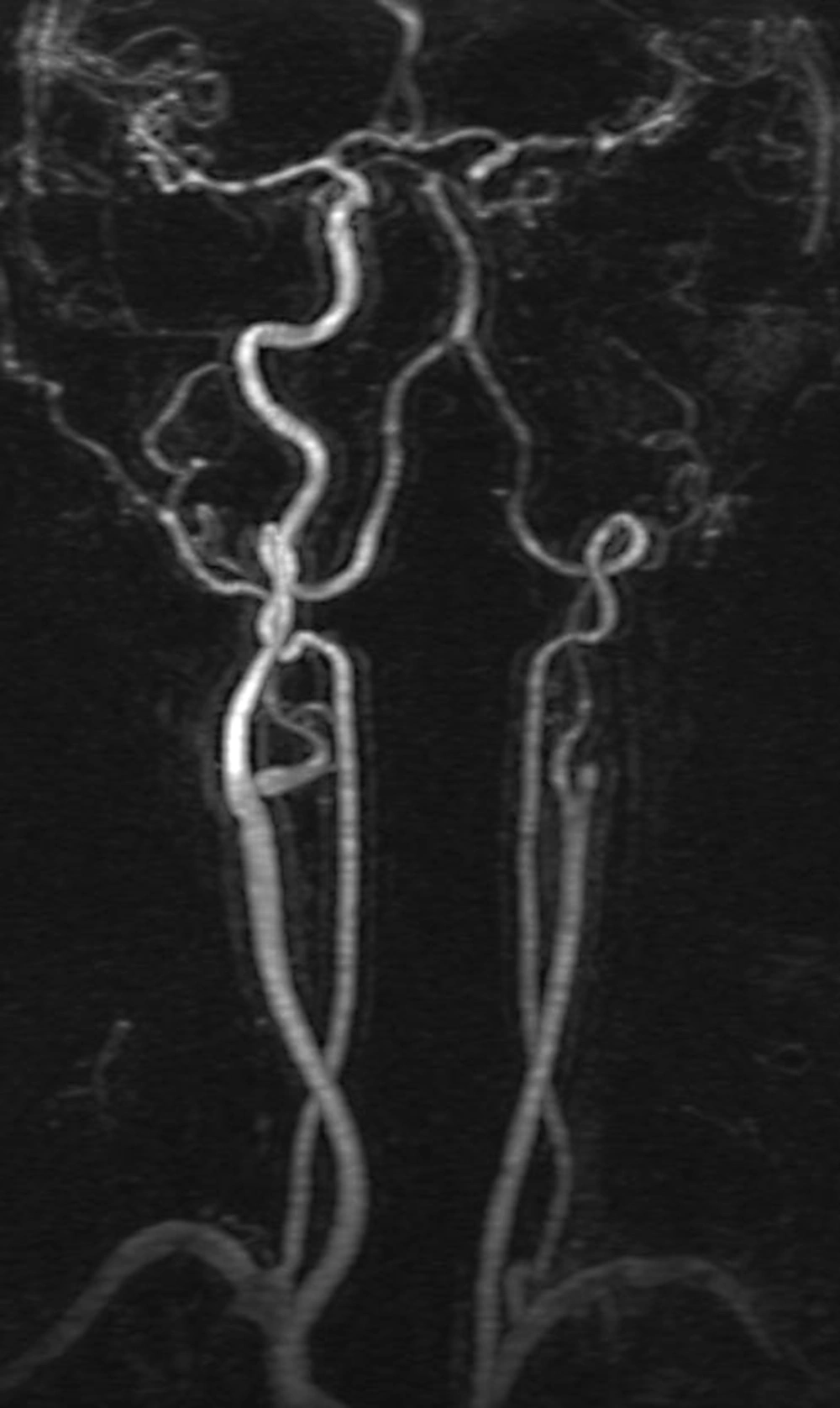
Iatrogenic dissection as a complication of neurointerventional procedures usually occurs when there is a tear in the intima of the arterial wall leading to intrusion of blood within the layers and formation of a false lumen. A false lumen often causes flow limitation to a variable extent (
1,
5,
6). Paramasivam et al. reported an incidence of 0.25% and Akins et al. reported cervical carotid artery dissection in five cases of 144 (3.5%) during endovascular treatment for acute stroke (
7,
8). None of these studies reported the complications in relation with the catheter type except for Akins et al. They reported the incidence of dissection to be 4.5 % using the Solitaire device which was the thrombectomy stent used in the present case (
8).
As mentioned before, there are very few cases in the literature, because some operators may consider small and asymptomatic dissections to be “technical events”, rather than complications, and therefore not report them (
5).
Although it has not been statistically proven that iatrogenic dissections occur more frequently during neurointerventional procedures than during diagnostic cerebral angiography, the risk of iatrogenic dissection may be slightly elevated in neurointerventional procedures due to an increased number of vascular runs, catheter exchanges, and distal placement of catheters (
5). Paramasivam et al. argued that most cases had multiple manipulations, ranging from one to six, in the dissected vessels (
7). In this study, it was noted that the dissection of the extracranial ICA after three SAT passes during the stroke treatment was due to the repetitive movement of the balloon guiding catheter, which was not identified in a search of literature.
Although there is no specific therapy for dissection of the ICA, the most common application for symptomatic spontaneous or traumatic dissections is intravenous administration of heparin. Hart and Easton recommend a follow-up protocol which consists of using heparin for seven days and coumadin for three months. Antiplatelet agents are recommended only when coumadin is contraindicated (
9). If there is no sign of ischemia, aspirin may be recommended for dissections (
5,
9). Good outcomes have been reported with this treatment (
6). There are reports that suggest stenting as an optional treatment, whereas Paramasivam et al. stented cases with luminal stenosis of over 70% and poor intracranial circulation (
7). Stroke resulting from dissection usually occurs within the first week, however it may occur after up to a one month period. For this reason, it is suggested to administer anticoagulant therapy for at least one month (
10).
In this case, the intervention was continued without treating the proximal dissection as there was no progression of the dissection to cause any flow disturbance or poor intracranial circulation.
A dissection of the ICA with a balloon guiding catheter and its progression to the proximal segment of the vessel is a rare condition. Although the dissection is not usually progressive and does not usually cause stenosis, silent occlusion may be the outcome in the dissected segment. For this reason, anticoagulant therapy and follow-up imaging are necessary for nonprogressive iatrogenic dissections following neurointerventional procedures.