





1. Background
2. Objectives
3. Patients and Methods
3.1. Patient Preparation and Procedure
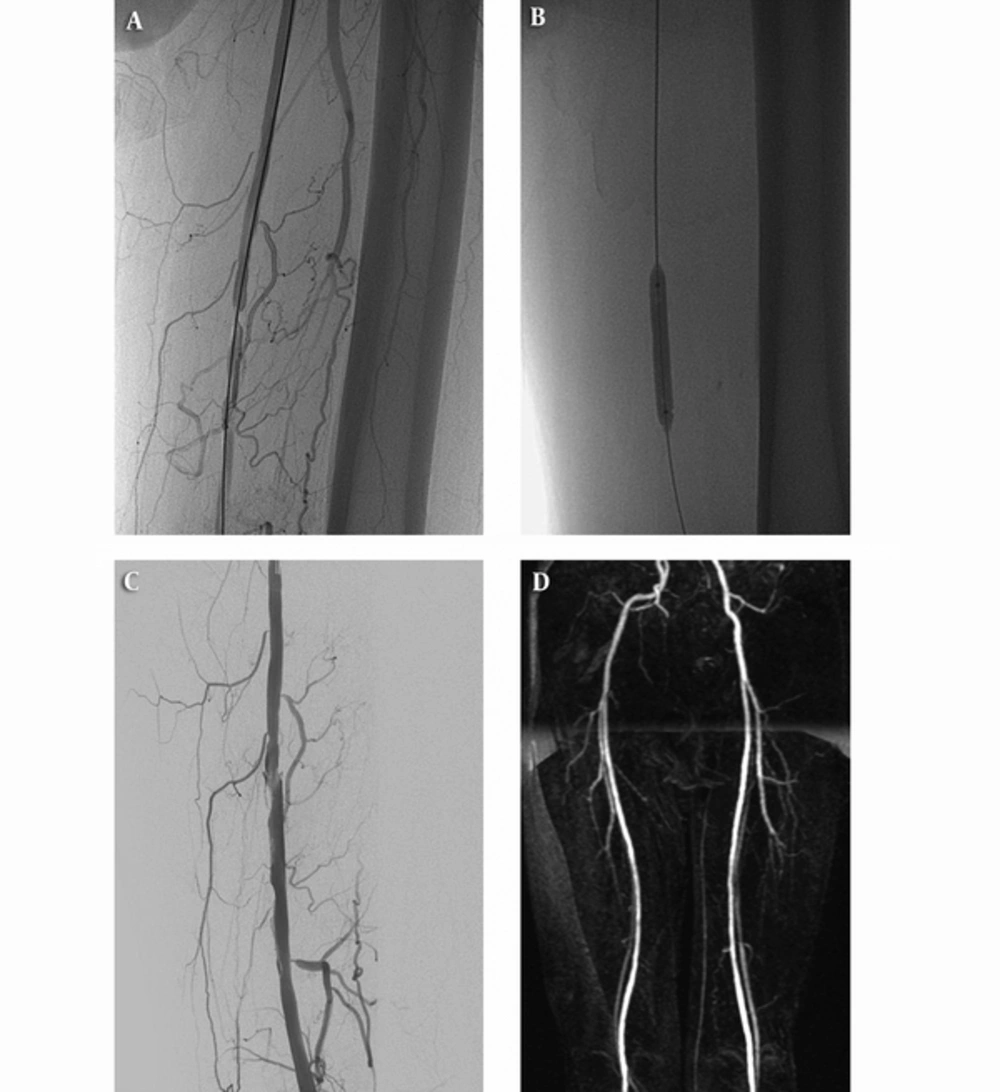
Angiogram of a 57-year-old male patient showing critical stenosis of the left superficial femoral artery (A). Result of drug-coated balloon (DCB) angioplasty showing a satisfactory angiographic result at the end of the procedure (B and C). On magnetic resonance angiography (MRA), primary patency confirmed up to 12 months after angioplasty (D).
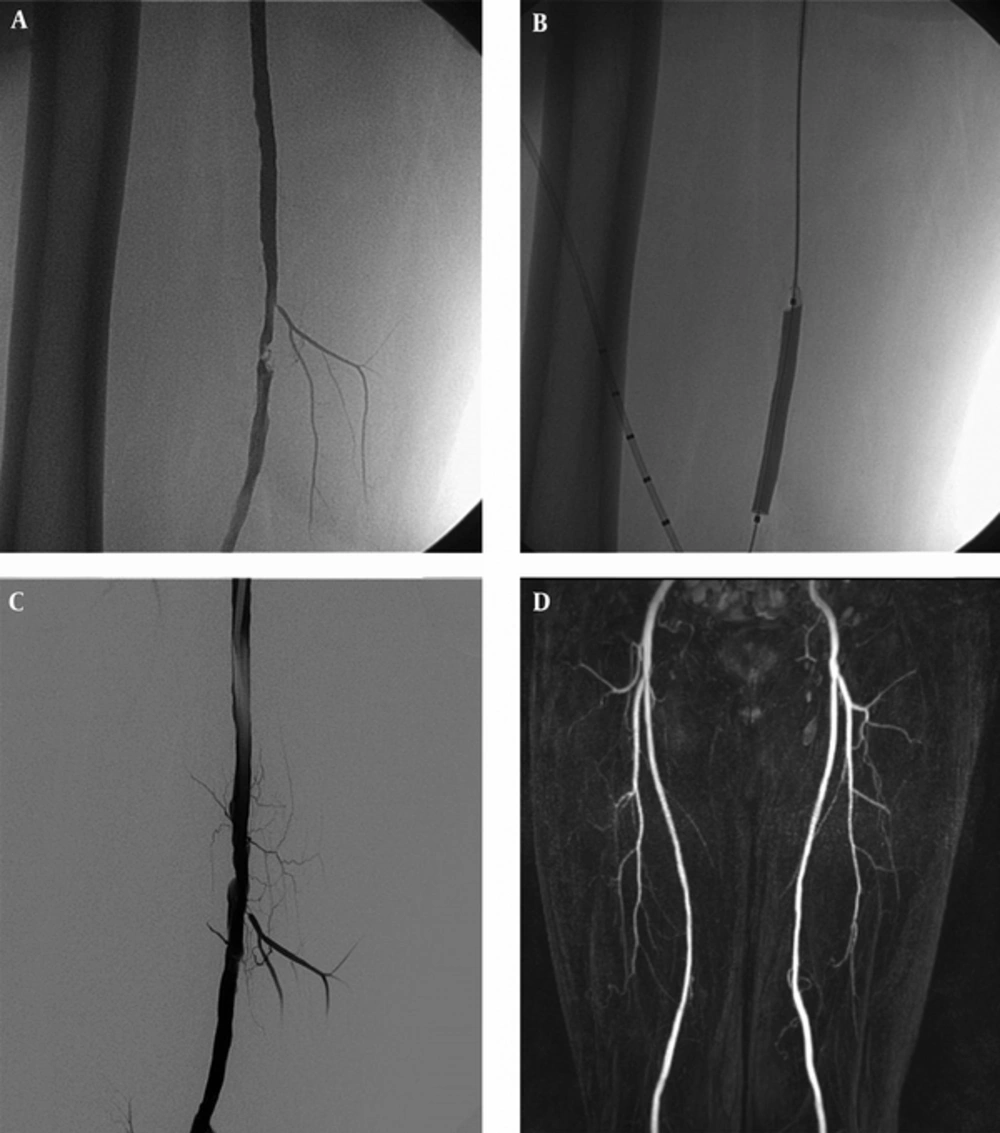
Angiogram of a 58-year-old male patient showing critical stenosis of the right superficial femoral artery (A). Result of drug-coated balloon (DCB) angioplasty showing a satisfactory angiographic result at the end of the procedure (B and C). In the sixteenth month after the procedure, primary patency is confirmed on magnetic resonance angiography (MRA) (D).
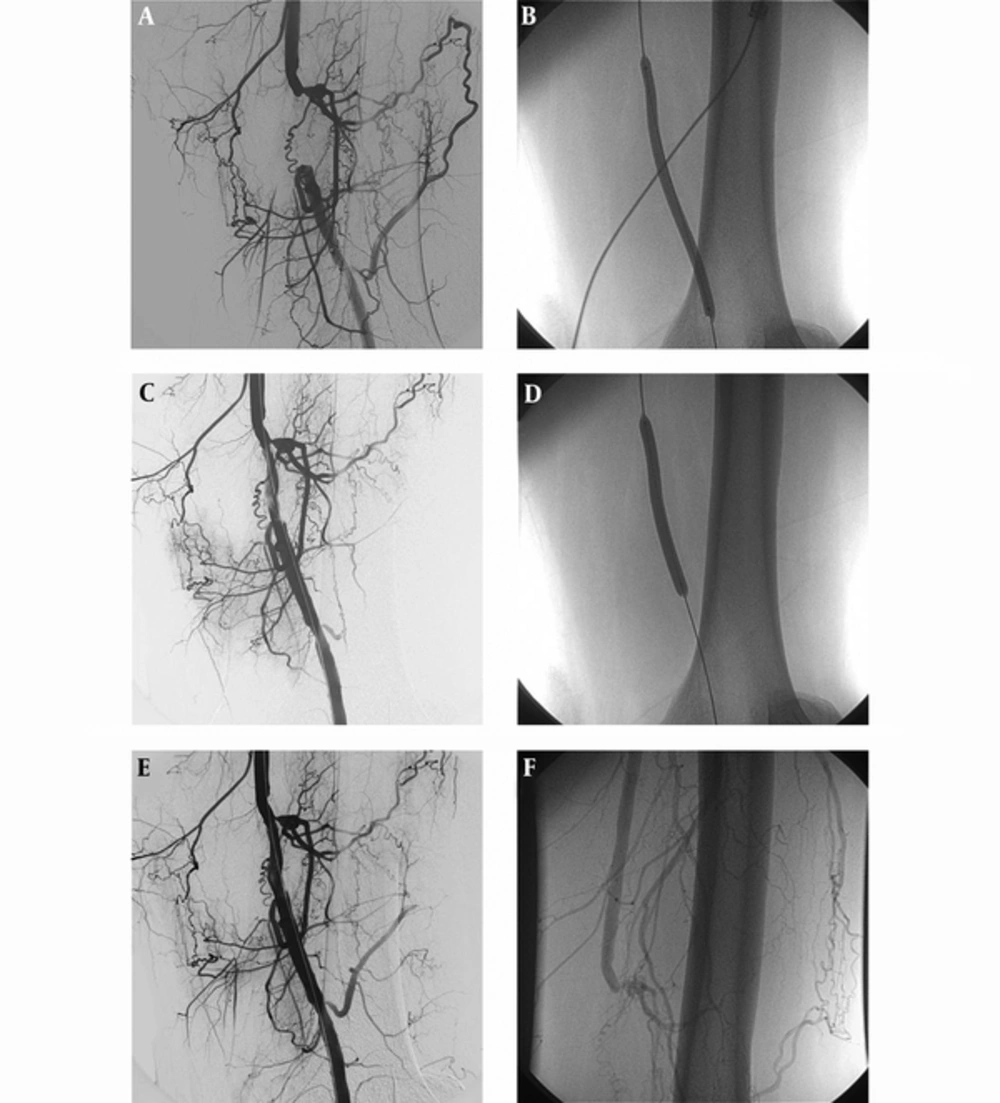
Angiogram of a 43-year-old male patient showing total occlusion of the left superficial femoral artery (A). Result of DCB angioplasty showing a flow-limiting dissection at the end of the procedure (B and C). After prolonged dilation (C), a satisfactory angiographic result is seen (D and E). In the second month after the procedure, angiography was performed due to clinical worsening. It shows total occlusion of target lesion (F).
3.2. Follow Up
3.3. Definitions
3.4. Statistical Analysis
4. Results
| DCB | PTA | P Value | |
|---|---|---|---|
| Patients, n | 28 | 15 | |
| Age, year (mean±SD) | 60.04 ± 7.23 | 56.6 ± 5.69 | 0.119 |
| Male, n (%) | 23 (82.1) | 11 (73.3) | 0.696 |
| Smoking, n (%) | 19 (67.9) | 9 (60.0) | 0.606 |
| Diabetes, n (%) | 21 (75) | 9 (60.0) | 0.324 |
| CAD | 18 (64.3) | 8 (53.3) | 0.484 |
| Limbs, n | 31 | 16 | |
| Rutherford class, n (%) | 0.260 | ||
| 3 | 14 (45.2) | 10 (62.5) | |
| 4 | 13 (41.9) | 6 (37.5) | |
| 5 | 4 (12.9) | - | |
| Lesion treatment, | 36 | 19 | 1.0 |
| SFA, n (%) | 31 (86.1) | 16 (84.2) | |
| PA, n (%) | 5 (13.9) | 3 (15.8) | |
| Lesion length (cm) (mean±SD) | 5.08 ± 1.46 | 4.84 ± 1.26 | 0.594 |
| Total occlusions, n (%) | 3 (9.7) | 2 (12.5) | 1.0 |
| Length (cm) (mean±SD) | 5 ± 1 | 5 ± 0 | 1.0 |
Abbreviations: CAD, Coronary arterial disease; DCB, Drug-coated balloon; PA, Popliteal artery; PTA, Percutaneous transluminal angioplasty; SFA, Superficial femoral artery.
aPTA and DCB groups were compared for Rutherford class (class 4 + 5).
4.1. Clinical Outcomes
| DCB | PTA | P Value | |
|---|---|---|---|
| Limbs, n | 31 | 16 | |
| Rutherford class, n (%) | |||
| Clinical improvement | 26 (83.9) | 9 (56.3) | 0.075 |
| Clinical deterioration | 5 (16.1) | 7 (43.8) | |
| Lesions, n | 36 | 19 | |
| BS, n(%) | 2 (5.6) | 3 (15.8) | 0.011 |
| TLR, n(%) | 5 (13.9) | 7 (36.8) |
Abbreviations: BS, Binary stenosis; DCB, Drug-coated balloon; PTA, Percutaneous transluminal angioplasty; TLR, Target lesion revascularization.
aPTA and DCB groups were compared for vessel patency (BS + TLR).
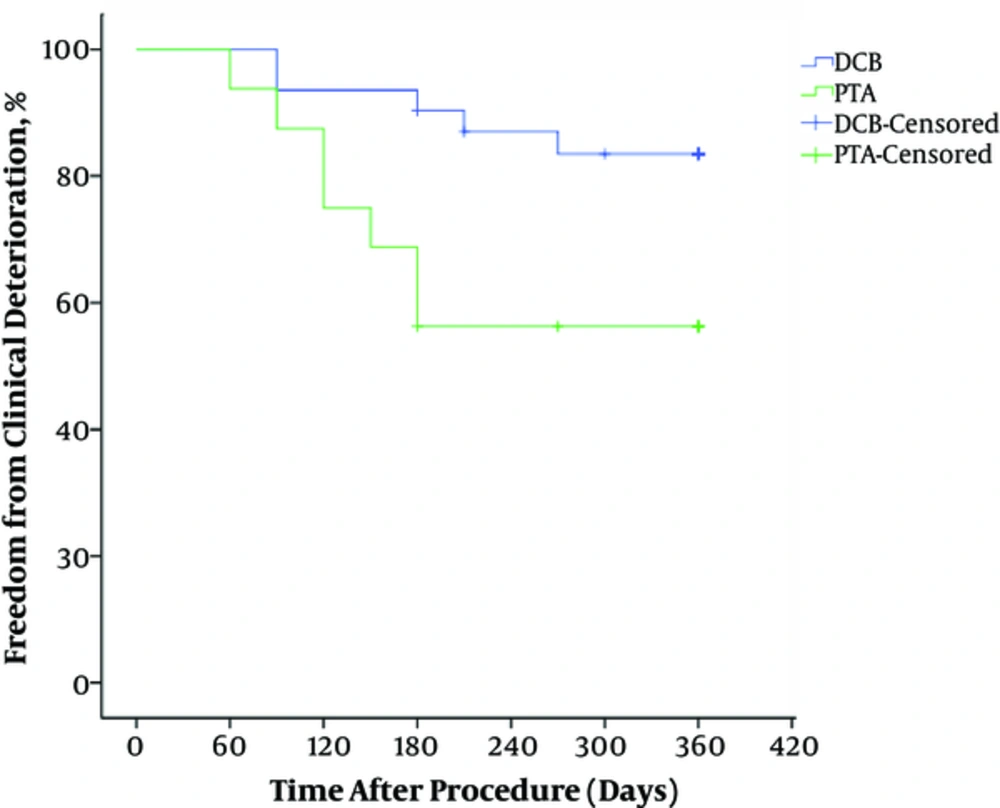
Kaplan-Meier estimations of clinical improvement after procedure (Log-Rank P = 0.027)
4.2. Radiological Outcomes
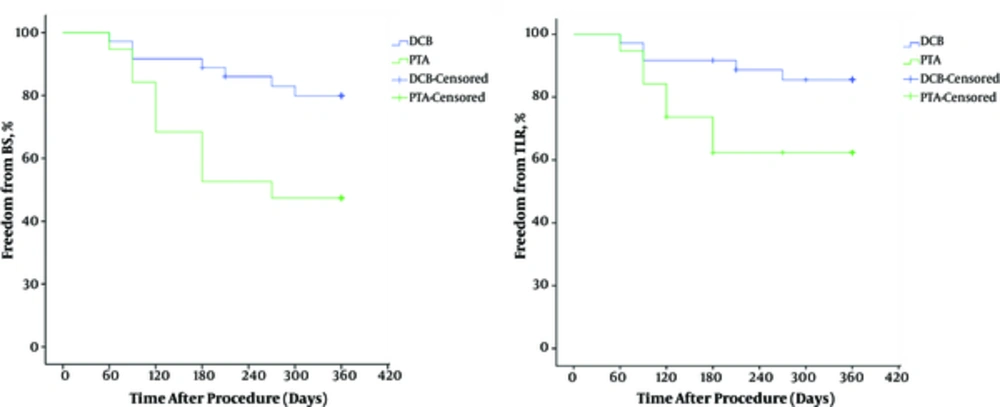
Kaplan-Meier estimations of freedom from binary restenosis (BS) and target lesion revascularization (TLR) (Log-Rank P = 0.009 and P = 0.041 Respectively).


