
1. Background
Accidents, as one of the largest group of non-communicable diseases, were the most common causes of illness and death in most countries. Injuries caused by accidents have been suggested to be the second leading cause of disability in developing countries and the third leading cause of death and disability worldwide, till 2020 (1). Trauma includes 12% of the entire disease burden with the highest mortality rate around the world (2). Nowadays, accidents, no longer known as a happening, are part of the costs that people must pay for industrialization and development (3-5). Trauma, similar to other diseases, follows the epidemiologic pattern of agent, host, and environment and leads to harm or injury (6). The literature revealed that injuries are among the five leading causes of death in different age groups, in both developed and developing countries and one of the most important causes of disability in developed countries (6, 7). Moreover, costs and expenses arising from accidents cause loss of active human resources (8). Children are the most vulnerable age groups for accidents. In other words, among the victims, children have the highest share of accidents compared with their population (9). Children are the most valuable, yet vulnerable, group of the society. Therefore, accidents not only threatens children’s life yet also influence their future, leaving long-term physical and psychological effects (3). Childhood injuries are among the most important public health challenges, worldwide (10). Children, as a large part of Iran's population, have been constantly threatened by various accidents. Injuries were considered as the most important reasons for their referral to hospital’s emergency departments and the most common cause of child disability and death (11). According to Iran Forensics Medicine Organization reports, injuries are known as the second leading cause of child mortality in Iran. Accidents in children, could be seen in various types, including poisoning, falling, electrocution, asphyxiation, burns, injuries arising from corporal punishment, and collisions (collision of vehicles with each other, with the pedestrian, etc.) (12). It was reported that 830,000 child deaths occur every year due to unintentional injuries, worldwide (8). Studies showed that 7% of child deaths in Iran were due to traffic accidents in 2013 (13). In a study conducted in Rafsanjan, injuries were introduced as the most common cause of death at the age of 1 to 14 years, and it was determined that most accidents that occurred for children over seven years old was falling (14). According to the literature, injuries were the cause of 18% of deaths in children under five years old in Iran (15). Moreover, previous studies showed that males were at a greater risk of injuries, especially during summer and falling and traffic accidents were the most prevalent accidents in children (16-18). In this regard, understanding the epidemiology of injuries and risk factors in children could provide useful information to apply appropriate preventive policies (15). Moreover, identifying patterns of injuries in this age group could be useful in order to reduce mortality and the risk of complications (19). The aim of this study was to investigate the epidemiology of injuries in children under five years old, admitted to the emergency ward of Tabriz Shohada Hospital, since 2015
2. Methods
2.1. Study Design and Population
This was a cross-sectional study conducted at Tabriz Shohada Hospital, during year 2016. The study population was all children under five years old (1376 cases), referring to the emergency department of Tabriz Shohada Hospital, since 2015, due to injury. All cases were recruited as the study sample.
2.2. Data Collection
A researcher-made goal-driven data collection form was developed for data gathering, including the child’s gender, age, length of stay at the hospital, type of accident, injury type, anatomical location of the injury, and type of insurance. Data were extracted from the hospital health information system (HIS). Information about the patients, which were not registered at the HIS, were extracted through patients’ medical records.
2.3. Context
Shohada Hospital is a teaching hospital and the largest orthopedic hospital and trauma referral center in the North West of Iran, and has 265 beds.
2.4. Data Analysis
The SPSS version 24 software was used for data analysis. Descriptive statistics (frequency, mean, etc.) were used to describe the prevalence of accidents and injuries, the time pattern of accidents and frequency of injured anatomical sites and demographics. Moreover, Pearson’s Chi-square and Phi and Cramer's V tests were used to investigate the relationship between the variables of gender, accident type, injury type, time of the accident, and age.
2.5. Ethical Considerations
This study was approved by the Ethics Committee of Tabriz University of Medical Sciences.
3. Results
The results showed that accidents most commonly occurred in children aged four years old (41.1%) and least commonly (0.3 %) in children less than one year old. Most injuries were in males (59.4%). More than half of the referred children (50.3%) used social security insurance. Mean length of stay was calculated as 3.08 days, ranging from one to 49 days.
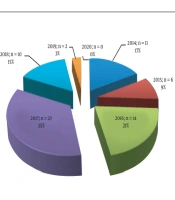
According to the results, it was determined that falling had the most incidence frequency (44.3%). According to the Chi-square test results, there was no significant difference in the frequency distribution of accidents in different genders (P value = 0.090). Frequency distribution, related to all kinds of accidents in children, are shown in Figure 1 (classification codes based on ICD-10, recorded in the hospital information system).
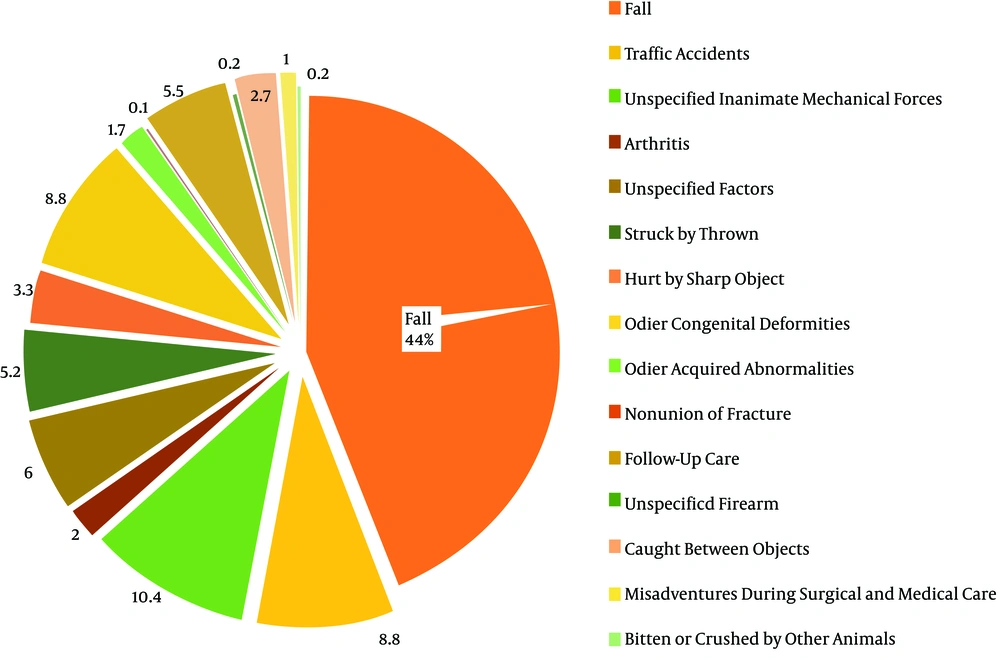
Figure 1.
Frequency distribution of accidents (ICD-10 codes)
It was revealed that fractures were the most frequent (66.9%) injuries in children. Bone cyst (0.3%) and nerve damage (0.7%) were injuries with the lowest frequency. Investigating the relationship between child’s gender and injury type showed no significant difference in terms of frequency distribution (P value < 0.01, Cramer's V = 0.19) (P value < 0.05). The relative frequency distributions of injuries regarding child gender are presented in Figure 2.
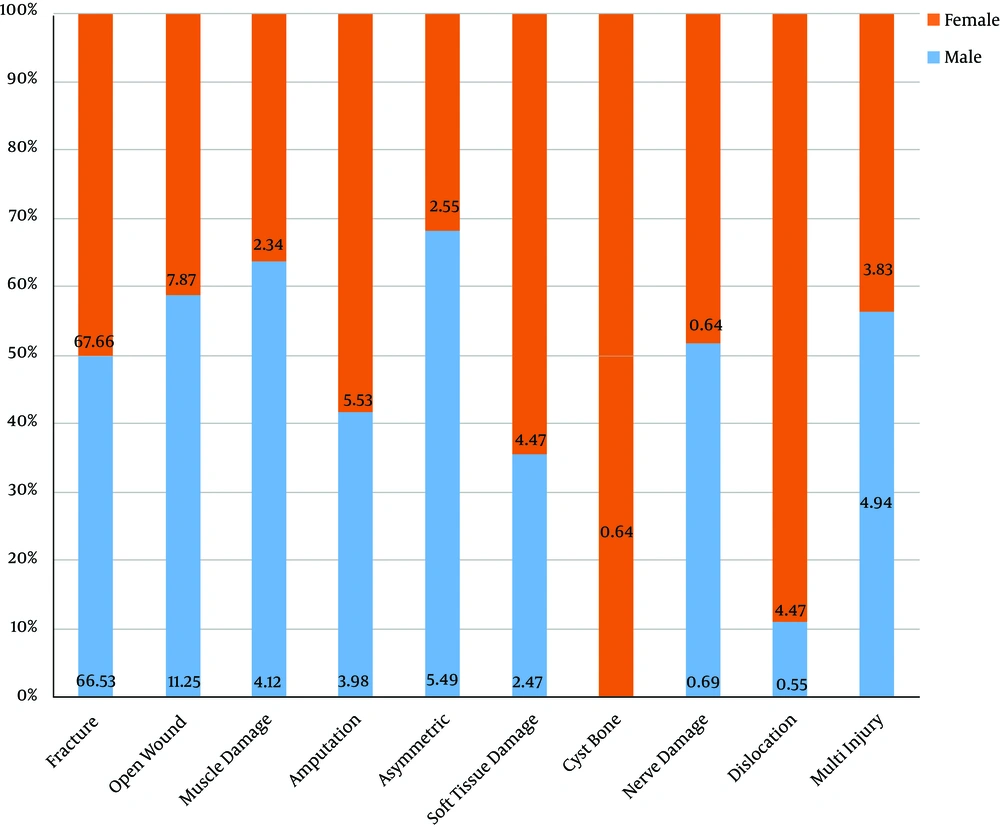
Figure 2.
Relative frequency of different injury types, according to the child’s gender
In terms of seasons, a significant difference was observed in the distribution of accidents in different seasons (P value = 0.01, Cramer's V = 0.135) and falling had the highest frequency in all seasons. Moreover, the results showed that most accidents occurred during summer with relative frequency of 30.08%. The relative frequency distribution of the time pattern of accidents, according the child gender, is shown in Figure 3.
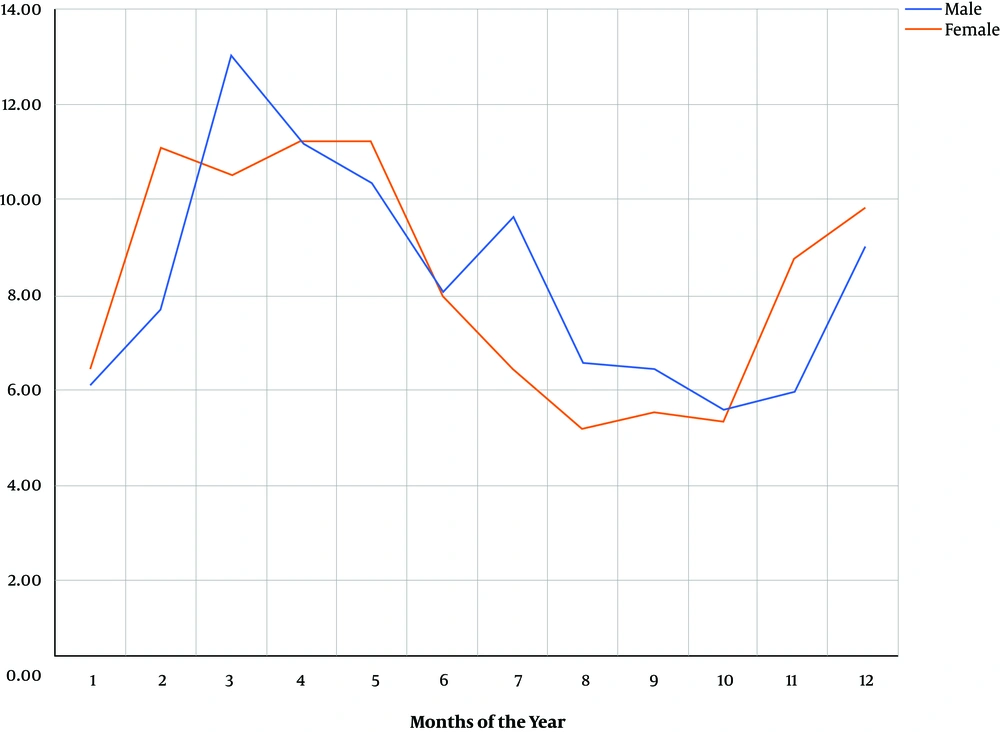
Figure 3.
Relative frequency distribution of accidents time pattern, according to child gender
Based on the results, it was determined that the most injured anatomical location was the forearm with relative frequency of 22.7% (Figure 4).
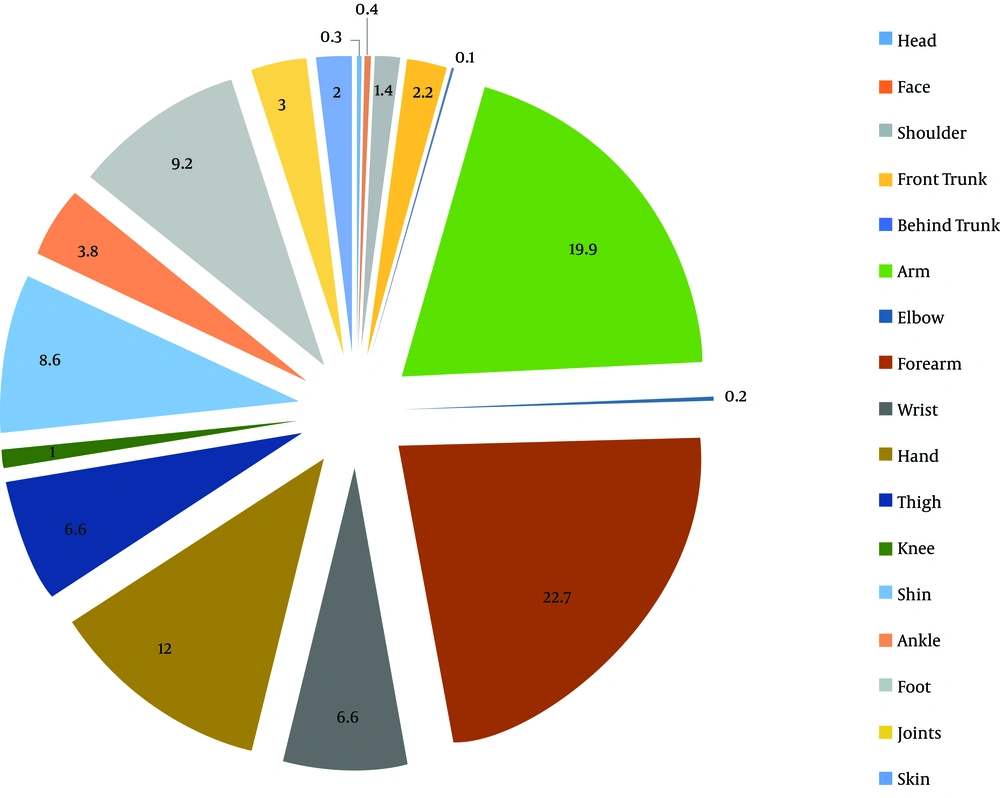
Figure 4.
Frequency distribution of injured anatomical sites in children less than five years old
There was a significant relationship between the child’s age and accident type (P value < 0.05) (P value < 0.01, Cramer's V = 0.173). In this regard, most accidents occurred in children aged four and five years old, with relative frequency of 41.3% and 37.4% (Figure 5).
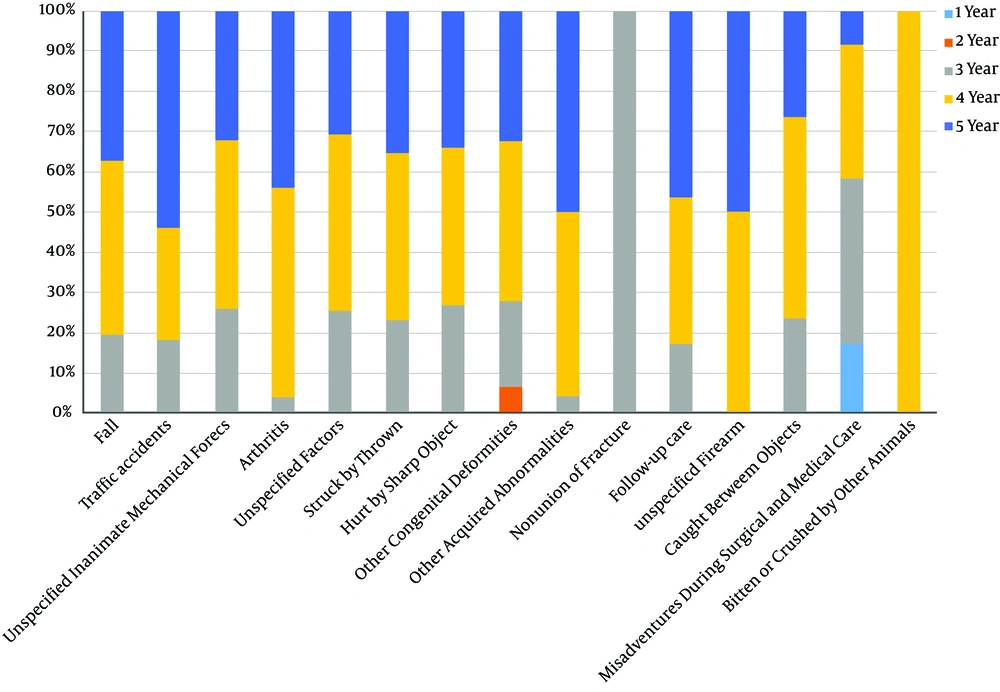
Figure 5.
Frequency distribution of accidents by age
4. Discussion
The results showed that falling (44.3%), unspecified inanimate mechanical forces (10.4%), and traffic accidents (8.8%), respectively, were the most frequent accidents that occurred in under five-year-old children referring to the Shohad Hospital. Bone fracture (66.9%) and wound (9.9%) were the most frequent consequence of accidents. The forearm was the most injured anatomic location in children. Moreover, seasonal distribution revealed that most accidents occurred during summer (30.08%).
Most accidents were related to males (59%), which was consistent with the results of other studies in Iran (16, 18, 20, 21), as well as with similar studies in other countries (22-25). This could be due to the different pattern of the boy’s entertainments and behavior, which puts them at greater risk of injuries. The results showed that most accidents (30.08%) occurred in the summer. This was consistent with the findings of Dolatabadi et al. (30.9%) (16) and Asadi et al. (36%) (20). It could be suggested that more accidents in summer might be due to the greater presence of children in playgrounds, such as parks, and performing risky behaviors. Moreover, the growing number of trips and presence of families in parks and public spaces, during summer, increases the risk of accidents and also traffic collisions incidence. Equipping the playgrounds with safety equipment and improving public places safety could be useful in preventing child injuries. However, adoption of safety rules in homes will be effective. Falling (44.3%) was the most frequent accident, followed by the unspecified inanimate mechanical forces (10.4%), and traffic accidents (8.8%). Similarly, falling was reported as the most frequent accident (40.4%), followed by traffic accident (35.1%) in another study from Iran (20). However, in a study by Dolatabadi et al. (16), most of the accidents were traffic accidents (52.3%) and then falls (41.5%). Stroke and falling was reported by Mobasheri et al. (18), as accidents with high incidence frequency in children. In a study from western Iran, it was demonstrated that falling and traffic accidents were the most frequent accidents in children under six years old (26). Moreover, Lawoyin et al. (27) and Ganveer and Tiwari (17) reported falling as the most common accident in children. It should be noted that the mean age of children in this study was 4.14 ± 0.78 and was relatively different from other studies, ranging from 2.5 to 6.6. The differences in the incidence frequency of various accidents in the mentioned studies could be caused by differences in the mean age of the study population. However, the study context could affect the results.
In this study, the most injured anatomic sites were the forearm (22.7%) and arms (19.9%), respectively. These results were not consistent with previous studies. Head and neck (39.7%), and then the lower limbs (32.7%) were reported as the most injured sites by Dolatabadi et al. in children (16). A study by Asadi et al. had reported head and neck (71.2%) and extremities injuries (15.5%) with highest frequency (20). Differences in the injured anatomic sites, reported in these studies, could be due to differences in the prevalence of accidents in this study with previous studies.
4.1. Conclusions
It was revealed that most accidents had occurred in children at age four, and falling had the highest frequency. In this regard, fall prevention strategies must be trained for parents, especially when children start to walk and play. However, they must receive first aid education to decrease trauma injuries. Moreover, safety rules and equipment must be employed by municipalities in settings used by children, as a leisure place.
4.2. Limitations
Extracted data was based on hospital information system and medical records. Moreover, data was not recorded completely in some medical records.