
1. Background
Tests and measurements are prerequisites for developing rehabilitation and training programs. Given that the body acts as a dynamic unit in daily life and sports activities, clinically evaluating only the muscle strength and joint mobility cannot provide the information required for evaluating functional performance and abilities (1). The FMS test makes up an organized observation of motor patterns by measuring and scoring movement patterns. The functional movement screen (FMS) ranking is based on a numerical scale focusing on the constraints and the significant asymmetry of motor patterns. In case only the overall motor pattern is focused and its smaller parts are ignored, a number of false small factors that causing the altered pattern of movement will mistakenly appear correct and flawless (2, 3). The FMS test is designed to identify individuals with compensatory movement patterns developed in the kinetic chain of movement. This test can be performed as an effective and efficient method to evaluate performance in many athletes (1, 3). Many risk factors associated with sport injuries have been reported so far, including body mass index (BMI), dynamic balance, faulty motor patterns, knee alignment during landing and exercise load. The changes in movement control caused by the damage persist after recovering and may cause further injuries. Many researchers have therefore proposed that a history of previous injuries is a risk factor for future damage (4). A large body of literature has been dedicated to the FMS test as an effective tool for predicting injuries in athletes before participating in competitions in different sports fields (5, 6).
The Lumbo-pelvic region includes the muscles and joints of the abdomen, waist, pelvis and thighs, which are responsible for maintaining the stability of the spine, waist and pelvis, and producing and transferring power from large parts of the body to small parts in many sports activities (7). The muscles in this area work in a reflexive or involuntary manner, stabilizes the lumbo-pelvic region, and coordinates the movements of the hands, legs, and spine. FMS tests are administered to assess this stability and coordination (3) and evaluate the Lumbo-pelvic region as an important part of the body.
As an important component of the somatosensory system, proprioception provides the sense of limb position and spatial movements of extremities without vision (8) by delivering information to the central nervous system (CNS). Proprioception is also used along with the CNS to control muscles, including the sense of movement acceleration, position, energy effort and weight and muscle contraction and the sense of muscle onset time (9, 10).
This sense is a conscious and unconscious perception of the spatial limb position that consists of the sense of awareness of joints position and kinaesthesia, which are both considered important aspects of body movements (8). Different researchers have observed correlations among balance, proprioception and motor function in different individuals (11, 12), and also relationships between equilibrium and FMS results (1). In case the likely relationship between the lumbo-pelvic proprioception and FMS outcomes are confirmed, the results of the FMS test can be improved by proposing exercises associated with proprioception and control in the lumbo-pelvic area.
Moreover, the optimal and ideal performance in sport activities depends on the complicated interaction of physiological, anthropometric, psychological and bio-motor factors. Physical fitness is an important and determinant factor affecting the performance of athletes and a prerequisite for succeeding in sport, which can be attained by recognizing anthropometric and physiological characteristics in different sports field (13).
To the best of the authors’ knowledge, the relationships of FMS with proprioception and anthropometric characteristics have not been yet investigated in athletes.
2. Objectives
The present study therefore explores the relationships of the FMS test with the proprioception of the core and physical anthropometric characteristics in female athletes.
3. Methods
3.1. Participants
The present cross-sectional study was conducted on 58 female athletes from sport clubs in Bojnord, Iran, who voluntarily participated in the study. The eligible subjects were selected after signing informed consent forms. The subjects were also ensured of the confidentiality of their information and their right to withdraw from the study at their own discretion.
The inclusion criteria comprised having a minimum three years’ history of regular exercise, exercising for at least three sessions a week and no history of orthopaedic surgeries in the trunk and lower extremities. The exclusion criteria consisted of a history of chronic low back pain for more than three months, a history of sports injuries in the previous six months resulting in the loss of at least one training week according to the time-loss index (14) and a history of upper and lower motor neuron diseases associated with musculoskeletal or balance disorders such as MS, poliomyelitis and cerebral palsy. Athletes in their menstrual cycle were also excluded.
The FMS test was first administered on the participants, and proprioception was measured using a six-channel gyroscope (made by Danesh Salar Iranian Co.). Tape measures and digital scales were also used to measure anthropometric features, including age, height, weight, BMI, the width of the pelvis and shoulder, the length ratio of the thigh to shin and the length ratio of the thigh to pelvic width.
A preliminary study was conducted on ten of the subjects to reduce possible errors of the examiner. The research method was ethically approved by the Physical Education Department of Allameh Tabataba’ee University, Tehran, Iran.
3.2. Performing the FMS Test
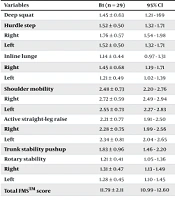
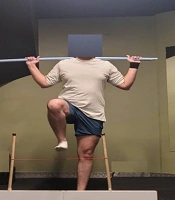
In this test, the examiner investigated the status of the athletes based on seven tests, involving shoulder mobility, active straight leg raise, stability of the trunk push-up, rotatory stability, in line lunge, unloaded deep squat and hurdle step (3). The test procedures and scoring method were adopted from literature (3, 15).
3.3. Core Proprioception Measurement
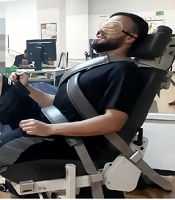
The angle repositioning error (RE) and the six-channel gyroscope device were used to measure the proprioception of the lumbo-pelvic spine (16, 17). Three channels of the gyroscope were used in the following manner: the first channel was mounted on the anterior superior iliac spine (ASIS) of the dominant body side, while the second and third channels were respectively installed on the vertebral spinous processes of S2 and L3 using double-sided adhesive tapes to measure the proprioception of thigh joints, pelvic bone and the lumbo-pelvic region.
The subjects performed a general 10-minute warm up before beginning the test. To familiarize the subjects with the methods, they were allowed to repeat the test a maximum of three times before beginning the test. The subjects wore the least amount of clothes to ensure that the information provided by sensory stimuli of the skin does not affect the sense of position. Based on the preliminary test results, the target angle was considered 60 degrees of anterior pelvic tilt on the frontal plane in the S2 marker. The joints at this angle lie almost in the middle of their range of motion and are not close to either the end or beginning of the range.
To assess the proprioception error, the subjects were asked to intentionally create the cited angle while standing with their eyes open (a distance of 30 cm between the legs and the arms hinged on both sides of the body). After forming the target angle controlled by the simultaneous data of the S2 marker, the subjects were asked to remain in this position for a few seconds, take this angle into consideration, memorize it and then return to the initial state.
The subjects were then asked to close their eyes and reposition the target’s angle three times while relying on proprioception and having a blindfold on their eyes. The repositioned angles were measured and recorded. The numerical value of the repositioning error was calculated and recorded by calculating the absolute angular difference between the target and repositioned angles. Moreover, the mean absolute value of three repetitions was considered an angular repositioning error (18).
The data were analyzed in SPSS-24 using the Shapiro-Wilk test for assessing normality and descriptive statistics for data description. The Pearson and Spearman tests were used to evaluate correlations between the study variables. A confidence interval of 95% was also considered (P < 0.05).
4. Results
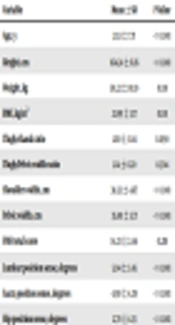
Table 1 summarizes the anthropometric characteristics of the subjects.
Table 1.
A Summary of Anthropometric Information and Data of 58 Female Athletes Using the Results of the Shapiro-Wilk Test for Normality
| Variable | Mean ± SD | P Value |
|---|---|---|
| Age, y | 21.11 ± 7.71 | < 0.001 |
| Height, cm | 164.24 ± 6.16 | < 0.001 |
| Weight, kg | 59.22 ± 10.19 | 0.118 |
| BMI, kg/m2 | 21.99 ± 3.17 | 0.110 |
| Thigh/shank ratio | 1.00 ± 0.14 | 0.090 |
| Thigh/Pelvic width ratio | 1.14 ± 0.20 | 0.304 |
| Shoulder width, cm | 38.22 ± 4.67 | < 0.001 |
| Pelvic width, cm | 35.80 ± 5.71 | < 0.001 |
| FMS total score | 14.23 ± 2.44 | 0.218 |
| Lumbar position sense, degrees | 5.04 ± 3.45 | < 0.001 |
| Sacra position sense, degrees | 4.90 ± 4.29 | < 0.001 |
| Hip position sense, degrees | 2.70 ± 4.13 | < 0.001 |
Abbreviation: FMS, functional movement screen.
Table 1 suggests that the majority of the data are not normally distributed. The nonparametric Spearman test was therefore used to examine the correlation of the FMS score with height, weight, shoulder width, pelvic width and proprioception of all the three areas. Table 2 presents the results of the statistical Pearson test applied on the remaining variables as well as the results of the Spearman test of the correlation between the data associated with the total FMS score and proprioception-associated data of the lumbo-pelvic area. The results suggested that the relationships of the total FMS score with the anthropometric data and proprioception are insignificant.
Table 2.
Examining the Correlation Between the Variables in 58 Female Athletes
| First Variable | Second Variable | P Value | ra |
|---|---|---|---|
| FMS total score | Age, y | 0.28 | 0.14 |
| Height, cm | 0.19 | -0.17 | |
| Weight, kg | 0.08 | -0.23 | |
| BMI, kg/m2 | 0.07 | -.23 | |
| Thigh/shank ratio | 0.16 | -0.18 | |
| Thigh/pelvic width ratio | 0.43 | -0.11 | |
| Shoulder width, cm | 0.45 | 0.09 | |
| Pelvic width, cm | 0.93 | 0.01 | |
| FMS total score | 0.72 | -0.05 | |
| Lumbar position sense, degrees | 0.67 | 0.06 | |
| Sacra position sense, degrees | 0.82 | -0.03 |
Abbreviation: FMS, functional movement screen.
ar: correlation coefficient.
5. Discussion
The present findings suggested that the relationships of the results of the total FMS score with the anthropometric characteristics and the proprioception of the core are insignificant, which is inconsistent with the results of previously-conducted studies suggesting significant relationships between anthropometric dimensions and motor functions; for instance, success in gymnastics was shown to be significantly related to hand length, waist circumference and BMI (13). Significant relationships were also observed between gender and balance, and women were found to present a better performance than men in terms of maintaining balance (19). Moreover, a statistically significant but weak relationship was observed between anthropometric characteristics and body control (20).
The discrepancy of the results can be attributed to factors such as differences in subjects or variations in the tests used. In contrast to the results of the practice of gymnastics, walking and balance that often assessing tests similar to the actual performance of individuals, the FMS is a screening test whose total score is calculated as the sum of several separate tests involving flexibility, balance, strength and motor control. However, some of these tests may not be applicable to the actual performance of the athlete, involving shoulder, hamstring flexibility and rotary tests. The results of these tests might have therefore affected the overall outcomes of the present study.
Moreover, some researchers have demonstrated significant relationships between anthropometric dimensions and motor functions, which is consistent with the present research. In addition, no significant relationships were observed between leg length and height in Taekwondo, which is consistent with the results obtained by Heller’s (21). Further studies are therefore recommended to be performed to clarify the relationship between anthropometric dimensions and different motor functions.
The present findings suggested no significant relationships between the position sense of the lumbo-pelvic region and the overall score of the FMS test. This finding can be evaluated according to the results of the studies showing no significant correlations between the core proprioception and physical functioning of the body (22). In contrast to previously-conducted studies claiming relationships between proprioception in the pelvic and lumbar region and FMS test results (3, 15), the present study did not provide evidence to confirm it.
Given that FMS test results have been proposed to be used for the prediction of the risk of injuries in athletes (23), and that no significant relationships have been observed between the status of the sense of joint position and the rate of injuries in athletes (24), other dimensions of proprioception, including the sense of movement and power, are highly recommended to be addressed in future research (25). The present study limitations include being a single-gender type of research, which restricts the generalization of the outcomes to male athletes.
The present study failed to consider other dimensions such as sense of movement and force, and only focused on the sense of joint position to evaluate proprioception. This shortcoming is also recommended to be resolved in future studies on the matter. In addition, the sense of joint position was evaluated only on the sagittal plane, although considerable data could have been obtained in transverse or frontal planes.
The present study was conducted to explore the relationship between the sense of position of the lumbo-pelvic region and FMS results. Given the nature of the FMS test, which evaluates the function of the upper and lower extremities, the proprioception changes in other parts of the body might have affected the study outcomes.
5.1. Conclusions
The total scores of the FMS test appear not to be significantly correlated with the outcomes obtained from the sense of position of the lumbo-pelvic region and anthropometric dimensions. This finding requires to be clarified in future research.