1. Background
Thalassemia is a type of hemoglobinopathy due to the defect of globin chains, which can be divided into 2 types of alpha and beta, depending on the type of globulin involved (1). The cause of beta thalassemia is the reduction or nonproduction of beta-globin chain, which leads to the formation of abnormal and fragile red cells that can easily lead to hemolysis and cause chronic anemia (2). This is a monogenic disorder inherited as autosomal recessive disease from parents. Thalassemia is the most common genetic disease in humans and has a high prevalence in the Mediterranean, Middle East, and South-East Asia regions. Beta thalassemia consists of 3 major groups: thalassemia major, intermedia thalassemia, and thalassemia minor (3). In 2013, WHO statistics showed that there are 30 000 patients with thalassemia major in Iran. With this number of patients, Iran is ranked first in the proportion of thalassemia patients to the total population in the world (4, 5). The highest incidence of β-thalassemia in the Caspian Sea and the Persian Gulf has been reported by more than 10%. The prevalence of this disorder in other areas is 4% to 8% (6) and 0.6% in Khorasan Razavi province (7). Chronic diseases make life difficult for patients and reduce their quality of life (8). Thalassemia, like any other chronic diseases, affects the various aspects of a person’s life, and despite repeated medical treatment, the symptoms and clinical symptoms cause many physical and psychological problems for the patients, which can have an adverse effect on their quality of life (9).
Quality of life is a range of human objective needs that is achieved in relation to the personal and group understanding of people about the feeling of well-being (10). Quality of life is considered as an important indicator, and the effectiveness of many health interventions is evaluated by this index (11). Thalassemia patients have severe psychiatric and social problems compared to healthy individuals, and thus medical treatment should be combined with emotional, psychological, and social support to improve the quality of life of these patients and prevent irreversible complications (12). Results of Hadi et al. study in Shiraz showed that thalassemia major severely affects patients’ quality of life. Adolescent patients received lower scores in physical health (including role limitation due to physical problems, physical functioning, physical pain, and general health). In other words, these patients suffer from more physical problems. In general health, patients in this study stated that they are more likely than others to have the disease and wait for their health to worsen and experience more physical pain (10). Studies conducted by Clarke et al. in England and Torcharus et al. in Thailand also showed similar results about the lower quality of life of children and adolescents with thalassemia compared to the control group (13, 14). According the above- mentioned explanations, one of the goals of caregivers should be improving the quality of life of these patients. One of the ways to achieve this goal is to educate thalassemia patients to improve their quality of life and help them deal with the effects and complications of the disease. On the other hand, training the points of caregiving for thalassemia patients is one of the main components of the treatment process to improve self-care behaviors and encourage the patients to participate in training courses (15). Education plays a central role in managing chronic diseases and is an essential component of thalassemia control (16). The effect of patient education in various researches has been confirmed, so that the patient’s lack of sufficient knowledge of the care orders lead to patients failing to follow the medical orders (17). For example, Ghazanfaris study shows that the level of knowledge of parents of thalassemia patients is low and they need a great deal of training (18). Lee also concluded that providing regular education to patients and caregivers is highly important in improving the patients’ quality of life and encouraging them to continue the treatment (19). In addition, studies have shown that intervention in patient and education groups increased their understanding of the disease (20, 21). Accordingly, healthcare providers, such as physicians and nurses, have found that the physical aspects of the patient cannot be only focused on treating individuals with thalassemia, but also various aspects of life of patients should be considered to help them live a normal life, while one of the important interventions is providing counseling and rehabilitation programs. Therefore, the health professionals, including nurses, by providing educational and counseling programs can help the patients deal with their chronic diseases, such as thalassemia. Many studies have been conducted on the symptoms and complications and also the prevalence of thalassemia, but so far in Iran, there has been no research on the effectiveness of educational counseling on the quality of life in patients with thalassemia. Therefore, the present study, conducted in 2016, aimed at determining the effect of an educational counseling program on the quality of life of thalassemia patients, improving their quality of life, enhancing caregiving capacity by educating patients, and increasing their awareness of the disease, symptoms, and complications.
2. Methods
2.1. Study Type
This was a semi- experimental study with pre and posttest conducted in Thalassemia clinic of Neyshabur University of Medical Sciences in 2016.
2.2. Sampling
The study population consisted of all thalassemia patients, who had a record in the thalassemia clinic and regularly referred to this center to receive blood. The Cochran formula was used to select the samples, based on which 20 thalassemia patients, who were eligible for the study, were randomly selected (goal-oriented).
(Z = 1.96, p = q = 0.5, d = 0.05, N = 20)
2.3. Inclusion and Exclusion Criteria
The inclusion criteria were as follow: definitive diagnosis of thalassemia, age 15 to 30 years, lack of hearing impairment, the ability to read and understand the educational pamphlet, having fixed or mobile telephone, and willingness to participate in the study.
2.4. Data Collection Tool
The data collection tool was a demographic characteristics form (age, sex, marital status, education level, and occupation) and the quality of life questionnaire (short form including 36 questions, SF-36). The quality of life questionnaire SF-36 is the most common and comprehensive standard tool for assessing quality of life. The questionnaire includes 36 questions in 8 dimensions, which include physical performance, role limitation due to physical function, physical pain, general health, sense of happiness and vitality, mental health, role limitation due to mental function, and social function. Based on the existing guidelines, the raw scores of the 8 areas of health-related quality of life were calculated and were then converted into the standard scores ranging from 0 to 100. The higher score demonstrates better status (22). This questionnaire has international reliability and validity and has been confirmed in Iran in the study entitled, “determining the reliability and validity of the Persian standard SF-36” by Montazeri et al. (R = 0.7). The results of Montazeri’s study showed that the Persian version of SF-36 has standard reliability and validity in assessing the quality of life related to health in different cultures (23). In several studies, this questionnaire was used to determine quality of life (10, 24). Also, in this study, the validity and reliability of the questionnaire were evaluated, content validity and split-half methods were used, and a correlation coefficient of 0.91 was calculated.
2.5. Intervention
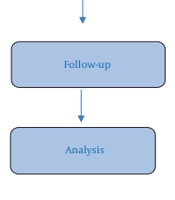
In this study, methodology included the pretest stage in the educational counseling program, the stage of implementation, and the follow-up phase. In the stage of the educational counseling program, the researcher introduced himself and explained the purpose of the research to the patients, and obtained an informed consent. The demographic information questionnaire was completed based on the patients and their parents’ statements, and the 36-SF Quality of Life Questionnaire was completed by the researcher.
In the implementation phase, after selecting patients and grouping them into 4 five-member groups and planning a general educational counseling program, according to the results of the demographic information and SF-36 quality of life questionnaires, the participants were requested by phone to participate in the second phase of the research by referring to the thalassemia clinic at a specific day and time (the stage of the educational counseling program implementation). During the second stage of the research, the implementation phase, 3 patients were excluded from the study: 1 due to absence from the sessions and 2 due to hospitalization. The sessions continued with 3 five-member groups. The implementation phase included five 90-minute sessions at intervals of at least 3 days from the previous session, covering contents related to the quality of life questionnaire. At this stage, the researcher outlined the subject at the beginning of the session and after discussing the subject in simple words and answering the questions, he discussed the educational needs and problems. Then, with the active participation of the patients, the necessary explanations were given about correcting the problem. Then, a booklet containing information about the disease, its symptoms, complications, and treatments that focused on improving the quality of life of patients was given to the participants, which was followed-up. The participants had I month to study the booklet. In this case, the researcher gave his phone number to the participants to resolve any ambiguity or question. Additionally, the researcher also conducted two 15 - 20 minute phone counseling sessions within a week (in addition to the educational counseling program) to answer the patients’ questions. Teenagers under the age of 18 attended the classes with their parents.
At the end of the month and at the beginning of the third stage of the study (the evaluation phase), the participants were requested to attend the clinic at a specific hour and day at the clinic through phone calls, and then the SF-36 quality of life questionnaire was completed again by the researcher.
2.6. Statistical Analysis
Data were analyzed by independent t test, Pearson and Spearman correlation coefficient, ANOVA, Kruskal Wallis, and Wilcoxon tests using SPSS software version 16. significance level was set at P < 0.05.
2.7. Ethics
This project was approved by the research council of Neyshabur University of Medical Sciences and has been approved and registered at the ethics committee of the research department of Neyshabur University of Medical Sciences with IR.NUMS.REC.1395.53 code. To observe ethics in research, after approving the proposal in the research council and in the ethics committee of the research deputy of the Neyshabur University of Medical Sciences, we explained the aim of sampling and the research stages to the participants. In addition, participants were informed about the voluntary nature of the study and the confidentiality of the information. Finally, written consent was obtained from the participants.
3. Results
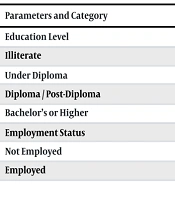
In this study, 15 patients with thalassemia, with an average age of 23.06 ± 10.87 years, participated. Among the participants, 8 (53.3%) were male, 12 (80%) unemployed, 8 (53.3%) educated, and 11 (73.3%) single. The results of Wilcoxon test on the 2 general subscales of physical and psychological quality of life questionnaire showed that the comparison of the meanings before and after the intervention was significant. Also, the findings indicated that the overall quality of life score after the educational counseling intervention has significantly increased (Table 1).
Table 1.
Comparison of the 2 General Physical and Mental Subscales and Total Score of Quality of Life
| Variables | Before Intervention, Mean ± SD | After Intervention, Mean ± SD | P Value |
|---|---|---|---|
| Physical health aspect | 57.29 ± 9. 04 | 79.25 ± 16.03 | 0.001 |
| Mental health aspect | 49.64 ± 6.82 | 75.54 ± 21.03 | 0.005 |
| Total score of life quality | 54.43 ± 5.60 | 78.11 ± 17.64 | 0.002 |
Comparison of the dimensions of quality of life in patients with thalassemia before and after the intervention indicated improvement in scores in all aspects of quality of life (P > 0.05). However, no significant difference was reported in dimensions of role limitation due to physical problems, general health, and wellbeing (P < 0.05) (Table 2).
Table 2.
The Mean and Standard Deviation Scores Concerning All 8 Aspects of Quality of Life Before and After Training Counseling Intervention in the Participants
| Variables | Before Intervention, Mean ± SD | After Intervention, Mean ± SD | P Value Before and After Wilcoxon Test |
|---|---|---|---|
| Aspects of life quality | |||
| Physical function | 62.66 ± 8.42 | 82.66 ± 15.45 | < 0.001 |
| Limited role due to physical problems | 55 ± 28.66 | 80 ± 30.17 | 0.06 |
| Corporal pain | 20.73 ± 8.06 | 76.33 ± 21.77 | < 0.001 |
| General health | 64 ± 15.02 | 73 ± 23.05 | 0.12 |
| Freshness and vitality | 60.33 ± 6.39 | 66.66 ± 26.50 | 0.46 |
| Mental health | 45.06 ± 6.67 | 75.20 ± 19.25 | < 0.001 |
| Limited role due to mental problems | 46.66 ± 21.08 | 84.44 ± 35.33 | 0.002 |
| Social function | 44.16 ± 19.40 | 80.83 ± 25.38 | < 0.001 |
To determine the relationship between quality of life and demographic data in patients with thalassemia, independent t test and P < 0.05, as well as one-way ANOVA and Kruskal Wallis test were used, but they did not show a significant relationship between quality of life dimensions and demographic variables.
The results of Table 1 demonstrate that the comparison of the total score of quality of life before and after the intervention was significant.
Comparing the dimensions of quality of life before and after intervention in Table 2 revealed that the scores in all dimensions were significant, except for the role limitation dimensions due to physical problems, general health, and vitality.
4. Discussion
This study aimed at investigating the effect of educational counseling program on the quality of life of patients with thalassemia in Neyshabur in 2016.
The result of this study indicated that the mean quality of life in patients with thalassemia was low, which is similar to Najafi et al., Saham et al. (25) ,and L-Kamah et al. (26). Findings obtained from the 36-S Questionnaire in this study revealed that the mean of quality of life in the psychological dimension is lower than the physical dimension. This problem may be due to feelings of anxiety or depression, reduced self-esteem, frequent absences from the classroom, and unemployment. In addition, our treatment centers provide appropriate services to patients with thalassemia for their physical problems, which is why their problems in this area are less, but the emotional problems of these children have been assessed less. These findings are consistent with studies of Esmaiel et al. (27), Thavorncharoensap et al. (28), and Salama et al. (29).
Findings indicate that educational counseling program has a significant effect on the quality of life of patients in 2 dimensions of physical and mental health. The results obtained by Gholami et al. indicated that group training was effective in increasing life expectancy and general health of 15 to 18 year- old females with thalassemia major (30). Badger et al. also reported that short phone counseling, in addition to easy access to information and emotional support, could significantly improve the quality of life of females with breast cancer in Latin America (31), which is consistent with our findings. Also, the results of studies by Pradier et al. (32), Hasanpour Dehkordi et al. (33), Belgacem et al. (34), Yang et al. In Taiwan (35), and Abu Samra et al. (36) were similar to the findings of this study. However, Rafiee et al. stated that the short-term training program did not significantly affect the quality of life of thalassemia patients (37). They reported that participants in their study had such problems as fatigue, frustration, low self-esteem, negative reactions to thalassemia, and restricted access to doctors with different specializations, lack of needed drugs, financial equipment, and financial problems, which caused ineffectiveness of this intervention. They concluded that the intervention, given the chronic nature of the disease and the severity of the related complications, was inadequate to improve the quality of life in these dimensions.
The findings indicate that in the components of physical health and its dimensions, including limitation of the role due to physical problems, physical functioning, physical pain, and general health, educational counseling intervention statistically influences all aspects except for role impairment due to physical and public health. Dampier et al., in their study entitled, “quality of life in patients with Tuberculosis Anemia” reported the scores of participants in the general health area (38). Also, the results of the study by Tawafian et al. entitled, “the effect of educational program on the quality of life of women with low back pain” showed that the quality of life of these women was the lowest in areas of role limitation due to physical problems (22). In the study of Wafaei et al. general health was lower in Ardebil’s thalassemia patients (39). This can be due to the effect of the disease on the patients’ apparent condition, early fatigue due to anemia, or headache.
Regarding the component of mental health and its dimensions, including vitality and cheerfulness, social function, role limitation due to mental health problems, and mental health, intervention on all dimensions except for the level of vitality and cheerfulness has a significant effect; and this may be because of cultural diversity, loss of support for friends and family, and the ability of individuals to cope with problems. It seems that mental disorders are common in patients with thalassemia. Studies show that people with thalassemia suffer from a higher level of depression and anxiety compared to healthy people (40). Yaghoobi et al. in a research on the emotional status of children with thalassemia in Rasht concluded that most of the children had a modest vitality score. They stated that the immune system’s performance of happy individuals against different stresses was better than sad ones and they were less likely to be ill and recovered faster. They suggested that effective steps can improve their health at least through identifying the most important factors in their happiness and providing practical training for these patients (41).
Educational counseling interventions in social performance dimension led to a higher score than before the intervention, which was maintained until one month later and seemed to be due to follow-up and phone counseling. In Salehi et al. study, 86.5% of thalassemia patients had impaired social functioning. They believed that this finding showed that adolescents with thalassemia suffer from more problems to achieve a good social equilibrium (42). Findings of the study by Sony et al. entitled, “quality of health-related Life in patients with Transfusion-related Thalassemia” showed that older patients had a weaker social function due to increased awareness of the effects of disease on work, marriage, and parenting duties (43). Kiyani et al. (2010) argue that by establishing counseling sessions and continuing psychological treatment in these patients, it is possible to increase the level of social self-esteem and help patients to achieve a good level of control and social relationships (44). Based on the mean age of 23 years in the current study, most of the patients were young and still under the guardianship of parents, and thus it seems that there is a strong family support for patients, so they still have not been faced with life problems and could adapt themselves to the disease by the help of family and patients.
In this study, the quality of life score did not show a significant correlation with demographic variables. These findings are consistent with those of Sazelina et al. (45) and Imani et al. (46).
4.1. Conclusions
Generally, it can be stated that the educational counseling program has a significant effect on the quality of life of patients in 2 dimensions of physical and mental health. Among the notable points in this study was the continuation and follow- up of patients’ education through phone counseling. It seems that integrating the educational curriculum with post-intervention counseling on a timely basis increases and sustains the impact of educational counseling interventions, which plays an important role in improving the quality of life of the individuals under study.
4.2. Limitations and Suggestions
The notable limitations of the present study were small sample size and lack of a control group. Therefore, to obtain more accurate results, it is recommended that in addition to the conditions of the current research, a study with larger sample size and 2 groups be conducted.
4.3. Clinical Application
The results of this study can serve as a guideline for nurses to design appropriate counseling programs for thalassemia patients. Also, many of the physical and mental disorders of these patients can be prevented by organizing group meetings.