
1. Background
Today, cancer is considered as the third leading cause of mortality in the world. Annually, more than 30,000 people die of cancer in Iran. On the other hand, with increasing life expectancy as well as an increase in the aging population, technological advances, and increased industrial pollutants, it is expected that cancer incidence would double in the next two decades. According to the world health organization predictions, the incidence of cancer in Iran will reach 85,653 cases in 2020 and about 62,897 cases will die of cancer (1).
Finding out about the diagnosis of cancer can be physically and psychologically stressful for patients and their families. In the past, it was common to avoid the word “cancer” or informing patients about their malignant disease; however, such avoiding behaviors are not approved in many countries anymore (2).
In many Asian countries and some European countries, such as Greece and Portugal, patients do not get aware of their cancer diagnosis. This action is done under the demand of their families in order to mentally support the patients and prevent them from becoming depressed, hopeless, or disappointed. Concerns of causing fear and anxiety in patients following revealing the diagnosis make even doctors and nurses unwilling to do this, despite their desire to inform patients (3). Patients with cancer typically experience a range of symptoms including pain and a variety of physical and emotional discomfort. Immediately after the diagnosis, anxiety and other mood disorders may arise and these symptoms may change as time passes and the disease improves (4). Despite medical advances, improvements in cancer treatment methods, and increased number of cancer survivors, this disease is unique in terms of causing deep fear and a sense of despair in patients. The diagnosis of cancer can lead to patient’s hopelessness and feeling that they are trapped in an uncontrollable situation. Studies conducted in this field are very limited in our country. Given the high prevalence of cancer in Iran and the consequences of this disease, it seems necessary to carry out research to identify the mental effects of this disease on patients. Obviously, this information will help medical doctors, nurses and rehabilitation teams to better understand the needs of patients and provide more useful services.
Gurm et al. (2008) in a qualitative study conducted in Canada concluded that women with breast cancer face mental stress after finding out about their cancer and believe that cancer is equal to death and had the fear of imminent death (5).
Chen et al. (2012) in a qualitative study conducted on cancer patients in Taiwan found out that one of their feelings was the sense of death and dying. Also, patients with cancer consider it as a sudden change in their lives. The results of Chen’s study indicated that one of the main concerns of patients facing cancer is losing their life; however, in many other patients it was loss of an independent life and becoming dependent on others (6).
The results of Landmark et al. study (2002) conducted in Norway showed that patients get shocked after hearing about their cancer and think about their future and the impact of this disease on their life (7).
Aghabarari et al. (2008) in a qualitative study indicated that breast cancer is a terrible incident for many women, and feelings of sadness, anxiety, confusion, anger, and depression are natural reactions in breast cancer patients (8).
The results of Khademi et al. study (2009) about the experience of patients with breast cancer showed 4 core concepts including delay in diagnosis and treatment, not accepting treatment, suffering from emotional reactions to the illness, facing treatment side effects, inefficient care and disruption of daily and family life, and returning to a natural life. These authors finally concluded that awareness among the medical team about the experiences of patients helps them better play their role in dealing with breast cancer patients (9).
The behavior of individuals and their experiences in dealing with chronic and incurable diseases such as cancer is affected by the culture and lifestyle of people; and so far a few studies have been conducted in Iran. The present study was designed with the purpose of understanding the psychological and mental experience of cancer patients in Iran; in order to enable the medical team and families to better understand their psychological crisis and therefore, provide better care and support to these patients.
2. Methods
According to the research question, a qualitative research method with content analysis was used. Qualitative research methods try to discover and understand the internal world and the feeling and experiences of people. The researcher can only understand the meaning of these concepts by entering into the world of these patients and seeing things from their point of view. In this study by using this method, and deep analysis of experiences and behaviors in the patients’ real world, the patients’ psychological reaction to cancer was investigated.
The study began with purposive sampling and continued until data saturation. The participants were patients who had been informed that they have cancer, and were conscious and willing to explain their experience. The researcher explained the purpose of the study to all participants. All the patients consented before participating in the study. The patients determined the place of the interviews themselves. The duration of the interviews was between 20 and 50 minutes. The interviews continued until data saturation. In this study, data saturation was achieved after the 12th interview; however, in order to ensure that there was no new information, two more interviews were conducted and eventually a total of 14 interviews were conducted.
Data analysis was performed along with data collection in accordance with Graneheim and Lundman’s method (10), which includes 5 steps to analyze qualitative data, as follows: 1- writing down the whole interview immediately after each interview, 2- reading the entire text of interview to reach a general understanding of its content, 3- determining the units of meaning and their initial codes, 4- determining the initial meaning units and initial codes, and classifying the similar codes in more general classes and, 5- determining the latent content of the data.
The data collection tool was non-structured interviews. First, the participants were asked general questions about the subject and then, specific questions related to the main aim of the study were asked. For example, the participants were asked "How did you feel when you found out that you have cancer?”, “What happened to you?", “What did you think of this?” The participants were asked to explain their feelings and events in detail for the researchers. Then, exploratory questions such as “Can you explain more about this?” were asked based on their responses.
In this study, immediately after each interview, the manuscript was typed and read several times. The initial codes were extracted, merged, and classified according to similarities and finally, the concept and content of the data were extracted. In order to ensure the trustworthiness of the data, the 4 criteria of credibility, dependability, confirmability, and transferability were used.
In order to increase the credibility of data, researchers tried to enroll participants that had the maximum variety in terms of age, type of cancer, occupation, gender, and education. Also, in order to increase the credibility of the results, the initial codes were presented to three participants and their comments about the suggested codes and the compatibility with their real experience and feelings were evaluated. The long-term engagement of the first author with the patients through an open and sincere relationship was another factor that increased the validity of the data.
In order to evaluate the dependability of the codes and extracted categories from the text, the interviews were presented to 2 professors with a high number of publications in the field of qualitative research to audit the process of data extraction and categorization. In order to ensure confirmability, the researchers tried to not involve their previous assumptions in the process of collecting and analyzing data, as much as possible. Transferability was evaluated by reviewing the results and comparing the findings of the study with the results of similar studies, situations, and common sense.
3. Results
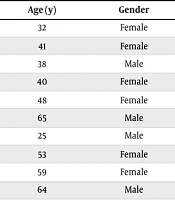
A total of 14 patients with cancer who were aware of their diagnosis participated in this study including 8 females and 6 males. Their age was between 30 and 75 years; all of them were married with education level from illiterate to bachelor degree. The time past from their diagnosis was 3 to 24 months and they had different jobs including housewife, storekeeper, worker, farmer, and governmental employee.
During the process of analyzing the data, a total of 10 themes were extracted including: 1- getting shocked, 2- fear, 3- anxiety and stress, 4- hopelessness, 5- guilt, 6- depression, 7- isolation and withdrawal, 8- feeling of lack of affection, 9- preparing for death and, 10- renewed relationship with God.
1) Getting Shocked
One of the reactions that most people had when hearing the diagnosis of cancer was shock. Many patients were shocked after finding out about their cancer; it was so hard for them to believe that they have cancer, and some denied their disease. This state was deeper for people who were diagnosed at an early age, because they did not expect to get cancer. Also, this state was more severe for the patients who were informed suddenly by the physician than those informed by their family and relatives indirectly. In some patients, the shock was associated with severe psychological reactions; some people said that they were going mad when they heard that they have cancer. Usually, severe reactions happened immediately after diagnosis.
One patient said: “I was shocked when the doctor told me I have cancer; I thought, Oh my God, what?! … I could not believe I had cancer“.
Another patient said: “When the doctor told me I have cancer, I was confused and stunned; I thought the world has collapsed on my head”.
2) Fear
Fear was one of the feelings expressed by patients in this study. In the minds of many participants, cancer was considered a terrible and scary disease. Fear of cancer was seen more in patients who thought cancer is the end of their life as well as in those who had the experience of a relative dying of cancer, or among those who believed that cancer has no treatment and cancer is equal to death. Some patients felt that they were helpless against this disease and it will eventually kill them; this led to more fear in patients. Fear of cancer was so severe that even some of the patients said they were even afraid of the word “cancer”. This psychological state was more frequently seen in the early phases of the disease.
In this regard, one of the patients said: “Even the word cancer is frightening; let alone someone telling you that you have cancer. I remember when I got home that night I could not sleep until morning; and I was constantly crying. It was terrible.”
Also, most patients were afraid of treatment, because of the side effects of chemotherapy, such as pain, severe nausea, and changes in their appearance. This type of fear was generally seen during the course of treatment, making the treatment difficult to tolerate so that some patients did not want to continue therapy and mentioned that if their relatives did not insist, they would abandon treatment. The participants stated that their spouse and relative’s support and communication with other patients who experienced similar surgeries and chemotherapy helped them reduce their fear of cancer.
A patient said: “When I went to start chemotherapy, I was afraid. Before the injection of drugs, when I saw them in the hands of the nurses, I was shaking with fear”.
Another patient said: “When I started the first session of chemotherapy, in the same room I was admitted to, a patient died after half an hour chemotherapy. Since then, I was really afraid. I lost heart.”
Another patient said: “For a long time, whenever I passed in front of the hospital, I felt bad”.
3) Anxiety and Stress
Anxiety and stress were other feelings mentioned by the patients, either directly or indirectly. One of the main reasons that caused this condition in patients was finding out about the malignancy of their disease, worrying about the future of their children, concerns about the high cost of treatment, doubts about the effectiveness of treatment, concern about the lack of an oncologist close to their city and the unavailability of drugs. All of these factors led to discomfort and exacerbated stress and anxiety among patients and worsened the patients’ performance. Since the patients thought that they will soon die of cancer, they became extremely worried about the future of their spouse and children and this led to anxiety and stress in patients. Many patients complained of the high cost of treatment and the unavailability of drugs. The difficulties in finding chemotherapy medicine and paying the high cost of treatment were important parts of their concerns.
One patient said: “I was very anxious and I was mostly worried about my children. I was worried about what would they do, if I did not get better.”
Also, chemotherapy and its side effects were one of the very important reasons for stress among patients in this study. Inquiring knowledge about the disease and its therapeutic dimensions was one of the very important factors in reducing stress and anxiety in patients that made them tolerate the treatment better.
4) Guilt
Feeling guilty was another topic mentioned by participants. Some people felt guilty and believed that their disease was the result of their sins; therefore, they blamed themselves for getting cancer and were looking for its reason. Even, some patients considered other people’s curse as the reason of their cancer and thought that the reason for getting cancer was their own deeds. Therefore, many patients felt guilty. This feeling usually happened in the early phases of diagnosis and caused a psychological crisis.
One patient said: “… I thought about all sorts of things. I thought what have I done to deserve getting cancer in this age?”
Another participant said: “I had no problem. I had no disease. One day, I argued with my maid; I was angry. I slept that night and in the morning I saw my breast was swollen. After a while the doctor diagnosed that it was cancer. I always think I broke that maid’s heart and … I got this problem”.
5) Hopelessness
Another feeling mentioned by the participants in this study was hopelessness. In this study, losing hope in life after hearing the diagnosis was mentioned by the majority of patients and most patients mistakenly believed that cancer has no cure and they have no opportunity to live. They imagined an uncertain future for themselves and felt hopeless. This feeling made some patients not seek treatment, because they were hopeless about treatment. Fear of inevitable death was one of the main reasons for the patients’ hopelessness. Participants reported all types of hopeless behavior, such as failing to do their job and live their normal life, lack of enjoying their life, low self-esteem, and depression. Due to long term treatment for cancer and hopelessness, they had a sad mood and were not able to have fun and enjoy their life. This situation mainly occurred at the beginning of treatment and caused the patient to feel hopeless and worried about the future.
One patient said: “When I heard I had cancer, it was as if life came to an end for me; I was really hopeless ... I just thought about my illness, … thinking about the disease bothered me, I was totally messed up, and life turned into hell for me and my family”.
6) Depression
The disease and its treatment complications caused different psychological effects among patients. Patients stated feelings such as boredom, lethargy and fatigue, insomnia, anorexia, and demoralization, which are the signs of depression. Some patients had thoughts about death and afterlife that caused more grief. Most of the participants complained about insomnia and nagging thoughts about their disease. Depression usually showed itself during treatment in cancer patients.
One patient said: “I felt so bad and depressed that the drugs had no effect on me up to 4 chemotherapy sessions. The doctors said if you continue to be like this, you won’t survive. You must be strong. Many people had the same disease and now they are cured and are living their lives.”
7) Isolation and Withdrawal
Isolation and withdrawal was one of the other feelings experience by patients. Due to treatment-related side effects such as hair loss, severe weight loss, and physical impairment, the patients felt that they had lost their beauty. This created a sense of inferiority and they tried to stay away from people and hide themselves. Some patients stated that they wore full clothing even at home, so their husband and children would not see them in that condition and they tried to appear less in public. Most participants stated disruptions in their relationship with others and had lack of interest to be seen in public or participate in events. This feeling was usually resolved over time and by support from their family. Most patients who had this condition talked about the effect of their family and spouse’s support to overcome this big problem. This feeling usually appeared after treatment side effects appeared in patients.
A patient said: “I always tried to be alone. I used to go home and cry when taking a shower so that no one would notice or become sad. I had lost all of my hair. I was frightened of myself. I did not want anyone to come to visit me. I wanted to be alone… I hated people… I felt nauseous when they came along … I always slept alone during this time… It was really hard for me”.
Another patient said: “After a while I lost my hair, I became very thin, I looked terrible. I tried not to go out, so that no one could see me. I became very ugly. When my children looked at me… I have two little children; they were frightened and asked what happened to you.... I was so thin that no pants fitted me. Once I took a bath, I asked my wife to come and scrub me and she was afraid. She said where should I scrub? It’s all bones…”
8) Feeling a Lack of Affection
Some patients mentioned that changes had occurred in their emotional state and they felt more dependent on their family and they also felt a lack of affection. This dependency was sometimes so much that even made their families feel worried. Some people wanted all their children to be around them and said they became very tender-hearted and felt an emotional vacuum. This feeling usually happened due to losing their self-esteem during treatment. Also, some patients had become sensitive and paranoid to other people’s behavior. This led to the misunderstandings about other people’s behavior; in many cases they became disappointed of other people’s behavior without reason. This was annoying both for the patients and those around them.
A patient said: “I needed affection; it was as if I lacked affection. I wanted everyone to be kind to me.”
Another patient said: “I became very attached to my family. I wanted them all to be near me. I felt bad when I could not see them even for one day.”
Another patient said: “Everyone was saying she will die. Even my aunt brought me a grave cloth (shroud) from Karbala. However, she didn’t say it to me herself … my husband said she has brought you a shroud. I was very sad when I heard this [the patient said this while crying] ... I told myself that my disease must be very dangerous that they have bought me a shroud, the doctor has certainly told them something, but they do not tell me”.
9) Preparing for Death
Some patients had thoughts about dying, for example, “How will I die? What happens to my family after my death? …”. These negative thoughts had occupied all of their time.
Acts like solitude with God, asking for forgiveness from family, and facing the Qiblah at bedtime showed that patients thought they have become very close to death, and they were preparing themselves for death.
10) Renewed Relationship with God
This study showed that finding out about cancer causes severe psychological crisis and confusion in patients at the beginning, but over time people accept this situation and try to return to normal life. Trust in God and seeking his help and thinking about the disease as a divine test, were among the most important thoughts and feelings mentioned in connection with accepting the disease and gaining hope among patients. Patients with stronger religious beliefs who believed that their fate is in the hand of God accepted their illness sooner and gained hope sooner. Many people, after their improvement, tried to enjoy their lives and felt happy that God had given them a second chance. This feeling usually occurred in the late stages of treatment and strengthened the patients’ spirit and helped them return back to their life.
A patient said: “Now I look at the world differently… You should never give up on God… God always takes care of his people… so why should we get disappointed?”
Another patient said: “After this happened, my life changed… I became more connected with God… I strongly feel that he is the only one that I can ask for help… when I pray I calm down… I feel peace. I used to pray before, but now I feel it with my whole heart.”
4. Discussion
In this study, a total of 10 themes including getting shocked, fear, anxiety and stress, helplessness, guilt, depression, isolation and withdrawal, feeling of lack of affection, preparing for death, and renewed relationship with God were extracted.
Mental and psychological reactions were among the most common and long-lasting reactions experienced by cancer patients. Among the psychological effects mentioned by the patients in previous studies are problems related to sexual relationships, poor body image, interrupted daily performance, financial pressures, obstacles to playing their role correctly, difficulties in achieving objectives, and problems in interpersonal relations (11).
The first reaction that most cancer patients in this study had in their experience was getting shocked. Many patients, especially young people that were informed suddenly about their cancer by the physicians, showed this reaction stronger. Landmark and Wall’s study also showed that patients were shocked after hearing the diagnosis of the disease and thought about its effect on their future (7).
Another reaction that most cancer patients had in this study during their experiences was fear of cancer. Perhaps the root of this fear was the thought that the disease is incurable. That is why the news of being diagnosed with cancer triggered the sense of death. This caused fear and hopelessness in patients.
Everdingen et al. in a study conducted on 136 patients with breast cancer showed that one of the dilemmas of patients after hearing about their cancer is concerns about their life and death (12).
Anxiety and stress was another experience of patients in this study. The root of this stress and anxiety seemed to be related to concerns about their children's future and fear of chemotherapy and its side effects. Many patients thought that cancer means death; they were worried about the future of their children and this caused severe disappointment and concern in patients. Aghabarari et al. stated that breast cancer is a disaster for many women. The feelings of sadness, anxiety, confusion, anger, and depression are natural reactions in patients with breast cancer (8).
Isolation and withdrawal was another experience among participants in the study. Perhaps one of the main reasons for this feeling in patients was related to changes in their appearance following the side effects of the disease so that patients felt that they have developed disability and impairment and they have lost their beauty. They also had a sense of inferiority, and tried not to show up in public.
Another experience of patients in the study was lack of affection and deep attachment to family, which can be due to the life-threatening nature of cancer and the fact that the patients, due to their hopelessness and fear of death, thought that they do not have much time left to be with their family and therefore felt they need to be with their family and relatives in the remaining time. The patients’ experience in this study was consistent with that reported by Esmaeili et al. in which, elderly patients recently diagnosed with cancer were concerned about their dependence on others (3).
The study found that cancer causes the patient to lose their spirit and suffer from emotional and spiritual crises. However, over time and by using mechanisms such as trust in God and seeking his help as well as looking at the disease as a divine test, they accepted the truth and gained life expectancy. Patients with stronger religious beliefs who believed that human fate is in the hands of God accepted their disease earlier and got back to their normal life sooner.
Walker et al. showed that patients’ fatalism was significantly correlated with medication adherence (r = 0.24), diet (r = -0.26), exercise (r = -0.20), and blood sugar testing (r = -0.19) (13). In Zamanzadeh et al. study, participants thought their power was from God and by believing in God and getting closer to him they increased their power to deal with the disease and the fear of death (14). In Fallah et al. study, participants thought that praying to god, trust in God, forgiveness and kindness were useful in coping with problems (15).
Generally, the results of this study show that although cancer is a physical disease, it has a very wide impact on patients’ mental health and these mainly negative emotions have an impact even worse than the disease itself. Also, the experiences of cancer patients in this study indicated that many mental and psychological disorders caused by the disease and its treatment remain even long after treatment, affecting individual performances.
4.1. Conclusions
It is necessary for medical staff and patient’s family to understand the mental and psychological emotions of cancer patients in order to apply interventions based on their needs. Due to the growing trend of cancer in Iran, the results of this study can be useful for patients' families and medical staff, especially doctors and nurses to deal properly and affectionately with cancer patients.