


1. Background
2. Objectives
3. Methods
3.1. Materials
3.2. Cell Culture
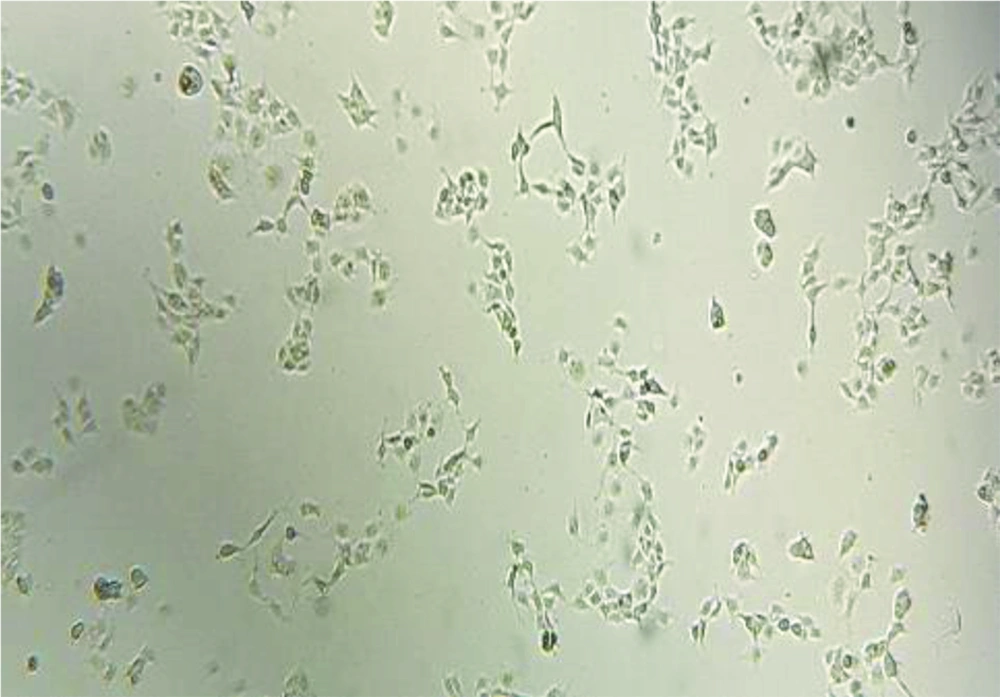
Human hepatic stellate cells before treating with fructose (magnification 10X).
3.3. Fructose Preparation
3.4. Cell Viability Assay
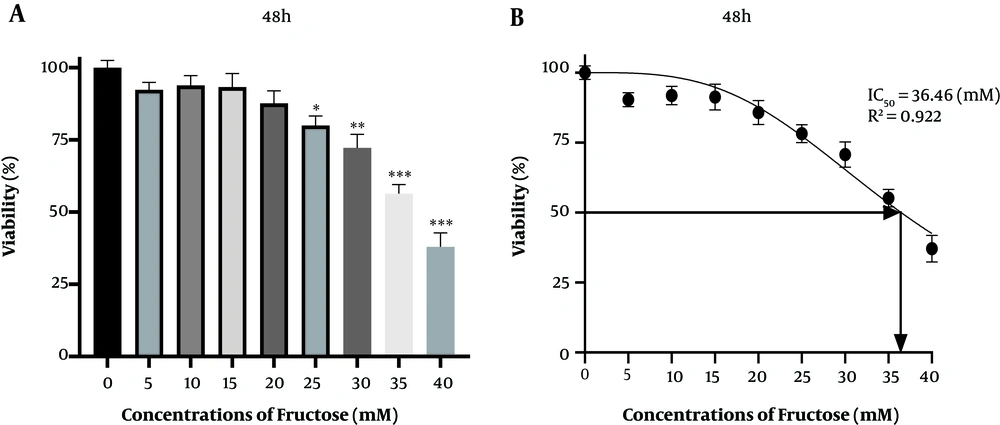
A and B, MTT assay results showing cell viability under different fructose concentrations over 48 h. Results are represented as a mean ± SD. Statistical analysis was performed using Graph Pad Prism 8 software and a one-way ANOVA test. Statistical significance was assumed for P-values < 0.05: (*P < 0.05, **P < 0.01, ***P < 0.001).
3.5. Treatment of Hepatic Stellate Cells with Different Concentrations of Fructose
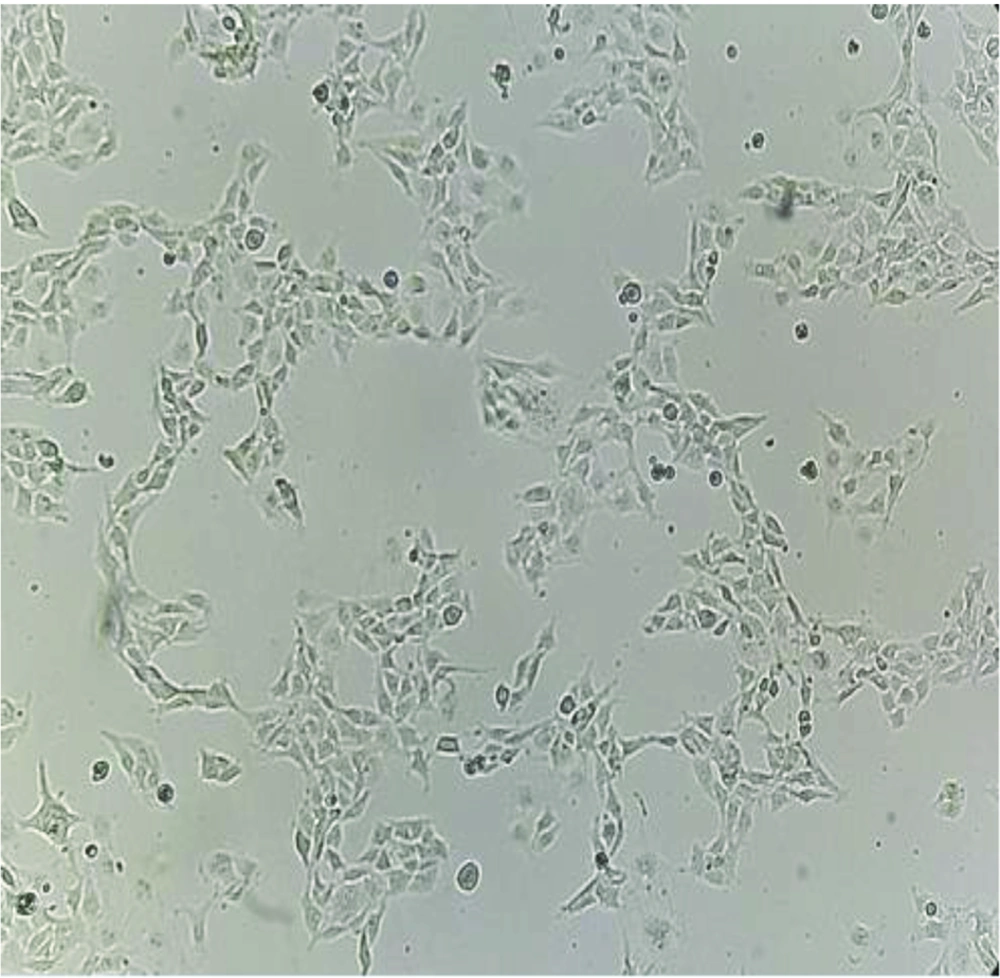
Human hepatic stellate cells after treating with a high concentration of fructose (magnification 10X)
3.6. Primers Used
3.7. Evaluation of Gene Expression by Total RNA Extraction and cDNA Synthesis with Real-Time PCR
3.8. Statistical Analysis
4. Results
4.1. Expression of TGF-Β Gene After Treatment of Cells with Fructose
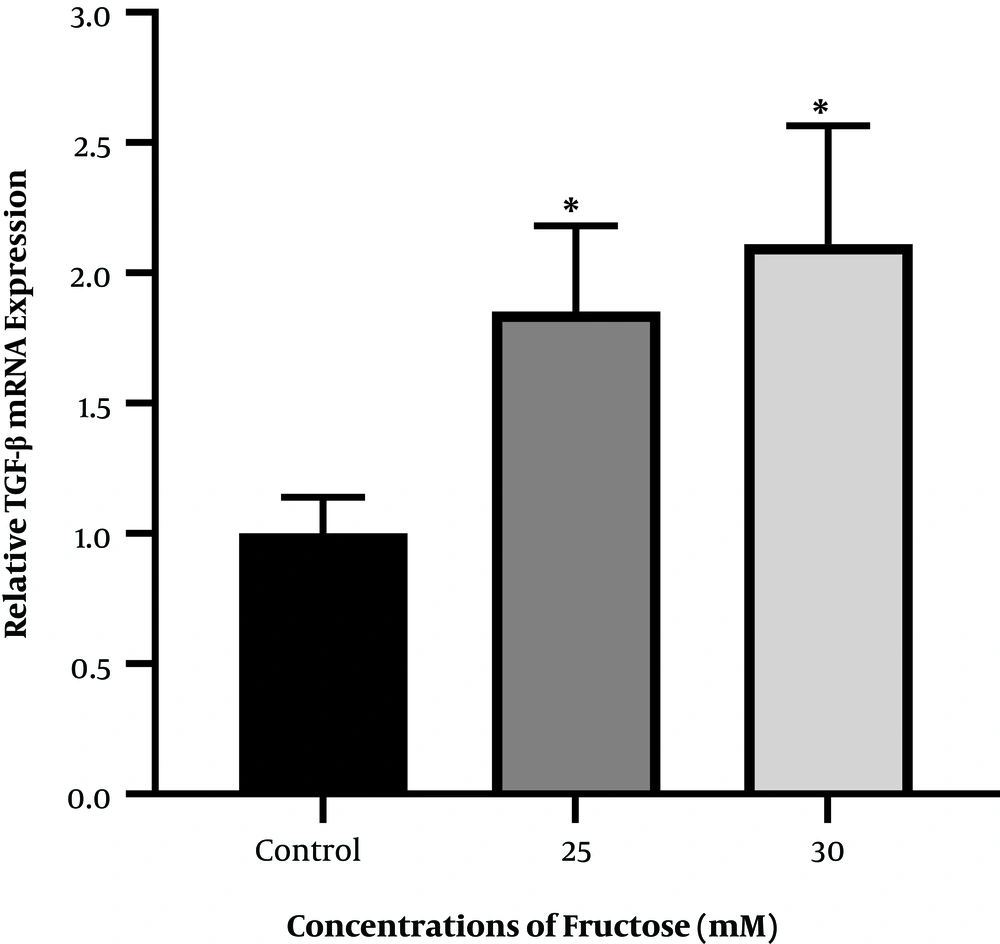
Diagram of TGF-β gene expression in fructose-treated human hepatic stellate cells at concentrations of 25 and 30 mM fructose after 48 h of incubation (* P < 0.05 for fructose-treated groups compared to the control group).
4.2. The Expression of Α-SMA Gene After Treatment of Cells with Fructose
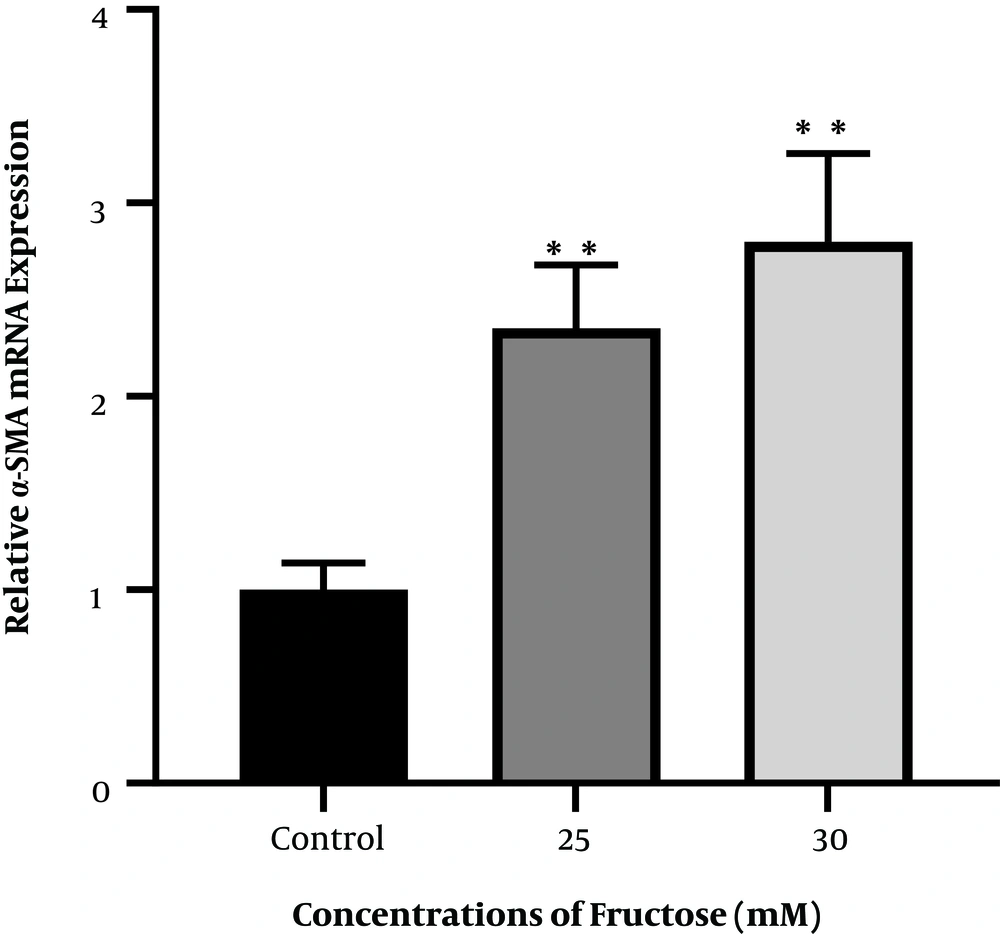
Diagram of α-SMA gene expression in fructose-treated human hepatic stellate cells at concentrations of 25 and 30 mM fructose after 48 h of incubation (** P < 0.01 for fructose-treated groups compared to control group).


