


1. Background
2. Objectives
3. Patients and Methods
3.1. Blood Collection
3.2. DNA Extraction
3.3. Mini-Short Tandem Repeats, Primers and Polymerase Chain Reaction
| Classification of Mini-STR | Primer Sequences (5' - 3') | Motif Repeat | Product Size, bp |
|---|---|---|---|
| Y Mini-STRs | |||
| DYS389b | (TCTG) 5 (TCTA) 12 | 122 | |
| F | CCAACTCTCATCTGTATTATCTATG | ||
| R | TATTATACCTACTTCTGTATCCA | ||
| DYS459 | (ATTT) n | 136 - 156 | |
| F | CAGGTGAACTGGGGTAAATAAT | ||
| R | TTGAGCAACAGAGCAAGACTTA | ||
| DYS446 | (TCTCT) n | 85 - 160 | |
| F | TATTTTCAGTCTTGTCCTGTC | ||
| R | GAGACTCTGTCTGAAGAGAG | ||
| DYS426 | (GTT) n | 85 - 110 | |
| F | GGTGACAAGACGAGACTTTGTGT | ||
| R | CTCAAAGTATGAAAGCATGACCA | ||
| DYS438 | (TTTTC) n | 95 - 140 | |
| F | TGGGGAATAGTTGAACGGTAA | ||
| R | GGCAACAAGAGTGAAACTCCA | ||
| DYS481 | (CTT) n | 115 - 158 | |
| F | AGGAATGTGGCTAACGCTGT | ||
| R | ACAGCTCACCAGAAGGTTGC | ||
| DYS505 | N-7-(T)-[TCCT] n-2-N24 | 97 - 125 | |
| F | CTCTGTTCTTTTTCTCTCCTTCC | ||
| R | AGGTTCGAGTCAGTTCACCA | ||
| DYS441 | N7-[TTCC] n-2-(T)-N-7 | 91 - 119 | |
| F | CAAATTCTCAGGCATTGCAG | ||
| R | GGGAGAGAAGGAGGAAGGA | ||
| DYS392 | (TAT) n | 94 - 130 | |
| F | AAAAGCCAAGAAGGAAAACAAA | ||
| R | GAAACCTACCAATCCCATTCCTT | ||
| Non-STR Markers | |||
| SRY | Non-repeat sequences | 76 | |
| F | TCCTCAAAAGAAACCGTGCAT | ||
| R | AGATTAATGGTTGCTAAGGACTGGAT | ||
| DYS14 | Non-repeat sequences | 84 | |
| F | GGGCCAATGTTGTATCCTTCTC | ||
| R | GCCCATCGGTCACTTACACTTC | ||
| X and Y Marker | |||
| Amelogenin | Non-repeat sequences | 106, 112 | |
| F | CCCTGGGCTCTGTAAAGAATAGTG | ||
| R | ATCAGAGCTTAAACTGGGAAGCTG | ||
| Classification of X Mini-STRs | Primer Sequences (5’ – 3’) | Motif Repeat | Product Size, bp |
|---|---|---|---|
| DXS7133 | TAGA | 76 - 100 | |
| F | AGCTTCCTTAGATGGCATTCA | ||
| R | GTTTTTAACGGTGTTCATGCTT | ||
| DXS8378 | CTAT | 95 - 11 | |
| F | GCTCCTGGCAGGTCACTATC | ||
| R | GCGACAAGAGCGAAACTCCA | ||
| DXS7132 | (TCTA) x-(TCA) (0-l)-(TCTA) 2 | 135 - 163 | |
| F | CCTCCTTAATAGTGTGAGCCCAT | ||
| R | GTCAACGTTCTCCAGAGAAACAGA | ||
| DXS7423 | CCAT | 95 - 115 | |
| F | AGATTTCCTCCCCATCCATC | ||
| R | GTTGTCACACAAATAAATGAATGAGT | ||
| GATA31E08 | (AGGG) x-(AGAT) y | 95 - 131 | |
| F | CAGAGCTGGTGATGATAGATGA | ||
| R | CTCACTTTTATGTGTGTATGTATCTCC | ||
| DXS6789 | (TATC)(0-l)-(TATG)x-(TATC)y | 124 - 168 | |
| F | CCTCGTGATCATGTAAGTTGG | ||
| R | CAGAACCAATAGGAGATAGATGGT | ||
| GATAD05 | TAGA | 122 - 150 | |
| F | TAGTGGTGATGGTTGCACAG | ||
| R | ATAATTGAAAGCCCGGATTC | ||
| DXS6803 | (TCTA) x-(TCA) (0-l)-TCTA | 102 - 30 | |
| F | GAAATGTGCTTTGACAGGAA | ||
| R | CAAAAAGGAACATATGCTACTT | ||
| DXS101 | (CTT) x-(ATT) y | 126 - 177 | |
| F | TCTCCCTTCAAAAACAAAGATAA | ||
| R | TGCATATTCTGCGCATGT | ||
| GATA165B12 | AGAT | 90 - 110 | |
| F | TCATCAATCATCTATCCGTATATCA | ||
| R | GAAGTTGACTGTGATTCCTGGTTT |
3.4. Polyacrylamide Gel Electrophoresis
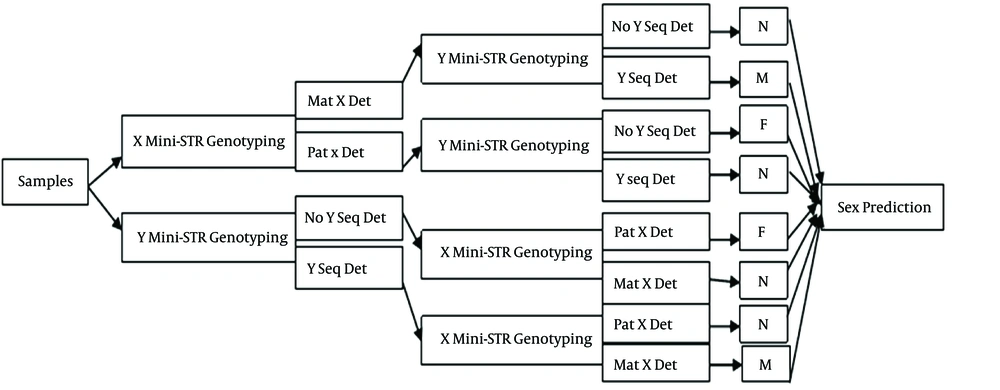
Mat X det, maternal X sequences were detected; Pat, Paternal; No Y seq det, No Y sequences were detected; M, Male; F, Female; N, Non-conclusive, Neither male nor female and the test should be repeated.
3.5. Statistical Analysis
4. Results
4.1. Mini-Single Tandem Repeat Genotyping Results
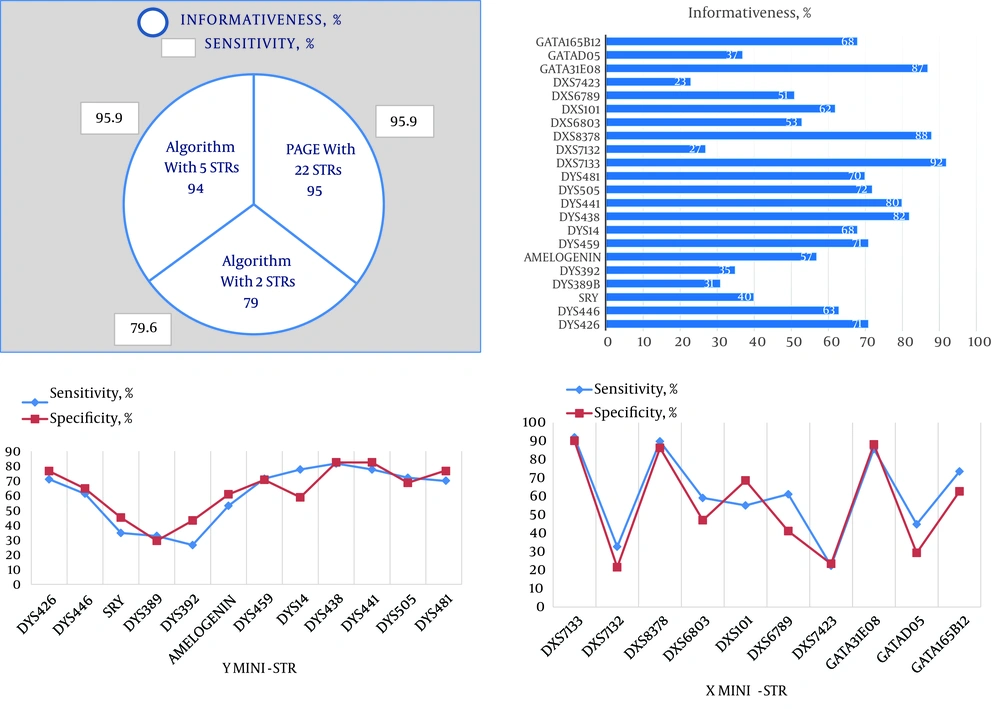
A, Comparing sensitivity and informativeness of the algorithm in three conditions and applicability of the X-Y algorithm (by five markers) for sex prediction in future studies and clinical settings; B, informativeness of X and Y mini-STRs; C, sensitivity and specificity of Y mini-STRs; D, sensitivity and specificity of X mini-STRs.
| Results | Informativeness, CI (95%) | Sensitivity | Specificity | Positive Predictive Value | Negative Predictive Value |
|---|---|---|---|---|---|
| PAGE with 22 STRs | 95 (88.7 - 98.4) | 95.9 | 98 | 94.0 | 97.9 |
| Algorithm with DXS7133 and DYS438 | 79 (69.7 - 86.5) | 79.6 | 78.4 | 78.0 | 80.0 |
| Algorithm with DXS7133, DXS8378, GATA31E08 and DYS438, DYS441 | 94 (87.4 - 97.8) | 95.9 | 92.2 | 92.2 | 95.9 |
aValues are expressed as %.
4.2. Marker Assessments for Being Applied in Clinical Settings
| Mini-STRs | Informativeness, CI (95%) | Sensitivity | Specificity | Positive Predictive Value | Negative Predictive Value |
|---|---|---|---|---|---|
| Y mini-STRs | |||||
| DYS426 | 71 (61.1 - 79.6) | 65.3 | 76.5 | 72.7 | 69.6 |
| DYS446 | 63 (52.8 - 72.4) | 61.2 | 64.7 | 62.5 | 63.5 |
| SRY | 40 (30.3 - 50.3) | 34.7 | 45.1 | 37.8 | 41.8 |
| DYS389b | 31 (22.1 - 41.0) | 32.7 | 29.4 | 30.8 | 31.3 |
| DYS392 | 35 (25.7 - 45.2) | 26.5 | 43.1 | 31.0 | 37.9 |
| Amelogenin | 57 (46.7 - 66.9) | 53.1 | 60.8 | 56.5 | 57.4 |
| DYS459 | 71 (61.1 - 79.6) | 71.4 | 70.6 | 70.0 | 72.0 |
| DYS14 | 68 (57.9 - 77.0) | 77.6 | 58.8 | 64.4 | 73.2 |
| DYS438 | 82 (73.5 - 89.0) | 81.6 | 82.4 | 81.6 | 82.4 |
| DYS441 | 80 (70.8 - 87.3) | 77.6 | 82.4 | 80.9 | 79.2 |
| DYS505 | 72 (62.1 - 80.5) | 75.5 | 68.6 | 69.8 | 74.5 |
| DYS481 | 70 (60.0 - 78.8) | 63.3 | 76.5 | 72.1 | 68.4 |
| X mini-STRs | |||||
| DXS7133 | 92 (84.8 - 96.5) | 93.9 | 90.2 | 90.2 | 93.9 |
| DXS7132 | 27 (18.6 - 36.8) | 32.7 | 21.6 | 28.6 | 25.0 |
| DXS8378 | 88 (80.0 - 93.6) | 89.8 | 86.3 | 86.3 | 89.8 |
| DXS6803 | 53 (42.8 - 63.1) | 59.2 | 47.1 | 51.8 | 54.5 |
| DXS101 | 62 (51.8 - 71.5) | 55.1 | 68.6 | 62.8 | 61.4 |
| DXS6789 | 51 (40.8 - 61.1) | 61.2 | 41.2 | 50.0 | 52.5 |
| DXS7423 | 23 (15.2 - 32.5) | 22.4 | 23.5 | 22.0 | 24.0 |
| GATA31E08 | 87 (78.8 - 92.9) | 85.7 | 88.2 | 87.5 | 86.5 |
| GATAD05 | 37 (27.6 - 47.2) | 44.9 | 29.4 | 37.9 | 35.7 |
| GATA165B12 | 68 (57.9 - 77.0) | 73.5 | 62.7 | 65.5 | 71.1 |
aValues are expressed as %.
| Markers | Median | Minimum | Maximum | Mean ± SD |
|---|---|---|---|---|
| Y mini STR | 66.7 | 0 | 91.7 | 60.67 ± 20.759 |
| X mini STR | 60.0 | 0 | 100 | 58.80 ± 19.811 |
aAll descriptive statistics were computed for each sample. For example, Mean column shows that for each sample about 60.67% of Y mini-STRs and 58.80% of X mini-STRs were informative, and thus they are enough for fetal sex determination.


