
1. Background
Klebsiella pneumoniae and Escherichia coli are Gram negative opportunistic pathogens from the family of Enterobacteriaceae. National Health Care safety Network in their report of between 2009 - 2010, described E. coli as 8% and K. pneumoniae as 11.5% of health care associated infections (1). From the early 1970s, K. pneumoniae was reported as one of the major causes of Hospital acquired infections, worldwide. Also K. pneumoniae is considered as a major cause of community-acquired infections including severe pneumonia in alcoholic and diabetic patients, urinary tract infections and liver abscess (2).
Resistance to extended-spectrum cephalosporins is a well-known problem among Enterobacteriaceae (3). Extended-spectrum beta-lactamase (ESBL) with the capability of hydrolysing oxyimino-cephalosporins, and monobactams, except cephamycins or carbapenems, first described in 1983 (4). The majority of Ambler class A bata- lactamases are TEM bata- lactamase responsible for resistance to ampicillin, penicillin and first-generation cephalosporins such as cephalothin. Occurrence of mutations in the blaTEM-1 gene, could lead to ESBL phenotype and increase the hydrolysis capabilities of particular extended-spectrum cephalosporins and aztreonam (5). Another class A bata- lactamases, Cefotaximases (CTX-M) have the capability of hydrolysing cefotaxime and aztreonam and worldwide distribution in community and hospitals is mediated by integrons and insertion sequences (6). The VEB-1 beta lactamase is responsible for a higher level of resistance to ceftazidime than to cefotaxime (7). PER-1 with the capability of hydrolyzing penicillins, oxyimino-cephalosporins and aztreonam, with high prevalence in non-fermentative Gram negative bacilli, such as Pseudomonas aeruginosa, Acinetobacter spp., and Alcaligenes faecalis, has also recently been detected in Enterobacteriaceae (8). Carbapenem resistance in Enterobacteriaceae is mediated by genes located on integrons, such as blaKPC, the gene encoding an Ambler molecular class A enzyme, or blaNDM the gene encoding New Delhi metallo-betalactamase, Which give them the potential of transmission in the community and hospital setting (3).
Four types of antibiotic integrons have been classified based on the intI sequence (9). Integrons are mobile genetic elements that consist of two conserved segments; the 5’conserved segment contains the intI gene, the attI site, and the common promoter Pant and; the 3’conserved segment which includes an antiseptic resistance gene (qacED1), a sulphonamide resistance gene (sul1) and an ORF (orf5) of unknown function. Class 2 integrons are similar to class 1 integrons (10). Most integrons from clinical isolates belong to class 1. The prevalence of the class 1 integron in clinical isolates of E. coli is reported between 33% to 49% and in commensal isolates between 11% - 42% (11).
2. Objectives
Since the existence of integrons in commensal opportunistic strains could serve as a reservoir for the spread of resistance genes in the community and hospital, the present study was conducted to describe the presence of four genetic variants of extended expectrum β lactamase including blaCTX-M, blaTEM, blaPER, blaVEB associated with Classes 1, 2, 3 integrons in E. coli and K. pneumoniae isolates from community-acquired and hospital acquired infections.
3. Methods
3.1. Subjects
Four groups of patient were included in the present study in May 2014 and February 2015. The four groups of patients included in the study, were as follows: Groups 1 and 2: Ninety-nine inpatients and Eighty-seven outpatients, infected with E. coli making a total of One hundred eighty six. Groups 3 and 4: Thirty-four inpatients and twenty-four outpatients (totaling 58); infected with K. pneumoniae.
3.2. Ethics and Consent
The study was approved by the Hormozgan University of Medical Sciences ethics committee according license number Hums.rec.1394.148.
3.3. Bacterial Isolates
Escherichia coli and K. pneumoniae were identified by biochemical tests (12). Bacterial isolates were collected from clinical specimens of affected patients, (e.g., urine, wound, sputum, ascites fluid, cerebrospinal fluid, peritoneum).
3.4. Antimicrobial Susceptibility Testing
Antimicrobial susceptibilities were determined by disk diffusion method in accordance with the clinical and laboratory standards institute (CLSI) guidelines. The following antibiotic disks (MAST Ltd, UK) were used: imipenem (10 µg), gentamicin(10 µg), ofloxacin(5 µg), ceftriaxone (30 µg), cefotaxime (30 µg), cefepime (30 µg), aztreonam (30 µg), ceftazidime (30 µg ), amikacin (30 µg), trimetoprim/ sulfametoxazol (1.25/23.75 µg), ciprofloxacin (5 µg), cefixime (5 µg). ESBL producing isolates were screened by phenotypic confirmatory test (PCT) using ceftazidime and clavulanic acid (13).
3.5. PCR for Identification of Antibiotic Resistance Determinants
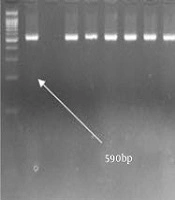
DNA was extracted by boiling. The extracted DNA was used as a template for amplication of blaTEM, blaCTX-M, blaPER, blaVEB using 4 primer pairs (Gen Fanavaran Ldt). Table 1 shows the primer sequence, annealing temperature and product size of target genes (14-16). Multiplex PCR was performed for the identification of Class 1, 2, 3 integrons as described by Dillon et al., (17). The PCR amplification was performed in a total volume of 25 µL containing 3 μL of DNA template, 10 pmol of each primer and 1.5 U of Taq DNA polymerase, in 10× PCR buffer containing 1.5 mM MgCl2 and 200 µM of each deoxynucleoside triphosphate(Cinagen Ltd, Iran). The annealing temperatures are presented in Table 1. Expected amplified products, were separated by electrophoresis on 1% agarose gel containing 0.5 μg/mL ethidium bromide and photographed under UV illumination.
Table 1.
Primer Pairs Used for Amplification in This Study
| Primer Name | Sequence (5’-3’) | Product Size, bp | Target | Annealing, °C | Reference |
|---|---|---|---|---|---|
| Veb-1-f | CGA CTT CCA TTT CCC GAT GC | 643 | BlaVEB | 62 | (14) |
| Veb-1-r | GGA CTC TGC AAC AAA TAC GC | ||||
| Per-1-f | ATG AAT GTC ATT ATA AAA GC | 927 | BlaPER | 50 | (14, 16) |
| Per1-r | TTAATTTGGGCTTAGGG | ||||
| TEM- F | GAGTATTCAACATTTCCGTGTC | 851 | BlaTEM | 63 | (14) |
| TEM -R | TAATCAGTGAGGCACCTATCTC | ||||
| CTX-m1 F | GACGATGTCACTGGCTGAGC | 499 | BlaCTX-M | 55 | (15) |
| CTX-m1 R | AGCCGCCGACGCTAATACA | ||||
| Int-1F | CAGTGGACATAAGCCTGTTC | 160 | Int 1 | 62 | (17) |
| Int-1R | CCCGAGGCATAGACTGTA | ||||
| Int-2F | GTAGCAAACGAGTGACGAAATG | 788 | Int 2 | 62 | (17) |
| Int-2R | CACGGATATGCGACAAAAAGGT | ||||
| Int-3F | GCCTCCGGCAGCGACTTTCAG | 979 | Int 3 | 62 | (17) |
| Int-3R | ACGGATCTGCCAAACCTGACT |
3.6. Statistical Analyses
Statistical analyses were performed using the SPSS 21 and Excel (Microsoft Corp) software programs, employing the chi-square test, and P values less than 0.05 were considered statistically significant.
4. Results
4.1. Strain Identification
A total of 186 E. coli isolates, 125 isolates (67.2%) were from female and 61 (32.8%) were from males. This comprised of 167 isolates (89.8%) from urine, 7 from wound (3.8%), 6 from throat (3.2%), 3 from Ascites fluid (1.6%) and 1 from other samples such as cerebrospinal fluid, Peritoneum and sputum (0.5%). ninety-nine out of 186 E. coli isolates (53.2%) were obtained from inpatients. Samples from inpatients were obtained from any of the wards including, internal medicine 30 (30.3%), pediatrics 24 (24.2%), intensive care units 12 (12.1%), Gynecology 9 (9.1%) and 24 (24.2%) were from other different wards. Eighty-six isolates out of 87 (98.8%) outpatient E. coli isolates, obtained from urine samples.
A total of 58 K. pneumoniae isolates, 22 isolates (37.9%) were from female and 18 (31%) were from males. This comprised of 34 (58.6%) isolates from inpatients, which were obtained from intensive care unit 12 (20.7%), pediatrics7 (12.1%), emergency 7 (12.1%), internal medicine 4 (6.9%), burn 1 (1.7%), surgery 1 (1.7%), ear, nose, and throat department 1 (1.7%) and neurology department 1 (1.7%).
4.2. Antimicrobial Susceptibility Testing
Forty-nine (26.3%) E. coli and 19 (32.8%) K. pneumoniae isolates presented with ESBL phenotype. ESBL ratio between inpatient and outpatient in E. coli isolates was 31/18 (31.3/20.7%) and in K. pneumoniae isolates was 13/6 (38.2%/25%). Antibiotic susceptibility of E. coli and K. pneumoniae isolates are shown in Table 2. Imipenem, ceftazidime and cefepime were the most effective betalactams against E. coli (92.5% susceptible) and K. pneumoniae (65.5% susceptible). The most resistance rate in isolates was on tetracycline with 65.6% resistance in E. coli and 72.4% resistance in K. pneumoniae.
Table 2.
Frequency (%) of Sensitivity Rate in E. Coli and K. Pneumoniae Isolates from Inpatient and Outpatienta
| Antibiotics | E. Coli | K. Pneumoniae | ||||
|---|---|---|---|---|---|---|
| Inpatient, N = 99 | Outpatient, N = 87 | Total, N = 186 | Inpatient, N = 34 | Outpatient, N = 24 | Total, N = 58 | |
| CAZ | 57 (57.6) | 64 (73.6) | 121 (65.1) | 13 (38.2) | 17 (70.8) | 30 (51.7) |
| CPM | 59 (59.6) | 63 (72.4) | 122 (65.6) | 16 (47.1) | 18 (75) | 34 (58.6) |
| CRO | 33 (33.3) | 54 (62.1) | 87 (46.8) | 11 (32.3) | 18 (75) | 29 (50) |
| AZT | 40 (40.4) | 57 (65.5) | 97 (52.2) | 13 (38.2) | 18 (75) | 31 (53.4) |
| IPM | 92 (92.9) | 80 (91.9) | 172 (92.5) | 21 (61.8) | 17 (70.8) | 38 (65.5) |
| AN | 96 (97) | 81 (93.1) | 177 (95.2) | 29 (85.3) | 21 (87.5) | 50 (86.2) |
| CP | 59 (54.5) | 55 (63.2) | 109 (58.6) | 25 (73.5) | 22 (91.7) | 47 (81.1) |
| SXT | 31 (31.3) | 46 (52.9) | 77 (41.4) | 18 (52.9) | 16 (66.7) | 34 (58.6) |
| TE | 28 (28.3) | 33 (37.9) | 61 (32.8) | 8 (23.5) | 3 (12.5) | 11 (19) |
| OFX | 53 (53.5) | 54 (62.1) | 107 (57.5) | 15 (44.1) | 18 (75) | 33 (56.9) |
| GM | 63 (63.6) | 68 (78.2) | 131 (70.4) | 23 (67.6) | 20 (83.3) | 43 (74.1) |
| CTX | 28 (28.3) | 50 (57.5) | 78 (41.9) | 10 (29.4) | 15 (62.5) | 25 (43.1) |
| CFM | 34 (34.3) | 56 (64.4) | 90 (48.4) | 12 (35.3) | 17 (70.8) | 29 (50) |
Abbreviations: AN, Amikacin; AZT, Aztreonam; CAZ, Ceftazidime; CFM, Cefexime; CP, Ciprofloxacin; CPM, Cefepime; CRO, Ceftriaxone; CTX, Cefotaxime; GM, Gentamicin; IPM, Imipenem; OFX, Ofloxacin; SXT, Cotrimoxazole; TE, Tetracycline.
aValues are expressed as No. (%).
Resistance rate of ESBLs producing K. pneumoniae to advanced generation cephlosporins are as follows: nineteen (100%) resistant to ceftazidime, 17 (89.5%) resistant to ceftriaxone and cefotaxime, 11 (57.9%) resistant to cefixime and 6 (31.6%) resistant to fourth generation cephalosporin and cefepime. Resistance rate of ESBLs E. coli to cefotaxime, ceftriaxone and cefeximme, ceftazidime and cefepime consequently were 47 (95.9%), 46 (93.9%), 32 (65.3%), 30 (61.2%).
4.3. Detection of Beta-Lactamase Genes
The prevalence of β lactamase genes and integrons are shown in Tables 3 and 4. Class 1 integron in E. coli (58.6%) was higher than in K. pneumoniae (56.9%) and the same was for Class 2 at 9.7 vs 5.2%. Sixty-two isolates (33.3%) of E. coli and 23 isolates (39.6%) of K. pneumoniae were carriers of both blaTEM and blaCTX-M genes. Five E. coli isolates and one K. pneumonia, were carriers of both integron Class 1 and 2. One of the E. coli and 2 isolates of K. pneumoniae, were carriers of more than one of the beta- lactamase genes tested in our study. Characteristics of these isolates are shown in Table 5.
Table 3.
Molecular Characteristics of E. Coli Isolates with ESBL Phenotypea
| Bacteria | No. | ESBLs Genes | Integrons | ||||
|---|---|---|---|---|---|---|---|
| blaTEM | blaCTX-M | blaPER | blaVEB | Class 1 | Class 2 | ||
| E. coli | |||||||
| Inpatient | 99 (53.2) | 57 (57.6) | 71 (71.7) | 3 (3) | 19 (19.2) | 66 (66.7) | 11 (11.1) |
| Outpatient | 87 (46.8) | 49 (56.3) | 42 (48.3) | 1 (1.1) | 13 (14.9) | 43 (49.4) | 7 (8.04) |
| Total | 186 (100) | 106 (57) | 113 (60.8) | 4 (2.2) | 32 (17.2) | 109 (58.6) | 18 (9.7) |
aValues are expressed as No. (%).
Table 4.
Molecular Characteristics of K. Pneumoniae Isolates with ESBL Phenotypea
| Bacteria | No. | ESBLs Genes | Integrons | ||||
|---|---|---|---|---|---|---|---|
| blaTEM | blaCTX-M | blaPER | blaVEB | Class 1 | Class 2 | ||
| K. pneumoniae | |||||||
| Inpatient | 34 (58.6) | 18 (52.9) | 22 (64.7) | 0 | 1 (2.9) | 21 (61.8) | 2 (5.9) |
| Outpatient | 24 (41.4) | 7 (29.2) | 12 (50) | 0 | 4 (16.7) | 12 (50) | 1 (4.2) |
| Total | 58 (100) | 25 (43.1) | 34 (58.6) | 0 | 5 (8.6) | 33 (56.9) | 3 (5.2) |
aValues are expressed as No. (%).
Table 5.
Characteristics of E. Coli and K. Pneumoniae Isolates That Contains Integrons and More Than One of the β Lactamase Genes
| Isolate | Bacteriae | Inpatient/Outpatient | Sex | Site of Isolation | Bla Genes and Integrones | Pattern of Resistance |
|---|---|---|---|---|---|---|
| 174E | E. coli | Inpatient | male | CSF | BlaCTX-M, BlaPER, BlaVEB, BlaTEM, Class 2 integron | CRO,CTX,CPM,AZT,CAZ,SXT,CP,CFM, |
| 74K | K. pneumoniae | Outpatient | male | urine | BlaCTX-M, BlaVEB, BlaTEM, Class 1 integron | GM,AN,CFM,CP,IPM,AZT,TE,CTX,CPM |
| 43K | K. pneumoniae | Inpatient | female | urine | BlaCTX-M, BlaVEB, BlaTEM, Class 1 integron | SXT,GM,CRO,OFX,CAZ,TE,CTX |
4.4. Statistical Analyses
We found significant differences in ESBLs phenotype in E. coli isolated from inpatient compared to community acquired isolates (P = 0.050). Although these differences were not significant in K. pneumoniae (P = 0.145). A significant association of ESBL presentation in E. coli was observed with resistance to ceftazidime, cefepime, ceftriaxone, aztreonam, cefexime, cefotaxime and ofloxacin (P = 0.000) and gentamicin (P = 0.001). In K. pneumoniae isolates, significant association was found with resistance to ceftazidime (P = 0.000) and cefepime (P = 0.001), and ceftriaxone (P = 0.000), aztreonam (P = 0.009), cefexime (0.002), coterimoxazole (SXT) (P = 0.000) and cefotaxime (P = 0.001). There was not significant association between class 1 and class 2 integrons and ESBL presentation in E. coli (P = 0.44). A significant association of ESBL presentation in K. pneumoniae was observed with class 1 integron (P = 0.0018), but class 2 integron (P = 0.47).
5. Discussion
Multi-drug resistant isolates of E. coli and K. pneumoniae are increasingly reported in hospital and community settings around the word. We analyzed the level of antimicrobial resistance, the ESBL presentation and the presence of molecular determinants of resistance including integrons and beta-lactamases-encoding genes in the most prevalent species of Enterobacteriaceae isolated from different samples of inpatient and outpatient. The emergence of community acquired ESBL producing E. coli was first reported in 1988 and since then we have been faced with increasing reports from around the world (4), 7.1% in Brazil (18), 7% in Hong Kong (19) to 28.1% in France (20) and 67.3 in India (21) to higher level of 32% in Iran (22) which was more than the present study (20.7%).
In Iranian study, the frequency of ESBL phenotype in K. pneumoniae in community acquired infections respectively were 52% (23) which was more than our results (25%). We didn’t find significant differences in ESBLs phenotype in K. pneumoniae isolated from inpatient compared to community acquired isolates. However, the frequency of ESBL phenotype in K. pneumoniae in inpatient in the present study (38.2%), was similar to Kashan study (35%), (23). And less than Tehran study (64%) (24). Significant differences in ESBLs phenotype in E. coli isolated from inpatient compared to outpatient, in our study, may be due to the selective pressure of excessive consumption of antibiotics in hospital.
In the present study, the ESBLs producing isolates showed resistance to most antibiotics including advanced generation cephalosporins (31.6% to 100%), which was consistent with other studies in Italy that reported resistance rate of between 41.9 % to 87.0 % for K. pneumoniae to third generation cephlosporins from 2010 to 2012 (25). In Iran, the rate of resistance to third generation cephalosporins amongst ESBL producing K. pneumoniae was between (55%, ceftriaxone), to (67.4%, cefexime) (26). Although these enzymes are not effective on carbapenems, since the cephalosporin resistance results in the use of carbapenem in the treatment of infections, these isolates might be exposed to carbapenem and became resistance (27).
Furthermore, the presence of class 1 and class 2 integrons in these isolates might be mediated resistance to other non beta-lactam antibiotics such as cotrimoxazole, tetracycline, gentamicin and plasmid that carry ESBL genes and can transport resistance genes of other classes of antibiotics (28). Thus, ESBL-producing isolates may exhibit resistance to multiple class of antibiotics.
The most prevalent beta- lactamase genes in the studied isolates was blaCTX-M which is supported by previous studies in Iran and other countries. ESBL producing Klebsiella in Iranian studies were 35% in Kashan of which 80% carried the blactx-M genes (24). According to a French study, the prevalence of CTX-M-producing E. coli among the total number of E. coli isolates was 60.8%, and the occurrence of CTX-M-producing E. coli among ESBL-producing E. coli isolates was 39.8% (20). A polish study revealed that Most of the ESBL-producing isolates (75.7 %) had a blaCTX-M gene (29). Some studies have indicated that CTX-M-producing E. coli and K. pneumoniae have been imported from community acquired urinary tract infections into the hospital setting (27).
In spite of what was expected, in the present study, prevalence of blaVEB in outpatients was more than in inpatients (16.7% vs. 2.9%). The small number of samples harbored this gene, can result in this finding. Amongst 34 ESBL producing E. coli isolates from community acquired urinary tract infections in Cambodia, all were positive for blaCTX-M and negative for blaVEB and blaTEM in 26 (76.4%) of the ESBL-carrying strains was reported (29). One hundred and thirty seven E. coli (73.6%) were not ESBL producing according to PCT. 121 (88.3%) isolates harbored at least one of the studied genes and in K. pneumoniae 39 isolates were not ESBL producing whereas 24 (61.5%) harbored ESBL genes. Presence of beta- lactamase genes in isolates lacking ESBL phenotype, indicates the presence of resistance gene pools in studied isolates causing a risk of resistance gene expression and ESBL phenotype in case of uncontrolled consumption of antibiotics.
Only one E. coli showed ESBL phenotype, without having any of the studied beta- lactamase genes and integrons indicates that the presence of this phenotype in isolates could mainly be due to the presence of these genes. Compared with other studies in Iran (52% class I integron and 2.5% class 2 integron) (9) and Kenya (35% class I integron) (30), the prevalence of integrons in all isolates and even in inpatient isolates was higher. Integrons have the main role in the acquisition and dissemination of resistance genes amongst bacteria. We also found a significant association of ESBL presentation in K. pneumoniae with class 1 integron. This might predict the dissemination and presence of various resistance determinants in nosocomial and community acquired isolates.
One limitation of the current study is the lack of assessment of cassette arrangement in integrons that could provide useful information about resistance gene pools of these isolates. The present study provides evidence indicating the exposure of dissemination of clones with multiple resistance determinants in community and hospital setting in our region. These clones may also acquire other new resistance genes via integrons. Further investigation on surveillance of resistance and molecular typing is recommended to distinguish genetic relatedness and route of transmission of isolates.