1. Background
Among the non-glucose-fermenting bacteria, Pseudomonas aeruginosa, Acinetobacter baumannii and Stenotrophomonas maltophilia have a leading role in nosocomial infections, especially in lower respiratory tract (LRT) infections in mechanically ventilated patients and in bacteraemia. While S. maltophilia has intrinsic resistance to many antibiotics, limiting treatment options to trimethoprim/sulfamethoxazole (SXT), fluoroquinolones and few other antibiotic agents, P. aeruginosa and A. baumannii often show a high level of acquired resistance in a hospital environment, often making colistin therapy necessary. The biofilm-forming ability of these bacteria makes antibiotic treatment even more challenging.
Polymicrobial colonization of the LRT is frequently observed in patients treated in intensive care units (ICU) or in patients suffering from chronic respiratory tract diseases with frequent hospital care. Polymicrobial infection can develop from previous polymicrobial colonization; however, it is difficult to decide whether the infection is really polymicrobial or caused by just one member of the bacterial consortia. Furthermore, differentiation between polymicrobial colonization and infection of the LRT in ventilated patients with serious underlying diseases is also difficult.
Stenotrophomonas maltophilia is often part of polymicrobial infections. In our centre 58% of S. maltophilia isolated from LRT specimens was cultured as co-pathogen or co-colonizer in 2013 - 2014. Pseudomonas aeruginosa was found to be the most frequent co-pathogen, but A. baumannii was also a significant co-habitant. Although co-infection/co-colonization by multidrug resistant (MDR) P. aeruginosa, A. baumannii and S. maltophilia in LRT is rare, we cannot treat it as a unique and therefore marginal problem. A rapid and efficacious antimicrobial therapy against this MDR bacterial consortium is essential.
In a meta-analysis it was demonstrated that colistin was efficacious and safe for treatment of patients with pulmonary infection caused by MDR P. aeruginosa or A. baumannii (1). However, considering the low penetration of colistin in the lung parenchyma after intravenous administration, there is a certain level of clinical reluctance to its use for treatment of respiratory tract infections. Inhalational use of colistin provides a high concentration in airways, and therefore represents a promising therapy approach (2). Trimethoprim/sulfamethoxazole is the first-line antimicrobial agent for S. maltophilia infections.
In cases of patients with MDR P. aeruginosa, MDR A. baumannii and S. maltophilia co-infection in LRT, colistin against MDR P. aeruginosa and A. baumannii plus SXT against S. maltophilia looks to be an optional or obligatory antimicrobial strategy. Colistin-plus-SXT is a combined monotherapy and not an unconventional combination therapy in such cases. The question is whether this ‘combination’ has synergy or antagonism on S. maltophilia, P. aeruginosa or A. baumannii.
In recent years combination antibiotic therapy has become an important option against MDR bacteria. Physicians should be supplied with in vitro synergy testing data, but most of the testing methods (checkekboard method, time-kill assay) are labour-intensive, therefore they are rarely performed in routine diagnostic laboratories. Furthermore, results gained by different techniques can be controversial and difficult to interpret. Especially non-fermenting bacteria demonstrate the methodical difficulties (3).
2.Objectives
Objective of this study was to determine the in vitro activity of the colistin-plus-SXT combination, using different synergy testing methods, against MDR P. aeruginosa, MDR A. baumannii and S. maltophilia strains isolated at the same time from the same LRT samples.
3. Methods
In a two-year study period (2013 - 2014) 392 consecutive non-duplicate S. maltophilia strains were isolated from LRT samples. In 58% of cases, other pathogens were isolated next to S. maltophilia. In 7% of cases, both P. aeruginosa and A. baumannii were co-isolated and in 5% of cases (n = 20) P. aeruginosa and A. baumannii fitted the criteria of multidrug resistance. This study included these 20 MDR P. aeruginosa, 20 MDR A. baumannii and 20 S. maltophilia isolates collected in the Diagnostic Laboratory of Clinical Microbiology, Institute of Laboratory Medicine, Semmelweis University (Budapest, Hungary). The bacterial ‘triplets’ were isolated at the same time from the same sample (tracheal aspirate or bronchoalveolar lavage sample) of different patients. Isolates were identified by the MALDI-TOF mass spectrometry technique (Bruker Daltonics, Germany). All strains were isolated from patients treated at ICUs.
Enterobacterial Repetitive Intergenic Consensus PCR (ERIC-PCR) was used for molecular typing of isolates, as described by Silbert et al. (4). Bacteria were suspended in 100 µL of PCR-grade water and heated at 100°C for 15 minutes. After centrifugation at 12,000 rpm for 2 minutes, supernatant was removed. One µL of the supernatant was used as DNA for PCR. Primers of ERIC1 5’-ATGTAAGCTCCTGGGGATTCAC-3’ and ERIC2 5’-AAGTAAGTGACTGGGGTGAGCG-3’ (Biocenter, Hungary) and REDTaq Ready Mix PCR reaction mix (Sigma-Aldrich, USA) were used for DNA amplification, in 50 µL final PCR reaction volume. PCR conditions were the following: initial denaturation at 95°C for 2 minutes, 30 cycles at 90°C for 30 seconds, 52°C for 1 minute, 65°C for 8 minutes. Electrophoresis in 1.5% agarose gel stained with 0.01% GelRed (Biotium, USA) was performed. Isolates that differed by two or more bands were interpreted as unrelated.
Minimum inhibitory concentrations (MICs) were determined by the broth microdilution method in cation-adjusted Mueller-Hinton II broth (Becton Dickinson, USA) (5). Escherichia coli ATCC 25922 and P. aeruginosa ATCC 27853 were used as quality control strains. Colistin (Sigma-Aldrich, USA) was tested in the range 1 - 512 mg/L in case of S. maltophilia strains and at 0.06 - 32 mg/l in case of P. aeruginosa, A. baumannii strains. The MIC values of SXT (Ratiopharm, Hungary) were tested at 0.5 - 256 mg/L and 2 - 1024 mg/L in case of A. baumannii and P. aeruginosa strains, respectively, and at 0.06 - 32 mg/L in case of S. maltophilia isolates. To interpret MIC results, EUCAST species-specific breakpoints were applied, except for the colistin MIC of S. maltophilia, when the Pseudomonas sp.-specific breakpoint was used (6).
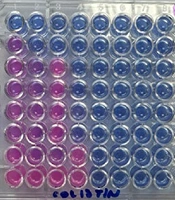
Antibiotic combination of colistin-plus-SXT was analysed initially by a checkerboard technique (CB). Mueller-Hinton II broth was used. Stenotrophomonas maltophilia isolates were tested in 7 doubling dilutions of colistin and 11 doubling dilutions of SXT, whereas P. aeruginosa and A. baumannii strains were tested in 7 doubling dilutions of SXT and 11 doubling dilutions of colistin. Microbroth plates were inoculated with bacteria to yield 5 × 10⁵ CFU/mL in the 100 µL final volume. Plates were incubated at 35°C for 18 - 22 hours. Fractional inhibitory concentration indices (ΣFIC) were calculated following the formula: FIC(A) + FIC(B) = ΣFIC, where FIC(A) = MIC of antibiotic agent A in combination/MIC of antibiotic agent A alone and FIC(B) = MIC of antibiotic agent B in combination/MIC of antibiotic agent B alone (7). The ΣFIC of two antibiotics tested defines the effects of antimicrobial agent combinations as antagonistic (ΣFIC > 4), indifferent (0.5 < ΣFIC ≤ 4) or synergistic (FICI ≤ 0.5).
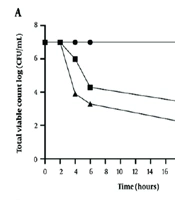
When synergy was detected by CB, a time-kill assay (TKA) was performed at 1xMIC following a previously published method (8). When MICs were above the therapeutic level, SXT was used at 8 mg/L and colistin at 4 mg/L, which fits the peak serum levels of these agents (9). Twenty ml of SXT, colistin and SXT-plus-colistin containing Mueller-Hinton II broth were inoculated with bacteria to yield a density of 106 CFU/mL in the final volume. Tubes were incubated at 37°C with constant agitation. After 1, 2, 4, 6 and 24 hours incubation aliquots were removed, serially diluted in 0.9% sodium chloride solution and plated on sheep blood agar plates (BioMerieux, France). Colony-forming units (CFUs) were counted on agar plates after 24 hours incubation at 37°C. The lower limit of detection by this method was 20 CFU/mL. Synergy was defined as a ≥ 2 log10 decrease in CFU/ml at 24 h for the antibiotic combination compared with its more active constituent (8).
4. Results
According to ERIC-PCR, isolates in the same species were from different genotypes. All P. aeruginosa and A. baumannii strains were susceptible to colistin, with MIC50 1 mg/L and MIC90 2 mg/L. Fifteen percent of A. baumannii strains were susceptible to SXT, MIC50 32 mg/L and MIC90 128 mg/L was found. Pseudomonas aeruginosa strains showed a high level of intrinsic resistance to SXT, with MIC50 256 mg/L and MIC90 512 mg/L. All S. maltophilia strains were sensitive to SXT, with MIC50 0.25 mg/L and MIC90 1 mg/L, and resistant to colistin, with MIC50 256 mg/L and MIC90 > 512 mg/L. Results of colistin-plus-SXT combination tests performed by CB method are summarized in Table 1. As summarized in Table 2 synergic and indifferent effects were found, but an antagonist effect was not.
Table 1.
Summary of Results Gained by CB Method; Effect of Colistin-Plus-SXT Combination was Tested on 20 S. maltophilia, 20 MDR P. aeruginosa and 20 MDR A. baumannii Strains; Strains were Connected as Each One of the Three Species was Isolated at the Same Time from the Same LRT samplea
| Stenotrophomonas maltophilia | Pseudomonas aeruginosa | Acinetobacter baumannii | |||||||||||||
|---|---|---|---|---|---|---|---|---|---|---|---|---|---|---|---|
| AB1 | AB2 | AB1 + AB2 | AB2 + AB1 | ƩFIC | AB1 | AB2 | AB1 + AB2 | AB2 + AB1 | ƩFIC | AB1 | AB2 | AB1 + AB2 | AB2 + AB1 | ƩFIC | |
| 1 | 0.25 | 256 | 0.062 | 32 | 0.375 | 256 | 1 | 32 | 0.25 | 0.375 | 32 | 1 | 2 | 0.25 | 0.312 |
| 2 | 0.062 | 256 | 0.062 | 4 | 1.015 | 128 | 1 | 8 | 1 | 1.06 | 8 | 2 | 1 | 0.25 | 0.25 |
| 3 | 1 | 512 | 0.25 | 8 | 0.265 | 512 | 2 | 8 | 1 | 0.52 | 128 | 1 | 8 | 0.5 | 0.56 |
| 4 | 1 | 8 | 0.5 | 2 | 0.75 | 128 | 2 | 8 | 1 | 0.56 | 64 | 2 | 4 | 0.25 | 0.187 |
| 5 | 0.25 | 32 | 0.125 | 4 | 0.625 | 8 | 2 | 1 | 0.062 | 0.156 | 64 | 0.5 | 2 | 0.25 | 0.53 |
| 6 | 0.25 | 256 | 0.062 | 8 | 0.281 | 512 | 2 | 8 | 1 | 0.52 | 32 | 2 | 4 | 0.5 | 0.375 |
| 7 | 0.06 | 64 | 0.015 | 8 | 0.375 | 128 | 1 | 32 | 0.125 | 0.375 | 64 | 2 | 8 | 0.25 | 0.25 |
| 8 | 0.5 | 512 | 0.062 | 16 | 0.151 | 16 | 2 | 0.5 | 1 | 0.53 | 32 | 2 | 16 | 0.25 | 0.625 |
| 9 | 0.25 | 256 | 0.062 | 16 | 0.312 | 512 | 2 | 8 | 0.5 | 0.265 | 128 | 0.5 | 8 | 0.25 | 0.56 |
| 10 | 0.5 | 32 | 0.062 | 2 | 0.187 | 512 | 2 | 8 | 1 | 0.52 | 32 | 1 | 2 | 0.5 | 0.56 |
| 11 | 0.25 | 128 | 0.125 | 2 | 0.52 | 512 | 2 | 16 | 1 | 0.53 | 1 | 1 | 0.25 | 0.125 | 0.375 |
| 12 | 0.125 | 256 | 0.125 | 16 | 1.06 | 512 | 1 | 32 | 0.5 | 0.56 | 1 | 1 | 0.25 | 0.125 | 0.375 |
| 13 | 0.25 | 64 | 0.125 | 16 | 0.75 | 512 | 2 | 8 | 0.5 | 0.265 | 64 | 1 | 8 | 0.25 | 0.375 |
| 14 | 0.5 | 512 | 0.062 | 16 | 0.25 | 8 | 1 | 1 | 0.25 | 0.375 | 128 | 0.5 | 4 | 0.25 | 0.53 |
| 15 | 0.25 | 512 | 0.25 | 8 | 1.015 | 256 | 0.5 | 8 | 0.5 | 1.03 | 4 | 0.5 | 1 | 0.25 | 0.75 |
| 16 | 0.25 | 512 | 0.25 | 8 | 1.015 | 512 | 1 | 16 | 0.5 | 0.53 | 2 | 0.5 | 1 | 0.25 | 1 |
| 17 | 0.062 | 128 | 0.062 | 8 | 1.06 | 128 | 0.5 | 64 | 0.125 | 0.75 | 4 | 0.125 | 0.5 | 0.125 | 1.125 |
| 18 | 0.25 | 256 | 0.25 | 8 | 1.03 | 1024 | 1 | 16 | 0.25 | 0.265 | 64 | 1 | 32 | 0.062 | 0.56 |
| 19 | 0.5 | 128 | 0.125 | 8 | 0.375 | 16 | 0.5 | 4 | 0.25 | 0.75 | 64 | 0.5 | 8 | 0.125 | 0.375 |
| 20 | 1 | 64 | 0.062 | 4 | 0.125 | 512 | 1 | 64 | 0.5 | 0.625 | 16 | 0.5 | 1 | 0.5 | 1.06 |
aAB1, MIC value of SXT; AB2, MIC value of colistin; AB1 + AB2, MIC value of SXT in combination with colistin; AB2 + AB1, MIC value of colistin in combination with SXT; ΣFIC values in bold means synergism.
Table 2.
Summary of Results Gained by CB Method; Colistin-plus-SXT Combination was Tested on 20 MDR P. aeruginosa, 20 MDR A. baumannii and 20 S. maltophilia Strains
| Colistin + SXT Combination Tested by CB Method | No. (%) of Strains Showed | |
|---|---|---|
| Synergy | Indifferent Effect | |
| S. maltophilia | 10 (50) | 10 (50) |
| P. aeruginosa | 7 (35) | 13 (65) |
| A. baumannii | 9 (45) | 11 (55) |
Strains showing synergy by CB method were further examined by TKA. The tested S. maltophilia, P. aeruginosa and A. baumannii strains showed synergy in 70%, 57% and 56% of cases, respectively. The rates of log10 decrease after 6 and 24 h are summarized in Table 3 considering that for most combinations with colistin against Gram-negative species initial killing is usually dramatic, but is followed by significant regrowth. Synergic activity of the combination was already detected after 6 hours incubation in 86% of S. maltophilia isolates and 50% of P. aeruginosa strains. In the case of A. baumannii, synergy was detected just after 24 hours incubation. The results gained by CB and TKA methods correlated in 61% of cases, but the ΣFIC values did not correlate with the rate of log10 decrease in TKA. The results of different in vitro synergy testing must be synthesized and carefully interpreted. Colistin-plus-SXT combination had synergistic effect on seven S. maltophilia (35%), four P. aeruginosa (20%) and five A. baumannii (25%) strains by both methods.
Table 3.
Summary of the Synergic Results Gained by TKA; Colistin-Plus-SXT Combination was Tested on Strains Which were Previously Tested by CB and ΣFIC was < 0.5
| Colistin + SXT Combination | No. (%) of strains showed synergy by TKA | Previously Determined | ||
|---|---|---|---|---|
| Tested by TKA | Synergy by TKA | Difference in log10 after 6 h | Difference in log10 after 24 h | ∑FIC Values |
| S. maltophilia | 7 (70) | 5.9 | 2.4 | Sm#1 ΣFIC = 0.375 |
| 7.7 | 3.8 | Sm#3 ΣFIC = 0.265 | ||
| 7.5 | 3.9 | Sm#6 ΣFIC = 0.281 | ||
| 2.4 | 4.7 | Sm#7 ΣFIC = 0.375 | ||
| 2.7 | 2.9 | Sm#9 ΣFIC = 0.312 | ||
| 6.3 | 3.1 | Sm#10 ΣFIC = 0.187 | ||
| 6 | 6 | Sm#20 ΣFIC = 0.125 | ||
| P. aeruginosa | 4 (57) | 7 | 4.2 | Pa#1 ΣFIC = 0.375 |
| 3.4 | 2.3 | Pa#5 ΣFIC = 0.156 | ||
| 6.7 | 4.1 | Pa#14 ΣFIC = 0.375 | ||
| 7.2 | 3.7 | Pa#18 ΣFIC = 0.266 | ||
| A. baumannii | 5 (56) | 3.1 | 7.3 | Ab#2 ΣFIC = 0.25 |
| 3.3 | 5.3 | Ab#4 ΣFIC = 0.094 | ||
| 3.1 | 7.3 | Ab#6 ΣFIC = 0.375 | ||
| 2.7 | 4.8 | Ab#11 ΣFIC = 0.375 | ||
| 3.6 | 5.5 | Ab#12 ΣFIC = 0.375 | ||
5. Discussion
The potential synergic effect of colistin-plus-SXT against MDR P. aeruginosa, MDR A. baumannii and S. maltophilia isolates was investigated in this study. The isolates were connected as each one of the three species was isolated at the same time from the same LRT sample of patients. Colistin-plus-SXT therapy is an obligatory antimicrobial strategy in LRT co-infections caused by the discussed three bacteria.
Co-colonization of patients with carbapenem-resistant Enterobacteriaceae and A. baumannii or P. aeruginosa has been shown to be associated with increased antibiotic resistance and mortality (10). As potential interspecies interactions may enhance bacterial virulence and antibiotic resistance, co-colonization or co-infection of patients with the intrinsically carbapenem-resistant S. maltophilia and A. baumannii or P. aeruginosa might be associated with increased antibiotic resistance and mortality. This hypothesis was not considered in previous studies. In our study the patients’ overall mortality in hospital was 50%. This did not differ significantly from a previous study where all-cause mortality of 45% was found in 100 S. maltophilia infections, of which 62 cases were pneumonia (11). The high mortality underlines the need for a rapid and effective antimicrobial therapy.
The folate synthesis inhibitor SXT is the first-line antimicrobial drug for S. maltophilia infections. All S. maltophilia strains were sensitive to SXT in our study, which supports the current antimicrobial guidelines. Colistin was found to have weak in vitro activity against the studied S. maltophilia isolates: high level of colistin resistance (MIC50 256 mg/L) was detected. This shows that colistin should not be used alone either in S. maltophilia infection or in S. maltophilia co-infection, but it can have synergic activity in combination, as reported in previous studies (12). The effect of colistin in antibiotic combination is based on its detergent-like property: it interacts with surface LPS and phospholipids, disturbing membrane permeability. Colistin exposure leads to increased permeability to large or hydrophobic compounds such as SXT (8). Synergic effect of colistin and SXT against S. maltophilia was found in 47% of isolates by Giamarellos-Bourboulis et al. (13). This is in concordance with our CB results (synergy in 50% of isolates). When CB and TKA results are evaluated together, the rate of synergic effect is only in 35%.
In current medical practice SXT is not recommended for treatment of MDR Acinetobacter infections. In the majority of studies regarding MDR Acinetobacter spp., the non-susceptibility rate was > 70%. In our study 85% of MDR A. baumannii strains were resistant to SXT. Only single case reports evaluated SXT for A. baumannii infections, mainly in combination therapy. Though they considered therapeutic success, clinical evidence has failed so far (14). Recent publication report that SXT combined with colistin might represent an effective therapy for severe carbapenem-resistant A. baumannii infections (15). In concordance with previously published data, colistin-plus-SXT was found to display a synergic effect against A. baumannii isolates: synergy was found in 45% by CB method, but in 25% when results gained by the two methods were synthesized. Similarly to the findings of Nepka et al. the regrowth of A. baumannii after 24 hours was prevented by colistin-plus-SXT (15). In case of colistin-resistant A. baumannii strains colistin-plus-SXT combination demonstrated limited synergism (16).
Pseudomonas aeruginosa is a poor target for therapy with SXT (6). Strains showed high level of intrinsic resistance to SXT. The combination of colistin-plus-SXT was synergistic against 20% of P. aeruginosa. In contrast with our results, Vidaillac et al. found no activity of colistin-plus-SXT against their tested colistin-susceptible P. aeruginosa strains (8).
Discrepancies between our results gained by CB and TKA indicate that different methods to assess synergic effects do not provide necessarily comparable results (17). Nevertheless, the probability of synergy is high in those cases when a synergic effect is proved by two different techniques. An important finding of our study is that colistin-plus-SXT combination can be used efficiently as no antagonistic effect was detected. Furthermore, synergism can be observed in 20% - 35% of isolates. Regrowth of A. baumannii after 24 hour in the presence of colistin can be prevented by colistin-plus-SXT combination. Of note, previous studies tested each species separately, whereas in our study MDR bacteria were investigated in their complex ‘triplet’ as they were isolated from a LRT sample. Two ‘triplets’ out of 20 showed synergy verified by both methods. In these cases patients had obvious benefit from combined colistin-plus-SXT therapy.
The potential interspecies interaction between these bacteria has to be highlighted. Dominantly in cystic fibrosis several studies focused on interaction of P. aeruginosa with other bacterial species, but only a few have been published on the interaction between P. aeruginosa and S. maltophilia. It was found that S. maltophilia increases the risk of resistance of P. aeruginosa to polymyxin; beta-lactamase leaking from S. maltophilia enhances the growth of P. aeruginosa in the presence of beta-lactam antibiotic agents; S. maltophilia might confer a selective fitness advantage to P. aeruginosa and increase the virulence of P. aeruginosa (18). The interaction of A. baumannii and S. maltophilia is not discussed in the literature, except for their ability to increase each other’s biofilm production (19). It was reported that a Burkholderia cenocepacia subpopulation highly resistant to polymyxin B can protect a sensitive P. aeruginosa from polymyxin B in broth co-culture (20). Similarly, it can be hypothesized that S. maltophilia highly resistant to colistin can protect a sensitive P. aeruginosa or A. baumannii from colistin in broth co-culture. Co-culturing of these bacteria in sessile form - like they growth together in LRT biofilms - can be suitable to detect this presumed interaction. Further investigations are needed to elucidate this hypothesis.
Further in vitro pharmacokinetic/pharmacodynamic experiments and animal studies are required to evaluate the combination of colistin with SXT against MDR Gram-negative pathogens. Evaluation of the clinical significance of our observation has to be performed also. The dose-response relationship of the colistin-plus-SXT combination must be clarified.
In conclusion, according to our in vitro results we can state that colistin-plus-SXT combined therapy can be used efficiently in clinical practice as no antagonistic effect was detected. In certain cases colistin-plus-SXT has a synergic effect against MDR P. aeruginosa, A. baumannii and S. maltophilia.