
1. Background
Acinetobacter baumannii (AB) has become a clinically important pathogen in the 21st century. Genomic research has revealed the ability of this pathogen to rapidly acquire and spread drug resistance. Multi-drug–resistant (MDR), extensively drug-resistant (XDR), and fully drug-resistant AB represent major challenges in the global anti-infective field (1). According to data from the China Antimicrobial Surveillance Network in 2024, AB accounted for 16.11% of clinical isolates of gram-negative bacteria in China. Acinetobacter baumannii nosocomial infections most commonly involve the lungs, and AB is an important causative agent of hospital-acquired pneumonia (HAP), especially ventilator-associated pneumonia (VAP) (2). Additionally, this pathogen tends to spread throughout the community (3). Carbapenem resistance in AB isolates has been increasing in recent years, with its rates reaching up to 50% in the US and exceeding 70% in China. The increasing antibiotic resistance of AB and the emergence of strains resistant to almost all available drugs represent grave concerns. Imipenem has traditionally been considered the gold standard for treating VAP caused by AB. However, the prevalence of carbapenem-resistant AB (CRAB) has increased dramatically (4), resulting in more restrictive antibiotic use. Thus, clinical alternatives are urgently desired (5). Among them, polymyxin E and polymyxin B have been used to treat VAP, bacteremia, and meningitis caused by AB. Meanwhile, tigecycline, eravacycline, minocycline, and cefiderocol represent alternative antibiotics used for MDR and XDR strains of AB (6). Therefore, the treatment of CRAB is challenging, making infection prevention critical. Current research has found that AB can colonize the skin, mucous membranes, and medical instruments and survive in the hospital environment (7). Therefore, cleaning and disinfecting the intensive care unit (ICU) is mandatory. Additionally, the risk factors for AB infections include prolonged hospitalization, admission to a care unit, mechanical ventilation, invasive surgery, antimicrobial exposure, and severe underlying disease (8). Therefore, ICU medical staff have been asked to strictly comply with aseptic practices and infection control norms, especially when performing operations such as central venous intubation, tracheal intubation, indwelling urinary catheterization, and drain placement. Meanwhile, a small number of studies have found that CRAB is associated with invasive surgery (9), but there is a dearth of large-sample studies. Moreover, the relationship between different invasive operations and the risk of CRAB infection has not been explored.
2. Objectives
The present study explored the relationships between specific invasive procedures and CRAB infection to provide evidence for the clinical prevention and control of CRAB.
3. Methods
3.1. Data Source
This single-center retrospective analysis was conducted in the ICU/electronic ICU (EICU) of Jiangsu Provincial Hospital of Traditional Chinese Medicine using data from the hospital’s electronic medical record system. This study included adults presenting with pulmonary infection by AB from June 2020 to December 2024. The study was approved by the Institutional Review Board of Jiangsu Provincial Hospital of Traditional Chinese Medicine. The requirement for informed consent was waived because of the retrospective nature of the research. This study was conducted in accordance with the 1975 Declaration of Helsinki on Ethics.
3.2. Study Population and Definitions
Data were extracted from the hospital’s electronic medical record system for patients in the ICU/EICU who met the diagnostic criteria for pulmonary infection as follows (10): Elevated temperature (≥ 38.5℃) with a peripheral blood leukocyte count greater than 10 × 10⁹/L or less than 4 × 10⁹/L; clinical symptoms such as coughing, coughing sputum, and deep and fast respiration; dry and wet rales on auscultation of both lungs; and inflammatory changes of lungs on X-ray or chest computed tomography. Patients meeting at least three of the following four criteria were included: Meeting the diagnostic criteria for pulmonary infection; invasive operation within 24 h after ICU admission; at least three valid sputum cultures, blood cultures, or alveolar lavage fluid cultures after placement of the relevant catheter and at least two valid cultures suggesting either pure or dominant AB growth (because it is difficult to strictly differentiate between colonization and causative bacteria); and ICU stay and survival time ≥10 days. Because it was difficult to completely determine whether AB infection existed before the patient was admitted to the ICU, we excluded patients who had been repeatedly admitted to the respiratory, emergency, and infectious disease departments or ICU and immunosuppressed patients with previous organ transplantation, hematological diseases, and active malignant tumors. To reduce the interfering factors, we excluded patients who previously participated in clinical trials of antibiotics and treatments for drug-resistant infection during hospitalization (Figure 1). Carbapenem-resistant Acinetobacter baumannii colonization was defined in reference to the 2023 Infectious Diseases Society of America (IDSA) Guidelines: Management of Antimicrobial-Resistant Gram-Negative Bacterial Infections (11). There is no clear demarcation between colonization and infection. Isolation of CRAB from non-sterile sites (skin, mucosa, or wounds) without clinical, imaging, biochemical, or histopathological evidence typically indicates colonization. Alternatively, recurrent CRAB cultures in patients with markedly improved clinical symptoms can also be considered colonization. Under compromised immune conditions, colonizing bacteria might become opportunistic pathogens.
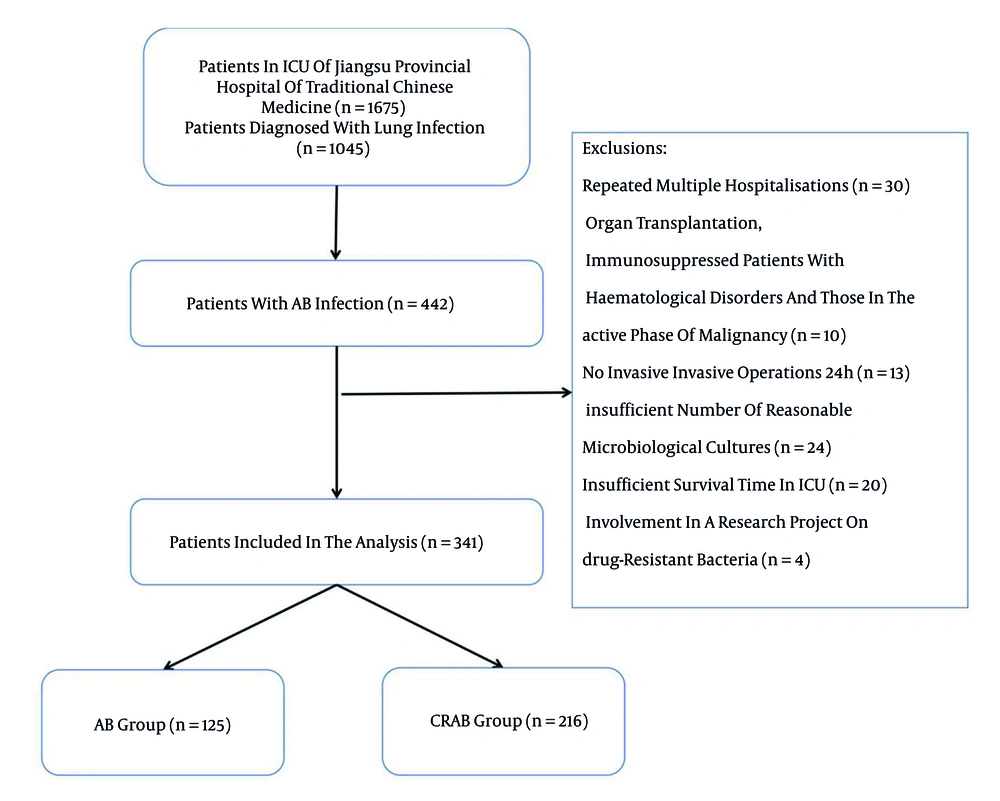
Figure 1.
Participant enrollment diagram. Abbreviations: ICU, intensive care unit; AB, Acinetobacter baumannii, CRAB, carbapenem-resistant A. baumannii
3.3. Data Extraction
The extracted variables included demographic information (sex, age, and Body Mass Index [BMI]), vital signs (respiratory rate, peripheral capillary oxygen saturation, heart rate [HR], temperature, and mean arterial pressure), comorbidities (hypertension, coronary heart disease, cardiac insufficiency, cerebral infarction, bronchiectasis, chronic obstructive pulmonary disease [COPD], diabetes, renal insufficiency, hepatic insufficiency, gastric ulcer, and malignant tumors), laboratory parameters (initially obtained within the first 24 h of ICU admission; white blood cell [WBC] count, high-sensitivity C-reactive protein [hsCRP], and procalcitonin [PCT]), blood gas parameters (lactate [Lac], partial pressure of oxygen [PaO₂], partial pressure of carbon dioxide [PaCO₂], and PaO₂/fraction of inspired oxygen [FiO₂]), invasive procedure type (placement of a nasogastric tube, nasoenteric tube, endotracheal tube, tracheotomy, internal jugular venous catheter, femoral venous catheter, continuous renal replacement therapy [CRRT] catheter, femoral arterial catheter, radial arterial catheter, peripherally inserted central catheter, thoracentesis drainage catheter, abdominocentesis drainage catheter, or urethral catheter, alongside the duration of catheterization), and all-cause mortality at 28 days.
3.4. Statistical Analysis
Variables with more than 30% missing data were excluded. Missing values for the remaining variables were imputed using multiple interpolation. Data imputation was performed for age; heart rate (HR); systolic and diastolic blood pressure; temperature; pH; partial pressure of oxygen (PaO₂); partial pressure of carbon dioxide (PaCO₂); white blood cell (WBC) counts; and procalcitonin (PCT), lactate (Lac), and high-sensitivity C-reactive protein (hsCRP) levels. The Shapiro–Wilk normality test was used to assess whether continuous variables were evenly distributed. Normally distributed data were presented as the mean ± standard deviation, and group comparisons were performed using the independent-samples t-test. Non-normally distributed data were presented as the median (interquartile range), and group comparisons were performed using the Mann–Whitney U test. Categorical variables were presented as frequencies and percentages, and between-group comparisons were performed using Fisher’s exact test or the chi-squared test. Kaplan–Meier survival analysis was conducted to estimate the incidence of 28-day mortality across the groups, with the log-rank test used to assess the statistical significance of differences between survival probabilities. Multivariate logistic regression analysis was performed to examine the association between group assignment and 28-day mortality, and odds ratios (ORs) and 95% confidence intervals (CIs) were calculated. To reduce factor covariance, least absolute shrinkage and selection operator (LASSO) regression was used to determine the influencing factors, followed by single and multifactor logistic regression analyses to derive the final influencing factors. Data processing and analysis were performed using Zstats 1.0 (http://www.zstats.net). A two-sided hypothesis test was applied, with statistical significance set at α = 0.05.
4. Results
4.1. Participant Characteristics
We identified 341 patients with pulmonary infections involving A. baumannii who met our inclusion and exclusion criteria (Figure 1), including 216 patients (63.3%) in the CRAB group and 125 patients (36.7%) in the AB group. Regarding general patient information, age and CURB-65 scores were higher in the CRAB group. C-reactive protein (CRP) levels and the incidence of chronic obstructive pulmonary disease (COPD) were lower in the CRAB group. Additionally, internal jugular vein catheterization and tracheal intubation were more common in the CRAB group, and the duration of deep venous catheterization was longer in this group. Moreover, the 28-day mortality rate was higher in the CRAB group. The findings are detailed in Table 1.
Table 1.
Participant Characteristics a
| Variables and Characteristic | Total | AB | CRAB | Statistic | P |
|---|---|---|---|---|---|
| Count | 341 | 125 (36.7) | 216 (63.3) | ||
| Age, y | 77.79 ± 11.86 | 75.89 ± 11.06 | 78.89 ± 12.19 | t = -2.26 | 0.024 |
| Sex | χ² = 0.87 | 0.351 | |||
| Male | 175 (51.32) | 60 (48.00) | 115 (53.24) | ||
| Female | 166 (48.68) | 65 (52.00) | 101 (46.76) | ||
| BMI, kg/m2 | 22.69 ± 4.15 | 23.29 ± 4.63 | 22.34 ± 3.81 | t = 1.96 | 0.052 |
| Vital signs | |||||
| HR, beats/min | 100.29 ± 16.79 | 101.56 ± 15.41 | 99.56 ± 17.52 | t = 1.06 | 0.289 |
| MAP, mmHg | 84.54 ± 11.40 | 85.34 ± 11.28 | 84.07 ± 11.47 | t = 0.99 | 0.325 |
| Temperature, ℃ | 38.80 ± 0.53 | 38.83 ± 0.48 | 38.79 ± 0.56 | t = 0.63 | 0.532 |
| RR, beats/min | 23.08 ± 6.67 | 22.30 ± 6.68 | 23.53 ± 6.63 | t = -1.65 | 0.099 |
| Scores | |||||
| APACHE II | 22.01 ± 3.72 | 21.65 ± 2.97 | 22.23 ± 4.08 | t = -1.51 | 0.133 |
| SOFA | 11.87 ± 4.09 | 11.46 ± 3.94 | 12.10 ± 4.16 | t = -1.39 | 0.165 |
| CURB-65 | 3.09 ± 1.06 | 2.90 ± 0.97 | 3.19 ± 1.10 | t = -2.52 | 0.012 |
| Laboratory values on admission | |||||
| CRP, mg/L | 77.74 ± 26.04 | 83.03 ± 23.81 | 74.68 ± 26.83 | t = 2.89 | 0.004 |
| WBC, ×109 | 19.39 ± 5.16 | 19.16 ± 5.08 | 19.53 ± 5.21 | t = -0.65 | 0.517 |
| PCT, ng/mL | 2.02 ± 0.92 | 2.03 ± 0.91 | 2.01 ± 0.93 | t = 0.21 | 0.831 |
| PaO2/FiO2, mmhg | 234.96 ± 50.01 | 232.55 ± 47.74 | 236.35 ± 51.33 | t = -0.68 | 0.500 |
| PaO2, mmhg | 58.72 ± 5.72 | 58.66 ± 5.38 | 58.75 ± 5.91 | t = -0.14 | 0.888 |
| PaCO2, mmhg | 60.39 ± 8.81 | 60.36 ± 8.93 | 60.41 ± 8.76 | t = -0.05 | 0.962 |
| Lac, mmol/L | 2.79 ± 0.72 | 2.73 ± 0.66 | 2.82 ± 0.75 | t = -1.20 | 0.231 |
| Chronic Pulmonary Disease | |||||
| Heart failure | 22 (6.45) | 9 (7.20) | 13 (6.02) | χ² = 0.18 | 0.669 |
| Hypertension | 77 (22.58) | 25 (20.00) | 52 (24.07) | χ² = 0.75 | 0.386 |
| COPD | 39 (11.44) | 20 (16.00) | 19 (8.80) | χ² = 4.06 | 0.044 |
| Bronchiectasis | 49 (14.37) | 21 (16.80) | 28 (12.96) | χ² = 0.95 | 0.330 |
| Coronary heart disease | 44 (12.90) | 12 (9.60) | 32 (14.81) | χ² = 1.92 | 0.166 |
| Renal insufficiency | 98 (28.74) | 43 (34.40) | 55 (25.46) | χ² = 3.09 | 0.079 |
| Cerebral infarction | 109 (31.96) | 37 (29.60) | 72 (33.33) | χ² = 0.51 | 0.476 |
| Liver insufficiency | 39 (11.44) | 17 (13.60) | 22 (10.19) | χ² = 0.91 | 0.340 |
| Gastric ulcer | 20 (5.87) | 8 (6.40) | 12 (5.56) | χ² = 0.10 | 0.749 |
| Diabetes mellitus | 66 (19.35) | 20 (16.00) | 46 (21.30) | χ² = 1.42 | 0.233 |
| Malignant tumour | 21 (6.16) | 10 (8.00) | 11 (5.09) | χ² = 1.16 | 0.282 |
| Invasive operations | |||||
| Nasogastric tube | 311 (91.20) | 114 (91.20) | 197 (91.20) | χ² = 0.00 | 0.999 |
| Nasoenteric tube | 13 (3.81) | 4 (3.20) | 9 (4.17) | χ² = 0.02 | 0.876 |
| Tracheal intubation | 131 (38.42) | 16 (12.80) | 115 (53.24) | χ² = 54.74 | <0.001 |
| Tracheotomy | 35 (10.26) | 16 (12.80) | 19 (8.80) | χ² = 1.38 | 0.240 |
| Internal jugular vein catheter | 217 (63.64) | 70 (56.00) | 147 (68.06) | χ² = 4.97 | 0.026 |
| Femoral vein | 138 (40.47) | 58 (46.40) | 80 (37.04) | χ² = 2.88 | 0.090 |
| CRRT | 53 (15.54) | 17 (13.60) | 36 (16.67) | χ² = 0.57 | 0.451 |
| Femoral artery | 62 (18.18) | 24 (19.20) | 38 (17.59) | χ² = 0.14 | 0.711 |
| Radial artery | 84 (24.63) | 36 (28.80) | 48 (22.22) | χ² = 1.85 | 0.174 |
| Picc | 10 (2.93) | 4 (3.20) | 6 (2.78) | χ² = 0.00 | 1.000 |
| Thoracic puncture | 59 (17.30) | 20 (16.00) | 39 (18.06) | χ² = 0.23 | 0.629 |
| Abdominal puncture | 54 (15.84) | 22 (17.60) | 32 (14.81) | χ² = 0.46 | 0.497 |
| Urinary catheter | 296 (86.80) | 111 (88.80) | 185 (85.65) | χ² = 0.69 | 0.407 |
| catheter dwell time, days | χ² = 45.39 | <0.001 | |||
| 1 - 5 | 61 (17.89) | 41 (32.80) | 20 (9.26) | ||
| 6 - 10 | 161 (47.21) | 64 (51.20) | 97 (44.91) | ||
| > 10 | 119 (34.90) | 20 (16.00) | 99 (45.83) | ||
| Arterial + venous catheters | 146 (42.82) | 60 (48.00) | 86 (39.81) | χ² = 2.17 | 0.141 |
| Number of catheters | - | 0.111 | |||
| 1 | 1 (0.29) | 0 (0.00) | 1 (0.46) | ||
| 2 | 8 (2.35) | 4 (3.20) | 4 (1.85) | ||
| 3 | 69 (20.23) | 23 (18.40) | 46 (21.30) | ||
| 4 | 149 (43.70) | 51 (40.80) | 98 (45.37) | ||
| 5 | 79 (23.17) | 34 (27.20) | 45 (20.83) | ||
| 6 | 27 (7.92) | 13 (10.40) | 14 (6.48) | ||
| 7 | 8 (2.35) | 0 (0.00) | 8 (3.70) | ||
| Prognosis | |||||
| 28-day all-cause mortality | 162 (47.51) | 48 (38.40) | 114 (52.78) | χ² = 6.56 | 0.010 |
Abbreviations: APACHE II, acute physiology and chronic health evaluation II; SOFA, Sepsis-Organ Failure Assessment Score; MAP, mean arterial pressure; WBC, white blood cell count; CRP, C-reactive protein, PCT, procalcitonin; COPD, chronic obstructive pulmonary disease; CRRT, continuous renal replacement therapy; PICC, peripherally inserted central catheter; PaO2, partial pressure of oxygen; FiO2, fraction of inspired oxygen; PaCO2, partial pressure of carbon dioxide; BMI, body mass index; AB, Acinetobacter baumannii; CRAB, carbapenem-resistant A. baumannii.
a Values are presented as mean ± SD or No. (%).
4.2. All-Cause Mortality at 28 Days
In total, 114 all-cause deaths occurred within 28 days in the CRAB group, versus 48 in the AB group (P < 0.001), whereas the mean (17.175 days vs. 23.417 days) and median survival times (17 days vs. 25 days) were longer in the AB group than in the CRAB group (both P < 0.05), as detailed in Figure 2.
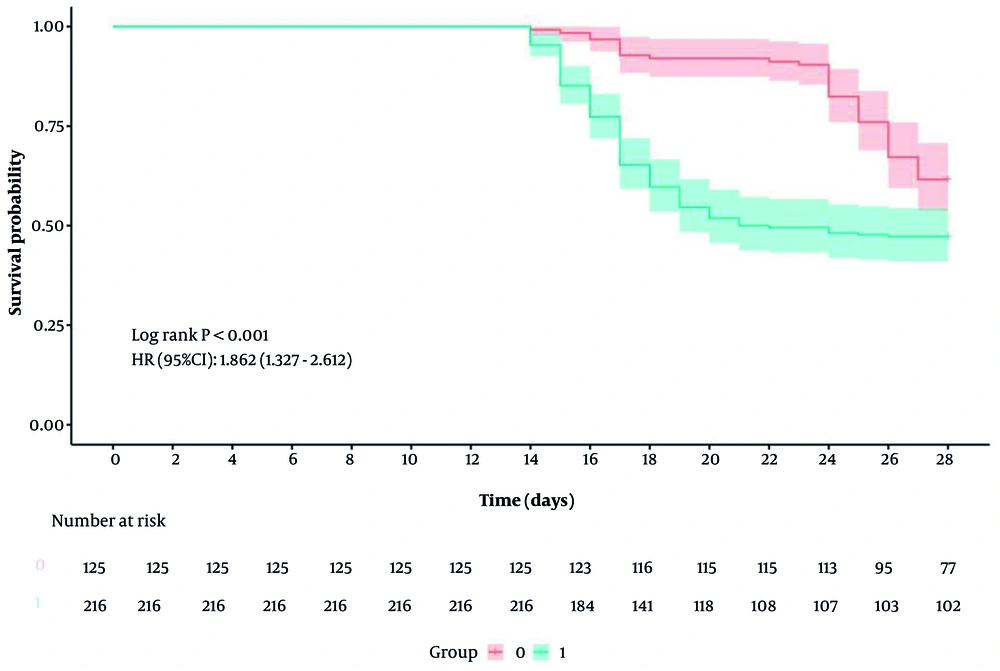
Figure 2.
Kaplan–Meier survival curves of 28-day mortality across the groups.
4.3. Correlation Between Invasive Maneuvers and the Occurrence of Pulmonary Infection by Carbapenem-Resistant Acinetobacter baumannii in Patients in the Intensive Care Unit
To reduce covariance in data analysis, a LASSO regression model was built using binomials, and all 44 influencing factors were included in the LASSO regression model, in which the regression coefficients of the model predictors gradually converged to zero as the penalty term (λ) increased. Eventually, 16 variables with non-zero coefficients were selected with a minimum mean square error of 0.027: Tracheal intubation, internal jugular venous catheterization, duration of deep venous catheterization, arterial catheterization, chronic obstructive pulmonary disease (COPD), coronary heart disease, renal insufficiency, age, Acute Physiology and Chronic Health Evaluation II (APACHE II), CURB-65, Sepsis-Organ Failure Assessment (SOFA), body mass index (BMI), respiratory rate, heart rate (HR), C-reactive protein (CRP), and lactate (Lac). The LASSO regression coefficient profiles and cross-validation plots are presented in Figures 3 and 4, respectively.
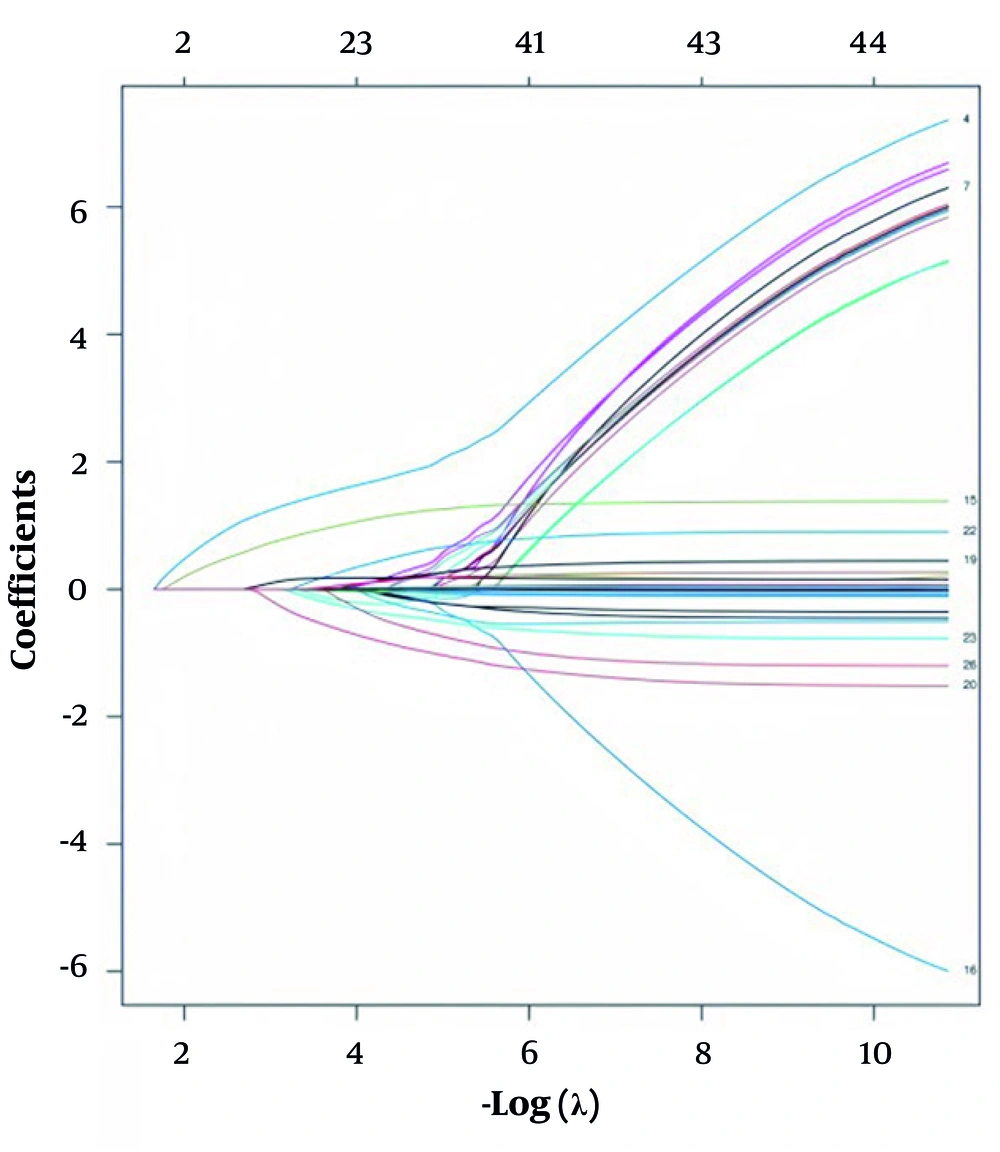
Figure 3.
Least absolute shrinkage and selection operator (LASSO) coefficient profile
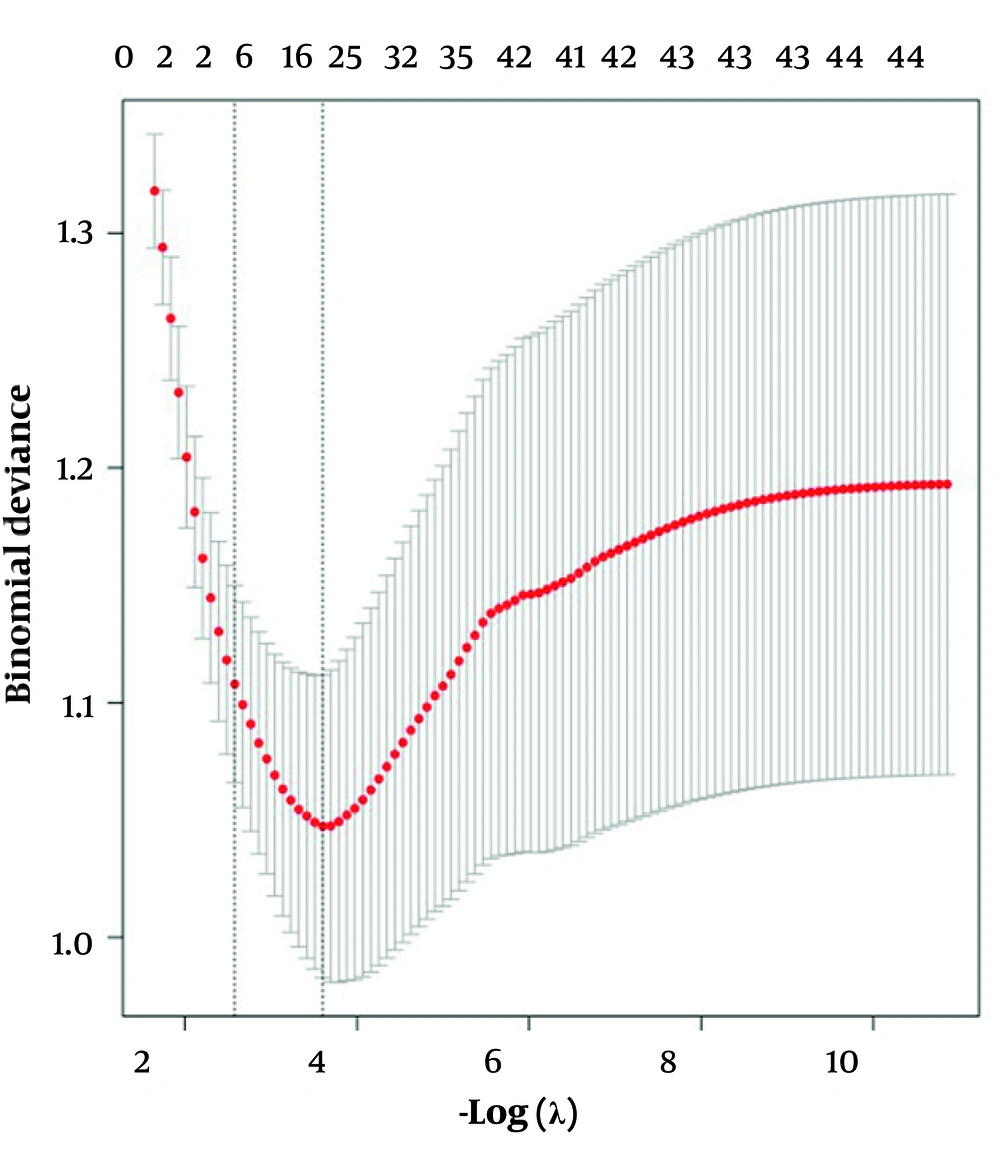
Figure 4.
Least absolute shrinkage and selection operator (LASSO) regression cross-validation curve
The 16 factors were included in the logistic regression model and subjected to one-way analyses, and variables significant at P < 0.05 were included in the multifactorial stepwise forward analyses. These analyses ultimately revealed that endotracheal intubation (odds ratio [OR] = 7.28, 95% confidence interval [CI] = 3.81 - 13.92), COPD (OR = 0.32, 95% CI = 0.14 - 0.77), higher CURB-65 scores (OR = 1.53, 95% CI = 1.16 - 2.02), and a longer duration of catheterization (6 - 10 days: OR = 2.39, 95% CI = 1.15 - 4.97; > 10 days: OR = 10.56, 95% CI = 4.52 - 24.67) were risk factors for CRAB infection, as detailed in Table 2 and Figure 5.
Table 2.
Logistic Regression
| Variables | Univariate Analysis | Multivariate Analysis | ||||||||
|---|---|---|---|---|---|---|---|---|---|---|
| β | S.E | Z | P | OR (95%CI) | β | S.E | Z | P | OR (95%CI) | |
| CURB-65 | 0.27 | 0.11 | 2.49 | 0.013 | 1.31 (1.06 ~ 1.63) | 0.43 | 0.14 | 3.04 | 0.002 | 1.53 (1.16 ~ 2.02) |
| Tracheal intubation | ||||||||||
| No | 1.00 (Reference) | 1.00 (Reference) | ||||||||
| Yes | 2.05 | 0.30 | 6.82 | < 0.001 | 7.76 (4.30 ~ 13.98) | 1.99 | 0.33 | 6.00 | < 0.001 | 7.28 (3.81 ~ 13.92) |
| Internal jugular vein catheter | ||||||||||
| No | 1.00 (Reference) | 1.00 (Reference) | ||||||||
| Yes | 0.52 | 0.23 | 2.22 | 0.026 | 1.67 (1.06 ~ 2.64) | 0.24 | 0.29 | 0.82 | 0.411 | 1.27 (0.72 ~ 2.23) |
| CURB-65 | ||||||||||
| 1 - 5 | 1.00 (Reference) | 1.00 (Reference) | ||||||||
| 6 - 10 | 1.13 | 0.32 | 3.58 | < 0.001 | 3.11 (1.67 ~ 5.78) | 0.87 | 0.37 | 2.33 | 0.020 | 2.39 (1.15 ~ 4.97) |
| 10~ | 2.32 | 0.37 | 6.32 | < 0.001 | 10.15 (4.95 ~ 20.82) | 2.36 | 0.43 | 5.45 | < 0.001 | 10.56 (4.52 ~ 24.67) |
| Arterial + venous catheters | ||||||||||
| No | 1.00 (Reference) | |||||||||
| Yes | -0.33 | 0.23 | -1.47 | 0.142 | 0.72 (0.46 ~ 1.12) | |||||
| COPD | ||||||||||
| No | 1.00 (Reference) | 1.00 (Reference) | ||||||||
| Yes | -0.68 | 0.34 | -1.99 | 0.047 | 0.51 (0.26 ~ 0.99) | -1.13 | 0.44 | -2.57 | 0.010 | 0.32 (0.14 ~ 0.77) |
| Coronary heart disease | ||||||||||
| No | 1.00 (Reference) | |||||||||
| Yes | 0.49 | 0.36 | 1.37 | 0.169 | 1.64 (0.81 ~ 3.31) | |||||
| Renal insufficiency | ||||||||||
| No | 1.00 (Reference) | |||||||||
| Yes | -0.43 | 0.24 | -1.75 | 0.080 | 0.65 (0.40 ~ 1.05) | |||||
| Age | 0.02 | 0.01 | 2.23 | 0.026 | 1.02 (1.01 ~ 1.04) | 0.01 | 0.01 | 1.18 | 0.237 | 1.01 (0.99 ~ 1.04) |
| RR | 0.03 | 0.02 | 1.65 | 0.099 | 1.03 (0.99 ~ 1.06) | |||||
| APACHE II | 0.04 | 0.03 | 1.38 | 0.166 | 1.04 (0.98 ~ 1.11) | |||||
| SOFA | 0.04 | 0.03 | 1.39 | 0.165 | 1.04 (0.98 ~ 1.10) | |||||
| BMI | -0.06 | 0.03 | -2.04 | 0.041 | 0.95 (0.90 ~ 0.99) | -0.06 | 0.03 | -1.78 | 0.075 | 0.94 (0.88 ~ 1.01) |
| CRP | -0.01 | 0.00 | -2.80 | 0.005 | 0.99 (0.98 ~ 0.99) | -0.01 | 0.01 | -1.44 | 0.149 | 0.99 (0.98 ~ 1.00) |
| HR | -0.01 | 0.01 | -1.06 | 0.288 | 0.99 (0.98 ~ 1.01) | |||||
| Lac | 0.19 | 0.16 | 1.20 | 0.231 | 1.21 (0.88 ~ 1.67) | |||||
Abbreviations: CVC, central vein catheter; COPD, chronic obstructive pulmonary disease; RR, respiratory rate; APACHE II, acute physiology and chronic health evaluation II; SOFA, Sepsis-Organ Failure Assessment Score; BMI, body mass index; CRP, C-reactive protein; HR, hazard rate; Lac, lactate; OR, odds ratio; CI, confidence interval.
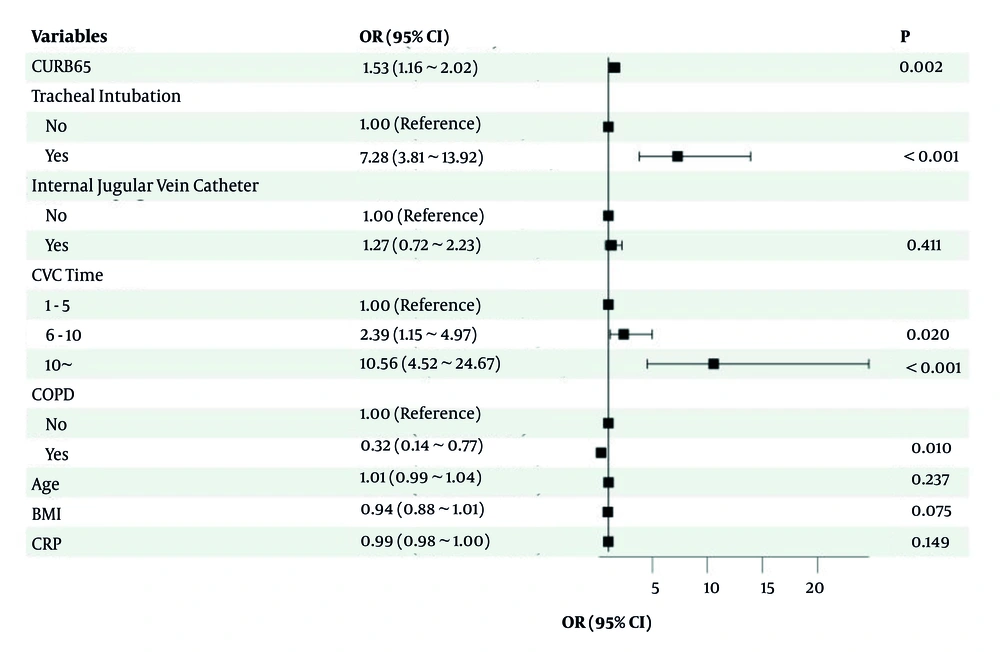
Figure 5.
Forest map of impact factors
4.4. Correlation Between the Duration of Deep Venous Catheterization and Carbapenem-Resistant Acinetobacter baumannii Infection
Patients were divided into three groups based on the duration of deep venous catheterization (1 - 5, 6 - 10, and >10 days). A comparison of the three groups revealed that the proportion of CRAB infections was significantly higher in the > 10-day group than in the remaining two groups (32.79% vs. 60.25% vs. 83.19%, P < 0.05). The >10-day group additionally had higher CURB-65, Acute Physiology and Chronic Health Evaluation II (APACHE II), and Sepsis-Organ Failure Assessment (SOFA) scores; an older age; and higher rates of tracheal intubation, tracheotomy, and arterial and venous catheterization, whereas C-reactive protein (CRP) levels were lowest in this group (Table 3). Using CRAB infections as an endpoint, the duration of catheterization was included in the multi-model regression analyses. In the fully adjusted model, the odds of CRAB infection were significantly higher in the 6–10-day (odds ratio [OR] = 2.49, 95% confidence interval [CI] = 1.16 - 5.34) and > 10-day groups (OR = 12.63, 95% CI = 5.22 - 30.59, Table 4), indicating that a longer duration of catheterization increases the risk of CRAB infection.
Table 3.
Comparison of General Conditions in Groups Categorized by the Duration of Deep Venous Catheterization a
| Variables and Characteristic | 1 - 5 (n = 61) | 6 - 10 (n = 161) | 10 ~ (n = 119) | Statistic | P |
|---|---|---|---|---|---|
| Age, y | 75.43 ± 11.02 | 76.78 ± 13.16 | 80.36 ± 9.91 | F = 4.69 | 0.010 |
| Sex | χ² = 2.59 | 0.274 | |||
| Male | 33 (54.10) | 88 (54.66) | 54 (45.38) | ||
| Female | 28 (45.90) | 73 (45.34) | 65 (54.62) | ||
| BMI, kg/m2 | 22.44 ± 4.43 | 23.10 ± 4.29 | 22.26 ± 3.77 | F = 1.52 | 0.221 |
| Vital signs | |||||
| HR, beats/min | 100.02 ± 13.81 | 99.22 ± 16.60 | 101.87 ± 18.36 | F = 0.86 | 0.423 |
| MBP, mmHg | 84.13 ± 11.26 | 85.08 ± 11.43 | 84.01 ± 11.49 | F = 0.35 | 0.706 |
| Temperature, ℃ | 38.77 ± 0.45 | 38.86 ± 0.52 | 38.75 ± 0.57 | F = 1.66 | 0.193 |
| RR, beats/min | 23.30 ± 7.32 | 22.73 ± 6.65 | 23.44 ± 6.37 | F = 0.42 | 0.658 |
| Scores | |||||
| APACHE II | 21.15 ± 3.81 | 22.57 ± 3.42 | 22.44 ± 3.67 | F = 5.07 | 0.007 |
| SOFA | 10.73 ± 3.52 | 12.54 ± 4.13 | 12.45 ± 4.30 | F = 7.34 | < 0.001 |
| CURB-65 | 2.66 ± 0.89 | 3.15 ± 0.93 | 3.37 ± 1.13 | F = 16.84 | < 0.001 |
| Laboratory values on admission | |||||
| CRP, mg/L | 88.33 ± 14.05 | 75.43 ± 28.98 | 75.44 ± 25.39 | F = 6.33 | 0.002 |
| WBC, ×109 | 19.71 ± 5.76 | 19.58 ± 4.63 | 18.98 ± 5.51 | F = 0.61 | 0.546 |
| PCT, ng/mL | 2.02 ± 0.88 | 1.94 ± 0.94 | 2.12 ± 0.91 | F = 1.38 | 0.252 |
| PaO2/FiO2, mmhg | 233.87 ± 46.97 | 235.23 ± 50.35 | 235.15 ± 51.44 | F = 0.02 | 0.983 |
| PaO2, mmhg | 58.74 ± 5.42 | 58.84 ± 5.62 | 58.55 ± 6.03 | F = 0.08 | 0.919 |
| PaCO2, mmhg | 62.11 ± 10.90 | 60.67 ± 8.15 | 59.13 ± 8.36 | F = 2.50 | 0.084 |
| Lac, mmol/L | 2.77 ± 0.69 | 2.81 ± 0.73 | 2.76 ± 0.72 | F = 0.18 | 0.833 |
| Chronic pulmonary disease | |||||
| Heart failure | 3 (4.92) | 14 (8.70) | 5 (4.20) | χ² = 2.58 | 0.275 |
| Hypertension | 10 (16.39) | 40 (24.84) | 27 (22.69) | χ² = 1.81 | 0.405 |
| COPD | 4 (6.56) | 21 (13.04) | 14 (11.76) | χ² = 1.86 | 0.395 |
| Bronchiectasis | 9 (14.75) | 20 (12.42) | 20 (16.81) | χ² = 1.08 | 0.583 |
| Coronary heart disease | 10 (16.39) | 22 (13.66) | 12 (10.08) | χ² = 1.59 | 0.453 |
| Renal insufficiency | 18 (29.51) | 41 (25.47) | 39 (32.77) | χ² = 1.81 | 0.405 |
| Cerebral infarction | 17 (27.87) | 53 (32.92) | 39 (32.77) | χ² = 0.57 | 0.751 |
| Liver insufficiency | 8 (13.11) | 14 (8.70) | 17 (14.29) | χ² = 2.32 | 0.314 |
| Gastric ulcer | 0 (0.00) | 10 (6.21) | 10 (8.40) | χ² = 5.22 | 0.073 |
| Diabetes mellitus | 10 (16.39) | 30 (18.63) | 26 (21.85) | χ² = 0.87 | 0.647 |
| Malignant tumour | 4 (6.56) | 11 (6.83) | 6 (5.04) | χ² = 0.40 | 0.819 |
| Invasive operations | |||||
| Nasogastric tube | 56 (91.80) | 146 (90.68) | 109 (91.60) | χ² = 0.10 | 0.949 |
| Nasoenteric tube | 2 (3.28) | 7 (4.35) | 4 (3.36) | - | 0.931 |
| Tracheal intubation | 11 (18.03) | 67 (41.61) | 53 (44.54) | χ² = 13.29 | 0.001 |
| Tracheotomy | 15 (24.59) | 10 (6.21) | 10 (8.40) | χ² = 16.91 | < 0.001 |
| Internal jugular vein catheter | 37 (60.66) | 99 (61.49) | 81 (68.07) | χ² = 1.56 | 0.457 |
| Femoral vein | 28 (45.90) | 66 (40.99) | 44 (36.97) | χ² = 1.37 | 0.504 |
| CRRT | 6 (9.84) | 23 (14.29) | 24 (20.17) | χ² = 3.65 | 0.161 |
| Femoral artery | 6 (9.84) | 33 (20.50) | 23 (19.33) | χ² = 3.54 | 0.170 |
| Radial artery | 14 (22.95) | 47 (29.19) | 23 (19.33) | χ² = 3.70 | 0.157 |
| Picc | 1 (1.64) | 6 (3.73) | 3 (2.52) | - | 0.761 |
| Thoracic puncture | 14 (22.95) | 25 (15.53) | 20 (16.81) | χ² = 1.73 | 0.420 |
| Abdominal puncture | 10 (16.39) | 26 (16.15) | 18 (15.13) | χ² = 0.07 | 0.965 |
| Urinary catheter | 52 (85.25) | 145 (90.06) | 99 (83.19) | χ² = 2.98 | 0.226 |
| Arterial + venous catheters | 20 (32.79) | 80 (49.69) | 46 (38.66) | χ² = 6.45 | 0.040 |
| Number of catheters | - | 0.794 | |||
| 1 | 0 (0.00) | 0 (0.00) | 1 (0.84) | ||
| 2 | 2 (3.28) | 3 (1.86) | 3 (2.52) | ||
| 3 | 13 (21.31) | 28 (17.39) | 28 (23.53) | ||
| 4 | 28 (45.90) | 70 (43.48) | 51 (42.86) | ||
| 5 | 10 (16.39) | 43 (26.71) | 26 (21.85) | ||
| 6 | 7 (11.48) | 13 (8.07) | 7 (5.88) | ||
| 7 | 1 (1.64) | 4 (2.48) | 3 (2.52) | ||
| Prognosis | |||||
| CRAB | χ² = 45.39 | < 0.001 | |||
| No | 41 (67.21) | 64 (39.75) | 20 (16.81) | ||
| Yes | 20 (32.79) | 97 (60.25) | 99 (83.19) | ||
| 28-day all-cause mortality | 17 (27.87) | 80 (49.69) | 65 (54.62) | χ² = 11.29 | 0.004 |
Abbreviations: APACHE II, acute physiology and chronic health evaluation II; SOFA, Sepsis-Organ Failure Assessment Score; MAP, mean arterial pressure; WBC, white blood cell count; CRP, C-reactive protein; PCT, procalcitonin; COPD, chronic obstructive pulmonary disease; CRRT, continuous renal replacement therapy; PICC, peripherally inserted central catheter; CRAB, carbapenem-resistant A. baumannii; PaO2, partial pressure of oxygen; FiO2, fraction of inspired oxygen; PaCO2, partial pressure of carbon dioxide; Lac, lactate; BMI, Body Mass Index; HR, hazard rate.
a Values are presented as mean ± SD or No. (%).
Table 4.
Association Between the Duration of Central Vein Catheterization and Carbapenem-Resistant Acinetobacter baumannii Infection Central Vein Catheter Time
| Variables | Model 1 a | Model 2 b | Model 3 c | |||
|---|---|---|---|---|---|---|
| OR (95%CI) | P | OR (95%CI) | P | OR (95%CI) | P | |
| Time | ||||||
| 1 - 5 | 1.00 (Reference) | 1.00 (Reference) | 1.00 (Reference) | |||
| 6 - 10 | 3.11 (1.67 ~ 5.78) | < 0.001 | 3.27 (1.74 ~ 6.16) | < 0.001 | 2.49 (1.16 ~ 5.34) | 0.019 |
| 10 ~ | 10.15 (4.95 ~ 20.82) | < 0.001 | 10.22 (4.90 ~ 21.31) | < 0.001 | 12.63 (5.22 ~ 30.59) | < 0.001 |
Abbreviations: CVC, central vein catheter; CRAB, carbapenem-resistant Acinetobacter baumannii; OR, odds ratio; CI, confidence interval.
a Model 1: Crude.
b Model 2: Adjustment for sex, age, and Body Mass Index.
c Modeel 3: Adjusted for CURB-65 score, tracheal intubation, tracheotomy, arterial + venous catheterization, age, APACHE II score, SOFA score, and CRP.
5. Discussion
In this study, we found that patients with pulmonary CRAB infection had significantly higher clinical 28-day mortality than those with regular A. baumannii infection. In addition, tracheal intubation (odds ratio [OR] = 7.28, 95% confidence interval [CI] = 3.81 - 13.92), chronic obstructive pulmonary disease (COPD) (OR = 0.32, 95% CI = 0.14 - 0.77), higher CURB-65 scores (OR = 1.53, 1.16 - 2.02), and a longer duration of catheterization (6 - 10 days: OR = 2.39, 1.15 - 4.97; > 10 days: OR = 10.56, 95% CI = 4.52 - 24.67) were associated with higher odds of CRAB infection among patients in the ICU. Further subgroup study clarified the correlation between the duration of deep venous catheterization and the occurrence of CRAB infection. CRAB tends to form biofilms on the catheter surface, increasing its drug resistance and survival in the ICU. Some studies isolated AB biofilms from patients with urinary tract infection and from the catheter (12). Thus, a longer duration of catheterization will increase the risk of CRAB infection by increasing the risk of bloodstream infection. Research has revealed that by improving the central vein catheter material (13), the biofilm can be effectively destroyed, thereby reducing the risk of AB infection. Prior research examined the use of octane dihydrochloride to eradicate AB biofilms from various types of catheters, thereby reducing AB colonization (14).
In addition, the present study also confirmed that tracheal intubation is a risk factor for CRAB. Tracheal intubation increases the probability of VAP, and as AB is the main causative agent of VAP, these two variables mutually influence each other. Tracheal intubation itself creates conditions for invasion and colonization by CRAB. The tracheal tube is inserted into the trachea through the mouth, allowing the bacterium to bypass the innate defense barriers of the human respiratory tract (e.g., nasal hairs, cough reflex, mucus cilia clearance system) and providing a direct gateway for its entry into the lower airway. Additionally, AB easily forms biofilms on the surface of the endotracheal tube. This film acts as a “protective shield” that permits the bacterium to firmly attach to the catheter, evading the body’s immunity and antibiotic clearance and becoming a persistent source of infection (15).
The CURB-65 scoring system is used to evaluate the severity of inflammatory lung disease. CRAB is more likely to infect patients with poor baseline immunity and more underlying diseases, who generally have greater severity, require greater catheter access, and have greater susceptibility to CRAB infections in the ICU setting (16). Concerning mortality, the 28-day all-cause mortality rate was higher in the CRAB group, in line with previous findings (17). Some studies have found that even after successful discharge from the hospital, patients with CRAB infection have higher re-hospitalization and mortality rates. Therefore, effectively preventing CRAB infection is extremely important for patient survival in the ICU.
This study revealed that COPD acts as a protective factor against CRAB infection, differing from the conventional clinical observation (18). The reason for this discrepancy might be that patients with COPD predominantly require repeated hospitalization. Such patients might have been excluded during the data collection phase, thereby influencing the final results. Patients with COPD frequently receive fluoroquinolones (e.g., moxifloxacin, levofloxacin) or macrolides (e.g., azithromycin) for acute exacerbations of COPD. These medications can exert in vitro activity or bacteriostatic effects against AB, thereby preventing CRAB colonization or early infection during hospitalization. This protective effect is attributable to the therapeutic drugs themselves as opposed to COPD. Alternatively, other uncontrolled confounding factors, rather than inherent biological protection from COPD, might explain this finding. Further investigation is warranted.
This study had some shortcomings. First, it was difficult to determine whether AB or CRAB infection already existed before patients were admitted to the ICU despite the exclusion of patients who frequently visited infection-related departments and those with clear immunodeficiency. It was also difficult to accurately grasp patients’ history of antibiotic use. Second, it was difficult to clearly distinguish whether CRAB was a pathogenic or colonizing organism. Past experience suggests that in addition to the general manifestations of pulmonary bacterial infection, several factors should be considered: Worsening of clinical symptoms of pulmonary infection and the appearance of new pulmonary exudates, infiltrates, and solid lesions on imaging; host factors, including the underlying disease, immune status, use of antimicrobial drugs, and other risk factors related to disease onset such as the duration of mechanical ventilation; initial improvement upon antimicrobial drug initiation followed by worsening, with the timing coinciding with the appearance of AB; the clinical significance of positive culture results in terms of the method of specimen collection, specimen quality, bacterial concentration, and observations on the smear; and two or more sputum cultures exhibiting either pure AB or AB-dominant growth.
We included all patients with AB pulmonary infections to minimize confounding factors in this regard and considered the quality of the specimens and reproducibility of the culture results. Third, multiple factors affect CRAB infection in patients, and patients’ empirical antibiotic use also affects their prognosis (19). As a single-center retrospective study, the use of empirical antibiotic use in patients with lung infections was consistent, and thus, this variable was not considered in the study. It is also possible that patients have infections in other parts of the body, but our study focused only on infections in the lungs. Fourth, while the duration of deep venous catheterization could be accurately recorded, that for other types of catheters was not fully considered. As tubes can be added or removed according to patients’ condition, we mainly considered the tubes that were placed within 24 h of ICU admission. Finally, as a single-center retrospective analysis, the data were obtained from a traditional Chinese medicine hospital. The conclusions drawn require further validation through future multicenter studies.
5.1. Conclusions
For patients with lung infection in the ICU, invasive operation is essential. This study found that endotracheal intubation and a longer duration of deep venous catheterization are risk factors for CRAB infection. As deep venous cannulation is indispensable for patients admitted to the ICU, we must ensure the cleanliness of venous tubing placement and minimize the duration of intravenous catheter placement.