1. Background
Polyols act as compatible solutes and can play a role in osmotic adjustment (1). Their role in membrane and protein protection is well established (2). The low molecular weight polyols, glycerol and erythritol, are more effective in osmotic adjustment than higher-molecular-weight compounds such as mannitol (3).
Erythritol is a four-carbon sugar alcohol with a molecular weight of 122. It is present in small quantities in fruits and fermented foods, 70–80 % as sweet as sucrose with a very low caloric value of 0.2 calories per gram. This non-caloric sweetener is an important sugar alcohol being industrially produced only by fermentation (4, 5). Industrial production of erythritol began in Japan in 1990 and has been used as sugar substitutes for candies, chocolates, soft drinks, chewing gum, jellies, jams and yogurt. It has been approved in U.S.A. in 2001 and used as a flavor enhancer, formulation aid, humectant, nutritive sweetener, stabilizer, thickener, sequestrant and texturizer at maximum levels of 100% in sugar substitutes (6).
Erythritol can be produced by osmophilic yeasts belonging to the genus Aureobasidium, Candida, Moniliella, Pichia, Pseudozyma, Trigonopsis, Trichosporon, Trichosporonoides and Yarrowia (5). Industrially, erythritol has been produced by the use of a mutant of Aureobasidium sp. at a rate of 1.81 g/L/h with a high yield of 44 % in a medium containing 40% glucose (7-9). Y. lipolytica has been reported to produce several polyols and organic acids such as erythritol, glycerol and citric acid. The composition of polyols produced by Y. lipolytica depends on the nature, composition and concentration of media constituents. The objective of the present study was to improve polyols production from Y. lipolytica by optimization growth condition in batch culture to minimize formation of glycerol. In addition, the erythritol production of the strain was improved with the range of glucose in batch culture.
2. Objectives
The aim of this study was erythritol production by Y. lipolytica.This study is the first research for erythritol production in Iran.
3. Materials and Methods
3.1. Microorganisms and Media
Y. lipolytica DSM70562 was obtained from DSMZ collection culture. The growth medium for activation contained 100 g/L glucose and 10 g/L yeast extract. Yeast cultures maintained at 4°C and sub-cultured each 4 weeks. The production medium contained 200 g/L glucose, 10 g/L yeast extract, 10 mg/L MnSO4.4H2O, and 2 mg/L CuSO4.5H2O in flask culture.
3.2. Culture Conditions
A single colony Y. lipolytica was inoculated into a 100 mL Erlenmeyer flask containing 10 mL of production medium and incubated at 30°C, 180 rpm for 48 h. Two and half milliliters of the broth was transferred into a 250 mL Erlenmeyer flask containing 50 mL production medium and incubated at 30°C for seven days on a reciprocating shaker with 180 rpm. Initial pH of the production medium was adjusted at 5.5 (4, 10). Fermentation samples were run and analyses usually were performed at 24 h intervals or when the fermentation was judged as complete. Samples were analyzed for residual sugar, total polyol concentration, erythritol concentration, and biomass density.
3.3. Optimization of Erythritol Production
Effects of environmental factors on erythritol production were studied. The process was examined in the presence of various carbon sources as well as nitrogen source, temperature, and initial pH.
3.4. Choice of Carbon Source
To study the effect of carbon sources on erythritol production by Y. lipolytica, glucose from production medium was substituted by sucrose at the concentration of 100 g/L. Respective media were inoculated with two and half milliliters of seed cultures from the activated culture and incubated at 30°C, 180 rpm on rotary shaker. After one week, samples were analyzed for biomass, residual glucose, and polyol concentration.
3.5. Effect of Yeast Extract
The effect of the yeast extract concentration on erythritol production in production medium was examined by 20 % glucose as a carbon source. Two and half milliliters of seed cultures were inoculated in 250 mL Erlenmeyer flasks with 50 mL medium of varying yeast extract concentrations ranging from 0.5 to 2.5 % and incubated at 30°C, 180 rpm for seven days. Samples were analyzed as described earlier.
3.6. Effect of Initial pH
Effect of initial pH on erythritol production was studied in shake flasks with 50 mL production medium. The pH of a production medium plays a vital role in the production of various products. In this experiment a range of pH from 4 to 7 was studied and used for final production. Incubation temperature of fermentation medium was maintained at 30°C.
3.7. Analytical Methods
Yeast growth was measured by centrifuging a sample of the fermented liquor, washing the yeast twice with distilled water, and drying at 80 ºC in 12 h. Glucose was measured using dinitrosalicylic acid method (9) after cell removal by centrifugation. The supernatant liquid from the yeast centrifugation was used for further analyses. Erythritol was separated from the sugars and other polyols by thin layer chromatography (TLC). TLC was conducted using a solvent system composed of ethyl acetate: 2-butanol: water in the ratio of 6:3:1 by volume. Polyols were stained and detected by spraying 1 % NaIO4 on the samples followed by 1 % KMnO4 (11). Polyols create yellow spots on purple background. Total polyols were determined by colorimetric method of Bok and Demain (12); the same method was applied to elute and determine erythritol from the paper. Yield of erythritol production was calculated by this formula: yield (%) = (erythritol / carbon source consumption) ×100 %.
4. Results
4.1. Optimization of Polyols Production (Choice of Carbon Source)
Figure 1 shows a sample of TLC which stained by 1 % NaIO4 and 1 % KMnO4. This strain produces maximum amount of erythritol after seven days (Figure 2). Despite of sucrose and lactose, glucose showed to keep organism growing and producing erythritol well. Glucose at concentration of 20% revealed maximum production and yields (Figure. 3).
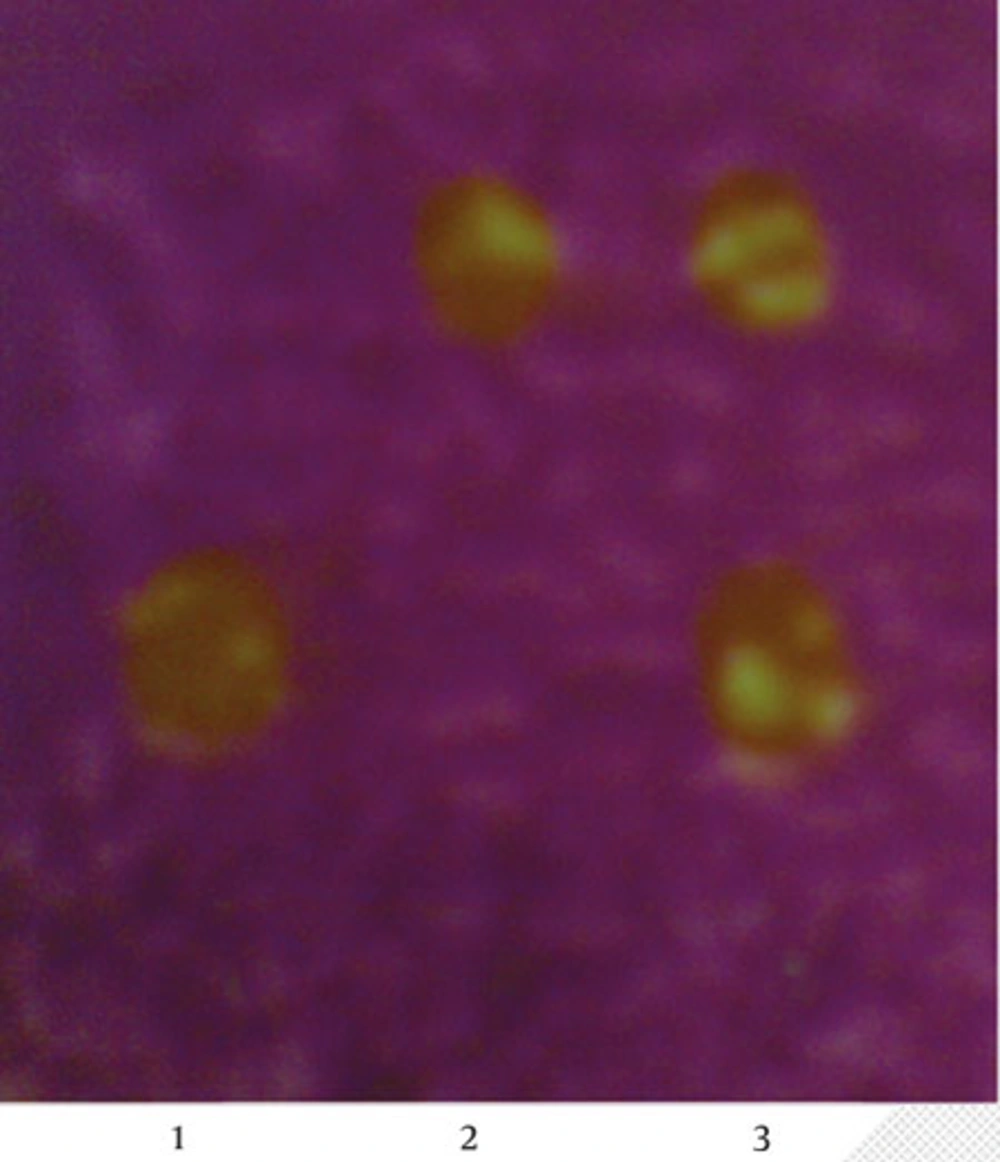
Figure 1
Separation of Polyols by TLC
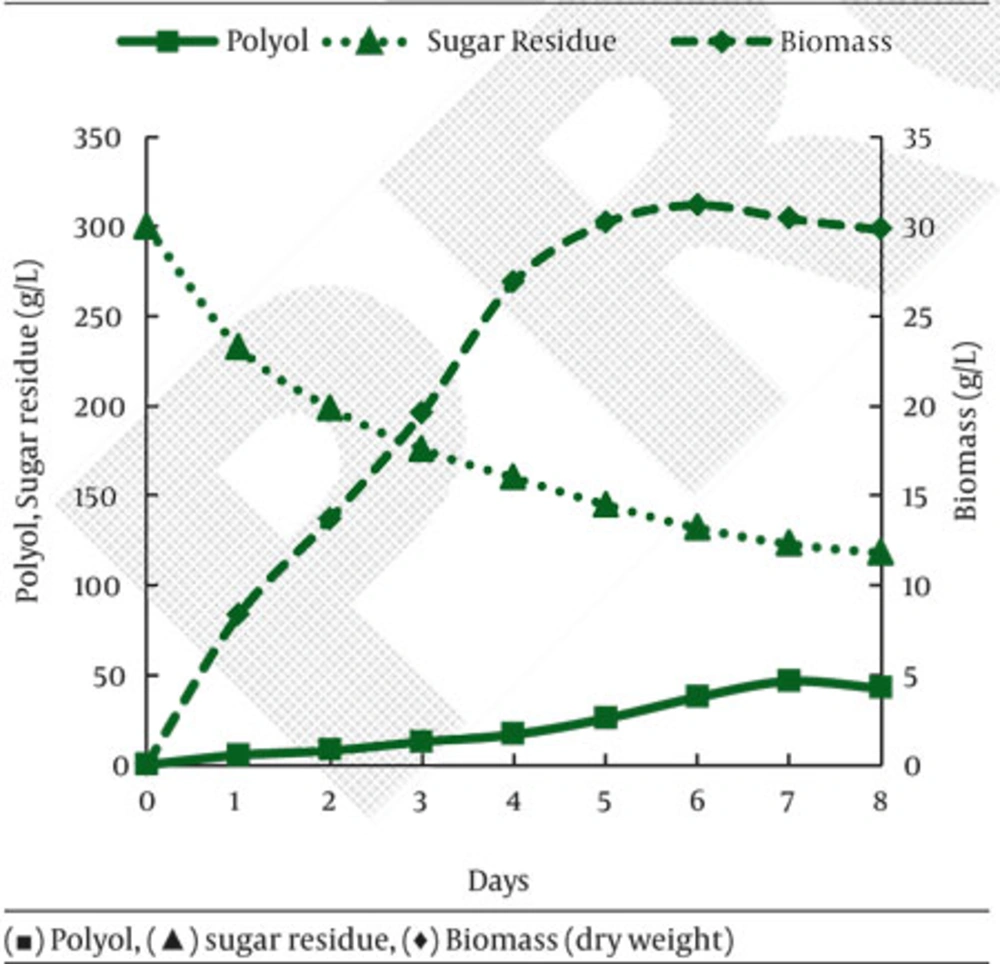
Figure 2
Glucose Consumption and Cell Growth During Polyol Production by Y. lipolytica
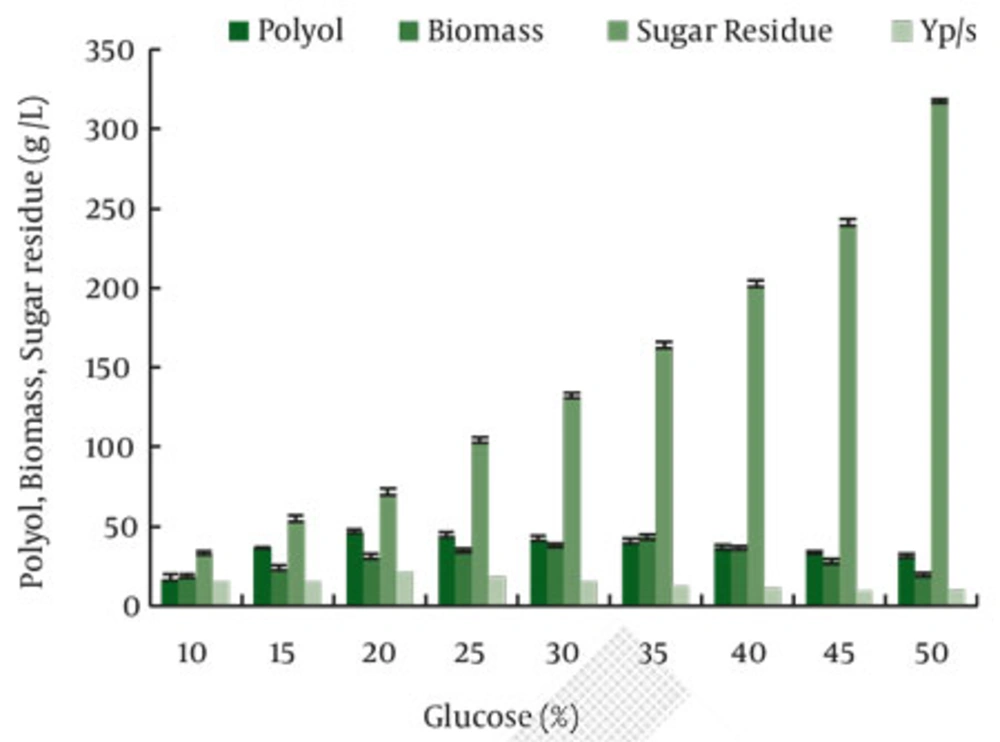
Figure 3
Effects of Concentration of Glucose on Polyol Production
4.2. Effect on Yeast Extract
Yeast extract concentrations varied from 0.5 to 2.5 %. At the highest level of yeast extract concentration, yeast growth was excessive and polyols yields were very low. Figure 4 shows that 1.0% of yeast extract is the best amount of this source for polyols production. TLC also showed that 1.0% of yeast extract is the best concentration for erythritol production. Based on sugar consumed, at the lowest level of yeast extract concentration, erythritol yields, appeared well, however sugar utilization was very slow as a result of low cell concentrations.
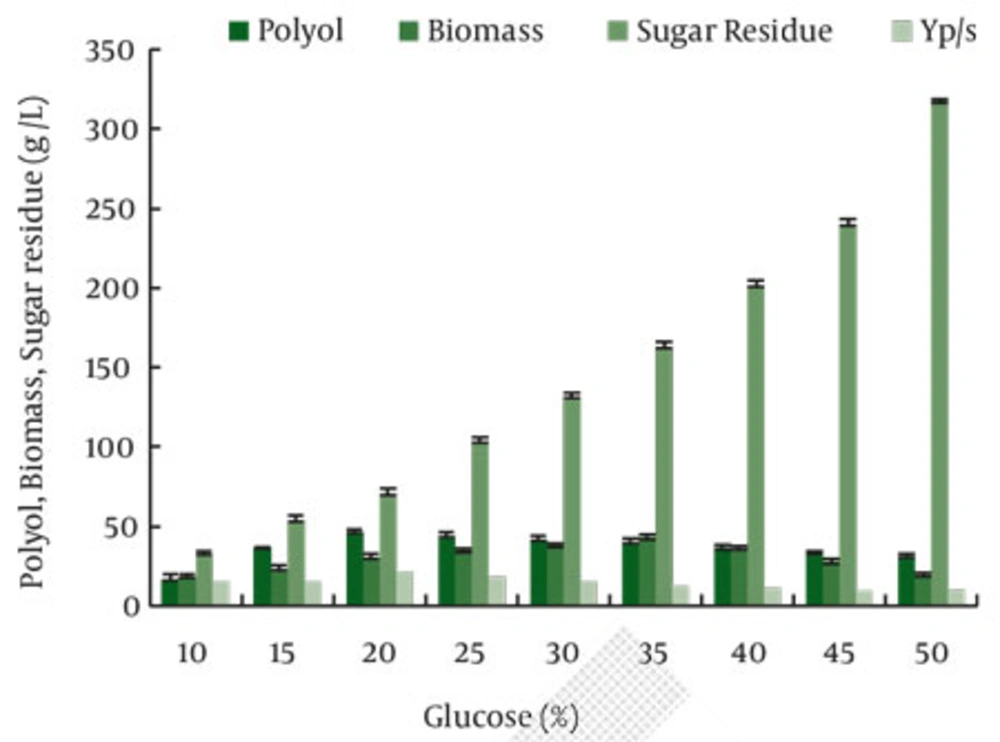
Figure 4
Effects of Concentration of Yeast Extract on Polyol Production
4.3. Effect of initial pH
Yarrowia grows in a broad spectrum of pH but the highest amount of polyols production occurred at pH 5.5 (Figure. 5) and detected by TLC; an alkaline pH led to an increase in glycerol production.
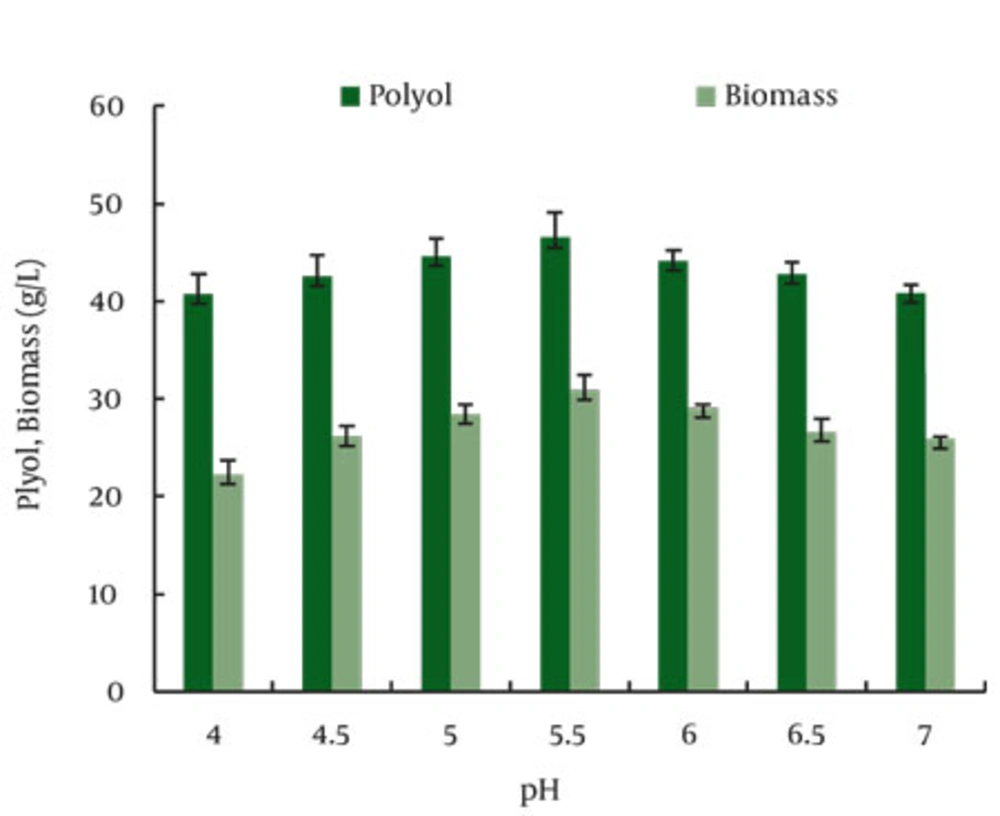
Figure 5
Optimal pH for Production of Polyol
5. Discussion
The concentration and pattern of polyols produced by osmotolerant yeasts are strongly influenced by medium composition and environmental conditions (10). The pathways for polyols biosynthesis and catabolism can be different among organisms (11). It was observed that Y. lipolytica produced 60% erythritol out of total produced polyols. The preliminary screening experiments (one-factor at a time) suggested that glucose - as carbon source - and yeast extract - as nitrogen source - were critical medium components for erythritol formation. Pattern of polyol production can be drastically altered by changing the medium components (10, 13).
In this study characterized that at concentration higher than 1.0% of yeast extract, glycerol production rate was much higher than that of erythritol. These results indicate that the addition of yeast extract facilitated and enhanced glycerol production. Alkaline pH led to an increase in glycerol production. The optimum pH for erythritol production was determined to be 5.5which was almost the same as optimum pH (pH 5.6) for Aureobasidium sp. reported by Wako et al. (14). Erythritol is commercially produced by fermentation of Aureobasidium sp., Torula sp., and Moniliella pollinis (5). Erythritol production by Y. lipolytica DSM70562 needs gene engineering such as overexpression of erythrose reductase, and deletion or decrease of glycerol production by ultraviolet irradiation.