
1. Background
Helicobacter pylori is a Gram-negative bacterium in the digestive tract, which is mainly found in human gastric mucosa (1). Helicobacter pylori is an important etiological factor in multiple gastraduodenal disorders including functional peptic ulcers, dyspepsia, gastric cancer, and mucosa-related lymphoid tissue lymphoma (2). Some of these virulence effects of H. pylori are encoded by babA2, VacA, iceA, cagA, cagE, Hsp60-70, and Hpa genes, which act differently and have meager functions in pathogenesis (3). Helicobacter pylori reaches the gastric mucosa and it makes use of several adhesions such as hpa and baba; baba is one of the most studied adhesions and is encoded by the gene babA2 and binds to Lewis-b blood group antigens (4). Based on the serological document, the frequency of this agent is approximately 60% to 80% in Iran (5).
BabA is the blood group antigen-binding adhesion, which is encoded by the babA2 gene and binds to Lewis-b blood-group antigen that exists in gastric epithelial cells. There are 3 bab alleles (babA1, babA2, and babB) of H. pylori, but only the babA2 gene indicates Lewis-b binding function (6). The BabA adhesion of H. pylori is an external membrane protein that is attached to the fucosylated histo-blood group antigens on the outer surface of gastric epithelial receptors (6, 7). Duodenal users and adenocarcinoma H. pylori agglutinin (hpa) is a binding protein of H. pylori that is coded by the hpa gene and binds H. pylori to gastric mucosal cells. Weighting 29 Kda, hpa is the main flagellar sheath protein and is considered an H. pylori adhesion (8, 9); hpa is a colonization factor for H. pylori and it only gives rise to low immune responses after infection (8). Hpa was originally defined as a haemagglutinin found on the surface of the bacteria and not noticeable on the flagella (10).
2. Objectives
The present study aimed at identifying the frequency of babA2 and hpa virulence genes of H. pylori isolates in gastric biopsy samples, establishing their associations with clinical disease, and correlating these data to the presence of gastritis, peptic ulcer, gastric adenocarcinoma, and mucosa-associated lymphoid tissue (MALT) lymphoma.
3. Methods
3.1. Ethics Statement
This study was approved by the ethical committee of Golestan University of Medical Sciences (ethic code: 35619112278).
3.2. Sampling
A total of 156 antral biopsy samples were obtained from patients who referred to endoscopy section of Shahid Sayad Shriazi hospital and 5 Azar hospital (Gorgan, Iran) from January 2014 to April 2015. Patients underwent endoscopy because of gastritis, peptic ulcer, gastric adenocarcinoma, and MALT lymphoma. Gorgan is located in the middle of Golestan province in north of republic of Iran and southeast of the Caspian Sea (11). We excluded those patients who received antibiotics. All patients were asked to sign a written informed consent. The present study was conducted based on the codes of the Helsinki’s Declaration.
3.3. Identification Methods
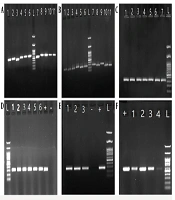
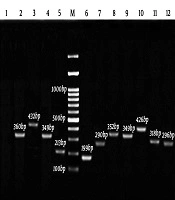
Rapid urease test (RUT) was performed by RUT kit (Bahar Afshan, Iran) according to manufacturer’s instruction. Further hematoxylin-eosin staining and Giemsa staining were used for histologic diagnosis. The histological slides were examined by 2 independent experts in histopathology to confirm the diagnosis. DNA was extracted from H. pylori positive biopsy samples using the Genomic DNA filtration Kit (Fermentas, Germany) based on the manufacture’s protocol. Purified DNA was kept at -20°C until used. The sequence of babA and hpa genes were amplified by PCR using the correspond primers (Table 1). The amplification reaction (50 µL) contained 5 µL 10X PCR buffer, 2.5 mM Mgcl2, 0.2 mM of each dNTP, 1 µL forward and reverse primer, 5 µL DNA template, and 2U Taq-Pol (Genetbio, South Korea). The PCR cycling situations were as follow: original denaturation stage at 95 for 5 minute, 35 cycles of 95°C for 1 minute, 60°C for 1 minute, 72°C for 1 minute, and last extension phase at 72°C for 5 minutes. PCR outcomes were analyzed by 1.5% agarose gel electrophoresis premixed with ethidium bromide and visualized under a UV transilluminator.
3.4. Statistical Analysis
Statistical analysis was performed by statistical software package SPSS for Windows Version 18.00 (SPSS Inc. Illinois, USA). Chi-square test or Fisher’s exact test were used to measure the relationship between H. pylori virulence indicators and clinical effects. P values less than 0.05 were considered statistically significant.
4. Results
The infection of H. pylori was confirmed by histologic analysis and RUT. From 156 samples, a total of 80 samples were infected by H. pylori (51.28%). We identified 80 gastric cancer patients and 36 patients with gastritis, moreover, 26 peptic ulcer patients were infected by the microorganism. The babA2 + strains were found in 51 (64%) patients and hpa + strains in 57 (71%) patients, which were associated with sex (P = 0.02). From 80 samples infected with H. pylori, 36 (45%) were female and 55% were male. The primers used in this study are demonstrated in Table 1, and the frequencies of babA2 and hpa gene in the biopsies in different gastric disease are summarized in Table 2. From 51 babA2+ strains, 21 (41.1%) were peptic ulcers, 19 (37.2%) gastritis, and 11 (21.7%) gastric cancer. BabA2 and hpa genes were common in peptic ulcer participants. Moreover, there were no statistically significant differences among the groups (P > 0.05). The frequencies of babA2 and hpa genes were higher in males than in females (Table 3), and only the hpa frequency was statistically significant (P = 0.02, OR = 3.21, 95% CI: 1.16 - 8.85).
Table 1.
The Primers Used in This Study
| Gene Name | Sequence (5' - 3') | Product Reference |
|---|---|---|
| Length | ||
| bab A2 | Forward: AATCCAAAAAGGAGAAAAAGTATGAAA | 832 |
| Reverse: TGTTAGTGTGATTTCGGTGTAGGACA | ||
| hpa | Forward: ATAAAGCTTTCGGTGGTGGTGGAACGATG | 850 |
| Reverse: TATCTCGAGTTGTCGGTTTCTTTGC |
Table 2.
Frequency of babA2 and hpa Genes in Different Studied Groupsa
| Gene Name | Gasteric Cancer | Gasteritis | Peptic Ulcer | P Value |
|---|---|---|---|---|
| babA2 | 11 (61.1) | 21 (58.3) | 19 (73.3) | 0.47 |
| hpa | 10 (55.5) | 25 (69.4) | 22 (84.6) | 0.10 |
aValues are expressed as No. (%).
Table 3.
Frequency of babA2 and hpa Genes in Different Gender Groups (44 Males and 36 Females)
| Gene Name | Male | Female | P Valuea |
|---|---|---|---|
| babA2 | 28 (63.6) | 23 (63.8) | 0.58 |
| hpa | 36 (81.8) | 21 (58.3) | 0.02 |
aFisher’s Exact Test was applied. Bold interface indicate significant value.
5. Discussion
The clinical progress of H. pylori infection is determined by several virulence factors that might forecast the risk for symptomatic clinical results. The attachment of H. pylori to epithelial cells is an appropriate step in explicit tropism and in developing gastraduodenal pathologies and persistency of infection (12). BabA2 protein attaches H. pylori to the blood group antigen Lewis-b existing on the surface of human gastric epithelial cells (3). In the present study, we determined the frequency of babA2 and hpa in 80 H. pylori isolates from selected patients with functional dyspepsia. In the current study, the babA2 gene was found in 40% of gastric biopsies; this frequency was higher than babA2 reported by Paniagua et al. (21.7%) and lower than Boria et al. (82.3%) and Safaei et al. (71.6%) (13, 14).
Numerous documents revealed that H. pylori expression babA are related to more severe mucosal cellular inflammation and increased risk of clinical outcome diseases like active gastritis, peptic ulcer, and gastric cancer (15). The study of Cadamuro et al. revealed that occurrence of babA was significantly associated with duodenal ulcer and adenocarcinoma and would be a useful marker to identify patients who are at higher risk for H. pylori-related diseases (15). Mizushima et al. found that babA prevalence in Japan is higher than the Western countries. They detected the babA gene in 85% of their local isolates, while the rate is about 66% to 72% for the Western countries. No significant relationship was found between the babA2 genotype and the clinical outcomes (16). However, in our study, babA gene was detected in 51% of the isolates, and no association was found between the babA gene and gastraduodenal disease.
Helicobacter pylori adhesion A (hpaA), which is a conserved surface lipoprotein and is essential for colonization of H. pylori, can induce immune responses and produce anti-bodies against HpaA in humans. Furthermore, this protein is a promising vaccine candidate against H. pylori infection (17). Hpa is a strong colonization factor for H. pylori. In this study, we determined the frequency of the hpa genotype in 80 H. pylori isolates from patients with peptic ulcer or gastric adenocarcinoma. Therefore, it is difficult to explain different clinical outcomes only from virulence factors such as babA2, hpa of H. pylori. The hpa gene was found to be present in 27.5% of babA2-negative strains. In our study, the prevalence of hpa genotype was 71.2%, it was 31.2% in gastritis, 27.5% in peptic ulcer, and 12.5% in gastric cancer. Furthermore, in this study, no relationship was found between presence of babA and hpa genes and gastric disease. However, other studies have found a strong association between the occurrence of babA2 gene and DU disease.
6. Conclusions
The results of this study provided information about the prevalence of 2 virulent factors of H. pylori. However, our data did not support the hypothesis that the virulence factors of H. pylori, BabA and Hpa are powerfully related to gastric adenocarcinoma, peptic ulcer disease, and chronic active gastritis in Western countries. Moreover, we did not identify a statistically significant relationship between babA and hpa virulence factors.