
1. Background
Attention-deficit/hyperactivity disorder (ADHD) is among the most prevalent behavioral disorders in children, inflicting approximately 7% of primary school children and 5% of adolescents and young people (1). Its high prevalence has motivated researchers to study it (2). This disorder negatively affects various dimensions of a child’s life (3). In DSM-5, an impairment of cognitive processes is noted as causing impulsive behavior, hyperactivity, and attention deficit in this disorder. Those with ADHD demonstrate cognitive problems on tests related to executive function (4). Executive function is a key term referring to a number of high-level cognitive processes which allow the individual set targeted goals (5). The evolution in the frontal lobe of children with ADHD is delayed, causing an impairment of executive functions (6). In fact, impairment of executive functions leads to behavioral problems in these children (7). ADHD is accompanied by ineffective executive functions such as response inhibition (8). Response inhibition is a key executive function which grows with the onset of puberty which is supported by the frontal lobe (9). It is a neurological element helping children provide delayed responses (10). In one research, 53 children with ADHD were exposed to a computer program. Results showed that this computer program enhanced working memory as well as response inhibition (11). Research suggests that the behavioral symptoms of ADHD in the experimental group were improved after computer-assisted cognitive rehabilitation sessions (4).
Parents of children with ADHD report sleep problems in them more than parents of other children. This shows a relationship between sleep and ADHD (12), with a high prevalence of sleep problems in children with ADHD (13). Over 70% of children with ADHD suffer from mild to severe sleep problems (14). The relationship between sleep and ADHD is bi-directional (15). Studies indicate that children with ADHD sleep less during the night compared to healthy children, and demonstrate problems with sleep onset and resistance to sleep. Signs of attention deficit and hyperactivity are correlated with problems during sleep and sleep quality (16). Studies show that a relationship exists between executive functions and sleep pattern in children with ADHD (17), and a low level of sleep is correlated with an increased impairment of executive function in these children. Nevertheless, no causal relationship between sleep deviation and executive functions can be obtained (18). A reduced sleep duration is accompanied with weaker executive functions in school-age children (1).
Therapeutic strategies available for ADHD include drug and non-drug interventions. However, drugs must be used with caution as they have side-effects (19). The implementation of behavioral therapy may also prove problematic for parents. Therefore, techniques which target cognitive and neuropsychological impairment in ADHD and complement behavioral and pharmaceutical therapy must be developed. Cognitive rehabilitation is one such technique (20). It includes programs for training the brain so that it can change its functioning through some processes (21). Cognitive rehabilitation programs consist of a chain of tasks aiming at the achievement of executive functions (22). The key role of cognitive rehabilitation is treating problems caused by brain injury. These problems can order tasks from easy to difficult based on personal differences, providing continuous cognitive challenges for the individual (23) computer-assisted cognitive training provides children with ADHD with the opportunity to learn various types of necessary cognitive skills (24). Computer-assisted cognitive rehabilitation not only improves cognitive symptoms, but also affects motor-motivational symptoms of this disorder (25). A study examined response inhibition in computer tasks and programs in 23 children with ADHD and reported a significant improvement in their cognitive inhibition (26). Studies suggest the effectiveness of cognitive enhancement programs on executive functions (11, 27-29).
A number of studies have previously examined the effectiveness of cognitive rehabilitation in improving executive functions in children with ADHD. However, the researcher has found no study investigating the effects of response inhibition cognitive rehabilitation on sleep quality and behavioral symptoms in these children.
2. Objectives
The present study attempted to answer the question whether cognitive rehabilitation is effective in reducing response inhibition cognitive impairment in children with ADHD and, consequently, improving behavioral symptoms in them.
3. Methods
The present study is a controlled quasi-experimental research with a pretest-posttest design. The sample was selected by visiting the Counseling Center of the Ministry of Education in Kermanshah, Iran. First, children aging 7 to 12 years diagnosed with ADHD by psychologists at the center based on DSM-V criteria were selected. After obtaining the consent of their parents, the Conners’ ADHD rating scale (parent questionnaire) and the Pittsburgh sleep quality index were completed by parents, while the Conners’ teaching rating scale was completed by teachers. Of children studying in regular schools, 33 were diagnosed with simultaneous ADHD and sleep problems. Then, the Stroop response inhibition test was administered to them by the therapist and 20 children with the weakest performance were randomly allocated to experimental and control groups (n = 10 each). After that, the experimental group received response inhibition cognitive rehabilitation using the Captain’s Log MindPower builder (2014 version) individually for 12 sessions (two 1-hour sessions per week), while the control group received no therapy. Inclusion criteria were a simultaneous diagnosis of ADHD and sleep problems and the consent of children and their parents for participation. Exclusion criteria were: having other psychological disorders in addition to ADHD and sleep disorders, receiving other specific psychological therapies, and taking stimulant and non-stimulant drugs.
The Conners’ ADHD rating scale (parent questionnaire) has 26 items. Achieving a score of above 34 indicates ADHD. Conners et al. reported the reliability of 0.90 for this scale. Its validity has been reported as 0.85 by the Institute for Cognitive Science Studies (30). In the present study, the Cronbach’s alpha of 0.89 was computed for this scale. The Conners’ teaching rating scale comprises 39 items. A mean score of above 1.5 indicates ADHD. Cronbach’s alpha for this scale has been reported to be 0.61 to 0.95. Cronbach’s alpha for this scale has been calculated in Iran and reported to be 0.86 for the total score and 0.89 and 0.74 for attention deficit and hyperactivity sub-scales, respectively (31). In the present study, the Cronbach’s alpha of 0.96 was computed for this scale. The Pittsburgh sleep quality index consists of 19 items and 7 sub-scales. This index was developed by Buysse et al. (1989). They calculated the internal consistency of this index using Cronbach’s alpha which equaled 0.83. In the Persian version, its reliability and validity equal 0.86 and 0.89, respectively (32). This index is used for adults as a self-report. For children, however, it can be completed by parents (33-35). In the present study, the Cronbach’s alpha of 0.42 was computed for this scale. The Stroop test has been employed in various studies to measure response inhibition ability. The validity of this test has been reported from 80% to 90% based on test-retest method (36). Sandford is a developer of the cognitive training system (37). Sandford’s Capitain’s log is based on a basic data processing system. This program is based on working memory and central processing speed and, therefore, includes basic cognitive skills and higher skills. The major advantage of this program is enhancing 22 basic and high cognitive skills. this program is based on the theory that computer-assisted cognitive rehabilitation induces stable changes to less active areas of the brain by consecutive stimulation of these areas based on the principle of brain plasticity and self-healing (38).
3.1. Intervention Program
As participants had a poor performance in response inhibition, sessions included approximately 1 hour of response inhibition exercises. From among programs related to response inhibition, 8 programs (Table 1) were selected and administered. First, basic skills were practiced and tasks increased in difficulty accordingly. The degree of progress or regress in exercises was controlled by the therapist. Each exercise was selected and adjusted by the therapist based on the child’s age and level of ability. Then, the implementation was explained to children in simple words. Each exercise lasted 5 to 7 minutes on average. After successfully finishing each exercise, participants moved to the next. After the final therapy session, posttest was administered to both groups.
Table 1.
Treatment Protocol for Each Session of Capitan’s Log Cognitive Rehabilitation
| Exercises | Promotion of Cognitive Skills | Time (Min) |
|---|---|---|
| Match point | Response inhibition, processing speed, general attention | 6 |
| Cats play | Response inhibition, general attention, visual perception, visual processing speed | 7 |
| Mouse hunt | Response inhibition, general attention, sustained attention, visual processing speed | 5 |
| Target practice | Response inhibition, selective attention, sustained attention, visual perception | 7 |
| Red light, green light | Response inhibition, concentration, general attention, visual processing speed | 6 |
| Pick quick | Response inhibition, central processing speed, visual perception | 5 |
| Darts! | Response inhibition, general attention, visual perception | 6 |
| On the road | Response inhibition, central processing speed, visual perception | 7 |
After data were collected, the mean and SD of data were calculated. Then, univariate analysis of covariance (ANCOVA) was employed to analyze the data of the Pittsburgh sleep quality index, and multivariate ANCOVA (MANCOVA) was utilized to analyze the data of Conners’ questionnaires in SPSS 23.
4. Results
Table 2 presents the demographic information of participants in both groups. The calculated Chi-squared value resulting from the comparison of frequencies across groups in two levels of the variable of sex equals 0 (P = 1.00). For the variable of age, it equals 2.53 (P = 0.77). Therefore, the two groups are not significantly different in terms of sex and age.
Table 2.
Demographic Information of Participants
| Group | Chi-Squared | P | |||
|---|---|---|---|---|---|
| Experimental | Control | Total | |||
| Sex, No. (%) | 0.00 | 1.00 | |||
| Female | 4 (40) | 4 (40) | 8 (40) | ||
| Male | 6 (60) | 6 (60) | 12 (60) | ||
| Age, mean ± SD | 9 ± 1.70 | 9 ± 1.56 | 2.53 | 0.77 | |
Table 3 reports the descriptive indices of sleep disorders and the behavioral symptoms of ADHD divided by groups on pre- and posttest. It is clear that, mean score of the experimental group was reduced from 6.20 to 2.40 for sleep disorders, from 25.80 to 16.40 for the sub-scale of hyperactivity, from 33.00 to 19.50 on the sub-scale of attention deficit, and from 14.60 to 9.60 on the sub-scale of impulsivity.
Table 3.
Descriptive Indices of the Pittsburgh Sleep Quality Index and Conners’ Questionnaire Divided by Groups on Posttesta
| Variable | Experimental Group | Control Group |
|---|---|---|
| Sleep disorders | ||
| Pretest | 6.20 ± 1.932 | 6.30 ± 2.869 |
| Posttest | 2.40 ± 1.075 | 6.30 ± 2.584 |
| Hyperactivity | ||
| Pretest | 25.80 ± 8.03 | 18.6 ± 6.95 |
| Posttest | 16.40 ± 4.06 | 21.10 ± 3.47 |
| Attention deficit | ||
| Pretest | 33.00 ± 7.88 | 24.30 ± 6.83 |
| Posttest | 19.50 ± 5.83 | 24.40 ± 7.42 |
| Impulsivity | ||
| Pretest | 14.60 ± 6.18 | 12.30 ± 5.94 |
| Posttest | 9.60 ± 2.41 | 12.30 ± 2.40 |
a Values are expressed as mean ± SD.
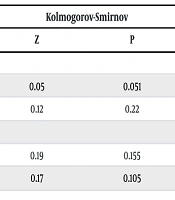
The assumptions of ANCOVA were first examined to investigate the research hypothesis results revealed that the assumption of equality of variances holds for variables, distribution of variables for each group on pre- and posttest is normal, and the assumption of homogeneity of regression slopes holds for variables.
Table 4.
Results of Univariate ANCOVA Showing the Difference Between Experimental and Control Groups in Terms of Total Scores on the Pittsburgh Sleep Quality Index
| Source | SS | Df | MS | F | Significance Level | Eta-Squared |
|---|---|---|---|---|---|---|
| Pretest | 17.40 | 1 | 17.40 | 5.57 | 0.001 | 0.24 |
| Group | 74.45 | 1 | 74.45 | 23.84 | 0.001 | 0.58 |
| Corrected model | 93.45 | 2 | 46.72 | 14.96 | 0.001 | 0.63 |
Table 5 shows that a significant difference exists between the two groups in one dimension. To find in what dimension the significant (P < 0.01) difference exists, MANCOVA was employed (Table 6).
Table 5.
Results of MANCOVA on the Behavioral Symptoms of ADHD in Both Groups After Intervention
| Test | Value | F | df of Hypothesis | df of Error | P | Effect Size |
|---|---|---|---|---|---|---|
| Pillai’s trace | 0.58 | 5.97 | 3 | 13 | 0.001 | 0.58 |
| Wilks’ lambda | 0.42 | 5.97 | 3 | 13 | 0.001 | 00.58 |
| Hotelling statistic | 1.37 | 5.97 | 3 | 13 | 0.001 | 00.58 |
| Roy’s largest root | 1.37 | 5.97 | 3 | 13 | 0.001 | 00.58 |
Table 6.
MANCOVA on Mean Posttest Scores of Levels of Variables in Both Groups
| Component | SS | df | MS | F | P | Effect Size |
|---|---|---|---|---|---|---|
| Hyperactivity | 160.672 | 1 | 160.672 | 16.602 | 0.001 | 0.525 |
| Attention deficit | 294.438 | 1 | 294.438 | 10.062 | 0.001 | 0.401 |
| Impulsivity | 33.141 | 1 | 33.141 | 10.465 | 0.001 | 0.411 |
Based on Table 6, the F value was significant for hyperactivity (P < 0.001), attention deficit (P < 0.001), and impulsivity (P < 0.001). Based on the calculated effect size, 0.52 of change in hyperactivity, 0.40 of change in attention deficit, and 0.41 of change in impulsivity resulted from a change in the independent variable (response inhibition rehabilitation program).
5. Discussion
Children with ADHD show impairments in executive functions, sleep, and behavior. Currently, drug and behavioral therapies are used more than other therapies to treat ADHD. Behavioral or drug approaches do not directly target cognitive problems, sleep problems, and ADHD simultaneously. Therefore, considering the need for treating cognitive impairments as well as behavioral and sleep problems in these children, in addition to the dearth of studies on the effectiveness of cognitive rehabilitation for ADHD, the present study was conducted to determine the effectiveness of response inhibition cognitive rehabilitation in improving sleep problems and behavioral symptoms in children with ADHD.
Various regions of the brain gradually take on the responsibilities of impaired parts, forming new neurological pathways. Cognitive rehabilitation programs help the brain identify and form these alternative pathways, thereby minimizing the negative effects of brain injury (39). The evolution in the frontal lobe of children with ADHD is delayed, causing an impairment of executive functions (6). On the one hand, the frontal cortex is bi-directionally involved in executive functions (40) and on the other hand, results of studies report a relationship between sleep quality and executive functions (41, 42). As the mean sleep disorder of the experimental group was reduced in this study, one can conclude that cognitive rehabilitation has improved sleep quality. Results of the present study are in line with those of Yum et al. and Steel et al. Warren, Riggs, and Pentz found a significant relationship between mean duration of night-time sleep and executive functions, and the results indicated the effect of sleep on sedentary behaviors through executive functions (42).
Another region of the brain with unnatural functioning in sleep disorders and ADHD is the the locus coeruleus (15). Therefore, it can be stated that injury in these regions of the brain leads to sleep disorders and impairment in executive functions. Based on the noted points, it is expected that cognitive rehabilitation of executive functions alleviate sleep disorders.
In the present study, mean behavioral symptom (hyperactivity, attention deficit, and impulsivity) was reduced in the experimental group. Thus, it can be concluded that the presence in the experimental group and receiving the treatment improved behavior symptoms in these participants. Results of the present study are consistent with those of previous studies (25, 28, 29). Results of studies show that computer-assisted cognitive training decreases behavioral symptoms in children with ADHD (43). Other studies on the effectiveness of computer-assisted cognitive rehabilitation in the treatment of ADHD indicated that this treatment causes effects similar to those of stimulants while having a higher stability (44). Results of a study revealed that, during the course of cognitive rehabilitation, the activity of the middle frontal gyrus and the inferior parietal cortex is increased. This study shows that the noted treatment improves the activity of the prefrontal cortex which is closely related to behavioral symptoms (4).
Computer-assisted cognitive rehabilitation interventions can improve response inhibition and increase brain activity in the prefrontal cortex. In fact, by this therapy, regions of the brain related to the executive function of response inhibition can be stimulated. As the activity of the prefrontal cortex is closely intertwined with behavioral symptoms (45), response inhibition cognitive rehabilitation can play a major role in improving behavioral symptoms.
Cognitive rehabilitation includes programs which assist the individual in reviving executive functions and can alleviate behavioral symptoms of children with ADHD by enhancing their executive functions. Results of the present study provide a strong support for the effectiveness of this novel treatment approach in improving the response inhibition executive function in children with ADHD. As these children suffer from frontal lobe malfunction, and since this region is in charge of the brain’s executive function, it is expected that the behavioral symptoms of ADHD should be improved upon providing executive function rehabilitation.
Based on the above discussion, it can be stated that the improvement of the function of prefrontal cortex in children with ADHD increases response inhibition capability in them which, in turn, can improve sleep quality and behavioral symptoms.
5.1. Conclusions
Results of data analysis show that posttest scores differ across groups in sleep quality and all three scales of behavioral symptoms. Based on these results, it can be concluded that response inhibition cognitive rehabilitation can improve the sleep quality and behavioral symptoms of children with ADHD.
It is recommended that, to increase generalizability, this study be replicated on larger samples with a second control group (another form of intervention) with a follow-up.