Fulltext
The body of the article can be found in the PDF file.
Journal of Medical Education for Future Demands
Former Title: Journal of Medical Education | The Official Journal of School of Medical Education and Learning Technologies
Image Credit:J Med Edu
Authors
Background and purpose: Studies have shown the advantages of e-CME programs. Developing Case-based e-CME activities, one of the popular formats of e-CME programs, is difficult and time consuming. In this article we describe our experience of performing instructional system design for creating case-based e-CME contents. Methods: We performed a five-step instructional system design (i.e. system analysis, design, development, delivery and evaluation) to create e-contents. We held several sessions with experts of the field to perform system analysis. Then we determined contents’ framework and a plan for faculty members’ development and incentives. In the development phase, we held workshops for faculty members and trained e-learning advisors who would help faculties to create contents. Incentives were legitimized. Then we delivered programs to the learners who would fill a program evaluation questionnaire after completing the study of each program. Results: 20 e-CME programs were developed and delivered to the learners. Totally 3644 learner-programs were studied. Cases rated the programs as 4.56 (SD= 0.65) on the 1–5 Likert-type scale.Conclusion: Results showed that the learners rated this kind of learning activity very high. On the other hand we had some challenges for developing the contents. Performing a comprehensive instructional system design would help to overcome the barriers.
© 2015, Author(s). This open-access article is available under the Creative Commons Attribution 4.0 (CC BY 4.0) International License (https://creativecommons.org/licenses/by/4.0/), which allows for unrestricted use, distribution, and reproduction in any medium, provided that the original work is properly cited.
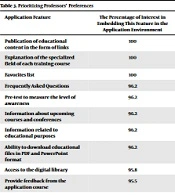
Khoshnoodifar M, Torbati Feyzabadi M, Raoufian H, Akbari Farmad S. Designing an Application to Empower Academic Staff Members in the Field of E-Learning. J Med Edu. 2024;23(1):e138849. doi: https://doi.org/10.5812/jme-138849
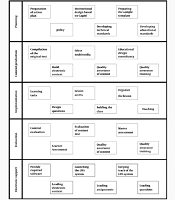
Alizadeh S, Hosseinzadeh M, Arshi S, Ghanbari S. E-Learning Framework Based on Electronic Learning Management System for the staff of Health Office of Shahid Beheshti University of Medical Sciences. J Med Edu. 2020;19(1):e103396. doi: https://doi.org/10.5812/jme.103396

Mirmoghtadaie ZS, Ahmady S, Yazdani S, Mojtahedzadeh R, Afshar L. Professional Practice of Medical Training in the E-Learning System: The Conceptual Model Based on a Critical Review. J Med Edu. 2016;15(4):e105550. doi: https://doi.org/10.22037/jme.v15i4.13480
Mohamadi S, Hosseiny SM, Hosseiny SS. The Role of Interactive E-Learning in Problem-Solving Skill and Independent Learning of Medical Students in Psychology Courses. Educ Res Med Sci. 2016;5(1):e79196. doi:
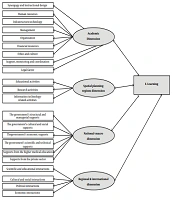
Sajedi R, Khorshidi A, Hamidifar F, Moghaddasi H, Mahmoodi AH. Designing a Conceptual Pattern of E-Learning for Iran’s Universities of Medical Sciences. J Clin Res Paramed Sci. 2021;10(1):e107521. doi: https://doi.org/10.5812/jcrps.107521
Last Update: 1 week ago
Last Update: 1 week ago
Last Update: 1 week ago
Last Update: 6 days ago
Last Update: 9 hours ago
Last Update: 5 days ago