
Dear Editor,
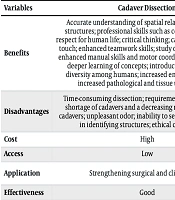
In the ever-evolving landscape of medical education, the foundational discipline of anatomy holds a pivotal role. As a seasoned surgeon and passionate medical educator, I find myself deeply troubled by a concerning trend: the dwindling interest among graduates in pursuing surgery as a career path (1). While numerous factors contribute to this phenomenon, one glaring issue emerges from the realm of anatomical training. Traditionally, cadaveric dissections have served as the cornerstone of anatomical education, offering students invaluable hands-on experience and a profound understanding of human anatomy (2). However, in recent years, we have witnessed a paradigm shift away from this time-honoured practice. The emergence of alternative teaching models, such as problem-based learning (PBL), case-based learning (CBL), and team-based learning (TBL), has ushered in an era where the emphasis on basic sciences like anatomy has waned. I am compelled to address this critical issue head-on. It is imperative that we re-evaluate our approach to anatomical education and explore innovative solutions to reignite interest in surgery among aspiring physicians. One such solution lies in embracing technology-based alternatives to traditional cadaveric dissections. From plastination of dissected cadavers and plastinated models to the most technologically advanced three-dimensional (3D) anatomy visualization and virtual dissection tools, these innovative approaches to digital anatomy presentation offer immersive virtual experiences that replicate the intricacies of human anatomy with remarkable accuracy. One such method developed is the online dissection audio-visual resources (DAVR) with promising outcomes (3). By integrating these cutting-edge tools into our curriculum, we can provide students with a dynamic learning environment that not only enhances their anatomical knowledge but also fosters a deeper appreciation for surgical practice. As educators, we have a responsibility to instil in our students the foundational skills and knowledge necessary for success in their chosen field, most importantly surgery and allied disciplines.
Reviving Surgical Interest through Modern Anatomy Education
As we navigate the ever-evolving landscape of medical education, one of the most significant shifts has been the transition from traditional anatomy teaching methods to modern, student-centered approaches. A cornerstone of this evolution has been the adoption of student-centered learning styles, and much talked about problem-based and case-based learning approaches in medical education. While these methodologies aim to promote active learning and critical thinking, they often overlook the diverse learning styles and preferences of students. For instance, students from non-traditional backgrounds or those with learning disabilities may struggle to thrive in environments that prioritize independent study and group discussions. Cadaveric dissections, conducted in small groups and incorporating staged assessments, served as an authentic learning experience for trainees as they work on their own dissected cadavers. Dissection should retain its prominence in modern medical anatomy courses. Beyond its role in anatomical education, dissection facilitates social learning experiences and offers broader educational opportunities, aligning with the principles outlined in Good Medical Practice guidelines by the General Medical Council (4). This approach not only provides opportunities for students to engage actively with the material but also caters to varying levels of interest among participants. While some students may have less enthusiasm for dissections, they still benefit from the immersive learning environment created by those fully engaged in the process of anatomical exploration. As educators, it is imperative that we recognize and accommodate these differences to foster an inclusive learning environment that empowers all students to succeed. Moreover, the shift towards student-centered learning with gradually withdrawn supervision has resulted in a reduction in the emphasis placed on foundational subjects like anatomy. Such insights can assist faculty members in selecting and recommending a range of computer-assisted learning (CAL) and other resources to support students' self-directed study endeavours effectively (5). We often talk about the competencies (knowledge of skills) rather than the competence (demonstration of skills), which essentially requires a hands-on learning environment in anatomy, paving the way for surgical training. Furthermore, the advent of competency-based medical education (CBME) has ushered in a new era of assessment focused on the attainment of specific milestones observed for Entrustable Professional Activities (EPAs). This approach not only shows potential in cultivating surgical proficiency but also acknowledges the significance of foundational disciplines like anatomy and basic sciences in surgical education and practice. However, the increasing reliance on segmented assessments, like Objective Structured Clinical Examinations (OSCEs) in the name of standardisation, has somewhat diluted the emphasis on anatomical mastery, often reducing it to a mere formality rather than an integral aspect of medical education. Reintroducing long case assessments, conducted in authentic clinical settings, could provide a more comprehensive evaluation of students' anatomical knowledge and skills. It is worth considering revisiting the use of long case assessments, focusing on their logistical feasibility rather than dismissing them solely for practical reasons.
Challenges of Anatomical Education in a Paradigm Shift
As anatomical education undergoes a profound paradigm shift from traditional teaching methods to more sophisticated, scholarly approaches, a host of challenges emerge, threatening to overshadow the gains made by this evolution. One of the foremost challenges lies in the erosion of hands-on experience afforded by traditional cadaveric dissections. While virtual anatomy platforms offer undeniable advantages in terms of accessibility and repeatability, they fail to replicate the tactile feedback and spatial understanding garnered through direct manipulation of human tissue. The Anatomage table offers an excellent tool for learning anatomy by virtual dissection. The tool is not only used as a teaching aid, but also as a diagnostic and planning tool in residency programs, and adding the tool as an educational aid boosts the curriculum and helps to counter the challenges with cadaveric dissection (6). The tool has been used successfully in maxillofacial surgery and radiological courses (7-9). Another critical challenge arises from the marginalization of foundational subjects like anatomy in an outcome-based education (OBE) framework in an integrated curriculum. By prioritizing competency in procedural skills over anatomical understanding, medical education risks producing clinicians who can perform tasks without truly understanding the underlying principles, a troubling prospect for the future of surgical training and practice. The growing dependence on technology and virtual learning platforms warrants scrutiny as it may inadvertently isolate students from diverse backgrounds or those with limited access to technology. Failing to address this issue could send a misleading message that disregards inclusivity across the board. While virtual anatomy platforms offer undeniable advantages, they must be complemented by equitable access to resources and support to ensure all students can participate fully in their authentic training in anatomy. In navigating these challenges, it is imperative to strike a balance between innovation and preservation, leveraging the strengths of both traditional and modern teaching methods.
Reviving the Scalpel: Solutions to Ensure Anatomy Teaching Endures
The author's perspective here is neither to dismiss the value of anatomical dissection, nor to insist on dissection being brought back to curriculum practice in undergraduate teaching, but rather to emphasize the importance of preserving proven methodologies while integrating new techniques when appropriate. While technological advancements offer innovative ways to study the human body, traditional methods like anatomical dissection remain invaluable. The stance taken here is to emphasize the importance of preserving proven methodologies while integrating new techniques when appropriate and affordable. This balanced approach ensures that students benefit from the strengths of both traditional and modern methods, fostering a comprehensive understanding of anatomy. By advocating for the continuation of anatomical dissection using a dissected plastinated body alongside technological advancements, we will promote a holistic approach to medical education that honours the legacy of established practices while embracing innovation. Integrating state-of-the-art software technologies, such as virtual reality simulations, three-dimensional (3D) modelling, and interactive anatomy applications (Hot Spot Questions), can bridge the gap between traditional anatomy education and contemporary medical practices, ensuring that students are well-prepared for the technological demands of modern healthcare.
In conclusion, the evolution of anatomy education presents both challenges and opportunities. Let us chart a course that honours the rich tradition of anatomy education while embracing the innovations and state-of-the-art software technologies that will shape the future of surgical practice. In a nutshell, the revitalization of surgical interest hinges upon our ability to adapt to the evolving landscape of medical education in anatomy. By embracing technology-driven innovations in anatomy instruction and reaffirming the significance of anatomical training, we can empower aspiring surgeons to pursue their passion with confidence and competence. Together, let us bridge the gap between tradition and progress, paving the way for a brighter future in surgical practice.