
1. Background
The world has experienced various natural and human-made disasters throughout different historical eras (1, 2). Infectious diseases have been one of the most significant disasters that affect humanity, causing significant changes in human societies from the Middle Ages to the present day (3). In late 2019, the world was hit by a pandemic caused by a novel infectious disease (COVID-19), which originated in China and quickly spread to other parts of the world. The unprecedented speed and extent of its transmission led the World Health Organization (WHO) to declare it the sixth global public health emergency (4).
The novel nature of the COVID-19 virus posed numerous challenges and problems for healthcare systems worldwide, particularly in developing countries like Iran. Using lessons learned from past disease outbreaks, such as SARS, has been shown to be extremely beneficial in dealing with the challenges posed by emerging infectious diseases (5).
In other words, reviewing experiences and lessons learned is one of the key approaches to acquiring knowledge and skills in dealing with emerging infectious diseases like COVID-19. Lessons learned serve as a formal learning process for the future, enabling individuals and organizations to reduce the risk of repeating mistakes and increase the likelihood of replicating successes (6). Registering and studying lessons learned is a widely adopted and effective practice globally in the fields of knowledge acquisition, preparedness, and leveraging past experiences.
For instance, Khoo and Lantos highlighted several lessons learned from the COVID-19 pandemic. These lessons encompassed resource scarcity, the significance of mental health, economic impacts, quarantine measures, and the trade-off between freedom and stringent measures (7). Khanna et al. also examined lessons learned from addressing COVID-19 in India. They indicated the implementation of a 14-day quarantine process and the cancellation of international travel as measures to control COVID-19 in India. Furthermore, discouraging human contact with animals and closing live animal markets were practiced. Hotels, trains, and ships were repurposed as quarantine facilities, and a range of measures were implemented, some of which proved effective while others did not (8).
Nurses played a vital role during the COVID-19 pandemic, providing valuable services to their communities. Given their extensive involvement in combating the pandemic, nurses acquired valuable and practical experiences in this field. Therefore, documenting and analyzing experiences and lessons learned from nurses, particularly clinical nurse managers, during the recent pandemic will significantly contribute to the preparedness of this professional group to face future similar disasters (9). Documenting such experiences and lessons learned not only captures a historical event but also serves as a valuable tool for enhancing health system policies, especially in various dimensions of the nursing profession, such as nursing management, delivery of nursing services, education, and research.
2. Objectives
Accordingly, this study was conducted to document and analyze experiences and lessons learned by nurses from the COVID-19 pandemic.
3. Methods
This qualitative study employed the conventional content analysis method and was conducted in Tehran, Iran, in 2021. The main objective of the present study was to explore the experiences and lessons learned by clinical nurse managers from the COVID-19 pandemic. The nurse managers who participated in the study were selected using purposive sampling based on 3 main criteria: Their managerial experience in providing services during the pandemic, their willingness to participate in the study, and their ability to provide diverse experiences. Sampling took place over a period of 4 months, from May to August 2021, until data saturation was achieved. Data saturation was determined after the 20th interview, and 2 additional interviews were conducted to ensure the adequacy of the sample size.
3.1. Data Collection
Semi-structured individual interviews were conducted to collect data. Appointments were scheduled, and the participants were given the opportunity to choose the location of the interview, either in the hospital or in an official environment outside the hospital. At the beginning of each interview, the study objectives were explained to the participants. The interview questions focused on their experiences and lessons learned from the COVID-19 pandemic in their workplace, strengths, and weaknesses observed, and suggestions for improving performance in pandemic conditions. The interview started with the prompt, "Describe your experiences during the COVID-19 pandemic," followed by specific questions such as What lessons did you learn from the pandemic in your workplace? From your perspective, what are the strengths and weaknesses, and how can performance be improved in pandemic conditions? Probing questions were used to gather more information. Each interview lasted between 50 to 70 minutes.
3.2. Data Analysis
Data analysis followed the method proposed by Graneheim and Lundman, consisting of 5 steps for qualitative data analysis (10). First, the interviews were transcribed verbatim immediately after each interview session. Then, the transcriptions were reviewed to develop a general understanding of the data. Each interview was treated as a unit of analysis. Semantic units were identified, and MAXQDA version 12 was used for data management. Codes representing specific subjects were then grouped into categories through continuous comparison of similarities, differences, and proportions. In the final step, the main categories were identified by comparing and reflecting on the subcategories, revealing the underlying content in the data.
3.3. Reliability and Validity (Trustworthiness)
To ensure scientific accuracy, the criteria of credibility, transferability, dependability, and confirmability, as presented by Lincoln and Guba (11), were considered. Credibility was established by reviewing the data with the participants, providing them with the transcriptions, and analysis of their interviews for verification. Reliability was ensured by describing the research procedures, background, and conditions in detail to evaluate the consistency and provide sufficient evidence in the specific context. Transferability refers to the applicability of the results to other settings and external validity. Finally, confirmability involves validating the research findings through the consensus of the research team, acknowledging that personal perceptions of the researcher may influence the research process. In this study, the research process and its results were reviewed and approved by the research team.
3.4. Ethical Considerations
The research was approved by the Research Ethics Committee of Iran National Science Foundation (code: 99015075). All participants signed an informed consent form after understanding the research objectives. This study strictly adhered to the principles of confidentiality, the right to withdraw from the study at any time, and the maintenance of participant anonymity throughout the study to ensure the protection of participants' privacy and rights.
4. Results
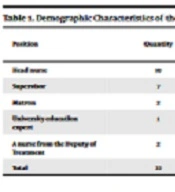
A total of 22 nurse managers participated in the study, comprising 12 female and 10 male managers, with an average age of 37.2 ± 0.9 years and an average work experience of 13 ± 0.9 years (Table 1).
Table 1.
Demographic Characteristics of the Participants
| Position | Quantity | Age | Years of Experience | Gender | Marital Status | Educational Level | |||||
|---|---|---|---|---|---|---|---|---|---|---|---|
| Female | Male | Single | Married | Other | Bachelor | Master | PhD | ||||
| Head nurse | 10 | 35 ± 1.2 | 10 ± 2 | 5 | 5 | 3 | 7 | - | 3 | 5 | 2 |
| Supervisor | 7 | 42 ± 3.0 | 16 ± 5.0 | 3 | 4 | 2 | 5 | - | 2 | 4 | 1 |
| Matron | 2 | 40 ± 1.2 | 6.0 ± 17 | 1 | 1 | - | 2 | - | 1 | 1 | - |
| University education expert | 1 | 35 | 12 | 1 | - | 1 | - | - | - | 1 | - |
| A nurse from the Deputy of Treatment | 2 | 34 ± 3.0 | 5.0 ± 10 | 2 | - | 1 | 1 | - | - | 2 | - |
| Total | 22 | 37.2 ± 0.9 | 13 ± 0.9 | 11 | 10 | 6 | 15 | - | 6 | 12 | 3 |
Upon analyzing the data, a total of 316 primary codes were extracted and categorized into 6 main categories and 16 subcategories (Table 2). The main categories identified in this study were human resource management, management of personal protective equipment (PPE) use, patient management, management of patients' families, disease management in the community, and virtual education and research monitoring. These categories are described in detail below.
Table 2.
Categories and Subcategories Obtained from Interview Analysis
| Categories | Subcategories |
|---|---|
| Talent dynamics: Strategies for effective workforce management | Health management of employees during the shifts |
| Managing personnel's mental health | |
| Supporting personnel's families | |
| Managing COVID-19–infected personnel | |
| Help from volunteers | |
| Ensuring safety: Effective practices for PPE management | The optimal method of PPE usage |
| The challenge of the PPE shortage | |
| Patient-centered excellence: Optimizing care delivery strategies | Challenging triage of patients |
| Continued care at home | |
| Empowering family engagement: Enhancing support in health care | Family relationship management |
| Sympathy in mourning | |
| Building resilient communities: Effective risk communication management in the society | Controlling the spread of the disease |
| Rumor management | |
| Addressing social exclusion | |
| Unveiling the digital realm: Exploring virtual experiences | Adherence to ethics in cyberspace |
| Management of cyberspace |
Abbreviation: PPE, personal protective equipment.
4.1. Talent Dynamics: Strategies for Effective Workforce Management
The care of individuals affected by COVID-19 is crucial, and nurses bear the primary responsibility for providing this care within hospitals. COVID-19 patients require specialized care, leading to an increased workload for nurses. The prolonged duration of the pandemic has resulted in chronic and extreme fatigue among nurses. Furthermore, nurses face psychological challenges, such as being separated from their families, experiencing stress, and encountering job-related stress. Human resource management is one of the main categories addressed in this study, which can be summarized into 2 subcategories described below.
4.1.1. Health Management of Employees During Shifts
According to the insights shared by the participating managers, the rates of resignation, absences, and emotional distress among staff have reached their peak. Many nurses have attempted to minimize the risk of transmitting the disease to their families by taking on extended shifts and staying in the hospital for prolonged periods. This has resulted in extended stays at the hospital, increased workload, and psychological burdens for the nurses. Additionally, due to the fear of contracting the illness and the use of PPE, employees tend to neglect rest breaks, fluid intake, and their physiological needs during their shifts, which endangers their health. One possible solution to address this challenge is to encourage short breaks between work shifts and provide balanced meals and beverages. It is important to consider designated break hours and ensure that employees have access to facilities for maintaining their health. As one of the managers said, "We provided the staff with packs containing juice and food. Rest hours were designated for them, and they were required to take breaks. Weakness and fatigue can compromise the immune system and lead to infections" (P2).
4.1.2. Managing Personnel's Mental Health
The physical and mental well-being of nurses is at risk during the COVID-19 pandemic due to factors such as separation from their families, consecutive shifts, limited time off, frequent exposure to patient deaths, and associated distress. Based on the lessons learned from participating managers, the following strategies were found effective in improving the employees' overall condition: Strengthening spiritual health, fostering a supportive team culture, maintaining professional attitudes, conducting screenings and assessments of mental health, implementing positive screening interventions, periodically modifying working conditions, providing opportunities for taking leave, and recognizing employees' performance. One manager shared the following insight:
We made a note of staff birthdays. The nursing office would buy a cake for their birthdays, and the head nurse and the assistant head nurse would visit to celebrate. We would arrange their shifts on their birthdays or call them in due to a shortage of human resources. These surprises and birthday celebrations brought them some joy. (P4)
Another solution mentioned by managers was the availability of counseling services: "Personnel has access to psychological counseling services. Dedicated hours are allocated for booking counseling sessions" (P9).
4.1.3. Supporting Personnel's Families
The concern of infecting family members, such as parents, spouses, or children, and the guilt associated with potentially transmitting the disease from the hospital to their families pose significant challenges for nurses. The prolonged periods of separation from their families and children have placed a heavy psychological burden on both the families and the healthcare team. Providing opportunities for personal time with family members and considering incentives for being at home are some of the approaches mentioned in this context. As shared by one of the managers:
At the beginning of the pandemic, we allocated a portion of the workforce for rest periods. For example, they would work for 15 days of the month to complete their shifts, followed by a PCR test. If the test result was negative, they could return home to their families. They would visit their families during this time. They felt relieved knowing that the virus wouldn't enter their homes from the hospital. (P10)
4.1.4. Managing COVID-19–Infected Personnel
Nurses who contract COVID-19 should take at least a 2-week break from work for rest and recovery. This reduction in human resources poses challenges for managing patient care, as many affected employees request accommodation and convalescent leave during their illness. Welcoming these nurses back to work and effectively managing the remaining workforce are among the challenges that the managers have learned to address. According to a manager:
When they return to work, they are physically weak, and the illness has significantly affected their morale. We usually visit them on the ward to greet and support them. Previously, we would send a package of food and disinfectant to their home address via courier, which was greatly appreciated. (P8)
4.1.5. Help from Volunteers
The participation of non-medical staff, known as health jihadists, has provided invaluable support to the healthcare team during the COVID-19 pandemic. These individuals have assisted in breathing exercises, feeding patients, helping them get out of bed, and supporting them with personal tasks in COVID-19 wards. Arranging the shift schedules of health jihadists has been identified as a beneficial practice within human resource management, as stated by a head nurse:
We maintain a list with names and contact numbers. We usually call them the day before. Most of them cooperate exceptionally well, and, God willing, they provide significant assistance in relieving the workload of nurses and paramedics, especially for disabled patients who have no companions. They have significantly reduced the workload. (P3)
4.2. Ensuring Safety: Effective Practices for PPE Management
The use of PPE is a crucial measure for protecting against COVID-19. Based on the managers' experiences, the inadequate supply of PPE, substandard quality of available equipment, insufficient guidance on proper usage, and discriminatory distribution of equipment are significant issues in the care of COVID-19 patients. In addressing these challenges, training plays a pivotal role in optimizing the use of PPE.
4.2.1. The Optimal Method of PPE Usage
A comprehensive personal protection program must include training for staff to effectively use PPE. As per the insights provided by managers, it is essential for all healthcare teams to receive training on the proper usage of PPE. The training program should cover fundamental aspects, such as the appropriate timing of use, the correct type of equipment, proper donning and doffing procedures, limitations, useful lifespan, and proper disposal of PPE. A head nurse shared their experience:
We used to wear coveralls for every task. It was very difficult. We couldn't perform tasks comfortably while wearing them. The staff even avoided going to the bathroom until the end of the shift. Then, a doctor suggested that we don't need to wear coveralls and just use gowns. It was a significant improvement. We performed the necessary tasks and then removed the gowns. (P2)
4.2.2. The Challenge of the PPE Shortage
Despite the hospital managers' efforts to provide adequate PPE for the healthcare team, shortages of essential items, such as masks, face shields, gowns, space suits, gloves, and disinfectants, persist during the COVID-19 pandemic. This challenge was particularly prominent at the beginning of the pandemic when the use of PPE was fragmented and not well-integrated. Coping with this challenge has been a valuable lesson learned. Measures such as ensuring the timely provision of equipment, making equipment readily available in the emergency room and specialized wards, and addressing personal usage of PPE have been implemented. One manager expressed, "We allocated specific devices for personal use in each ward. We also increased supervision in this area to ensure compliance" (P4).
4.3. Patient-Centered Excellence: Optimizing Care Delivery Strategies
The objective of patient care management is to ensure the provision of medical care to patients. Given the contagious nature of the disease, patient care requires specific considerations. The scarcity of hospital beds and equipment necessitates effective management by skilled managers. Within the realm of patient management, 2 subcategories are identified: Patient triage and continued care at home.
4.3.1. Challenging Triage of Patients
Accurate and well-organized triage in COVID-19 plays a critical role in efficiently managing the influx of patients to the triage unit due to the high prevalence of the disease. Overcrowding in the triage unit can lead to confusion, chaos, and increased risks of transmission and contamination for both patients and staff. Additionally, uncertainty about safety and fear of the disease can contribute to anxiety and confusion among patients and staff in the triage unit.
Based on the insights gained by managers, several methods have proven effective in triage management. These include creating a separate corridor for triage and a dedicated waiting room for patients, clearly marking the transfer route of suspected patients from the triage unit to isolated rooms, utilizing telephone triage and face-to-face visits when necessary, implementing telephone screenings or telemedicine consultations, and directing patients to COVID-19 medical centers. A nurse manager stated, "We have a system called the nurse's voice, where nursing professors answer questions. Patients can describe their symptoms, and if necessary, they are guided to visit the hospital. This helps prevent unnecessary visits and reduces our workload" (P21).
4.3.2. Continued Care at Home
Continuity of patient care at home serves as a cost-effective alternative to hospitalization and facilitates the seamless continuation of care. Early discharge provides greater comfort and convenience to patients, reduces hospital costs, increases bed turnover, and shortens waiting lists when patients no longer require respiratory monitoring. The participants identified various lessons regarding the provision of continued care at home. These included using the services of nursing homes, administering medication and injections at home, providing telephone counseling, offering virtual medical services, and facilitating the sharing of patients' experiences through online platforms. A manager stated, "There are institutions that provide home care services, such as medication administration and home-based oxygen therapy. We provide a list of reliable and trusted providers to patients, so they can continue receiving care at home" (P18).
4.4. Empowering Family Engagement: Enhancing Support in Health Care
During the COVID-19 crisis, families have been confronted with the harsh reality of uncertain outcomes and the potential loss of their loved ones. Some families struggle to adapt to these circumstances, experiencing psychological distress and emotional crises. In the midst of focusing on patient care, the feelings and needs of the families can unintentionally be overlooked. It is crucial to identify and promptly respond to the needs of families, as this reduces the negative impact of stress on the family and minimizes its effects on the healthcare team. Within this category, 2 subcategories were addressed: Family relationship management and sympathy in mourning.
4.4.1. Family Relationship Management
Due to the contagious nature of the disease and the risk of transmission to other family members, patient visits should be limited. The time spent with patients should be minimized, and clear instructions on the use of PPE should be provided to the patient's companions. Video calls can serve as a viable alternative to face-to-face meetings. One of the participants stated:
We distributed tablets in the wards to facilitate video communication between patients and their families who did not have access to mobile phones or proper facilities. This enabled them to connect with their families without the need for in-person visits. (P1)
4.4.2. Sympathy in Mourning
The process of grieving and finding closure after the loss of a loved one typically involves mourning rituals, such as viewing the deceased, attending funerals, and engaging in cultural and belief-based customs. However, the experience of grief and loss during the COVID-19 pandemic has presented unique challenges, altering the way mourning is conducted. Burials have become different and emotionally distressing, and the absence of physical support and compassion exacerbates the unresolved grief, potentially impacting the individual's physical and mental well-being. In such situations, bereavement support groups can play a crucial role in facilitating the natural process of grieving and healing. A manager shared their experience:
Our School of Nursing has implemented a program called sympathy in mourning, which provides excellent support. We reach out to individuals who have lost their families due to COVID-19 and offer valuable consultations to assist them through their grieving process. (P11)
4.5. Building Resilient Communities: Effective Risk Communication Management in the Society
The role of the community in disease transmission or prevention is undeniable. Effective communication plays a crucial role in pandemic management. Crisis communication should be honest and timely and provide appropriate information tailored to different groups, as ethical and timely communication is vital in managing a pandemic. When crisis communication is delayed, public trust may waver, leading to ineffective policies. Denial of the disease, claims of control, and normalization of the crisis create an environment prone to misinformation and distrust. Normalization can lead to negligence, while the lack of accurate information fuels rumors and fosters fear and stigma. The following subcategories address disease management in the community.
4.5.1. Controlling the Spread of the Disease
The findings indicate that the main source of disease transmission lies outside the health care team, within the community, and in its surroundings. Failure to adhere to health protocols and disregarding prevention measures, coupled with unrealistic expectations from the healthcare staff to swiftly overcome the COVID-19 pandemic, were among the mentioned challenges. Educating the public about COVID-19 prevention protocols and disease control through various channels, such as media, schools, and society, is a social approach to disease control. A manager expressed their perspective:
As the second level of care, our role comes into play when affected patients reach us. Ideally, the disease should be prevented even before it occurs. Level 1 prevention involves wearing masks and following protocols, which can be taught through media, schools, society, and any informative means. (P21)
4.5.2. Rumor Management
During the COVID-19 pandemic crisis, misinformation circulating within the community and virtual networks has led to the creation of significant rumors, sometimes overshadowing accurate and scientific news and hindering disease management efforts. False claims about the effectiveness of certain traditional remedies, rumors regarding vaccines, misconceptions about children's susceptibility to COVID-19, or notions of the disease disappearing with the arrival of hot weather are all examples of false news and rumors. Based on the lessons learned by managers, the best approach to dealing with rumors and false information is to provide clear and accurate information through the media while actively monitoring the spread of information. Scientific sources, such as the Ministry of Health or WHO, can be recommended to ensure the public receives reliable information. Drawing from a manager's experience:
When a glass is filled with water, there is no space left for anything else. By filling people's minds with accurate information and guiding their thoughts, we can prevent rumors and misinformation from taking hold. To some extent, we are responsible for this negligence. (P7)
4.5.3. Addressing Social Exclusion
Participants' experiences revealed that healthcare staff were initially praised as health heroes at the beginning of the epidemic. However, as time passed, this positive perception was replaced by stigma and social exclusion, which was an unpleasant experience. Despite society's initial respect for the sacrifices made by nurses and the heroic recognition they received, particularly through social media, they also faced stigmatization. People sometimes avoided approaching or assisting healthcare workers due to fears of contracting the virus. Many participants shared their experiences of acquaintances avoiding them under the pretense of being part of the healthcare team. Suggested solutions in this area included promoting acceptance within the healthcare team and providing informative content through television networks. Reflecting on the shared experience of a manager: "It's inevitable. People are afraid for their own health and the health of their loved ones. Although it may be frustrating, it is understandable. The best approach is not to take it personally" (P20).
4.6. Unveiling the Digital Realm: Exploring Virtual Experiences
To ensure uninterrupted education and research during the period of social distancing and maintain the predetermined schedules of educational and research programs, various solutions have been presented, including the adoption of virtual platforms. Virtual education and research have entered a new phase during the pandemic, with increased emphasis on their importance. Education stakeholders have recognized the necessity of distance education and e-learning. Integrating technology into education is no longer a choice but a requirement, demanding flexibility, creativity, and innovation. This section encompasses 2 subcategories: Adherence to ethics and cyberspace management.
4.6.1. Adherence to Ethics in Cyberspace
In the virtual realm, people tend to employ less stringent moral standards compared to the real world. Virtual spaces offer a higher potential for individuals to assume false identities, greater temporal and spatial distances in communication, and a dominant sense of anonymity. Consequently, individuals may exhibit more permissive behavior in these spaces. Conversely, societal oversight and external judgment are virtually absent, resulting in diminished moral constraints. Managers have suggested monitoring virtual groups and ensuring the disclosure of identities through video in online classes, as well as implementing individualized and confidential passwords for each participant.
"False information may be disseminated in cyberspace under someone's name. Assigning individual accounts can help minimize the risk of misuse, as individuals are responsible for safeguarding their own accounts" (P16).
4.6.2. Management of Cyberspace
The rapid transition from traditional to virtual education during the COVID-19 pandemic initially encountered challenges due to inadequate infrastructure. The incorporation of virtual learning tools, such as the Navid system, Skyroom, Adobe Connect, and other virtual learning platforms, faced obstacles that impeded the learning process. Challenges included limited access to hardware and equipment for virtual education and research, insufficient computer skills and software literacy among participants, inadequate training for instructors and learners, limited interaction between instructors and learners, and unfamiliarity with completing online questionnaires. Managers' experiences highlight the need to develop the necessary infrastructure, improve nationwide internet connectivity and speed, and produce interactive software. Additionally, incorporating various tools, such as chat rooms, discussion groups, and online bulletin boards, is essential for fostering interactions in virtual education. A manager shared their experience: "The internet connection is frequently disrupted, and messages get interrupted. It would be beneficial to consider internet packages specifically for these classes or provide conditions where participants can utilize the hospital's internet" (P15).
4.6.3. Another Manager Emphasized the Importance of Interaction
Many times, participants may not actively engage in the class even though they are present. Interaction is key. Randomly posing questions to individuals during the class ensures they listen to the topics and actively participate. It makes the virtual classroom feel more authentic. (P8)
5. Discussion
In this study, after investigating the opinions and experiences of clinical nurse managers, 6 categories were obtained, including (1) talent dynamics: Strategies for effective workforce management, (2) ensuring safety: Effective practices for PPE management, (3) patient-centered excellence: Optimizing care delivery strategies, (4) empowering family engagement: Enhancing support in health care, (5) building resilient communities: Effective, risk communication management in the society, and (6) unveiling the digital realm: Exploring virtual experiences.
This study aimed to evaluate the experiences and lessons learned by nurse managers from the COVID-19 pandemic based on 3 main categories. According to the main category of talent dynamics: Strategies for effective workforce management, the human resource shortage was one of the problems and challenges of managers, which has become more apparent. According to other studies during the pandemic, shortages of skilled and experienced nurses, unconventional work schedules, involuntary transfers, inadequate organizational support, quality of rest time, conflicting rules and information, and insufficient coronavirus-specific training were the main problems (12, 13).
Employee health management during the shift was another subcategory of human resource management. Consecutive and intensive shifts of employees and the risk of threatening the health of employees during the shift are the most important findings of this subcategory. Another study showed that nurses neglected to meet their basic needs while on duty, including eating, using the bathroom, and changing clothes due to lack of time, which overshadowed their health (13). Supporting employees infected with COVID-19 was another important consideration. Sometimes the continuation of the disease and the related stress was the cause of psychological damage in employees who needed support. Many healthcare providers engage in high-risk behaviors such as alcohol and drug use to heal and alleviate these side effects without proper support. Studies also showed an increase in such high-risk behaviors among health workers (14).
Supporting nurses' families is also a major challenge mentioned in the findings. Many employees are afraid of losing their family members, and some have even lost a family member (15). In addition, treatment staff face the problem of caring for children and other family members with increasing working hours and hospitalization and closure of infant and child care centers (16).
Paying attention to the mental health of employees is another important lesson mentioned by managers. Other studies have pointed to mental health threats, in addition to fear of death and high risk of infection, high work pressure, negative emotions and fatigue, and lack of contact with family (17). Lee et al. also reported employees' feelings of interpersonal isolation and fear of transmitting the virus to their relatives. The use of personal equipment also created high stress among employees (18). Mental health consequences are more prevalent than viral epidemics and have more lasting complications (19). Lack of mental health services or increased stress may lead to increased suicide attempts, domestic violence, and feelings of anxiety (20). Mental health support for vulnerable people should continue even up to 6 months after quarantine (21).
Ensuring safety: Effective practices for PPE management was another main category. The most important way to protect employees against infection is to use PPE. Given the sanctions, Iran is at war with the crisis of medical equipment shortages (22, 23). In addition, the lack of resources (especially the lack of beds in special wards, essential medicines, and ventilators) has put the treatment staff in a situation where they could not provide adequate treatment for all patients (24).
Patient-centered excellence: Optimizing care delivery strategies was another category derived from the analysis of managers' experiences. Western Hospital has taken such a set of measures to achieve zero contamination among the staff of such healthcare facilities in patient management (25). Initially, an online clinic was set up to facilitate patient triage, and non-emergency patients were advised to delay their hospital appointments. Dead patients' families were suggested to hold virtual mourning and funerary rituals instead of traditional ones because it was possible to share audio, text, photos, and videos in cyberspace, and this type of mourning can be observed and analyzed beyond geographical borders (26).
The most effective prevention and control measures were to find suspicious patients and close contact, confirm patients and carriers of the virus, and block transmission through isolation, disinfection, and personal protection in managing disease in the community. Therefore, early diagnosis, isolation, and treatment of patients were the main measures to control the source of infection and reduce the rate of infection. It was also essential to prevent nosocomial infections by strengthening the management of medical staff and patients. Health education in the field of disease prevention and control was also critical (27).
. Building Resilient Communities: Effective Risk communication management in society was one of the main categories extracted from analyzing the experiences of nurse managers. Controlling the rumors and false news were subcategories of this main category. Munawar and Choudhry stated that exposure to news and social media, which sometimes disseminated false news and information, was one of the stressors in Pakistan (28). Procrastination in the rapid presentation of statistics to the public is a factor in increasing concerns in society and the production of pseudo-information and counter-information in society (29). Social exclusion is another subcategory that was created in data analysis. Avoiding stigma is crucial during COVID-19 because it causes people to hide their illness or not seek treatment (30).
Although the public health system may be directly affected by the consequences of a catastrophe or disaster, it is expected to have the capacity to respond to the sudden increase in demand associated with the crisis and be a social infrastructure for accountability at the forefront of life preservation (5, 31). Efforts to maintain access to preventive health services in pandemics and key preparedness measures (including identifying appropriate managers, planning and training health workers, and preparing health care systems at various levels of society) are essential to reduce the adverse health effects of pandemics (32, 33).
A limitation of this study was its small sample size and the fact that it was limited to hospitals affiliated with Tehran University of Medical Sciences. Valuable experiences of other managers can be obtained with the aim of being able to further generalize the data with further research in other treatment environments. Another limitation of the study was the COVID-19 peak and the high workload of healthcare workers, which delayed interviews.
5.1. Conclusions
The incidence of newly emerging and re-emerging infectious diseases is increasing worldwide due to various factors, such as changing global trade patterns, evolving social norms (e.g., same-sex marriage), advancements in treatment methods (e.g., organ transplants), and the rise in conflicts and migration. It is predictable that such diseases will continue to occur in the coming years. Therefore, it is crucial for governments, especially health systems, to be well-prepared to provide appropriate and quality healthcare services in response to these conditions. One practical approach to preparing for unknown circumstances, such as a pandemic, is to use previously recorded experiences and lessons learned. The lessons gleaned from managing the COVID-19 pandemic, particularly in the nursing field, can serve as a roadmap for developing policies, programs, and guidelines.
Undoubtedly, nurses play a significant role in managing the risks associated with accidents and disasters. Based on their skills and international guidelines, it is necessary to initiate necessary measures and interventions, even before accidents occur, to effectively respond to various types of disasters. This may involve compiling guidelines and regulations, formulating preparation and manpower supply plans, and planning for triage and logistics. The findings of this research can inform decision-makers in these areas. The insights gained from the experiences of clinical nurse managers, as extracted in this study, can serve as a foundation for decision-makers and nursing policymakers in planning, preparing, and empowering nurses for similar incidents and disasters in the future.
For future research, it is recommended to conduct mixed-method studies with the aim of designing practical and appropriate guidelines to address challenges arising from emerging infectious diseases like COVID-19. Such research would not only expand knowledge but also explore and validate its application at the bedside.