


1. Background
High risk behaviors such as smoking, alcohol consumption, anti-social behaviors, drug abuse, and unprotected sexual intercourse are linked with increased risks of morbidity and premature death (1). Familial and social conflicts can result in crises for the youth at the decision-making level (2). As a large part of the young population, university students enter a new period of life when they start the tertiary education independently from parents. They experience a new environment at the university, which can potentially expose them to an unhealthy lifestyle (3, 4).
Worldwide, some studies zooming on high-risk behaviors such as inactivity, eating disorders, car accidents, smoking, alcohol and drug use, and violence among students have revealed instances of unhealthy lifestyle among university students (5).
Violence resulting from high risk behaviors such as illicit drug and alcohol abuse has been emphasized as a major challenge for health systems (5).
Studies in neighboring countries such as Turkey and Syria show an increasing rate of cigarette smoking among adolescents and the youth (2). In addition, in one study in Indian medical students, the prevalence of overweight and obesity together was 13.2% (6). A number of studies conducted in the Iranian context report that personality factors such as impulsivity, sensation seeking, and hopelessness are significantly conducive to tendency towards smoking (7). A study in one Iranian university indicates that intentional injury was higher in male than female students (8).
The findings of another study on the prevalence of high-risk behaviors among students at the University of Medical Sciences in Iran showed that the use of illegal drugs and pre-marital sex among students were relatively common with a significant difference between women and men (9).
In a further study in Iran, the prevalence of smoking among university students was low (10). Another study showed relatively low rates of illicit drug and alcohol use in medical science students in Iran (11).
While nearly 40% of the Iranian population are young, there is little information on the prevalence of high-risk behaviors among the Iranian youth (2), especially among college students as a result of religious and legal limitations related to these risky behaviors in Iran (9). Sufficient to-date studies need to be conducted to help authorities plan for effective preventive strategies. In this study, we aim to investigate the prevalence of high-risk behaviors in a group of medical students.
2. Methods
2.1. Sample and Setting
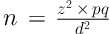
This cross-sectional study was conducted from September 2015 to October 2016. A total of 300 medical students studying in one of the largest medical universities in Tehran, Iran, at different levels of their education (basic science, externship and internship) were recruited via the convenience sampling method. Numbers of completed and returned questionnaires were considered as the response rate (91.7%). We considered type one error 0.05 with a precision of about 0.06 to detect the frequency of high risk behaviors among medical students. The sample size was calculated as approximately 300 subjects according to the prevalence of 0.2 (Equation 1).
The inclusion criterion comprised of studying in the medical university during the study period at any level from basic science to internships.
The purposes of the study were explained to educational officials of the medical school. Afterwards, the permission to distribute the questionnaires among medical students was issued. Before final exams, explanations were presented to the students about the aims of the study and completion of ethical consent form. Given the proportion of students in each level, 300 questionnaires (80 basic sciences, 100 externships, and 120 internships) were distributed among them. Some required 15 minutes to complete the questionnaire and they were requested to put the completed questionnaires in a special box. A Code of Ethics was taken from the Ethics Committee of Iran University of Medical Sciences (ethics code: IR.IUMS.REC.1396.1735).
2.2. Measures and Variables
Our questionnaire was based on the youth risk behaviors surveillance system (YRBSS) whose validity and reliability were confirmed by Baheiraei et al., in Persian (12). YRBSS is developed by the Centers for Disease Control and Prevention (CDC) to monitor health risk behaviors among the youth in the United States (8). The Persian version of this questionnaire (PYRBS) consists of 89 items. We used a self-administered questionnaire that included demographic information and questions on eight main risk domains (i.e., safety, violence, depressed mood, physical activity, nutrition, smoking, alcohol consumption, and substance use).
Safety domain involved two questions mainly regarding the risk of unintentional injuries and motor vehicle accidents. Drinking alcohol before driving a car and riding in a car driven by someone who drank alcohol in the last 30 days were asked to assess safety.
The questions in the violence domain mostly asked about the history of being involved in physical violence during the past 12 months. Questions were also asked with regards to usage of cold weapons and injury requiring medical attention in the last 30 days.
The depressed mood domain consisted of items regarding the presence of a depressed mood that interfered with routine activities for a minimum of 2 weeks. Serious decision to commit suicide or suicidal attempts in the last 12 months was also covered.
The physical activity domain involved the frequency and intensity of physical activity during the past 7 days and the average daily time spent watching TV during the academic year.
The questions in the nutritional domain covered the students' self-body image and using some kind of weight reduction method in the past 30 days such as exercising, reducing food intake, taking weight loss pills or powders, and also some extreme measures such as fasting for at least 24 consecutive hours, laxative use, or intentional gag reflex triggering and consequent vomiting. The measure of height and weight was self-administered. The formula for calculating BMI was equal to the weight (kilogram) divided by height (meter) to the power of two.
The other domains enquired about daily smoking for at least 30 consecutive days in their life, attempting to quit smoking in the last 12 months, consuming alcohol at least once in their lifetime, drinking in the last 30 days, and using different kind of illicit drugs.
2.3. Statistical Analysis
Percent and frequency distribution tables were used to report categorical variables. Besides, mean and standard deviation were employed to report numeric variables. Chi-square test was applied in order to compare the frequency of qualitative variables between groups. Means of quantitative variables across different groups were compared using independent samples t-test and analysis of variance (ANOVA). The level of statistical significance was considered at 0.05. Data was analyzed using IBM SPSS software version 19.
3. Results
3.1. Participants
A total of 275 questionnaires were returned (response rate: 91.7). Mean age of the respondents was 23.7 ± 4.3 years. Demographic characteristics of the participants are shown in Table 1.
Table 1.Characteristics of the Participants
| Variable | No. (%) |
|---|---|
| Gender | |
| Male | 152 (55.3) |
| Female | 123 (44.7) |
| Marital status | |
| Single | 234 (85.1) |
| Married | 41 (14.9) |
| Educational level | |
| Basic science (years 0 - 2.5) | 80 (29.1) |
| Externship (years 4 - 6) | 100 (36.4) |
| Internship (years 6 - 7.5) | 95 (34.5) |
| Place of residence | |
| Students dormitory | 120 (43.6) |
| Other | 155 (56.4) |
3.2. Risk Domains
3.2.1. Safety
With regards to the question about wearing a helmet during cycling in the past 12 months, 209 (76%) of the students declared that they had not ridden a bike in that period (76.3% of the males vs. 75.6% of the females). From those 66 participants who had ridden a bike in the past 12 months, 84.8% had never used a helmet and no one reported perpetual helmet use with no significant difference between male and female students (P-value: 0.7). Only 38.5% of the respondents reported that they fastened seatbelts when riding in a car whereas 14.9% rarely or never did so.
Drinking alcohol before driving a car during the past 30 days was never performed by 262 (95.3%) participants, although 13 reported at least one episode of drinking before driving. The difference between the sexes in this regard did not reach the level of statistical significance (P-value: 0.055).
Riding in a car driven by someone that drank alcohol during the last 30 days was reported by 21 students (7.6%) and for 8 of them, this happened more than once.
3.2.2. Violence
Only 2 students (0.7%, 1 male and 1 female) reported using a cold weapon during the last 30 days (both more than 5 occasions) and 34 (12.4%) claimed they had been involved in a physical fight during the previous year (15.8% of males vs. 8.1% of females; P-value: 0.055). The severity of the consequent injuries in 2 of the respondents required medical attention at least in one occasion. Marital status did not show a significant association with history of being involved in such conflicts (12.8% of singles vs. 9.7% of married subjects; P-value: 0.58).
3.2.3. Depressed Mood
A total of 72 students (26.2%) reported feeling severely sad or hopeless for at least 2 weeks during the previous year, 15 (5.5%) claimed they had made a serious decision about ending their life, 10 had actually tried to commit suicide (4 of them more than once), where medical attention was needed for 2 persons. No significant difference was found between the sexes or single and married participants in these regards.
3.2.4. Smoking, Alcohol Consumption and Drug Use
Prevalence of risk behaviors regarding smoking, alcohol consumption, and illicit drug use in all participants and in each sex are shown and compared in Table 2.
Table 2.Prevalence of Risk Behaviors Regarding Smoking, Alcohol Consumption, and Illicit Drug Use Among All Participants and in Each Sex
| Risk Behavior | Total, No. (%) | Male, No. (%) | Female, No. (%) | P-Value |
|---|---|---|---|---|
| Ever smoked a cigarette | 92 (33.4) | 74 (48.7) | 18 (14.6) | 0.0001 |
| History of daily smoking for 30 consecutive days in lifetime | 28 (10.2) | 24 (15.8) | 4 (3.3) | 0.001 |
| Smoked daily during the past 30 days | 9 (3.3) | 9 (5.9) | 0 | 0.006 |
| Ever drank alcohol | 74 (26.9) | 58 (38.2) | 16 (13) | 0.0001 |
| Drank alcohol during the past 30 days | 29 (10.5) | 22 (14.5) | 7 (5.7) | 0.02 |
| Ever used marijuana | 16 (5.8) | 14 (9.2) | 2 (1.6) | 0.008 |
| Ever used heroin | 3 (1.1) | 0 | 3 (2.4) | 0.08 |
| Ever used methamphetamines | 8 (2.9) | 5 (3.3) | 3 (2.4) | 0.73 |
| Ever used ecstasy | 2 (0.7) | 1 (0. 65) | 1 (0.8) | 1 |
| Ever injected any kind of illicit drug | 2 (0.7) | 2 (1.3) | 0 | 0.5 |
| Ever used any kind of illicit drug | 24 (8.7) | 18 (11.8) | 6 (4.9) | 0.053 |
Among the participants who had never smoked, 13% had never smoked an entire cigarette. Moreover, 12.5% of those who did were 12 years old or younger at the time of their first smoking experience. While smoking is not allowed on campus, 8.8% of the students mentioned smoking on campus during the last 30 days. Less than half of the smoking participants (40.4%) reported attempting to quit smoking during the previous year.
Among the students who mentioned drinking alcohol, 12.2% were 15 years old or younger at the time of their first drinking experience, while all of those reporting marijuana use were at least 17 or older at the time of their first consumption.
3.2.5. Nutrition
Mean body mass index (BMI) of the participants was 23 ± 3.4 kg/m2, ranging from 16.3 to 38.06 kg/m2, and the difference between male and female respondents (24.1 ± 3.3 versus 21.7 ± 3, respectively) was statistically significant (P = 0.0001).
A total of 67 students (24.4%) had BMIs greater than 25 kg/m2, while 7.6% were underweight with BMI values below 18.5 kg/m2. In regards to "self-body image", 2.9% of the participants considered themselves as extremely thin, 3.3% thought they were extremely obese, and 49.8% believed they had a normal body weight. Students' perceptions about their weight was completely in accordance with their actual BMI, where the mean BMI of the group that considered themselves extremely thin was 18.6 ± 1.6 vs. 30.3 ± 3.4 in those who considered themselves as extremely fat (P = 0.0001). However, when the analysis was performed for each sex separately, the concordance was weaker in girls since the mean BMI of the group who considered themselves as overweight was 24.3 ± 2.3, and those who thought that they were extremely obese had an average BMI of 29 ± 4.7 kg/m2.
Nearly half of the respondents (48.4%) mentioned using some kind of weight reduction method in the past 30 days including exercising, reducing food intake, use of weight loss pills or powders, and adoption of extreme measures such as fasting for at least 24 consecutive hours (2.9%), and laxative use or intentional gag reflex triggering and consequent vomiting (1.1%). The difference between the sexes in using any kind of weight reduction method or using each method separately was not significant (P = 0.39). Nine students (3.3%) reported not eating any fruit and 1.8% reported having no fruit or vegetable in their diet during the previous week; however, 21.1% mentioned having salad at least once a day during the same period.
3.2.6. Physical Activity
Over one-third of the respondents (37.8%) reported that they had less than 30 minutes of low intensity physical activity during the entire past week, whereas only 4% claimed they had more than 4 episodes of 20-minute or longer sessions of moderate intensity workout during the same period. No significant difference was observed in the physical activity levels of female and male respondents. Eventually, 37 students reported that they had spent at least 3 hours every day watching TV during the current educational year.
4. Discussion
In our study, physical inactivity, depressed mood, and being overweight and obese were the most common high-risk behaviors.
The result of this study showed that the most prevalent high-risk behavior was bike riding without helmet use (84.8%), followed by physical inactivity (37.8%), experience of depressed mood in the past year (26.2%), overweight or obesity (24.4.7%), physical violence (12.4%), smoking (10.5%), and substance abuse (8.7%). These findings suggest that medical students can be at risk of poor health-related outcomes.
In a Brazilian-based study conducted in 2014 on the prevalence of high-risk behaviors among university students, merely 3.3% had never used a helmet (5), while in our study, the rate was greater.
Physical inactivity and unhealthy diet affects ones health status and well-being (13). Planning in physical activity promotion has become important for prevention of non-communicable diseases in public health (14). In a study of Abolfotouh et al. (15), in Alexandria University in Egypt, the prevalence of physical inactivity was 33% and in another study, in the Iranian context, it was 15.3% (16). Our results showed higher prevalence rates, however, our study was also different from a study among students in Majmaah University, Kingdom of Saudi Arabia (17). In the latter study, 66.4% were inactive, which was more than our study. This might be due to sedentary life style in the Kingdom of Saudi Arabia (17). In addition, an Australian study, in the ≥ 18-year-old age group indicated that 66.9% had a sedentary life style or low physical activity level (18). In another study among German university students, 60% of the students did not have a sufficient exercise (19). The rates in these two studies were higher than that of our study. These differences are possibly due to the different definitions of physical activity and populations. Furthermore, the high prevalence of physical inactivity in medical students might be attributed to the time spent to study more than other students.
The prevalence of overweight and obesity has become epidemic in young adults (20). The highest increase of obesity in the US is in the 18 to 29 year old age group (20).
Besides, concerning the overweight and obesity domain, findings of the Brazilian study were similar to our findings in that BMI values in men were higher than in women (5). In this regard, the two studies in Iran and Egypt (15) were also similar. The results of a study in medical students of Pakistan showed that overall, 21% of medical students were overweight and obese, with men being more obese than women (21). Our findings were similar to those of the Pakistan-based study. This similarity may be attributable to epidemiological transition of diseases on the globe and the similar lifestyle in these areas. Moreover, in the German-based study, 95% of students did not have fruits and vegetables sufficiently (five servings daily) (19). This was very different from our study. The difference may be as a result of different definitions and categorizations of fruit and vegetable consumption.
With respect to physical violence, our rates were lower than those of Hajian's study (16) (12.4 vs. 33%), however, in the Brazilian context (5), the rate was substantially lower (1.9%). In our study, the difference between the 2 sexes concerning involvement in physical violence was not statistically significant. Hajian's study (16) showed a significant difference (men > women). In a study conducted in Sweden among medical students, depressed mood was 12.9%, which was approximately half of our result (22). The results of a meta-analysis on the prevalence of depression in medical students globally indicated that the prevalence of depressed mood and suicide was 28% and 5.8%, respectively (23). Our study had the same result. In a study among U.S. medical students, 10% of the students' experienced suicidal ideation during medical school while in our study, 5.5% had made a serious decision about suicide (24). This difference may be as a variance of cultural, ideological and religious beliefs between the two societies (25).
Concerning the cigarette smoking domain, our findings were different from those of the Egyptian (15) and Kyrgyzstani contexts (24). We had lower prevalence rates of cigarette smoking than these studies and the difference was more substantial in the Kyrgyzstan-based study (10.5 % vs 35%). In addition, there was a significant difference between sexes (men > women). This difference may be attributed to the high prevalence of tobacco smoking among the general population and possibly among the medical students in Kyrgyzstan (24). Also, in the German-based study, the prevalence of smoking was higher than our study (19). One study in medical students of Sudan showed that cigarette smoking was of a similar rate to that of our study (10%) (26). Besides, similar to our study, another study in Iran showed a low rate of smoking (10).
The Brazilian study (5) showed a significantly higher prevalence of alcohol consumption among the students than our study did, where men had a greater share than women (5). This may be due to the cultural differences in the two countries. In contrast, our study showed a significant difference in cigarette smoking between sexes (men more than women).
According to these results, we suggest that preventive education of health-risk behaviors be incorporated into the curriculum of medical sciences. In addition, some interventions such as group discussion sessions and programs for information transfer about behavioral changes can be effective. Provisions of facilities such as sport facilities and possibility to prepare healthy food are also suggested.
4.1. Limitations
The study was conducted in a single university and there were no causal associations because of the cross-sectional nature of the study. A further limitation lies with the underestimation of the real data due to the fact that high-risk behaviors have social stigma, particularly in medical students.
4.2. Conclusion
In this study, physical inactivity, overweight, and depressed mood were the most common findings. Smoking, alcohol consumption, and drug abuse were more prevalent among male students. Recognition of these risky behaviors may help develop strategies to prevent them and hence control non-communicable diseases in adults.


