
1. Introduction
Cerebral palsy (CP) is characterized by abnormal muscle tone, posture, and movement of the body, which develops due to the failure of the central nervous system. However, it is not identified to be the cause of a deteriorating brain ailment. The curse might arise throughout the different stages of development. The clinical features frequently include late motor improvement, the presence of abnormal reactions, and deficient development of protective responses (1).
CP patients may have several incapability, including compromised physical mechanism, limbs synchronization, position and stability inconsistency, difficulty in chewing, swallowing, and speaking, reduced logical ability, and inappropriate manners such as drooling (2).
Because of abnormal movement of the facial muscles, they have food retention in the oral cavity for a long time, imperfect self-cleansing mechanisms, and saliva incontinence; therefore, their oral hygiene is becoming undesirable (3).
Individuals with CP have a high susceptibility to dental caries, periodontal disease, temporomandibular joint disorders, enamel hypoplasia, and other abnormal oral disorders such as bruxism, malocclusion, tongue thrust, and drooling. Moreover, because of the atypical neuromuscular harmonization of the cheeks, lips, and tongue, the quality of oral care is reduced. The treatment procedure for CP is complicated, dividing into general and oral treatments, consisting of surgical interventions, physiotherapy, and behavior management (4).
The traumatic ulcerative granuloma is a rare circumstance identified to be a reactive wound of the oral mucosa, mostly the tongue. The ulcer generally arises on the under-trauma areas that are traumatized by teeth and denture (5).
In this report, we present a case of CP in a boy with multiple carious teeth and traumatic ulcerative granuloma of the tongue, for whom oral rehabilitation was carried out under general anesthesia.
2. Case Presentation
A 16-year-old-male with CP presented to the Oral Medicine Department of Dental School of Semnan University of Medical Sciences with the chief complaint of chronic traumatic ulceration of the oral cavity because of dental sharpness (Figures 1 and 2).
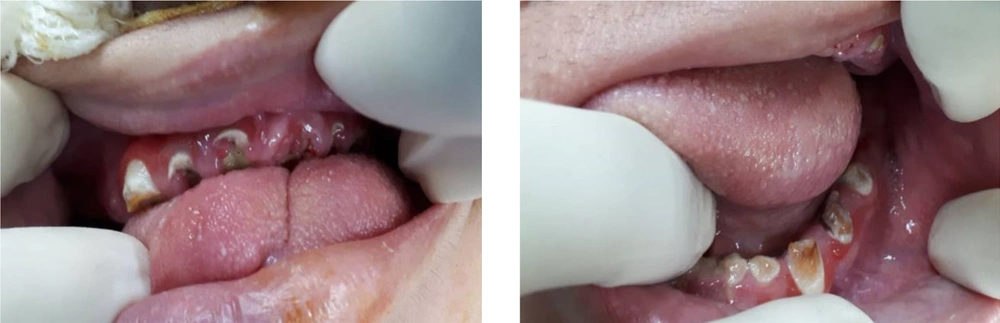
Figure 1.
A, Broken and B, sharpened teeth in the maxilla and mandible
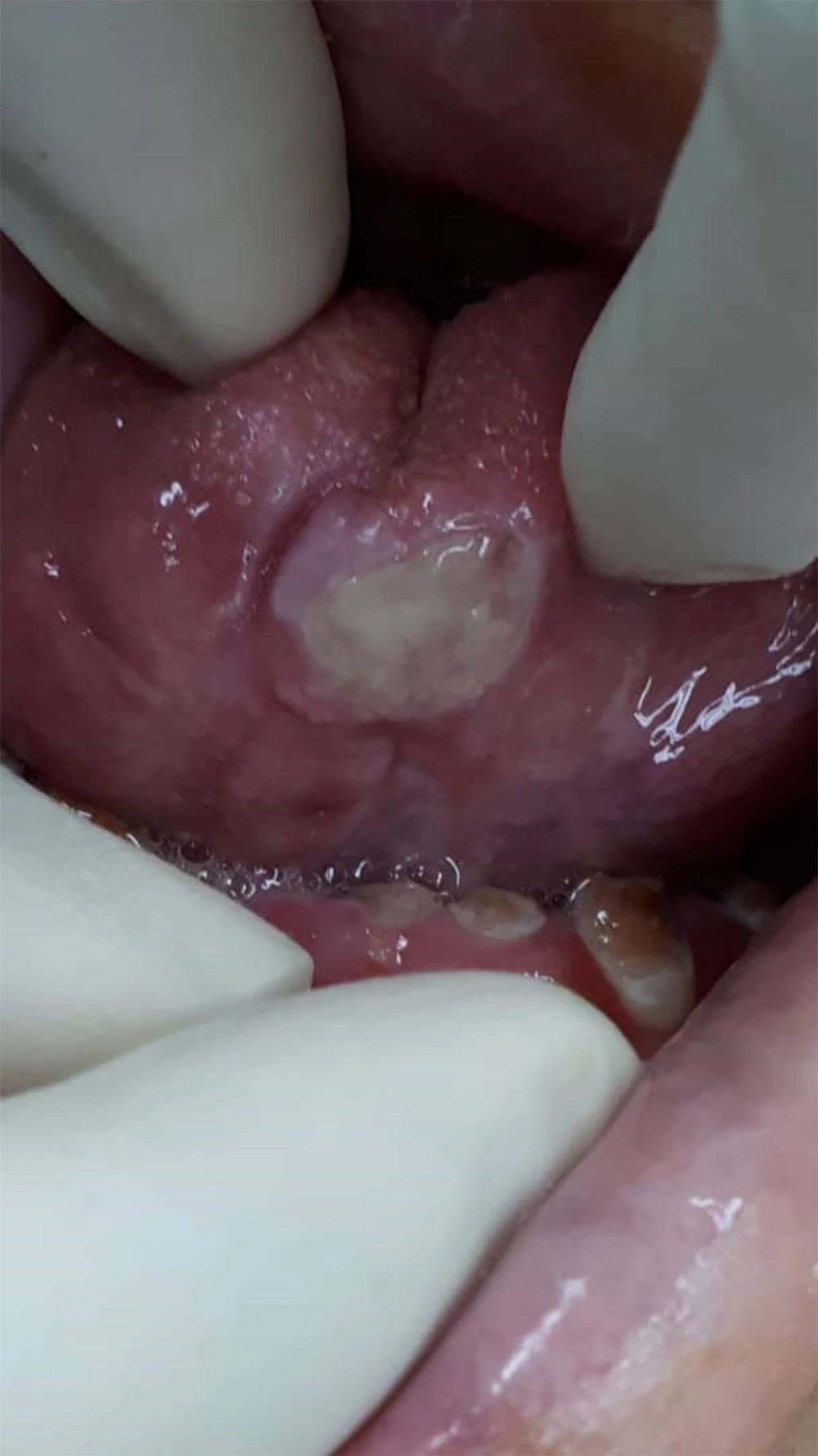
Figure 2.
Eosinophilic granuloma of the tongue
The patient was not capable of moving his limbs and he was using a wheelchair. The patient had ever been visited by any dentists. Because of the lack of his cooperation for intraoral examination and since he could not open his mouth properly, we decided to do the dental treatment under anesthesia. After obtaining his parents’ informed consent, consulting with an anesthesiologist to be assured about the health of his cardiovascular and respiratory systems, he was treated under anesthesia in the hospital setting.
The intraoral examination showed that all of his teeth had severe caries with almost lost crowns. The chronic traumatic ulceration of the tongue started approximately two months earlier due to the broken and sharpened teeth. Moreover, he had a horizontal incisor erupted toward his tongue with a sharp edge.
We started the extraction of the exposed roots of the mandibular teeth from the right to left side and then in the maxilla from the left to right side. The continuous sutures were held (Figures 3 and 4). We prescribed ampicillin and acetaminophen intravenously. After regaining full consciousness and liquid toleration, the patient was discharged from the hospital. Amoxicillin and acetaminophen syrups and chlorhexidine mouthwash were prescribed for one week.
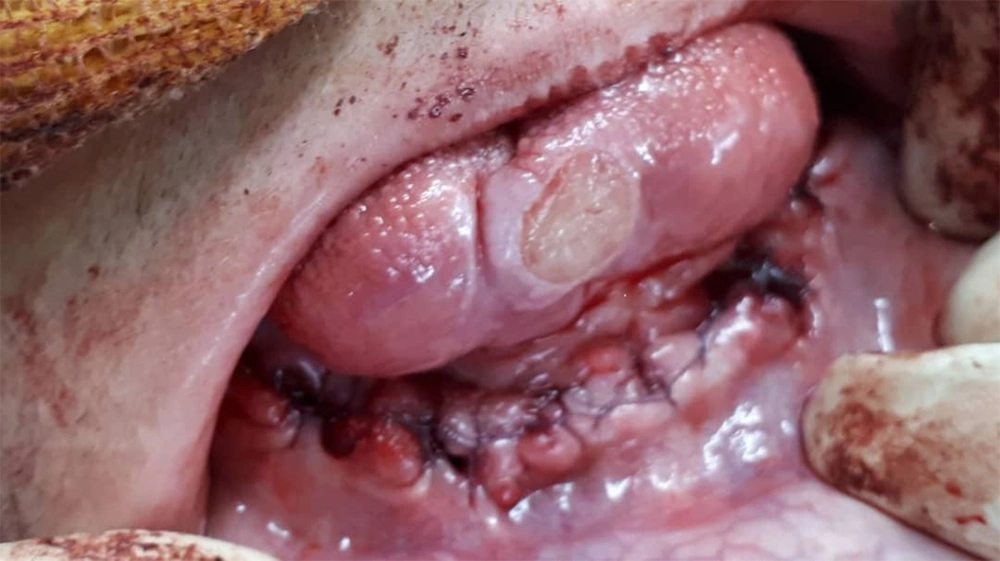
Figure 3.
Extracting the exposed roots of the mandibular teeth and applying continuous sutures
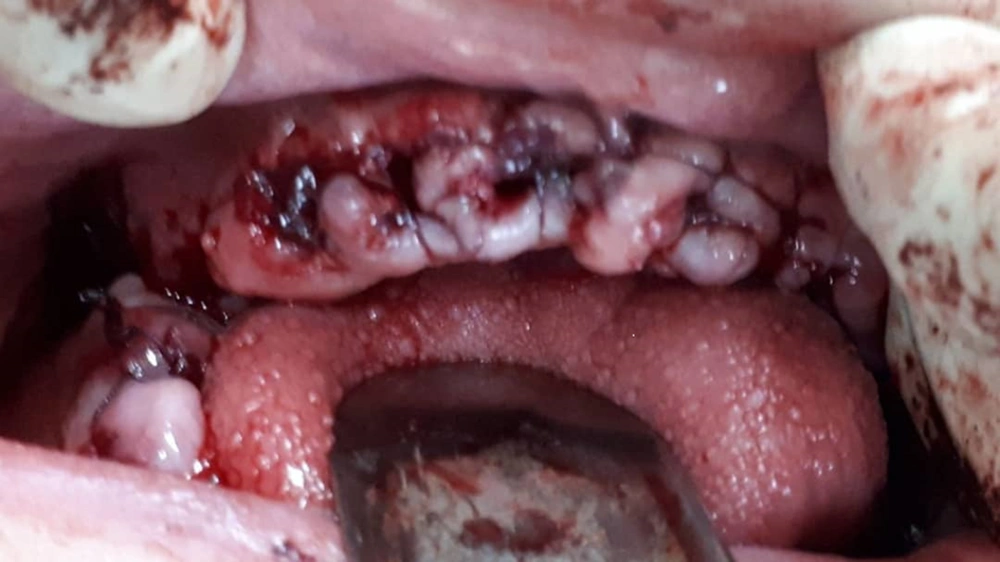
Figure 4.
Extraction of the exposed maxillary roots
At a two-week follow-up, the ulcer totally disappeared, but the contour of the tongue was depressed with the intact mucosa and no color changes. Unfortunately, we could not take any photograph because of the lack of patient’s cooperation.
3. Discussion
Scientific achievements have increased the number of CP patients who seek dental care (6). Hence, it is necessary for dental specialists to know how to act toward such challenging patients (7).
The oral hygiene of CP patients is undesirable due to the unusual muscle movement of the face, insufficiency of self-cleansing mechanisms, incontinence of saliva, and using cariogenic diets and drugs such as anticonvulsant (3).
Patients with CP are highly susceptible to dental caries, periodontal disease, dental trauma, malocclusion, bruxism, temporomandibular joint disorders, and other dental disorders. Because of the atypical neuromuscular association between the tongue, cheeks, and lips, the appropriate dental care is impossible. Therefore, the patients’ parents should be encouraged for careful brushing of their children’s teeth, oral health care, and regular dental visits because they may be essential for improving the lifestyle of these special patients (4, 6-9).
One of the most critical oral problems of CP patients is a traumatic ulcerative granuloma, which is initiated by unplanned bites or recurrent tongue thrust against sharp and broken teeth (10). It is significant to recognize this condition as early as possible because it could be a principal sign of a neurological complaint. There are several syndromes and conditions associated with this entity, including familial dysautonomia, Lesch-Nyhan syndrome, microcephaly, Tourette syndrome, macroglossia, and tongue biting. It has been proposed that traumas prompt the characteristics of inflammatory reactions by entering the infections and external proteins in the individuals who are susceptible. There is another theory that it represents a CD30+ lymphoproliferative disorder (10, 11).
Clinically, eosinophilic ulceration of the mouth usually manifests as a solitary ulcer with elevated and indurated borders. The entity usually develops rapidly and increases in size. The lesion may be characterized by a superficial fibrinous membrane and a white or yellowish base with peripheral erythema. Although it can affect any mucosal surfaces, the tongue is the most common site, especially the lateral and dorsal sides (5, 11).
There are numerous therapeutic approaches toward eosinophilic ulceration of oral mucosa, including eliminating the etiologic factors such as trauma, excision and curettage, medications such as corticosteroids and antibiotics, and cryosurgery (11). Our case healed after the extraction of sharpened and broken teeth; therefore, no surgical excision was required.
Oral rehabilitation can improve CP patients’ quality of life by adding masticatory efficiency and enhancing their social interaction (8). We document this case of eosinophilic ulcer of the tongue in a CP patient to emphasize that although these patients have more serious health problems rather than dental problems, in some situations, the dental problems may bring more difficulties for the patients. Therefore, it is critical to continuously follow up the dental situation of CP patients. The families must also be aware of the oral health of their CP children. This highlights the coordination between health professionals and family members in multidimensional planning for these patients (9).
3.1. Conclusions
Oral health problems of patients with cerebral palsy may originate from the reduced importance of oral health compared to the overall health management of the patients in the view of the parents. A multidisciplinary approach needs to be taken toward the oral health care of such patients in order to promote the overall health and quality of life of these patients.