
1. Background
1.1. Setting and Disease Context
Mass gatherings, defined as assemblies of 1,000 or more people at a specific location for a defined purpose, can strain local emergency resources and create conditions conducive to infectious disease transmission (1). The Arbaeen pilgrimage to Karbala, Iraq, during which an estimated 14 - 20 million pilgrims walk up to 600 km to visit the shrine of Imam Hussein on the 40th day after his martyrdom, is among the world’s largest annual mass gatherings (2). Along the routes, thousands of volunteers organise Mawakib, which are rest and service stations that provide food, beverages, accommodation, and related services at no cost. Most individuals working in service Mawakib (Mawakib al-khidma) are not formally certified food handlers. Their duties typically include slaughtering, butchering, cooking, packing, and transporting fresh meat from livestock (11).
Crimean-Congo haemorrhagic fever (CCHF) is a tick-borne viral zoonosis caused by a Nairovirus of the family Nairoviridae and is transmitted mainly by Hyalomma tick species. Livestock are amplifying hosts; they maintain high viraemia while remaining clinically silent, enabling unrecognised tick-to-human transmission and direct-contact transmission during slaughter (3). The disease has a case fatality rate of 10% - 40%. No licensed vaccine or specific antiviral treatment of proven efficacy exists, making behavioural prevention the primary protective mechanism (3). CCHF is endemic across Eastern and Southern Europe, the Mediterranean, sub-Saharan Africa, the Middle East, Central and South Asia, and the Indian subcontinent (3).
Iraq has a documented history of CCHF dating to 1979. As of 1 June 2022, the World Health Organization situation report that was current when this study was planned stated that the Iraqi Ministry of Health had recorded 1,112 suspected cases, 295 confirmed cases, and 53 deaths among confirmed patients in 2022, corresponding to a case fatality rate of 18.0%. These figures represent the situation as of that reporting date and may not reflect the final annual total (4). Cases were distributed across all governorates except Sulaymaniyah, and 84% of those infected were housewives, butchers, livestock breeders, or traders, occupational categories that closely parallel the Mawakib food-handler profile (4).
1.2. Theoretical Framework: Knowledge-Attitudes-Practices and the Health Belief Model
This study is framed within the knowledge-attitudes-practices (KAP) model and draws on constructs from the Health Belief Model (HBM). The KAP model posits that knowledge is a necessary but insufficient precondition for safe health behaviour. Deficits in knowledge impair an individual’s capacity to perceive risk, evaluate protective options, and act preventively (13). The HBM specifies that perceived susceptibility, perceived severity, perceived barriers, and cues to action mediate the pathway from knowledge to behaviour (14). Within this framework, a food handler who does not know that CCHF is transmitted by ticks is unlikely to perceive tick attachment as a personal risk and, consequently, may not inspect livestock or use appropriate personal protective equipment. Conversely, correct knowledge that no vaccine or curative treatment exists may heighten perceived severity and strengthen motivation to prevent exposure.
The KAP-HBM framework justifies treating knowledge as an independent, measurable outcome and positions sociodemographic factors, including education and urban residence, as distal determinants of knowledge acquisition operating through differential access to information and literacy. It also frames the absence of attitude and practice data in this study as a recognised limitation. This study addresses only the knowledge component of the KAP triad and cannot test knowledge-behaviour linkages; this is explicitly acknowledged in the objectives and limitations.
1.3. Prior Studies on Crimean-Congo Haemorrhagic Fever Knowledge in Endemic Populations
Published KAP studies on CCHF consistently show suboptimal knowledge across diverse endemic settings; however, the magnitude, pattern, and drivers of knowledge gaps differ by health system, social structure, and literacy context. These differences must be considered when interpreting comparisons with the present study.
In Turkey, where CCHF re-emerged in the northern Black Sea and Central Anatolia regions from 2002 onward, structured national surveillance and occupational health programmes for livestock workers were established relatively early (5, 8). Çilingiroğlu et al. documented poor CCHF awareness, approximately 53%, among urban Ankara residents in a low-exposure, high-literacy setting (5). Kartal et al. and Yilmaz et al. found higher, but still inadequate, knowledge among rural, high-risk populations in Tokat province, where television and health workers were the primary information sources (8, 12). These Turkish studies benefit from a more homogeneous national health system and near-universal literacy, conditions not present in Iraq, which has greater rural-urban inequality in health infrastructure, lower average educational attainment, and a public health system that has experienced prolonged disruption.
In Iran, Tabatabaei et al. (6) and Nuckols et al. (10), who studied CCHF-endemic populations in southeastern and western provinces, respectively, identified education and proximity to livestock as key determinants of knowledge. These findings are consistent with the present study. However, their populations were served by Iran’s rural health house network, a community-based primary care system that functions as an active CCHF communication channel and is absent in the Iraqi Mawakib context. Iran’s predominantly rural study populations and their reliance on television and health workers as information sources contrast with the urban-majority, social-media-dominant pattern observed in the present study.
In Georgia, De Cicco et al. (7) conducted the most methodologically rigorous published CCHF KAP study, using probability sampling in endemic villages with documented transmission. Their finding of 56% awareness and modest substantive knowledge is broadly consistent with the present findings, but the Georgian population is characterised by near-universal adult literacy, a post-Soviet public health infrastructure with active surveillance, and settled agricultural communities. This context differs fundamentally from the mobile, educationally heterogeneous, mass-gathering population of Arbaeen Mawakib. Studies from Pakistan and the broader Central Asian endemic zone document similarly poor knowledge of transmission in livestock-keeping communities (15), further supporting the generalisability of education and rurality as predictors while underscoring that mechanisms and intervention approaches may differ across settings.
No previous study has examined CCHF knowledge specifically among food handlers at a mass gathering. This context introduces determinants absent from community studies, including compressed exposure timelines, high population turnover, the absence of formal occupational health oversight, and dense social networks that may facilitate rapid but variable-quality information exchange. These contextual specificities limit direct comparability with published studies and are acknowledged throughout the Discussion.
2. Objectives
The primary objective was to determine the prevalence of CCHF name recognition, operationally defined as first-level awareness, and to describe the distribution of substantive knowledge across five domains—causative agent, routes of transmission, at-risk occupational groups, clinical features, and disease management and prevention—among Mawakib food handlers at the 2022 Arbaeen gathering. A knowledge deficit was operationally defined as a correct-response rate below 60% for a given item, a threshold used in prior regional CCHF KAP studies (7, 8).
The secondary objective was to identify independent sociodemographic predictors of CCHF name recognition using multivariable logistic regression. This study was restricted to the knowledge component of the KAP triad. Attitude and practice data were not collected in this phase because operational constraints in the mass-gathering setting precluded the extended interviews required for those domains. The knowledge findings are intended to inform the design of a subsequent full KAP study incorporating attitude and practice assessments.
3. Methods
3.1. Study Design and Setting
A cross-sectional survey was conducted from 10 to 17 September 2022 along the main pilgrimage corridors traversing Iraqi provinces en route to Karbala during the Arbaeen mass gathering.
3.2. Study Population and Sampling
The target population comprised all adult food handlers aged ≥ 15 years working in Mawakib al-khidma along the pilgrimage routes. The total number of Mawakib at the 2022 Arbaeen gathering is not centrally registered. Estimates from organisational bodies and prior literature suggest tens of thousands of service Mawakib, with food handlers numbering in the hundreds of thousands (11). The achieved sample of 1,207 therefore represents a small, non-probabilistic fraction of this population.
A convenience sampling strategy was used. All food handlers encountered at accessible points along the pilgrimage routes during survey hours who agreed to participate were enrolled. Probability sampling was not feasible because no sampling frame, that is, no registry of Mawakib or their workers, exists. This is a fundamental structural constraint of the Mawakib system rather than a study-design choice, and its implications for representativeness are acknowledged as a principal limitation. All individuals approached consented and completed the questionnaire; no refusals were recorded.
No a priori sample size calculation was performed because no reference prevalence for CCHF knowledge in this specific population was available, and the primary aim was descriptive. A post hoc power calculation showed that n = 1,207 provides ≥ 99% power to detect a 10-percentage-point difference in awareness prevalence between any two subgroups (α = 0.05, two-tailed), indicating adequate statistical precision for the regression analyses presented.
3.3. Data Collection Instrument
A structured 20-item electronic questionnaire was developed in KoboToolbox (KoboToolbox Inc., Cambridge, MA, USA). It comprised two parts: 1) four sociodemographic items (sex, age group, education level, and place of residence); and 2) 16 CCHF knowledge items covering name recognition, causative agent, transmission routes, at-risk groups, clinical features, disease severity, management, and prevention, including tick handling.
The instrument was adapted from validated CCHF KAP questionnaires used by De Cicco et al. (7), Kartal et al. (8), and Ozer et al. (9), with items modified for the Iraqi cultural and occupational context. Face and content validity were established through review by two public health specialists and one infectious disease clinician before deployment. The questionnaire was administered verbally by trained interviewers, thereby minimising literacy-related response bias. The internal consistency of the 13-item CCHF knowledge subscale was acceptable (Cronbach’s α = 0.71). A formal pilot study was not conducted because of operational time constraints in the mass-gathering setting, which is noted as a limitation.
3.4. Field Team and Data Collection
Thirty Intermediate Field Epidemiology Training Program Cohort 3 residents were trained over 3 days in standardised interview techniques and electronic data entry and were deployed along provincial pilgrimage routes during morning and evening hours. Data were entered directly into KoboToolbox on electronic devices.
3.5. Statistical Analysis
Data were imported from KoboToolbox into Epi Info (version 7.1.1.14; Centers for Disease Control and Prevention, Atlanta, GA, USA). Descriptive statistics, including frequencies, proportions, and means ± standard deviations, were calculated. Bivariate associations between CCHF awareness and each sociodemographic variable were assessed using Pearson’s chi-square test. Crude prevalence ratios with 95% confidence intervals were calculated as the bivariate effect-size measure, with the least-exposed or lowest-education category as the reference. A P value < 0.05 was considered statistically significant.
Multivariable binary logistic regression using the enter method was performed, with CCHF awareness as the binary outcome (1 = aware, 0 = not aware). All four sociodemographic variables were entered simultaneously. The reference categories were female for sex, 15 - 34 years for age, illiterate for education, and rural for residence. Results are reported as aORs with 95% CIs. Because sex-stratified awareness counts were not available in the published aggregate data, the sex covariate was imputed from overall sample proportions and contextual assumptions; the aOR for sex is therefore treated as hypothesis-generating only. Model fit was assessed using the likelihood-ratio chi-square test and Nagelkerke pseudo-R².
3.6. Ethical Considerations
The study protocol was approved by the Scientific and Ethics Committee of the Public Health Directorate, Ministry of Health, Iraq. Verbal informed consent was obtained before each interview. Participation was voluntary, and no personally identifiable information was recorded.
3.7. Operational Definitions
CCHF awareness, first level: An affirmative response to “Have you ever heard of CCHF?” This construct captures name recognition only and does not imply understanding of aetiology, transmission, or prevention.
Knowledge gap: A correct-response rate below 60% on a specific knowledge item, consistent with the threshold applied in prior regional CCHF KAP studies (7, 8).
Mawakib al-khidma: Volunteer service stations along Arbaeen pilgrimage routes that provide food, beverages, accommodation, and related services to pilgrims at no cost.
Food handler: Any individual handling food or food-contact surfaces during preparation, including slaughtering, butchering, cooking, packing, transporting, or serving food.
4. Results
4.1. Participant Characteristics
A total of 1,207 food handlers from 16 of Iraq’s 18 governorates participated. The largest contributions were from Diyala (13.1%), Babylon (12.8%), and Baghdad/Rusafa (11.1%). The mean age was 41 ± 13 years (range: 15 - 80 years). The sample was predominantly male (n = 1,082; 89.6%). This sex distribution reflects the occupational composition of Mawakib al-khidma: heavy manual roles, particularly slaughtering and butchering, are overwhelmingly performed by men in the Iraqi sociocultural context, whereas women (n = 125; 10.4%) primarily undertake cooking and packaging roles. This pronounced imbalance limits the reliability of sex-stratified comparisons and is addressed in the limitations. Two-thirds of participants were urban residents (67.0%), and the modal education level was secondary school (38.8%). Sociodemographic characteristics, stratum-specific awareness rates, and crude prevalence ratios are presented in Table 1.
Table 1.
Sociodemographic Characteristics, Stratum-Specific Crimean-Congo Haemorrhagic Fever Awareness Rates, and Crude Prevalence Ratios Among Mawakib Food Handlers, Arbaeen Mass Gathering, Iraq, 2022 (N = 1,207)
| Characteristic | No (%) | CCHF Aware, % (n) | Crude PR (95% CI) a,b |
|---|---|---|---|
| Sex (reference: Female) | |||
| Female (reference) | 125 (10.4) | 66.4 (83) | 1.00 (reference) |
| Male | 1,082 (89.6) | 77.6 (840) | 1.17 (1.00 - 1.36) |
| Age group, y (reference: 15 - 34) | |||
| 15 - 34 (reference) | 431 (35.7) | 76.3 (329) | 1.00 (reference) |
| 35 - 54 | 575 (47.6) | 76.5 (440) | 1.00 (0.94 - 1.07) |
| 55 - 74 | 195 (16.2) | 76.4 (149) | 1.00 (0.91 - 1.10) |
| ≥ 75 | 6 (0.5) | 83.3 (5) | 1.09 (0.72 - 1.66) |
| Education level (reference: Illiterate) | |||
| Illiterate (reference) | 163 (13.5) | 45.4 (74) | 1.00 (reference) |
| Primary | 314 (26.0) | 68.2 (214) | 1.50 (1.25 - 1.80) c |
| Secondary | 469 (38.8) | 84.2 (395) | 1.85 (1.57 - 2.19) c |
| University | 252 (20.9) | 92.1 (232) | 2.03 (1.74 - 2.36) c |
| Postgraduate | 9 (0.7) | 88.9 (8) | 1.96 (1.52 - 2.51) c |
| Residence (reference: Rural) | |||
| Rural (reference) | 398 (33.0) | 69.6 (277) | 1.00 (reference) |
| Urban | 809 (67.0) | 79.9 (646) | 1.15 (1.07 - 1.23) c |
| Total | 1,207 (100.0) | 76.5 (923) | — |
a Crude PR was computed as the stratum awareness rate divided by the reference-category awareness rate; 95% CI was estimated using the log-binomial method. Abbreviations: CCHF, Crimean-Congo haemorrhagic fever; CI, confidence interval; PR, prevalence ratio.
b Sex adjusted odds ratio from logistic regression was derived from imputed data; PR interpretation for sex should be treated as approximate.
c P < 0.05 by Pearson’s chi-square test. Mean age ± SD = 41 ± 13 years.
4.2. Crimean-Congo Haemorrhagic Fever Awareness and Information Sources
Among the 1,207 participants, 923 (76.5%) reported prior CCHF name recognition, whereas 284 (23.5%) reported no prior awareness. Among the 923 aware participants, media were the primary information source for 73.9% (n = 682). Of these, 71.0% (n = 484) identified social media, mainly Facebook and Instagram, as the main channel. Health workers were cited as information sources by fewer than 5% of aware respondents.
4.3. Bivariate Associations Between Sociodemographic Characteristics and Awareness
Bivariate analysis (Table 1) showed a significant positive association between education level and awareness (chi-square P < 0.001), with a monotonic gradient from 45.4% among illiterate participants to 92.1% among participants with university education. The crude prevalence ratio for university versus illiterate participants was 2.03 (95% CI: 1.74 - 2.36), indicating more than twice the likelihood of awareness. Urban residence was also significantly associated with higher awareness (79.9% vs. 69.6% rural; crude prevalence ratio = 1.15; 95% CI: 1.07 - 1.23; P < 0.05). No significant variation in awareness was observed across age groups. The crude prevalence ratio for male sex, approximately 1.17, should be interpreted cautiously given the sex imputation described in the Methods.
4.4. Substantive Crimean-Congo Haemorrhagic Fever Knowledge Across Domains
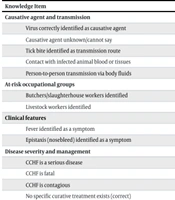
Table 2 presents correct-response rates for all 24 knowledge items, stratified by the total sample and the CCHF-aware subgroup. Applying the pre-specified 60% threshold, knowledge gaps were identified across all five domains in the total sample.
Table 2.
| Knowledge Item | All Respondents, n/N (%) | CCHF-Aware Subgroup, n/923 (%) |
|---|---|---|
| Causative agent and transmission | ||
| Virus correctly identified as causative agent | 651/1,207 (53.9) | 651/923 (70.5) |
| Causative agent unknown/cannot say | 434/1,207 (36.0) | 434/923 (47.0) |
| Tick bite identified as transmission route | 531/1,207 (44.0) | 531/923 (57.5) |
| Contact with infected animal blood or tissues | 917/1,207 (76.0) | 917/923 (99.4) |
| Person-to-person transmission via body fluids | 362/1,207 (30.0) | 362/923 (39.2) |
| At-risk occupational groups | ||
| Butchers/slaughterhouse workers identified | 1,002/1,207 (83.0) | — |
| Livestock workers identified | 760/1,207 (63.0) | — |
| Clinical features | ||
| Fever identified as a symptom | 869/1,207 (72.0) | 869/923 (94.2) |
| Epistaxis (nosebleed) identified as a symptom | 435/1,207 (36.0) | 435/923 (47.1) |
| Disease severity and management | ||
| CCHF is a serious disease | 543/1,207 (45.0) | 543/923 (58.8) |
| CCHF is fatal | 531/1,207 (44.0) | 531/923 (57.5) |
| CCHF is contagious | 507/1,207 (42.0) | 507/923 (54.9) |
| No specific curative treatment exists (correct) | 350/1,207 (29.0) | 350/923 (37.9) |
| No licensed vaccine exists (correct) | 435/1,207 (36.0) | 435/923 (47.1) |
| Prevention and tick management | ||
| Wearing gloves/PPE when handling animals | 676/1,207 (56.0) | 676/923 (73.2) |
| Wearing gloves at slaughter (most-cited measure) | 954/1,207 (79.0) | — |
| Eye shields at slaughter (least-cited measure) c | 205/1,207 (17.0) | 205/923 (22.2) |
| Livestock CCHF infection usually non-apparent | 398/1,207 (33.0) | 398/923 (43.1) |
| Tick-bitten meat safe if properly cooked | 181/1,207 (15.0) | 181/923 (19.6) |
| Would seek expert removal of embedded tick | 543/1,207 (45.0) | 543/923 (58.8) |
| Would self-remove tick by pulling (unsafe response) | 483/1,207 (40.0) | 483/923 (52.3) |
a Values are presented as No. (%) unless otherwise indicated.
a The dash indicates that the item was not directly applicable to the aware-subgroup comparison. Abbreviations: CCHF, Crimean-Congo haemorrhagic fever; PPE, personal protective equipment.
b Knowledge gap was defined as a correct-response rate < 60% in the total sample
c This item had the lowest correct-response rate across all prevention items.
In the causative-agent domain, 53.9% of all respondents correctly identified a virus, which was below the 60% threshold. Tick bite as a transmission route was identified by only 44.0%, and person-to-person transmission via body fluids by 30.0%; both represent knowledge gaps. Contact with infected animal blood or tissues was correctly identified by 76.0%. Knowledge of at-risk groups was comparatively better: 83.0% identified butchers and slaughterhouse workers, and 63.0% identified livestock workers. In the disease-management domain, the most pronounced gaps were knowledge that no curative treatment exists (29.0%) and that no vaccine exists (36.0%), both well below 60%. Prevention knowledge was mixed: glove use at slaughter was widely cited (79.0%), but eye-shield use was the least-cited item overall (17.0%). Forty percent endorsed self-removal of an embedded tick by pulling, an unsafe response. Even when the analysis was restricted to the aware subgroup, six of 14 items with direct comparisons remained below 60%, indicating that name recognition does not translate into adequate substantive knowledge.
4.5. Multivariable Logistic Regression: Independent Predictors of Crimean-Congo Haemorrhagic Fever Awareness
The logistic regression model was statistically significant (LR χ²(9) = 162.0, P < 0.001; Nagelkerke R² = 0.189). Results are shown in Table 3. Education level was the dominant independent predictor, with an orderly dose-response gradient. Compared with illiterate participants, the aOR was 2.54 (95% CI: 1.71 - 3.77) for primary education, 6.35 (95% CI: 4.25 - 9.48) for secondary education, and 13.68 (95% CI: 7.85 - 23.83) for university education; all were statistically significant at P < 0.001. Postgraduate participants also had significantly elevated odds (aOR = 8.58; 95% CI: 1.04 - 70.74; P = 0.046), although the wide CI reflects the small group size (n = 9). Urban residence was an independent predictor (aOR = 1.61; 95% CI: 1.20 - 2.17; P = 0.001). The male-sex coefficient (aOR = 1.80; P = 0.008) should be considered hypothesis-generating because of sex-covariate imputation. Age group was not independently associated with awareness (all P > 0.05). The model explained 18.9% of the variance, indicating that substantial unmeasured factors also contribute.
Table 3.
Multivariable Binary Logistic Regression: Independent Predictors of Crimean-Congo Haemorrhagic Fever Awareness Among Mawakib Food Handlers, Iraq, 2022 (N = 1,207)
| Variables | β | Adjusted Odds Ratio | 95% CI | P-Value |
|---|---|---|---|---|
| Sex (reference: Female) a | ||||
| Male a | 0.59 | 1.80 | 1.16 - 2.78 | 0.008 b |
| Age group, y (reference: 15 - 34) | ||||
| 35 - 54 | 0.03 | 1.03 | 0.75 - 1.41 | 0.861 |
| 55 - 74 | 0.01 | 1.01 | 0.66 - 1.55 | 0.963 |
| ≥ 75 | 0.29 | 1.34 | 0.14 - 12.41 | 0.799 |
| Education level (reference: Illiterate) | ||||
| Primary | 0.93 | 2.54 | 1.71 - 3.77 | < 0.001 b |
| Secondary | 1.85 | 6.35 | 4.25 - 9.48 | < 0.001 b |
| University | 2.62 | 13.68 | 7.85 - 23.83 | < 0.001 b |
| Postgraduate | 2.15 | 8.58 | 1.04 - 70.74 | 0.046 b |
| Residence (reference: Rural) | ||||
| Urban | 0.48 | 1.61 | 1.20 - 2.17 | 0.001 b |
a Sex aOR derived from imputed data; treat as hypothesis-generating only (see Methods). Model: LR χ²(9) = 162.0, P < 0.001; Nagelkerke R² = 0.189.
b P < 0.05.
5. Discussion
5.1. Principal Findings
This study provides the first assessment of CCHF knowledge among Mawakib food handlers at the Arbaeen pilgrimage. The findings are interpreted within the KAP-HBM framework: the identified knowledge deficits represent upstream barriers that, according to the model, would reduce perceived susceptibility and severity and could diminish motivation for preventive behaviour. Given the cross-sectional, convenience-sampled design, all interpretations are exploratory.
5.2. Awareness Prevalence and the Gap Between Name Recognition and Substantive Knowledge
The finding that 23.5% of food handlers lacked CCHF name recognition during an active national outbreak is noteworthy, although contextual interpretation is necessary. This figure reflects first-level awareness only and was collected in the specific setting of a mass gathering during an outbreak year with high media coverage, conditions that likely inflated awareness relative to the inter-outbreak baseline. Prior studies in endemic-area populations have reported awareness ranging from 56% in Georgia (7) to 70% in high-risk populations in Turkey (8, 12), suggesting that the overall rate of 76.5% in the present study is comparable to or somewhat higher than benchmarks in analogous settings. This pattern is consistent with an outbreak-related media effect and the urban composition of the sample.
The more analytically important finding is that awareness did not translate into adequate substantive knowledge. Knowledge gaps, defined as correct-response rates below 60%, were present in all five domains among all respondents and in three of five domains even among the CCHF-aware subgroup. This pattern aligns with the KAP distinction between knowledge accessibility, represented by name recognition, and knowledge depth. It also replicates findings from Iran (6) and Georgia (7), where surface-level familiarity coexisted with substantial misconceptions about transmission and prevention. This reinforces the theoretical point that first-level awareness, while a useful screening indicator, is an insufficient proxy for the specific knowledge constructs that influence protective behaviour under the HBM.
Social media was the primary information source for 71.0% of aware respondents, a pattern distinct from that in Turkish and Iranian populations during the same period, which relied predominantly on television and health workers (5, 6). This difference likely reflects Iraq’s rapidly expanding mobile internet penetration and the relatively young, working-age demographic of Mawakib food handlers rather than a fundamental difference in health information-seeking behaviour. The implication is that uncontrolled information quality on social media platforms may partly explain the disconnect between high name recognition and poor substantive knowledge.
5.3. Logistic Regression: Interpretation of Education and Residence Effects
The dose-response gradient between education level and CCHF awareness, with aORs ranging from 2.54 to 13.68 across educational tiers, was the dominant finding of the regression model and is consistent with the HBM construct of cues to action moderated by health literacy. The observed gradient exceeds the magnitude reported in comparator studies from Turkey (5), Iran (6), and Georgia (7). This is plausibly explained by the greater educational heterogeneity in the present sample, which included 13.5% illiterate participants and 20.9% university-educated participants, combined with Iraq’s larger rural-urban health-system inequality. However, the association between education and awareness is observational. The model explained only 18.9% of the variance, indicating that unmeasured factors, including household livestock ownership, media consumption habits, social network composition, and prior personal CCHF exposure, likely contribute meaningfully and should be incorporated into future models.
The association between formal education level and CCHF awareness in this cross-sectional study does not constitute evidence that educational interventions will increase CCHF knowledge or that improving education access at the population level will reduce CCHF incidence. No controlled evaluation of CCHF knowledge interventions in Mawakib or analogous mass-gathering contexts has been published. Intervention effectiveness in Turkey has been demonstrated through occupational health briefings for livestock workers in structured national programmes (5), a mechanism that depends on institutional infrastructure that is not present in the Mawakib system. Any conclusions regarding intervention strategies require prospective evaluation with appropriate controls.
Urban residence remained an independent predictor after adjustment (aOR = 1.61). In Turkey and Iran, urban-rural differences in awareness primarily reflect differential health-system access and broadcast-media penetration (5, 6). In Iraq, where health workers were rarely cited as information sources by any group, the mechanism is more likely to reflect differential social media connectivity, which is itself correlated with urban residence. This contextual distinction matters for intervention design: In Iraq, rural-targeted health communication cannot rely on the health-worker channel that is effective in Turkish or Iranian contexts and would need to reach rural populations through other means.
5.4. Specific Knowledge Gaps and Their Relevance to Behavioural Pathways
Three knowledge gaps are particularly relevant to the HBM construct of perceived susceptibility. First, only 44.0% of respondents identified tick bite as a transmission route. A food handler who does not recognise this pathway is unlikely to inspect livestock for tick attachment or adopt tick-avoidance behaviours. Second, 40.0% endorsed self-removal of an embedded tick by pulling, a practice associated with an increased risk of mechanical CCHF transmission through crushed tick haemolymph (3). This indicates that even partial awareness of the tick hazard did not translate into knowledge of a safe response. Third, only 17.0% identified eye shields as a required protective measure at slaughter, despite the role of conjunctival exposure as a documented CCHF entry portal.
Gaps in knowledge regarding the absence of treatment (29.0%) and the absence of a vaccine (36.0%) are relevant to the HBM construct of perceived severity. According to the model, correct knowledge that no curative options exist should increase perceived severity and motivate preventive behaviour. Whether this pathway operates in practice in the Mawakib context is an empirical question that this cross-sectional study cannot answer; it requires attitudinal and behavioural measurement in a follow-up KAP study.
5.5. Comparative Analysis: Contextual Limits of Cross-Study Comparisons
Comparisons with Turkey, Iran, and Georgia, while informative, require caution because knowledge-survey results reflect not only individual knowledge levels but also structural factors. Health-system organisation, occupational health programme history, adult literacy rates, and dominant information channels differ substantially across these settings. Turkey’s results reflect a population served by a functioning national CCHF surveillance and response system active since 2002 (5, 8). Iran’s rural health house network provides a primary care community channel that is absent in Iraq (6, 10). Georgia’s probability-sampled population has near-universal adult literacy (7). Absolute awareness or knowledge rates from these contexts therefore cannot serve as normative benchmarks for Iraq. The consistent finding across settings that education level and rurality predict CCHF knowledge suggests a robust structural pathway that is likely generalisable. What differs is the mechanism, such as health-worker contact in Turkey and Iran versus social media in Iraq, and therefore the appropriate intervention channel.
5.6. Limitations
Several limitations qualify these findings. First, convenience sampling without a sampling frame precludes assessment of selection bias and limits representativeness; the findings are explicitly exploratory. Second, no a priori sample size calculation was performed. Although post hoc power was adequate, the sampling approach constrains inference. Third, the questionnaire was not formally piloted. Although Cronbach’s α = 0.71 indicates acceptable internal consistency, no test-retest reliability data are available. Fourth, self-reported knowledge assessed by interview may be subject to social desirability bias, likely biasing correct-response rates upward. Fifth, the cross-sectional design precludes causal inference. Sixth, sex-stratified awareness data were unavailable, requiring imputation for the sex regression covariate; this finding is therefore hypothesis-generating only. Seventh, attitude and practice data were not collected, limiting this study to the knowledge component of the KAP triad and precluding direct knowledge-behaviour analysis. Future work should use probability sampling, validated full KAP instruments, directly observed behavioural data, and longitudinal or pre-post designs to test causal pathways.
5.7. Conclusions
This exploratory cross-sectional survey found that nearly one quarter of Mawakib food handlers lacked first-level CCHF name recognition during the 2022 Arbaeen gathering and that substantive knowledge deficits, defined as correct-response rates below 60%, were present across all five assessed domains, including in the CCHF-aware subgroup. Logistic regression identified education level as the dominant independent predictor of awareness, with a consistent dose-response gradient; urban residence and male sex were also independent predictors. Age was not independently associated with awareness. The model explained 18.9% of the variance, highlighting the contribution of unmeasured factors. These findings should be interpreted as preliminary evidence consistent with the KAP framework rather than as a basis for definitive programme recommendations. Prospective KAP studies incorporating attitude and practice components, probability sampling, and validated instruments are needed to establish the knowledge-behaviour linkages that would justify and guide targeted interventions.
5.8. Suggestions for Future Research and Health Communication Planning
1. Full KAP study with probability sampling: A prospective KAP study incorporating knowledge, attitude, and practice domains and using a sampling frame derived from Mawakib registration records should be conducted before the next Arbaeen gathering to provide representative estimates and enable knowledge-behaviour analysis.
2. Instrument development and validation: A CCHF KAP instrument adapted for the Iraqi Mawakib context should be formally piloted, with test-retest reliability established before deployment.
3. Intervention development and evaluation: Health communication materials targeting the gaps identified here, including tick management, eye protection, and the absence of a vaccine and treatment, should be developed using formative research with target subgroups and evaluated in a controlled pre-post design before any recommendation for wide deployment.
4. Social media content analysis: Given the dominance of social media as an information source, research on the accuracy of CCHF content circulating on Arabic-language Facebook and Instagram during Arbaeen periods is warranted to determine whether misinformation contributes to knowledge gaps.
5. Subgroup-focused formative research: Formative qualitative research with low-education and rural food handlers, the subgroups with the lowest awareness, should inform the design of literacy-adapted communication strategies appropriate for these groups.
6. Behavioural observation: Future studies should include direct observation of personal protective equipment use, tick management, and hygiene practices, enabling comparison of stated knowledge with actual behaviour.