1. Context
Mass gatherings (MGs) are diverse events, including sporting competitions, music festivals, and religious pilgrimages, that can strain the public health infrastructure of a host nation or community (1). The inherent risks, including rapid transmission of infectious diseases, food- and waterborne illnesses, and potential mass casualty incidents, are well documented (2). Although event organizers have operational responsibilities, the ultimate legal and ethical responsibility for safeguarding the health and well-being of attendees rests with the state. This responsibility is not merely a matter of good practice but is a direct extension of the state's obligation to uphold the fundamental human right to health.
The scale and complexity of contemporary MGs have grown considerably. Events such as the Hajj pilgrimage in Saudi Arabia, the Kumbh Mela in India, and the FIFA World Cup routinely attract millions of participants from diverse national, cultural, and epidemiological backgrounds (3, 4). This diversity amplifies the public health challenge: attendees may carry pathogens to which local populations lack immunity, may have preexisting conditions that are poorly documented, and may face language and cultural barriers that impede access to care. As the primary duty bearer under international human rights law, the state must therefore adopt a proactive, anticipatory posture rather than a reactive one.
The right to health is firmly established in international law. The preamble to the WHO Constitution (5) declares that "the enjoyment of the highest attainable standard of health is one of the fundamental rights of every human being." This principle is legally codified in Article 12 of the International Covenant on Economic, Social and Cultural Rights (ICESCR), which recognizes "the right of everyone to the enjoyment of the highest attainable standard of physical and mental health" (6).
The UN Committee on Economic, Social and Cultural Rights (CESCR) has clarified in General Comment No. 14 (7) that the right to health should not be understood as a right to be healthy but rather as a right to a system of health protection that provides equality of opportunity for people to enjoy the highest attainable level of health. The CESCR further states that health facilities, goods, and services must be available, accessible, acceptable, and of good quality (the so-called AAAQ framework) (7). Each of these dimensions has direct implications for MG health governance.
Availability requires that functioning public health and health care facilities, goods, and services be present in sufficient quantity. In the MG context, this means ensuring an adequate ratio of medical personnel, first aid stations, and emergency transport relative to the expected crowd size and risk profile (1).
Accessibility encompasses four overlapping dimensions: nondiscrimination, physical accessibility, economic accessibility or affordability, and information accessibility. States must ensure that health services at MGs are reachable by all attendees, including persons with disabilities, older participants, and people from marginalized groups, without financial barriers (7).
Acceptability requires that health services be respectful of medical ethics and culturally appropriate. At religiously motivated gatherings in particular, health interventions must be designed with sensitivity to the spiritual and cultural context of participants (8).
Quality requires that health facilities and services be scientifically and medically appropriate and of good quality, including trained medical personnel, scientifically approved and unexpired drugs and hospital equipment, and adequate sanitation (7).
The CESCR further identifies 3 distinct types of state obligations related to the right to health (7):
To respect: States must refrain from directly or indirectly interfering with the enjoyment of the right to health.
To protect: States must take measures to prevent third parties from infringing on the right to health.
To fulfill: States must adopt appropriate legislative, administrative, budgetary, and other measures to fully realize the right to health.
Beyond the ICESCR, the right to health is reinforced by a constellation of other international instruments. The Convention on the Rights of the Child obliges states to ensure the highest attainable standard of health for children attending MGs (9). The Convention on the Rights of Persons with Disabilities requires that persons with disabilities have equal access to health services (10). The International Health Regulations (IHR, 2005) impose binding obligations on states to develop core public health capacities, including surveillance and response systems directly relevant to MG health management (11).
2. Evidence Acquisition
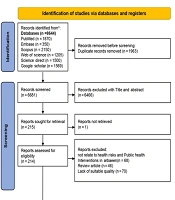
This review examines State responsibility for ensuring the right to health in MGs, drawing on international human rights law and public health governance sources. The analysis focuses on Article 12 of the ICESCR, CESCR General Comment No. 14, WHO guidance on public health for mass gatherings, the IHR (2005), and selected public health literature on infectious disease control, crisis and emergency risk communication, climate risk, mental health support, and digital health governance in MG settings.
3. Results
3.1. Applying State Responsibility to Mass Gathering Contexts
3.1.1. Pre-Event Strategic Planning and Risk Assessment
The state must lead or mandate a comprehensive strategic and operational risk assessment well before the event. This process identifies potential public health threats, assesses the vulnerability of the attending population, and evaluates the capacity of the existing health system to respond (1). Risk assessment should be evidence-based and should draw on historical data from previous editions of the event, epidemiological intelligence on circulating pathogens, and modeling of crowd dynamics and potential crush scenarios.
A critical component of pre-event planning is the establishment of a multiagency coordination mechanism. Public health authorities, emergency medical services, law enforcement, civil defense, environmental health agencies, and event organizers must operate within a unified command structure. The absence of clear lines of authority and communication has been identified as a contributing factor in several MG disasters, including the 2015 Mina stampede during the Hajj, which resulted in more than 2000 fatalities (12). States must therefore invest in joint training exercises, tabletop simulations, and the development of standardized operating procedures before the event.
Pre-event health promotion is also essential. States should disseminate targeted health advisories to prospective attendees, covering vaccination requirements, management of chronic conditions, heat and hydration guidance, and information on available health services at the venue (1).
3.1.2. During-Event Regulatory Enforcement and Service Provision
The obligation to protect necessitates the establishment and enforcement of clear regulatory frameworks, including mandates for minimum levels of on-site medical infrastructure, standards for water, sanitation, and hygiene, and the enforcement of food safety protocols (1). The duty to fulfill requires the state to ensure the provision of essential public health services, including a robust syndromic surveillance system and a clear command, control, and communication structure for managing public health emergencies (3).
Proactive health promotion and risk communication campaigns are essential to inform participants about potential risks and protective behaviors. The Crisis and Emergency Risk Communication framework provides a structured approach to communicating health risks during emergencies and is applicable to the MG context (13). Mental health services represent a frequently neglected dimension of MG health provision; states should ensure that mental health first aid is integrated into the on-site medical response (14).
3.1.3. Post-event Evaluation and Accountability
Post-event evaluation is a legal and ethical imperative. States must systematically collect and analyze data on health outcomes, including morbidity, mortality, and near-miss incidents, to identify gaps in planning and service provision (1). Post-event surveillance is also critical to detect delayed-onset outbreaks of communicable diseases that may not manifest until attendees have returned to their home communities (2).
3.2. Thematic Dimensions of State Responsibility
3.2.1. Religious Pilgrimages as a Special Case
Religious pilgrimages represent a particularly demanding category of MG from a public health governance perspective. Events such as the Hajj, the Arbaeen pilgrimage in Iraq, and the Kumbh Mela in India involve tens of millions of participants, many of whom are elderly, have preexisting health conditions, and travel from countries with limited health infrastructure (3, 15). The Arbaeen pilgrimage, which attracts an estimated 20 million pilgrims annually to Karbala, Iraq, exemplifies both the scale of the challenge and the potential for innovative health governance (16). The Iraqi government, in coordination with religious authorities and international partners, has developed a comprehensive health management framework encompassing mass vaccination campaigns, deployment of mobile medical units, water, sanitation, and hygiene infrastructure, and a dedicated health information system (16).
Host states of religious pilgrimages bear a heightened duty of care under international law, given the vulnerability of the attending population and the cross-border nature of the event. This duty extends to ensuring that health services are provided without discrimination based on nationality, sect, or socioeconomic status, consistent with the nondiscrimination principle foundational to international human rights law (7).
3.2.2. International Cooperation and Shared Responsibility
Many MGs are inherently transnational. Article 2 (1) of the ICESCR obliges states to take steps "individually and through international assistance and co-operation" to achieve the full realization of the rights recognized in the Covenant (6). The WHO plays a central coordinating role by providing technical guidance, facilitating information exchange, and supporting capacity building in member states (1). The IHR (2005) provide a binding legal framework for international health cooperation, requiring states to notify the WHO of public health events of potential international concern (11).
3.2.3. Accountability Mechanisms
In the domestic sphere, states should establish clear lines of legal accountability for failures of MG health governance, including administrative liability for regulatory agencies that fail to enforce health and safety standards and potential criminal liability for gross negligence resulting in preventable deaths or injuries. At the international level, the CESCR reporting and review mechanism provides a forum for scrutiny of state compliance with the right to health (7). Civil society organizations and national human rights institutions can submit parallel reports highlighting gaps in state practice.
3.2.4. Emerging Challenges
3.2.4.1. Climate Change and Extreme Heat
Climate change is intensifying the public health risks associated with outdoor MGs. Rising ambient temperatures increase the risk of heat-related illness, particularly among elderly participants and those with cardiovascular or metabolic conditions (17). States must integrate climate risk into MG health planning, including the provision of cooling stations, enhanced hydration infrastructure, and heat health action plans with clear thresholds for event modification or cancellation (17).
3.2.4.2. Emerging Infectious Diseases
The COVID-19 pandemic demonstrated the potential for MGs to serve as amplification events for emerging infectious diseases (18). States must maintain robust pandemic preparedness plans that include specific provisions for the suspension, modification, or cancellation of MGs in the event of a declared public health emergency of international concern (11, 18).
3.2.4.3. Digital Health and Surveillance Technologies
Advances in digital health technology offer important opportunities to enhance MG health surveillance and response. Mobile health applications, wearable biosensors, and artificial intelligence-driven crowd analytics can provide real-time data on crowd density, environmental conditions, and health indicators (19). However, the deployment of such technologies raises important questions about data privacy, informed consent, and the potential for discriminatory profiling. States must ensure that digital health interventions at MGs are governed by robust legal and ethical frameworks (19).
4. Conclusions
The right to health is not suspended at the gates of a stadium, festival, or pilgrimage site. Under international law, states have a clear legal obligation to ensure that this right is upheld for all participants in MGs. Based on the foregoing analysis, the following recommendations are advanced:
Legislate: Enact or strengthen national legislation governing the public health dimensions of MGs, establishing minimum standards and enforceable penalties for noncompliance.
Plan comprehensively: Pre-event planning should be mandatory, evidence-based, and multisectoral, incorporating risk assessment and multiagency coordination.
Invest in surveillance: Establish or strengthen syndromic surveillance systems for MGs, integrated with national and international health information networks.
Communicate proactively: Health risk communication should be initiated well before the event, be multilingual and culturally adapted, and follow established frameworks such as Crisis and Emergency Risk Communication (13).
Cooperate internationally: Actively engage with the WHO, regional health bodies, and bilateral partners to share intelligence, harmonize standards, and build capacity (1, 11).
Ensure accountability: Domestic accountability mechanisms should be clearly defined and effectively enforced; states should engage constructively with international human rights monitoring bodies (7).