
1. Background
Breast cancer is the most common malignant disease affecting women all over the world, accounting for 28% of all cancers. The incidence of breast cancer in Iranian women is 22 per 100 000 people, and its prevalence rate is 120 per 100 000 people, which is a very shocking statistic (1).
Due to the chronic nature of cancer, the patient must accept long-term treatments with chemotherapy drugs (2). Chemotherapy is one of the main cancer treatments and destroys 90% of malignant cells (3). Chemotherapy takes months to treat the patient, and its side effects include nausea, hair loss, fatigue, muscle pains, skin burns, and especially weight changes and anorexia (4). Evidence suggests that nutrition plays a decisive role in cancer treatment. Studies have shown that nearly 30% of cancer deaths can be prevented by following a healthy diet (5). In addition, 20% to 80% of cancer-prone patients progress toward malnutrition during their illness, and about 20% of these patients die due to the complications of malnutrition (6). Also, 5% weight loss within 6 months may increase treatment complications (7).
Besides its physical effects, cancer is associated with psychological consequences and degrees of emotional tension, stress, and anxiety (8). In the majority of cases following the diagnosis of cancer, the affected person experiences a crisis. Moreover, frequent hospitalizations, side effects of chemotherapy drugs, and physical changes, especially weight loss caused by anorexia and malnutrition, adversely affect the mental state of patients and cause stress and anxiety (9); even some patients leave chemotherapy due to its psychological problems (10).
It seems that there is a two-way relationship between nutritional status, especially anorexia, and psychological disorders in cancer patients (11). Some studies have shown that cancer patients lose weight after treatment due to various physio-psychological factors that affect food intake, such as anorexia, dry mouth, nausea, and vomiting (8, 12). Another study showed that cancer patients who lost 1.8 kg in the last 6 months had a worse prognosis and were exposed to treatment complications, treatment delays, frequent hospitalizations, and lower quality of life (13).
It seems that controlling stress can improve a person’s physical conditions, including appetite and nutritional status. In this regard, Sajadian et al. showed that reducing stress could play a valuable role in improving the physical and mental health of cancer patients. However, no known treatment can significantly affect the patients’ anorexia. Although in some cases, supplements (such as zinc) can have an effect on the patients’ appetite, their effect is insignificant and transient (6).
Non-pharmacological measures (such as teaching and improving patients’ knowledge) could reduce the patients’ physical and mental problems. One of the comprehensive training programs is support training programs. Indeed, support training programs provide a context in which people and patients learn to behave in a way to promote and maintain higher levels of health (14). Social support is the interaction between the support provider and the support recipient (15). Support facilitates adaptation skills and promotes active adaptation strategies to help people adapt to life changes (16). Nurses, as the most important members of the treatment team, play an important role in the care of cancer patients undergoing treatment and are in a good position to provide education and emotional support to patients due to their long-term contact with them (17).
Nutritional status and treatment-related issues can also affect the patient’s survival because, in some cases, the failure to manage patients and their complications lead to many problems. In other words, nurses can help improve the conditions of cancer patients by conducting educational interventions and measures (5) because nurses spend more time with the patient and notice problems that can greatly affect the treatment process of these patients (18). In other words, training nurses to manage these complications can increase the patient’s sense of efficiency and ultimately reduce their stress. Some studies have reported that patients who learn how to manage the side effects of chemotherapy (including stress and nutritional status) strengthen their self-esteem and improve their physical and mental health (19, 20). Ataollahi et al. showed that perceived stress and social support were major factors in cancer treatment (21). Other studies have also shown a significant relationship between social support and psychological stress (22).
Given the changes taking place in health care systems, teaching cancer patients is an inseparable part of the nursing care of these patients (23). Cancer is more prevalent in women than in men. Thus, paying attention to women with cancer is of particular importance because women play the most important role in their families, and their physical and mental health has a tremendous impact on the health of other family members. Since breast cancer patients have to follow a special treatment regimen, especially during chemotherapy, they are at risk of treatment complications, especially malnutrition. A review of the literature shows that interventional studies have not evaluated malnutrition and anorexia in cancer patients undergoing chemotherapy.
2. Objectives
The present study aimed to explore the impact of an educational-supportive intervention on the perceived stress and nutritional status of breast cancer patients undergoing chemotherapy.
3. Methods
This quasi-experimental study was conducted on 80 women with breast cancer undergoing chemotherapy at Khatam Al-Anbia (PBUH) and Ali Ibn Abi Talib (AS) hospitals affiliated with Zahedan University of Medical Sciences in 2022. The eligible patients were identified and divided into 2 intervention and control groups. The sample size was estimated as 36 persons per group using a mean diet score in a similar study at a 95% CI and 80% statistical test power, as well as using the following formula (24). Taking into account the possible dropout of the participants, the sample size per group was considered to be 40 persons (80 persons in total):
Z(1 - α/2) = 1.96; Z(1 – β) = 0.85; S1 = 0.7; S2 = 0.8; X1 = 5.4; X2 = 4.9.
Inclusion criteria were a definitive diagnosis of breast cancer, age between 20 and 60 years, attending 1 chemotherapy session, no mental illness declared by the patient, no mental and physical disabilities, no diabetes, grade 2 and 3 cancer, no drug abuse, not being pregnant, having an albumin range above 3 g/dL, and having hemoglobin above 10 g/dL. Exclusion criteria were unwillingness to participate in the study, metastasis of cancer disease during the study, patient death, experiencing a stressful event during the study, and the failure to attend more than 1 training session.
The data were collected using 3 instruments. The patient’s demographic information form was used to assess age, marital status, occupation, education, and variables related to the disease (such as stage of the disease, Body Mass Index (BMI), and the history of other diseases. The Perceived Stress Scale and patient-generated subjective global assessment (PG-SGA) were also used to measure the participants’ stress and nutritional status, respectively.
3.1. The Perceived Stress Scale
The Perceived Stress Scale was developed by Cohen et al. (1983) The scale has 4-, 10-, and 14-item versions that measure general perceived stress in the past month (7). The scale measures thoughts and feelings about stressful events and controlling, overcoming, and coping with psychological distress and stress. This scale also examines risk factors for behavioral disorders and shows the process of stressful relationships. The 14-item version of the scale was used in the present study. Sepahvand and Gilani reported a reliability index of 0.80 for this scale (13). The scale contains 14 items scored on a 5-point Likert scale (0 = never, 1 = almost never, 2 = once in a while, 3 = often, and 4 = very often). Items 4, 5, 6, 7, 9, 10, and 13 are scored inversely (4 = never to 1 = very often). The minimum and maximum scores on the scale are 0 and 56. A higher score indicates greater perceived stress (7). The reliability of the scale measured using Cronbach α was 0.85, and its validity was confirmed with a Cronbach α of 0.76 (18).
3.2. PG-SGA
PG-SGA was developed by Ottery in 1996 (25). The first section of PG-SGA SF consists of 4 boxes: (1) Weight history, (2) food intake, (3) nutrition impact symptoms, and (4) activities and function. These 4 sections are completed by the patient. The minimum and maximum scores in the first section are 0 and 36. The second section assesses the disease and its relationship with the patient’s nutritional needs, metabolic needs, physical examinations, and cancer stage. The items in this section are completed by a health expert such as a doctor or nurse. The patient’s metabolic status is assessed based on the temperature, periodical fever, and whether the patient is using steroids. The clinical assessment is performed by examining the reduction in fat reserves and muscle mass and the amount of fluid accumulation measured by a caliper. The minimum and maximum scores in the second section are 1 and 24. Following the total scores obtained in the first and second sections (1 to 60) of the instrument, the decision on the type of intervention is made. Shahabbasi et al. (26) assessed the content validity in terms of comprehensibility, difficulty, and relevance, and the corresponding values were 0.94, 0.84, and 0.92, respectively. The test-retest reliability of the instrument was 0.84, its internal consistency using Cronbach α was 0.60, and its construct validity was greater than 0.6 (23). In the present study, the reliability of this tool was confirmed with a Cronbach α of 0.78.
After obtaining permission from the Ethics Committee (code: IR.ZAUMS.REC.1400.418) and receiving a letter of introduction from the vice-chancellor for Research and Technology of Zahedan University of Medical Sciences, the researcher went to Khatam Al-Anbia (PBUH) and Ali Ibn Abi Talib (AS) hospitals in Zahedan. The researcher also made the required arrangement with the hospital managers to attend the chemotherapy department. The eligible patients were selected via convenience sampling. To this end, first, cancer patients who met the criteria for enrollment in the study were identified. After explaining the objectives of the study and the rationale for the intervention, the patients were invited to participate in the study. Informed written consent was obtained from patients willing to participate in the study. The patients were then divided into 2 intervention and control groups based on the random allocation rule. To do so, first, 80 color cards identifying the group membership (red for the intervention group and white for the control group) were prepared. By removing the cards, a list of 80 participants was prepared, indicating the group membership of each patient. Each number on the list was assigned to an eligible patient. The patients in both groups first completed the questionnaires as the pretest.
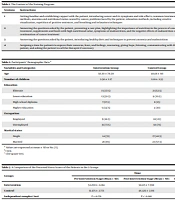
In the intervention group, patients attended 4 training sessions based on their clinical diagnosis and prescribed treatment. Table 1 shows the content of the training sessions. Each training session was held for 45 - 60 minutes before the start of each chemotherapy session. During the 6 weeks of follow-up, the researcher was in contact with the patients and answered their questions by visiting them in person or through phone calls and text messages. Six weeks after the last training session, arrangements were made with each patient to complete the questionnaires as the posttest. If the patient’s next visit differed from the time of completing the questionnaires, the researcher would make the required arrangements and complete the questionnaires at the patient’s home.
Table 1.
The Content of the Training Program
| Sessions | Instructions | Time (min) |
|---|---|---|
| 1 | Getting familiar and establishing rapport with the patient, introducing cancer and its symptoms and side effects, common treatment methods, anorexia and nutritional status caused by cancer, problems faced by the patient, relaxation methods, including creative visualization, repetition of positive sentences, and breathing and relaxation techniques | 45 - 60 |
| 2 | Answering the questions asked by the patient, presenting a care plan, highlighting the importance of nutrition in the process of cancer treatment, supplements and foods with high nutritional value, symptoms of malnutrition, and the negative effects of malnutrition on the continuation of cancer treatment | 45 - 60 |
| 3 | Answering the questions asked by the patient, introducing healthy diets and techniques to prevent anorexia and malnutrition | 45 - 60 |
| 4 | Assigning a time for patients to express their concerns, fears, and feelings, reassuring, giving hope, listening, communicating with the patient, and asking the patient to call the therapist if necessary | 45 - 60 |
In the control group, patients received no training except for routine care provided by the department. In the control group, questionnaires were completed 6 weeks after the intervention in the department or at the patient’s home. To comply with ethical considerations, after the end of the study, the content of the training instructions was provided to the patients in the control group in the form of an educational booklet.
After collecting and coding, the data were analyzed by SPSS version 22 (SPSS Inc., Chicago, IL, USA). First, the data were summarized using descriptive statistics, including frequency, percentage, mean, SD, minimum, and maximum. Moreover, the paired-samples t test was used to compare intragroup differences before and after the intervention. The differences between the 2 groups were also compared in the pretest and posttest stages using the independent samples t test and chi-square test. The level of significance in this study was less than 0.05 (P < 0.05).
4. Results
Participants’ demographic characteristics showed that the age range of the 2 groups was 40 - 50 years. Most of the patients had less than 3 children and were illiterate, unemployed, and married. The 2 groups were homogenous in terms of demographic characteristics (P > 0.05; Table 2).
Table 2.
Participants’ Demographic Data a
| Variables and Categories | Intervention Group | Control Group | P Value |
|---|---|---|---|
| Age | 50.20 ± 70.20 | 48.48 ± 90 | 0.311 b |
| Number of children | 2.50 ± 2.17 | 2.10 ± 2.35 | 0.432 b |
| Education | 0.590 c | ||
| Illiterate | 15 (37.5) | 21 (52.5) | |
| Lower education | 13 (32.5) | 9 (22.5) | |
| High school diploma | 7 (17.5) | 6 (15) | |
| Higher education | 5 (12/.5) | 4 (10) | |
| Occupation | 0.793 c | ||
| Employed | 9 (22.5) | 10 (25) | |
| Unemployed | 31 (77.5) | 30 (75) | |
| Marital status | 0.549 c | ||
| Single | 14 (35) | 17 (42.5) | |
| Married | 26 (65) | 23 (57.5) |
a Values are expressed as mean ± SD or No. (%).
bt test.
c Chi-square test.
According to Table 3, the 2 groups showed significant differences in terms of perceived stress before and after the intervention, as indicated by the paired-samples t test (P < 0.001).
Table 3.
A Comparison of the Perceived Stress Scores of the Patients in the 2 Groups
| Groups | Time | ||
|---|---|---|---|
| Pre-intervention Stage (Mean ± SD) | Post-intervention Stage (Mean ± SD) | Paired-samples t Test | |
| Intervention | 52.250 ± 2.284 | 32.125 ± 7.390 | P < 0.001 |
| Control | 51.475 ± 2.773 | 48.425 ± 2.011 | P < 0.001 |
| Independent samples t test | P = 0.176 | P < 0.001 | |
Furthermore, there was a statistically significant difference between the 2 groups in the perceived stress as indicated by the independent samples t test (P < 0.001; Table 4).
Table 4.
The Results of Analysis of Covariance for the Perceived Stress Scores of the Patients in the 2 Groups After the Intervention
| Source of Changes | Sum of Squares | df | Mean Squares | F | Sig. | Effect Size | Test Power |
|---|---|---|---|---|---|---|---|
| Pretest | 29.392 | 1 | 29.392 | 2.596 | 0.111 | 2.596 | 0.356 |
| Group | 4915.767 | 1 | 4915.767 | 483.595 | 0.000 | 483.595 | 1.000 |
| Error level | 782.708 | 77 | 10.165 | ||||
| Total | 135278 | 80 |
The results of the analysis of covariance (ANCOVA) to adjust the significant effect of pretest scores showed significant differences in the mean perceived stress scores of the breast cancer patients in the 2 groups after the intervention (P < 0.001), indicating that the implementation of educational-supportive intervention reduced the stress experienced by the patients in the intervention group.
According to Table 5, the 2 groups showed significant differences in terms of PG-SGA scores before and after the intervention, as indicated by the paired-samples t test (P < 0.001).
Table 5.
A Comparison of the Nutritional Status Scores of the Patients in the 2 Groups
| Time Group | Pre-intervention Stage (PG-SGA Score) | Post-intervention Stage (PG-SGA Score) | Paired-Samples t Test |
|---|---|---|---|
| Intervention | 41.40 ± 7.005 | 19.95 ± 1.947 | P < 0.001 |
| Control | 40.58 ± 7.561 | 49.65 ± 5.177 | P < 0.001 |
| Independent samples t test | P = 0.614 | P < 0.001 |
Abbreviation: PG-SGA, patient-generated subjective global assessment.
Furthermore, there was a statistically significant difference between the 2 groups in PG-SGA scores, as indicated by the independent samples t test (P < 0.001; Table 6).
Table 6.
The Analysis of Covariance Results for the Patient-Generated Subjective Global Assessment Scores of the Patients in the 2 Groups After the Intervention
| Source of Changes | Sum of Squares | df | Mean Squares | F | Sig. | Effect Size | Test Power |
|---|---|---|---|---|---|---|---|
| Pretest | 434.564 | 1 | 434.564 | 44.119 | 0.000 | 44.119 | 1.000 |
| Group | 17901.823 | 1 | 17901.823 | 1817.477 | 0.000 | 1817.477 | 1.000 |
| Error level | 785.436 | 77 | 9.850 | ||||
| Total | 115718 | 80 |
The result of ANCOVA to adjust the significant effect of pretest scores showed significant differences in the PG-SGA scores of the breast cancer patients in the 2 groups after the intervention (P < 0.001), indicating that the implementation of educational-supportive intervention improved the nutritional status of the patients in the intervention group.
5. Discussion
The results confirmed the hypothesis that the level of perceived stress is different in breast cancer patients undergoing chemotherapy in the 2 groups before and after the educational-supportive intervention. In other words, the findings showed that the educational-supportive intervention positively affected the nutritional needs, exercise training, and strategies to cope with negative feelings and stress, reducing the perceived stress of breast cancer patients after the intervention program. The decrease in the perceived stress scores of the patients was significantly higher in the intervention group than in the control group. Contrary to expectation, even though the patients in the control group did not receive any intervention, they reported a decrease in their perceived stress. Perhaps the most important reason for a significant decrease in stress scores in both groups can be attributed to the passage of time and the end of the critical period of hospitalization. In most cases, patients often tend to accept the existing conditions for some time after the diagnosis and the start of treatment and mostly adapt themselves to the new situation. However, the changes in the stress scores were significantly higher in the intervention group than in the control group. Arbabi et al. examined the effect of an educational-supportive intervention on perceived stress and the severity of chemotherapy-related neuropathy in breast cancer patients. They reported a significant decrease in perceived stress in breast cancer women after educational-supportive intervention and learning stress relief and crisis management strategies, which is in line with our results (27). Further, in addition to practical informational support, stress control techniques (such as relaxation, creative visualization, and repetition of positive sentences) and breathing techniques were taught to the patients to cope with stress. The findings of the present study were also in line with the results of previous studies, for instance, Mardani Hamoleh et al. (28), Emami et al. (29), Darabpour et al. (30), Aghebati et al. (31), and Shayan et al. (19). These studies used techniques such as education support, increasing the knowledge of patients by nurses, family engagement in patient care, and social and psychological support techniques to cope with perceived stress, and the effect of all interventions led to a reduction in the patient’s perceived stress.
In the current study, the educational-supportive intervention was performed individually, while some studies have highlighted that conducting these training courses for a group of clients is more effective in reducing perceived stress (3, 32). Thus, the use of group intervention programs may be more effective in reducing patients’ perceived stress.
The main assumption of educational-supportive interventions is that everyone with a better understanding and recognition of their situation will engage more actively in the management and prevention of disease recurrence. In other words, this type of emotional intervention targets the sense of control and belief in the influencing role in one’s destiny as one of the important components. Hence, the patient’s participation in the treatment process and the emphasis on creating a set of skills to control the perceived stress improve the patient’s quality of life and reduce stress (33).
Addressing the psychological issues of cancer patients is essential, but it is not enough because paying attention to the physical problems caused by the treatment, especially nutritional disorders (which can be caused by the local and systemic effects of the tumor with the side effects of anti-cancer drugs, especially chemotherapy), affects different aspects of patients’ lives because nutritional disorders can cause reluctance to continue treatment, physical weakness, weight loss, and in some cases even lead to disease recurrence and treatment failure; therefore, it can severely reduce the quality of life of patients (34). In this regard, addressing the nutritional status of patients is of particular importance. Accordingly, educational-supportive interventions can significantly affect the nutritional status of cancer patients.
To our knowledge, this is the first study to evaluate malnutrition and anorexia in breast cancer patients. Previous studies have addressed the radiotherapy stages of the patients and have not investigated the nutritional status of breast cancer patients. Movahed et al. examined the nutritional status of cancer patients admitted to a radiation therapy outpatient clinic in Mashhad (35). The results showed that breast cancer patients had the lowest risk of malnutrition, and the majority of patients at risk of severe malnutrition had cancer of the lower gastrointestinal tract, brain, and upper gastrointestinal tract, respectively (36). The methodology used in their study was different from the method used in our study; however, their results highlighted that malnutrition was more prevalent in patients with cancer, especially gastrointestinal and head and neck cancers (37).
Mahdavi et al. compared the nutritional status of cancer patients before and after radiotherapy (11). They found that patients before and after radiotherapy suffered from moderate and severe malnutrition, and even these symptoms, except for vomiting, were aggravated after radiotherapy (38).
In line with the present study, Ravasco et al. showed that nutritional interventions could improve the nutritional status of patients with colorectal cancer. The patients were followed up for 6.5 years (4.9 to 8.1 years), and their data showed an increase in survival, quality of life, and improvement of nutritional status in patients. Their study was a comprehensive and extensive study with a long follow-up period. The results of their study, like the present study, confirmed the effectiveness of therapeutic interventions on the nutritional status of patients (39). Besides, Xie et al. highlighted the beneficial effects of educational and nutritional interventions on the nutritional status of patients with gastric cancer treated with radiotherapy. Their findings also showed that the combination of educational and nutritional interventions has beneficial effects on gastric cancer patients undergoing chemotherapy (40). However, in some cancers, patients are more likely to suffer from nutritional disorders; thus, it may be more important to address the nutritional status of these patients. Ravasco et al. investigated patients with head and neck cancers undergoing radiotherapy (39). Their results showed that nutritional interventions could have significant beneficial effects during the radiotherapy of these patients. These interventions could have a positive effect on the outcome of the disease. In other words, nutritional insecurity can also affect cancer. Furthermore, some studies have confirmed the results of the above study (20, 41). It seems that nutritional status can affect the outcome of the disease in cancer patients. Thus, there is a need for support training interventions to reduce disease complications.
One of the limitations of this study is the short follow-up period. Thus, similar studies need to be conducted over a longer period.
5.1. Conclusions
The educational-supportive intervention affects the perceived stress and nutritional status of cancer patients because stress and malnutrition are important challenges for cancer patients. Patients with severe weight loss and nutritional disorders are at a greater risk of stopping or abandoning treatment, disease relapse, and not accepting the treatment regimen, leading to oncology crises, including emergency treatments and frequent hospitalizations. Thus, it is important to perform educational and support interventions. Hence, educational-supportive interventions can be considered effective measures to increase the ability of patients to control their conditions. These interventions can also enhance patients’ awareness, knowledge, skills, motivation, self-confidence, and management of crises that occur during the treatment process, and thus have a significant impact on the perceived stress of patients. On the other hand, the supportive role of nurses in the oncology department improves the communication and interaction between the patient and the treatment staff and helps to reduce the stress perceived by patients and their concerns. Moreover, engaging patients in the treatment and following up on the treatment can contribute to controlling and alleviating chemotherapy complications, including nutritional problems.