


1. Context
On March 11, 2020, the World Health Organization (WHO) declared COVID-19 a pandemic. Due to the rapid spread of the disease worldwide, most governments took unprecedented measures of social distancing to prevent the spread of the disease. One of these measures was the temporary closing of in-person classes and turning to virtual education (1). Sooner or later, we had to move toward virtual education and use the capacities of such training. The COVID-19 pandemic created an opportunity to take better steps toward this goal by identifying the strengths and weaknesses of virtual education. E-learning, also referred to as online or electronic learning, is the acquisition of knowledge through electronic technologies and media. E-learning aims to build knowledge on personal experience. Information and communication technologies are the main media for facilitating virtual education, which may be networked or non-networked (2).
According to the literature, some of the most important advantages of e-learning include increasing the quality of learning, facilitation of access to a large volume of information and knowledge, rapid and timely access to information, decreasing educational costs, increasing the quality and accuracy of curricula and scientific content, scientific promotion of students and teachers, appropriate educational approach to promote teacher-student interaction, formation of educational working groups, and using appropriate educational technologies (e.g., web environment and information technologies) (3, 4).
Despite these advantages, many experts have pointed out the shortages of e-learning. For instance, Dreyfus claims that virtual education cannot guarantee updated creative ideas, information quality, and user aristocracy overall facts. According to this scholar, students know that attendance in the classroom and interacting with the teacher and other students makes them more connected to educational materials, which should not be missed on their behalf. Attending a classroom is such a positive experience that most students may compromise their comfort to experience this learning environment regardless of unfavorable momentary situations (e.g., bad weather). According to Dreyfus, the teacher in the virtual classroom could not know if the students in the class are attracted to the lesson. In addition, the teacher may not properly measure the involvement of the students in the lesson and estimate or guide their emerging and creative ideas. Therefore, it seems that we should reflect on the educational effects of virtual universities (5). Most studies have highlighted a mismatch between medical training and its curriculum structure and information and communication technology developments.
Teacher's centrality is a major challenge in the transition to distance education, especially in the field of clinical education, wards, and outpatient clinics (6, 7). Such an example is the anatomy discipline, which is the basis of medical education. There is still resistance to stopping training with corpses despite the possibility of using virtual resources and simulations (7). On the other hand, pre-clinical subjects are simpler due to less interaction with patients, better access to virtual education contents, using operating systems, and problem-based learning. Factors such as limited access to high-speed internet could cause irreversible damage to education. The professional performance of physicians in the future is another concern of the academic community due to the volume of the materials and spaces required for education. This is mainly due to students’ need for expansive technical skills in addition to theoretical knowledge, which must be learned in person. Some educational options do not require physical presence, and the transition to distance learning and e-learning could occur faster in theoretical disciplines (6, 7).
The shift toward distance learning has put tremendous pressure on students and faculty members. Students are concerned about developing their skills, while teachers are forced to enter an unknown arena known as the cyberspace. Despite the increasing use of electronic resources in educational spaces and the availability of advanced hardware/software technologies in universities, students still depend on face-to-face teaching and guidance. Therefore, significant progress is needed to enable effective e-learning (8, 9).
Several studies have investigated the challenges of e-learning, indicating that virtual education in universities has transformed the education structure, causing concerns regarding the education of students in the cyberspace. Therefore, the main challenges of e-learning should be properly addressed in the current era, especially given the COVID-19 crisis.
2. Objectives
The present study aimed to evaluate the challenges of virtual education during the COVID-19 pandemic in the form of a systematic review.
3. Study Selection
This systematic review was performed by collecting data from search engines and databases such as Google Scholar, ScienceDirect, PubMed, Scopus, and ERIC during March 2019 until April 2021 using keywords such as “E-Learning” OR “Distance Learning” OR “Electronic Learning” OR “Virtual Education” OR “Learning Online” AND “COVID-19” OR “Coronavirus” OR “COVID-19 Pandemic” AND “Medical Education” AND “Challenge” OR “Opportunities”. To identify additional relevant articles, we conducted a manual search in MedEdPublish. Due to the short timeframe between the advent of COVID-19 and our study, forward and backward citation searching was not performed as it was not likely to identify more relevant articles.
3.1. Inclusion and Exclusion Criteria
The inclusion criteria were as follows: Studies describing the virtual education challenges in medical education explicitly deployed in response to COVID-19; Studies published after March 1, 2019 (i.e., when COVID-19 was first identified); Studies published in the English language
The exclusion criteria were as follows: Lack of access to the full-text article; Low-quality studies based on the Gifford criteria; Lack of e-learning challenges in the findings; All COVID-19-related content obtained from unapproved resources (e.g., blogs, social media, books, and content from other sources than medical universities)
4. Results
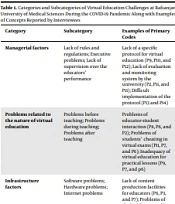
In total, 5,056 articles were identified. After the initial screening process, 4,367 articles that met the inclusion criteria were assessed by reviewing their titles and abstracts. The full texts of the articles were also evaluated based on the eligibility criteria, and 23 papers were finally selected for the current review (Figure 1). A summary of the selected articles are shown (Table 1). Notably, the e-learning challenges identified in medical universities were divided into three categories of structural challenges, student-related challenges, and teacher-related challenges.
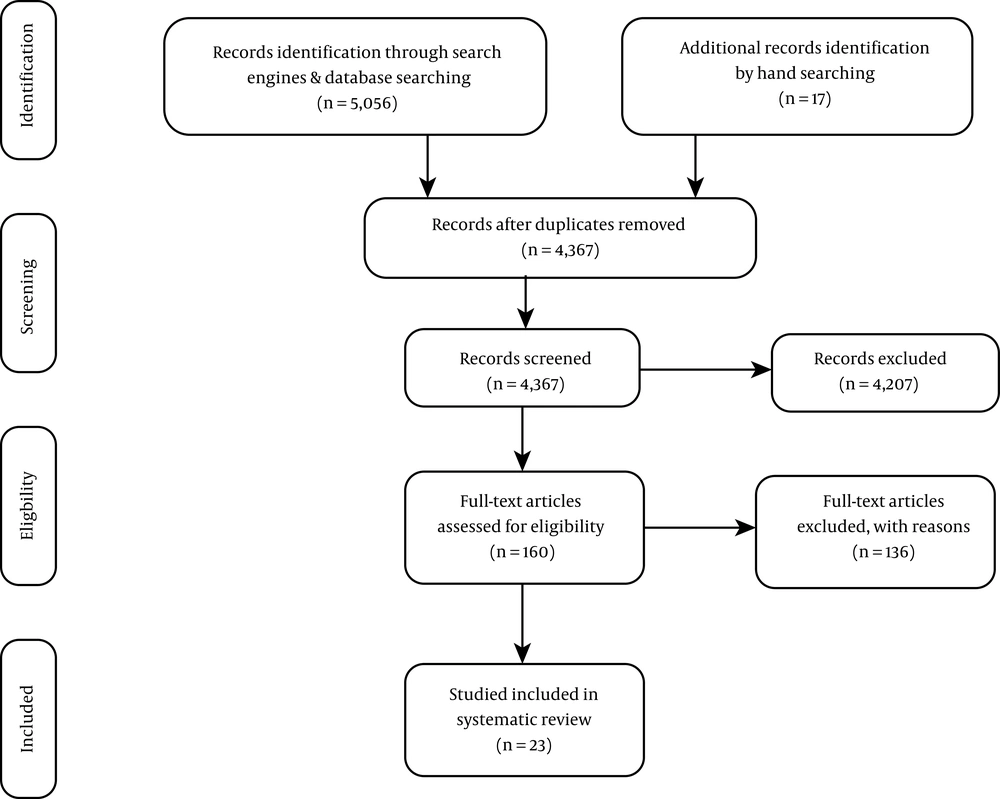
Figure 1.
PRISMA flow diagram of article selection
Table 1.Summary of Reviewed Studies
| Titles | Author (y) | Country | Highlights |
|---|---|---|---|
| The pedagogical shift during COVID 19 pandemic: Online medical education, barriers and perceptions in Central Kerala (10) | Rafi et al. (2020) | Central Kerala, India | Using self-study method and e-learning technologies could tackle the identified challenges; a large proportion of students attend online classes via smartphones; a small portion did not have personal devices to partake; mentioned challenges included eye problems due to the constant use of phones, overloading of classes, disinterest in online classes, network issues, and fluctuations; most of the students stated that practical classes fail to provide effective learning; even the use of simulators could not compare to contact with patients and attending hospital wards. |
| Challenges with medical education in Nigeria in the COVID-19 era (11) | Oladipo et al. (2020) | Nigeria | Lack of interaction with patients; no access to interactions for creating communication, empathy, compassion, and team work in medical students, no access to proper infrastructures, and presence of socially vulnerable students as main barriers to online learning; poor online educational content, high costs of internet, unreliable internet-based services, inability of lecturers to use digital operating systems, lack of access to e-learning systems, lack of technical support, lack of knowledge and technological support . |
| Challenges and opportunities from the COVID-19 pandemic in medical education: a qualitative study (12) | Hayat et al. (2021) | Iran | Influential factors in e-learning: 1. Perception of feasibility of e-learning, reflecting the extent to which courses could be delivered virtually; 2. Standardizing e-learning; 3. Dedicated teaching (appropriate preparation and empowerment of agents plays a pivotal role in medical e-learning); 4. Centrality of networking and interdisciplinary collaborations |
| Medical education during pandemics: A UK perspective (13) | Mian and Khan (2020) | UK | Interaction and communication with patients as major challenges in medical education; creating a diagnostic method and contact with patients considered essential to learning in medical students; as William Osler claims: "He who studies medicine without books sails an uncharted sea, but he who studies medicine without patients does not go to sea at all."; in the current pandemic, Imperial College London faces the challenge of online patient inventories and recorded interviews; emphasis placed on the fact that distance learning does not replace direct contact with patients, and it is difficult to develop key clinical skills in this method; challenges could be diminished by digital technologies. |
| COVID-19 the disruptor; challenges and opportunities in medical education (14) | Farooq et al. (2020) | Pakistan | Lack of personal computers/laptops and poor internet facilities; in competency-based medical education (CBME), emphasis is on regular educational progress of students, while the electronic method requires trained faculty members and strategic planning; challenges in patient-physician communication. |
| The COVID-19 pandemic and the challenge of using technology for medical education in low and middle income countries (15) | Cecilio-Fernandes et al. (2020) | Ormskirk, UK | Challenges in online education in Brazil reported to be time and energy of professors spent preparing lectures via PowerPoint, students sitting for long hours using a computer and their distraction due to lack of a specific learning environment, needing a laptop, internet access, loss/disruption of internet connection during online lectures, and follow-up of students' presence/absence in classes; clinical education of students also considered a significant challenge. |
| COVID-19 and education system: impact of current pandemic on adaptive learning strategies in medical education system (16) | Deepali and Waqar (2020) | India | Stress of students in e-learning; professors should make more attempts to engage students and use effective strategies to increase their interest; emphasis on proper video contents; in producing educational content, rules and regulations should prevail; tips for the proper evaluation of students. |
| The impact of COVID-19 on medical education: our students perception on the practice of long distance learning (17) | Daroedono et al. (2020) | Indonesia | Distance learning provides opportunities for self-regulatory and active learning, decreases commute costs, and staying home helps with concentration of students to learn effectively; Indonesia is a large country consisting of 13,000 islands, which causes disruptions in distance signals. |
| COVID-19 and distance learning: Effects on Georgia State University School of Public Health Students (18) | Armstrong-Mensah et al. (2020) | USA | Lack of alternatives for students' choice of online or offline courses; lack of access to free technological hardware, software, and internet services due to social distancing; lack of motivation for learning; increased workload in new courses; adjusting to unknown technologies; lack of trust in the future; lack of fair access for all students; lengthy preparation and adequate training of faculty members; adding current materials; creating new curricula and duplication online. |
| Students and faculty perception of distance medical education outcomes in resource-constrained system during COVID-19 pandemic. A cross-sectional study (19) | Tuma et al. (2021) | Iraq | Less than half of students and teachers consider online learning to be equal or superior to traditional learning methods; most students and teachers find the main problems of e-learning in the challenges associated with using the current technologies, such as unreliable internet connection and exhaustion while listening to online lectures. |
| Challenges of online medical education in Pakistan during COVID-19 pandemic (20) | Farooq et al. (2020) | Pakistan | Lack of prior experience in online teaching; lack of training on the technical support of information by faculty members; problems in recording lectures by faculty members at home; absence of students for their online evaluation; keeping the balance between professional and personal life in female faculty members working at home; high volume of lectures to be downloaded by the students living in rural areas (e.g., live/video conferences); no educational design; recurrent power outage; disinterest of schools to adopt new educational strategies and cultural/social norms; lack of specific guidelines for online medical education from Pakistan Medical and Dental Council or Higher Education Commission of Pakistan to create a map of e-learning. |
| Investigating the E-learning challenges faced by students during COVID-19 in Namibia (21) | Kaisara and Bwalya (2020) | South Africa | Lack of access to electronic learning resources, a sense of isolation, poor system function, system arrangement, and home environment not only in Namibia, but also the consequences of e-learning in many developing countries; ACTIONS (acronym for access, costs, teaching and learning, interactivity, organizational issues, novelty, and speed) and its updated version the SECTIONS (acronym for students, ease of use and reliability, costs, teaching and learning, interactivity, organizational issues, novelty, and speed). |
| Indonesia education readiness conducting distance learning in Covid-19 pandemic situation (22) | Churiyah et al. (2020) | Indonesia | Indonesia has prepared the virtual infrastructures, while attention should still be paid to the factors related to teachers and schools regarding distance learning; students have poor self-regulatory distance learning activities; teachers face challenges regarding novel technologies; parents lack the proper understanding of home-based learning. |
| Distance learning in clinical medical education amid COVID-19 pandemic in Jordan: current situation, challenges, and perspectives (23) | Al-Balas et al. (2020) | Jordan | Less than half of the students were dissatisfied with distance learning, while satisfaction was observed in students with the experience of e-learning; time spent by professors was significantly more in learning sessions based on multimedia content, and they allocated sufficient time to these activities; delivery of educational content through live sessions was most common; more than half of students believed internet connection and quality to be the main challenges. |
| Challenges to online medical education during the COVID-19 pandemic (24) | Rajab et al. (2020) | Saudi Arabia | Less than half of students claimed that before the pandemic, they did not experience online learning/teaching or had limited experience in this regard; the majority preferred online learning to face-to-face learning; reported challenges in online medical education were teacher-student communication, COVID-19 examination of students, using technological devices, online experiences, anxiety and stress of pandemic, time management, and phobia of technology; the majority of students believed that COVID-19 pandemic has increased their self-confidence regarding the efficacy of online medical education; most of the students were interested in continuing the online classes of the pandemic in the future. |
| E-Learning during the period of pandemic (COVID-19) in the kingdom of Saudi Arabia: an empirical study (25) | Hoq (2020) | Saudi Arabia | Most lecturers had a positive view toward e-learning. However, it was suggested that users need skills such as recognizing the capacity of content for learning through online education, selecting and using proper learning tactics, monitoring the individual performance of students, and exploiting knowledge and skills to reach learning goals. In addition, coordination between the main stakeholders (teachers, parents, apprentices/students) is essential to the active adjustment of e-learning. It was also recommended that e-learning operating systems be upgraded for use in training. Considering proper reward systems for teachers and students/apprentices could also increase their motivation of using e-learning techniques. |
| Exploring the critical challenges and factors influencing the E-learning system usage during COVID-19 pandemic (26) | Almaiah et al. (2020) | Jordan | Research findings were focused on the influential factors in e-learning systems and the challenges associated with organizing these systems in the COVID-19 pandemic. The foremost factors affecting the use of e-learning systems included technological factors (access to proper software and hardware), factors associated with the quality of e-learning systems (accessibility and usability of the internet, computer skills, compatibility of electronic data with students' needs), cultural factors (widespread use of electronic devices by students), self-efficacy of students, and reliability factors (privacy and reliable systems). It was also stated that factors related to change management, technical problems of e-learning, and financial support are the main challenges in using e-learning approaches. |
| Study of the effectiveness of e-learning to conventional teaching in medical undergraduates amid COVID-19 pandemic (27) | Kaur et al. (2020) | India | Among 10 parameters, the six parameters of communication, skill development, better understanding in recorded classes, in-doubt sessions, grooming of professional career, and assignment delivery in e-learning were viewed as effective as conventional education. As for the other four parameters (comfort, interaction, attention to personal needs, and balance of practical and theoretical knowledge) were observed to be less effective in e-learning. Students were more satisfied with e-learning in terms of class material and accessibility of electronic resources compared to conventional learning. They were equally satisfied with professional improvement and access to professors in e-learning compared to conventional learning. It was concluded that e-learning could complement the current educational process, while it cannot replace face-to-face learning. |
| Perceptions of students regarding E-learning during COVID-19 at a private medical college (28) | Abbasi et al. (2020) | Pakistan | Students did not prefer e-learning to face-to-face learning. Faculty members should take effective measures to enhance e-learning and students' learning. |
| Medical education and E-learning during COVID-19 pandemic: Awareness, attitudes, preferences, and barriers among undergraduate medicine and nursing students at Makerere University, Uganda (29) | Olum et al. (2020) | Uganda | One-fourth of students had access to high-quality or optimal internet connections. Knowledge and the use of e-learning operating systems (MUELE) were reported. More than half of the respondents believed that the quality of their knowledge reduced with e-learning, and e-learning is not an effective learning approach. Factors such as monthly income, internet connection quality, owning a computer, and the frequency of using websites or academic programs significantly affect the perception toward e-learning. Costs of internet connection and a poor internet connection were the main barriers to e-learning. It was concluded that creating sensitivity and training of students and professors on e-learning and using available learning operating systems are essential to improving the perceptions and use of e-learning. The integration of online and offline educational materials that could be downloaded could also help overcome the challenges associated with the unstable internet connection in the country. |
| Barriers to online learning in the time of COVID-19: A national survey of medical students in the Philippines (30) | Baticulon et al. (2021) | Philippines | Less than half of students considered themselves mentally and physically capable of online learning. The barriers were reported to be technological (hardware, software, internet connection), individual (students' learning, physical/mental health), domestic (family financial problems), institutional (management, medical curricula, school references, educational skills), and social (social constraints, infrastructure issues, and sociopolitical issues). Reported issues included the difficulty of adjusting learning styles, home duties, and poor interaction of teachers and learners. It was suggested that student-oriented interventions should be implemented, and medical schools and instructors also play a key role in this regard during and after the COVID-19 pandemic. |
| Impact of COVID-19 pandemic on dental education: online experience and practice expectations among dental students at the University of Jordan (31) | Hattar et al. (2021) | Jordan | Students partly welcomed education through online lectures and discussion sessions. However, they believed that this system cannot replace clinical practices, and they have missed on many educational experiences. Graduates also considered themselves prepared in terms of the characteristics expected of dentists based on their mental capacities, while their feedback reflected the need for partake in post-graduation training courses. |
| Distance education of medical students during COVID-19 pandemic (32) | Sukhomlyn et al. (2020) | Ukraine | By analyzing practical differences and features of various distance learning methods, different approaches and e-learning tools were observed to be available for use in effective online learning. It was concluded that the optimal distance learning techniques for enhancing teacher-student interaction involve using different states simultaneously (e.g., online education setting, video conferences, email, group chats, and messaging). In addition, it was stated that although distance learning cannot replace face-to-face interactions between teachers and students, its advantages could be incorporated into conventional models for improvement in the future. |
5. Discussion
The present study aimed to evaluate different virtual education challenges in medical universities during the COVID-19 pandemic by reviewing the related articles. The identified challenges and strategies to cope with these issues have been discussed below.
5.1. Structural Challenges
Virtual learning infrastructures refer to the facilities, systems, and structures in the field of communication technology, as well as the required technology for the proper implementation and access to e-learning services (1). Structural challenges are the most important issues of education in the current situation. Internet problems are among the infrastructure issues in virtual learning or e-learning, which include low connection speed, high user volume, frequent internet disconnection, and lack of especial bandwidth to students. A review of the studies in this regard indicated that internet bandwidth and internet connection failure are among the most important structural challenges of e-learning during the COVID-19 pandemic in developing countries (10-13) and even developed countries (e.g., Indonesia). Despite the existence of virtual infrastructures, Indonesia is faced with a telecommunication signal problem due to its special geographical location with 13,000 islands (14). According to most studies, lack of infrastructures and technologies is another barrier to medical education, which is more prominent in low- and middle-income developing countries (15). Moreover, lack of access to the internet, lack of proper structures, presence of socially vulnerable students, and sociocultural norms were identified as the barriers to online learning (10, 13, 16, 17).
The reviewed studies indicated that technological barriers (e.g., software and hardware), weak servers without the capacity for high user volume, and systems with poor visual communication with the audience adversely affect online learning. Unreliable internet service, internet connection, internet costs and financial support issues, frequent power outages (power fluctuation), and network issues (poor bandwidth) were among the other challenges identified in the previous studies in this regard (10, 12, 13, 15-20).
5.2. Student-related Challenges
Since many courses are offered to medical students practically and clinically, one of the most important challenges identified according to the studies of this field was the lack of proper bedside learning. The actual interaction with the patient in the clinical setting cannot be provided in distance learning despite the use of stimulators (18). Interactions are essential to establishing skills such as communication, empathy, compassion, and teamwork in medical students (10). According to Mian and Khan, one of the main challenges in medical education is interaction and communication with patients at the bedside. In the mentioned study, the researchers emphasized the necessity of communication with and examining patients to learn and develop an effective diagnostic approach. In this regard William Osler states: "He who studies medicine without books sails an uncharted sea, but he who studies medicine without patients does not go to sea at all."
During the COVID-19 pandemic, the Imperial College London used recorded interviews with patients and online patients to address the challenges of medical education at the bedside. By providing the online repository of patient interview recordings and cases, the obtained results emphasized that distance learning cannot replace actual contact with patients as it complicates the development of key clinical skills in medical students. However, this challenge could be resolved with the help of digital technologies (13). In this respect, several studies have discussed the challenges of social interaction in students. Accordingly, most students complain of the reduced depth and quality of learning, mentioning the neglected areas of virtual education, such as the lack of in-depth online conversations, lack of improvised and creative ideas, lack of understanding others and not being understood by others, lack of acquaintance with others, and lack of learning and having a behavioral and learning role model (11, 13, 15, 19, 22). Furthermore, the results obtained from the assessment of the articles revealed that most students attended online classes via smartphones. Therefore, one of the obvious challenges faced by these individuals was eye problems caused by mobile device overuse (10). However, not all students had fair access to handheld devices (18).
Among other e-learning challenges were sitting in front of a computer for long hours, distractions caused by the lack of a space dedicated to studying (15), and stress due to e-learning (16). Meanwhile, Rajab et al. claimed that the COVID-19 pandemic has boosted students’ confidence in the effectiveness of online medical education. Most students are willing to continue online classes owing to their experience of such courses during the pandemic (24). Other major challenges of virtual education were reported to be the lack of alternatives and asking students’ opinions about whether they are willing to attend online classes (18), boring online lectures (19), low self-regulation of students in e-learning (17), low knowledge quality of students in e-learning classes (29), poor online content (11), not having a personal computer/laptop, and poor internet facilities (14).
5.3. Teacher-Related Challenges
Lack of technical skills is a major challenge faced by educators in the development and implementation of online education. Medical educators are currently pressured to dedicate adequate time to education management, research, and establishing a balance between life and work. Therefore, inadequate time could be a considerable barrier in this context. In a research, Armstrong-Mensah et al. reported the main challenges of e-learning to be the adequate time dedicated to education by teachers and the ability to verify the existing curricula or develop/reproduce new curricula online (18). Another barrier to the development and implementation of online learning has been reported to be educators’ negative attitude toward engaging with new technologies (33). In addition, their unfamiliarity with e-learning strategies, poor university technology units in supporting the e-learning process, and the digital gap caused by the inequalities in underprivileged areas that prevent students' access to virtual classrooms are among the challenges faced by teachers during the current pandemic.
The regular assessment of students’ academic achievements requires trained teachers and planning although this type of training focuses on electronic assessment (14, 25). Other challenges faced by educators have been reported to be difficulty in recording lectures by faculty members at home, absence of students and their involvement in other online activities, lack of training of faculty members on online student evaluation, and maintaining a balance between life and work in female faculty members while staying home due to the current pandemic (20). Undoubtedly, the implementation of virtual classes requires equipping universities with the infrastructure of educational technology, software, hardware, educational regulations fitting virtual education, skill and psychological preparation of teachers, and skill and psychological preparation of students. In this regard, some solutions and recommendations have been proposed in the following section, which could be effective in improving the current status and avoiding the aggravation of the identified obstacles and challenges of e-learning.
One of the most widely recommended solutions to overcome the challenges of distance medical education is using video conferencing operating systems (34). For optimal performance in these classes, it is strongly recommended that this educational method be used in small groups to facilitate interaction in the form of problem-solving teaching. An effective strategy would involve the implementation of flipped classes in which the curriculum content is provided to students prior to online classes (8, 35). Several e-learning operating systems could be employed for this purpose, such as Microsoft Teams®, Google Meet®, Edmodo®, Moodle®, and Blackboard®. Moreover, video conference operating systems such as Zoom®, Skype®, WebEx®, and Adobe Connect are widely used in this area. These tools create an environment for interaction between students and faculty members, especially for resolving medical educational concerns and problems. Furthermore, they enable students to have virtual presentations and make online seminars and problem-based video conferences for deeper learning.
Among the other identified issues with e-learning were recording the electronic content prior to classes and using simultaneous chats or asynchronous forums (8, 34). Online operating systems such as Zoom® are applied for bedside patient visits by an instructor to teach theoretical points and even perform some clinical activities in medical education. Another interesting strategy in this regard would be virtual surgery using a GoPro® camera and two-way audio and video communication between students and the surgical team in real-time (36).
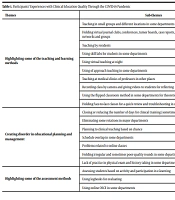
There are grave concerns regarding the evaluation of the teaching-learning process in medical education texts due to the great emphasis on memorizing the lessons in traditional exams, and the COVID-19 pandemic could further disrupt the online implementation of these evaluations (34, 35). Several interesting online evaluation strategies could be adopted to increase evaluation credibility, such as oral assessment through videoconferencing and close communication with students, oral lectures (37), recording videos provided in clinical cases (9, 38), evidence-based medical practices during treatment assessment (36), open-book tests, and random questions in a virtual education environment with a set maximum time for finishing (39). In the disciplines where clinical skill development is important, methods such as preparing an electronic report in which the clinical supervisor assesses students’ skills could be effective as well. Creating concept maps, podcasts, videos, other resources, and a final section to reflect on these categories could be another prominent activity for online student evaluation (40). The use of videoconferencing in clinical trials with real patients, listening to conversations between students and patients, providing real-time feedback, and designing the necessary interventions have also been recommended in this regard (41, 42).
In the reviewed studies, most of the students had access to the electronic educational content via their handheld devices, and cellphones were the main device applied for this purpose. Therefore, it is recommended that applications and systems compatible with students’ smartphones be employed in e-learning and medical education, especially clinical education. Elimination of students from clinical internship courses could lead to significant outcomes for future workforce planning. However, the COVID-19 pandemic has highlighted issues previously discussed in medical education, such as the role of students, focus on education by relying on clinical experience, and challenges posed by a traditional model (e.g., medical model). The image of the contemporary world and technological advances, as well as the centrality of the role of students rather than teachers in the teaching process, have become clearer as an important issue in the educational decisions regarding medical education courses (43).
5.4. Conclusions
Virtual education is a global service that has attracted tremendous investments recently. Even without considering the coronavirus pandemic, virtual education must be followed as a solemn priority of higher education. Virtual education involves issues such as educational justice, which necessitate the thorough assessment of this area. While new technologies make education more independent and flexible, the organizational structure of higher education institutions must change to exploit these facilities. Furthermore, it is essential to provide proper learning opportunities through measures such as establishing a strong technological infrastructure, developing the necessary educational standards, creating a proper culture, and changing the traditional attitude of the community toward education and investment. Finally, the participation of the government and private sector is critical to the application of new technological systems for educational affairs.
5.5. Ethical Considerations
The ethical considerations for review studies were considered based on Cochran’s instructions. Our study has not been published in any editions of the journal. The research findings are published honestly, accurately, and in simple language. In addition, the material and intellectual rights of the research team and research colleagues have been observed, and plagiarism has been avoided.