


Fulltext
The full-text is available in pdf.
International Cardiovascular Research Journal
Background: SYNTAX scores (SS) and clinical SYNTAX scores (CSS) together are widely used in clinical practice as predictors for major adverse cardiac events (MACEs) after an elective primary percutaneous intervention (PCI).
Objectives: We sought to investigate prognostic values of the combination of SS and CSS in predicting MACEs in a cohort of patients with acute myocardial infarction treated by primary PCI with a 12-month follow-up.
Methods: This prospective, longitudinal study included patients from two referral hospitals who had an acute myocardial infarction and underwent primary PCI. SS and CSS were calculated by researchers blinded to patient details using web-based software and clinical factors. SS and CSS were classified into three categories: low/SS1: < 11.75, moderate/SS2: 11.75 – 23.25, or high/SS3 > 23.25, and low/CSS1: < 22.95, moderate/CSS2: 22.95 – 35.95, or high/CSS3: > 35.95. We followed the patients 12 months after the procedure and recorded clinical examination results and MACEs. Data analysis included the chi-squared test (c2), student's t-test, and Cox regression analysis. Cumulative survival rates were estimated through Kaplan–Meier curve analysis.
Results: Among 296 subjects, those with a MACE predominated in the SS3 (16.8%) and CSS3 (14.0%) categories. SS had a significant relationship with all-cause mortality (P = 0.015), re-infarction (P = 0.019), cardiovascular death (P = 0.03), and MACE (P = 0.04). CSS had a significant relationship with all-cause mortality (P < 0.001), re-infarction (P = 0.02), cardiovascular death (P = 0.016), and MACE (P = 0.045). The risk of death by 12-month follow-up of the SS3 patient group was 2.99 times higher than that of the SS1 group (HR = 2.99; 95% CI: 1.11 – 7.84; P = 0.029). The CSS3 patient group had a 4.23 times higher risk of death than the CSS1 group (HR = 4.23; 95% CI: 1.94 – 9.36; P < 0.001). According to Kaplan-Meier curve analysis, the difference in survival rates of the three patient groups categorized by SS or CSS was significant. The SS1 group had the highest survival rate of 91.8%, followed by the SS2 (85.0%) and SS3 (77.9%) groups. Regarding CSS, the CSS1 group had the highest survival rate of 93.0%, followed by the CSS2 (85.1%) and CSS3 (73.8%) groups.
Conclusions: The classification of SS (low SS1, moderate SS2, high SS3) and CCS (low CSS1, moderate CSS2, high CSS3) has important roles in the risk assessment of patients with ACS treated by primary PCI.
© 2023, Author(s). This open-access article is available under the Creative Commons Attribution 4.0 (CC BY 4.0) International License (https://creativecommons.org/licenses/by/4.0/), which allows for unrestricted use, distribution, and reproduction in any medium, provided that the original work is properly cited.
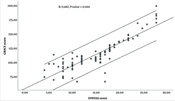
Namazi MH, Khaheshi I, Alaei M, Tavakoli Y, Moradi A, et al. The Correlation Between GRACE Risk Score and SYNTAX Angiographic Score in Acute Coronary Syndrome: A Cross-Sectional Study. Int J Cardiovasc Pract. 2023;8(2):e142570. doi: https://doi.org/10.5812/intjcardiovascpract-142570
Vakili H, Sadeghi R, Toofaninejad N, Akbari T, Kachoueian N. One- and Six-month Outcomes of Patients with Non-ST Elevation Myocardial Infarction. Int J Cardiovasc Pract. 2016;1(3):e130050. doi: https://doi.org/10.21859/ijcp-010303
Patel C, Prajapati J, Patel I, Singhal R, Mishra A, et al. Predictors of the extent and severity of coronary artery disease for prognosis of patients with non-ST-segment elevation acute coronary syndromes. Int J Cardiovasc Pract. 2018;3(4):e130285. doi: https://doi.org/10.21859/ijcp-03043
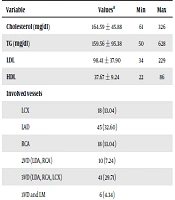
Mirbolouk F, Salari A, Riahini F, Moayerifar M, Norouzi S, et al. Electrocardiographic Changes and Coronary Findings in Patients with Acute non-ST-Elevation Myocardial Infarction: A Cross-Sectional Study. Jundishapur J Chronic Dis Care. 2020;9(4):e103948. doi: https://doi.org/10.5812/jjcdc.103948
hosseini K, Bozorgi A, Karbalayi S. Predicting the Culprit Lesion in Acute Inferior ST-Elevation Myocardial Infarction Based on Wellens’ Criteria and Tierala’s Algorithm. Thrita J Neu. 2014;3(1):e93661. doi: https://doi.org/10.5812/thrita.15607
Last Update: 3 weeks ago
Last Update: 3 weeks ago
Last Update: 3 weeks ago
Last Update: 5 days ago
Ordering Reprints
Articles are published under the Creative Commons license stated on each article. No permission or royalty fee is required for uses permitted by that license. CCC handles optional bulk and customized reprint orders. Any quotation covers production and delivery services only, not copyright permission. > Request Reprints from CCC
Author(s):

