
1. Background
Benign focal lesions (e.g. osteoporotic fractures) in the spine can be misdiagnosed with metastatic lesions. Since the prognosis and management differ in these two entities, accurate diagnosis without taking the risk of unnecessary biopsy or surgery is important. Although conventional magnetic resonance (MR) imaging is known as a sensitive modality for studying the bone marrow, it does not have specificity in differentiating benign from malignant vertebral marrow lesions. Bone marrow can be divided into two types of fatty (yellow marrow) and hematopoietic (red marrow) in normal adults (1-3). Normal hematopoietic marrow, in the axial skeleton, contains about 60% cellular elements, which mostly consists of water, and 40% fat (while yellow marrow has 80% fat content) (1-3).
Most malignant infiltrations tend to completely replace the fatty marrow components with neoplastic cells, whereas non-neoplastic lesions typically preserve fat within marrow (1-11). Thus, if a component with low fat is present in the bone marrow, it can show a malignant process. It is also well known that the predominantly fatty benign lesions show low signal intensity (SI) on opposed-phase (OP), compared with in-phase (IP) images (2-6). Therefore, when a malignant process replaces fatty tissue, it results in a decreased loss of SI on out-of-phase in comparison to IP images. This would consequently result in a greater proportional score.
Based on such special pathologic differentiation between benign and malignant marrow infiltration, and the ability of chemical shift MRI (also known as IP and OP imaging) to quantify vertebral bone marrow fat content, researchers have hypothesized that chemical shift MR imaging can be an effective technique for studying the lesions inside the spinal bone marrow better enabling the differentiating between malignant and benign processes (1).
The aim of the present study was to establish a cut-off value for signal intensity ratio (SIR) in dual-phase chemical shift MRI and also to evaluate the sensitivity and specificity of this method in order to differentiate benign from malignant focal vertebral lesions.
2. Methods
2.1. Study Design and Population
Totally 51 patients, (28 men and 23 women) with a mean (± SD) age of 52.61 ± 13.52 years (range, 27 - 81 years) with 116 vertebral focal lesions referred to our university hospital radiologic services for routine MR imaging of the spine (cervical, thoracic, lumbosacral imaging or any combination of them) from 2010 to 2012, were enrolled in this prospective study.
Inclusion criteria were vertebral lesions with abnormal SI on conventional MRI or bone nuclear scan, previous history of malignancy and vertebral lesion, known metastatic vertebral lesions and new onset of acute back pain and tenderness over vertebral column) (less than 20 days). Standard MRI and additional chemical shift sequences were done for all patients. Patients who had received radiotherapy were excluded. In addition, patients for whom adequate follow-up or documentation could not be obtained were excluded from the analysis.
After complete MR evaluation, patients were followed for 6 - 12 months. Final diagnosis was made on clinical basis ± imaging (no evidence of erosion, extension of lesion or other signs of malignancy), biopsy and pathologic proof or according to other imaging methods such as nuclear medicine. The final clinical diagnosis made for the patients was used as the “gold standard” to categorize the vertebral lesions as benign or malignant.
2.2. MR Imaging Technique
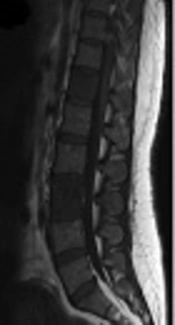
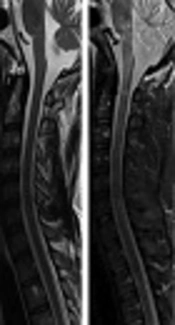
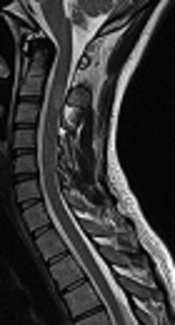
MR imagining was performed for all patients using a 1.5-Tesla superconducting system (Magnetom Vision and Symphony; Siemens, Erlangen, Germany). Also a phased-array spine coil was used. The following pulse sequences were used for all patients: sagittal T1-weighted spin-echo (400-700/8-16 [repetition time (TR) msec/echo time (TE) msec]), sagittal T2-weighted fast spin-echo (TR/TE 2000-5000/80-100) fast multi-planar spoiled gradient-echo MR imaging. Chemical shift sequences for sagittal IP were obtained at RT/ET 100-165/4.2 and OP 100-165/2.4 with breath-holding. The flip angle was 30°. For chemical shift MR imaging, the total imaging time was 40 - 50 seconds for the entire pulse sequence.
Sagittal images with a 4-mm section thickness and a 1-mm section gap were obtained for all sequences. The field of view was 20 cm for cervical vertebrae, 34 cm for thoracic vertebrae, and 24 cm for lumbosacral vertebrae. The matrix was 256 - 192.
2.3. Imaging Analysis
All images were then sent to a picture archiving and communication system (PACS) work station and areas with abnormal SI on the T1 and T2 sequences were identified on the IP/OP. An elliptical region of interest cursor was placed over the abnormal area on the IP as well as on the OP images.
We calculated the signal intensity ratio or SIR (SI of OP/SI of IP) to compare the OP with the IP images. Air was chosen as the reference because it is not affected by fatty infiltration.
2.4. Statistical Analysis
The signal intensity on OP images was divided by IP images to calculate SIR for each lesion in both benign and malignant groups. Results are presented as mean ± SD (standard deviation) for numeric variables, and are summarized by absolute frequencies and percentages for categorical variables. Continuous variables were compared using the Student’s t-test or Mann-Whitney test, while categorical variables were compared using chi-square test or Fisher’s exact test as appropriate. ROC (Receiver Operating Characteristic) curve was designed to yield the best cut-off value for chemical shift technique and to obtain false negative and false positive rates for every possible cut-off value. P values less than 0.05 were considered statistically significant. For the statistical analysis, SPSS software (ver. 20.0) was used.
2.5. Ethics
The study protocol was approved by Research Deputy of Shahid Beheshti University of Medical Sciences, Tehran, Iran; No. 522 M. The study protocol was in conformity with guidelines of the Declaration of Helsinki.
3. Results
On the basis of final clinical diagnosis after follow up, amongst 116 vertebral lesions, 29 (25%) lesions were classified as benign focal lesions (including degenerative changes, hemangioma or fat deposition) and 87 (75%) were diagnosed as malignant lesions. Final diagnosis of malignant lesions was proved by biopsy in 27 lesions, 49 of them had known underlying malignancy and metastatic vertebral lesion and in 11 cases diagnosis was based on clinical basis. There was no significant difference between these two groups regarding age and gender (Table 1).
Table 1
. Patients Characteristics Grouped Based on Final Diagnosis
| Variables | Total (N = 116) | Benign Lesions (n = 29) | Malignant Lesions (n = 87) | P Value |
|---|---|---|---|---|
| Age | 52.61 ± 13.52 | 55.55 ± 13.86 | 51.63 ± 13.34 | 0.18 |
| Male | 40 (34.5) | 13 (44.8) | 27 (31.0) | 0.18 |
| Location of the lesion | 0.03 | |||
| Cervical | 8 (6.9) | 2 (6.9) | 6 (6.9) | |
| Thoracic | 48 (41.4) | 7 (24.1) | 41 (47.1) | |
| Lumbar | 54 (46.6) | 20 (69.0) | 34 (39.1) | |
| Sacral | 6 (5.2) | 0 (0) | 6 (6.9) | |
| SIR (out-phase/in-phase) | 0.92 ± 0.27 | 0.60 ± 0.19 | 1.03 ± 0.20 | < 0.001 |
Lumbar vertebral lesions were diagnosed more frequent as benign lesions, whereas most of the thoracic lesions were malignant. All sacral lesions were malignant at final diagnosis. All these differences were statistically significant (P = 0.03). Also the mean SIR in benign lesions was significantly lower than the SIR of malignant lesions (0.60 ± 0.19 vs. 1.03 ± 0.20, P < 0.001); Table 1.
The final clinical diagnosis was considered as gold standard, and ROC curve was used to establish a cut-off value of SIR on chemical shift MR imaging to differentiate benign from malignant lesions. Results indicated that a SIR of 0.73 (OP images compared with IP images) can be used as the best cut-off value to identify benign (SIR < 0.73) vs. malignant (SIR ≥ 0.73) lesions with 100% sensitivity and 89.7% specificity. The area under the curve was 93.6% (P < 0.001). At this cut-off value, the positive predictive value was 96.7% (95% CI = 90.7-98.9) and negative predictive value was 100% (95% CI = 87.1-100). In addition, the accuracy of the test was 97.4% (95% CI = 92.7 - 99.1); Table 2.
Table 2.
The Result of the Test Comparing with the Gold Standard
| Gold Standard | |||
|---|---|---|---|
| Malignant | Benign | Total | |
| Positive (malignant) | 87 | 3 | 90 |
| Negative (benign) | 0 | 26 | 26 |
| Total | 87 | 29 | 116 |
4. Discussion
The principle finding of the present study was establishing a cut-off value for SIR on chemical shift MRI to distinguish benign from malignant focal infiltrative vertebral lesions with appropriate sensitivity and specificity. Despite the common usage of IP/OP imaging of the adrenal glands and liver, studies evaluating the utility of chemical shift MR imaging in diagnosis Bone marrow diseases and more specifically vertebral lesions are not widespread. Moreover most of the previous reports assessed the utility of IP/OP imaging for differentiation of malignant from benign fractures of the spine (2-4).
Based on the physics of the chemical shift technique, in normal marrow we have a suppression of signal intensity on the OP images because of the presence of both fat and water. In benign fractures/lesions no marrow replacement occurred, so the existence of the normal marrow fat should result in suppression of signal intensity on OP images. In contrast, in neoplastic infiltrations, lack of suppression in OP signal intensity is expected because of the replacement of the normal marrow fat with tumor. However, as it shown in previous studies (2, 3), sometimes it does not occur as it is expected. There are some overlapping in the range of signal intensity values between malignant and benign fracture/lesions that may results in developing false positive and/or negative results especially in vertebral fractures. That is to say, as it was indicated by a previous report (9) that some benign fractures did not suppress signal intensity on OP image because they do not contain sufficient fat to suppress the OP sequence. Conversely, in some cases of pathologic fractures, the volume of fractured bone and consequently the fat component is higher than the tumor volume. In such studies, signal intensity suppression on the OP images might observe and a false-negative result might be yielded. Another potential explanation of such incongruity could be the confounding effect of extracellular edema in benign and intracellular water content in malignant lesions on the water-fat component of the lesion and bias the signal intensity value. In this study, benign and pathological fractures are not included to avoid potentially overlapping of SIR between malignant and benign fractures. We just aimed to develop a SIR cut-off on chemical shift imaging for differentiating malignant from benign focal infiltrative lesions.
Despite few differences in the design of the present study and previous ones, our findings are consistent with the existing literature. The most relevant investigation was a study (8) designed retrospectively to assess the use of chemical shift MR imaging technique in differentiating benign from malignant marrow abnormalities. They included 569 normal vertebrae among 75 subjects (42 women, 33 men; mean age of 57.5 years) as control group and 221 lesions in 92 patients (50 women, 42 men; mean age of 59.0 years) as study group who had focal vertebral marrow abnormalities by chemical shift MR imaging. The proportional changes of SI on IP vs. OP (expressed as percentage) of benign and malignant lesions were compared with normal levels. They found a substantial decrease in signal intensity for all normal vertebrae and benign lesions. They indicated a 20% decrease of signal intensity on OP images in comparison to IP images can be used as a cut-off threshold for normality to differentiate benign vs. malignant causes of abnormalities of the vertebral bone marrow.
In a study (12), the distinction between osteoporotic and neoplastic vertebral fractures by chemical shift was evaluated. They suggested that a signal drop greater than 35% on OP images in comparison to IP images can be applied as a cut-off value to differentiate osteoporotic vs. malignant lesions. This cut-off had a sensitivity of 95%, specificity of 100%, positive predictive value of 100%, and negative predictive value of 95.2%. The cut off value obtained in our study was between the cut off values of these two studies. However, our values were calculated as SIR (OP signal intensity dividing to IP signal intensity) and were expressed by a different method to show the difference in signal intensity between OP and IP images. The discrepancy in the cut-off values obtained in various studies may be explained by the difference in the type of lesions. In a study, the authors (8) examined variables including endplate degeneration, Schmorl nodes with edema, hemangiomas, benign fractures and different patterns of metastatic lesions. The metastatic lesions were lytic, blastic, or mixed. They also indicated that lytic lesions lost less signal intensity than that of blastic lesions. In a former study, the researchers (12) studied only the osteoporotic and neoplastic vertebral fractures. In our study we focused only on focal vertebral lesions. These findings indicate that bone marrow lesions in the vertebral bodies may display somewhat variable behavior at chemical shift MR imaging based on their underlying pathologic process.
Our study had some limitations. The first one was the absence of a comparative group from non-affected vertebra as a control group. In addition, most of the lesions were not confirmed pathologically as it was not possible to obtain informed consent to perform biopsy especially in those with diagnosis of benign lesions. Another potential study design weakness is that some potential confounding factors such as anemia, smoking, osteoporosis and body mass index, associating with a decreased amount of hematopoietic marrow were not assessed in the present study.
4.1. Conclusions
Our study shows that signal intensity ratio values from Out-Phase and In-phase images (Chemical shift MR imaging) may be useful for quantitatively differentiation benign from malignant focal vertebral lesion with high specificity and sensitivity. However, different pathologies seems to have variable behaviors at chemical shift MR imaging. Our results suggested that the SIR values in neoplastic focal lesions were greater than benign lesion and a value of 0.73 can be used as a cut off to differentiate between benign and malignant focal lesions with 100% sensitivity and 89.7% specificity. Findings of this investigatio acorn tributes to existing literature to better the interpretation of clinical chemical shift MR images of vertebral bone marrow. This technique is useful to aid clinicians to discriminate between benign and malignant vertebral marrow lesions and may reduce unnecessary surgical biopsies.