This study evaluated whether vitamin C-loaded niosome has protective effects over vitamin C against As-induced toxicity in HEK-293 cells. For this purpose, a stable formulation of niosome vitamin C was prepared, which effectively reduced the As toxicity compared to vitamin C in HEK-293 cells. Vitamin C or L-ascorbic acid is a hydrophilic vitamin that acts as a free radical scavenger, regulates cholesterol metabolism, and also inhibitor of the radical chain of LDL oxidation in cells (
26). Although vitamin C is an effective natural antioxidant, it is eliminated from cells shortly after consumption because of poor stability and rapid degradation, especially in oxidative pathways (
19). Therefore, to overcome this problem and increase the effectiveness of this antioxidant, a new drug delivery system as niosomes was designed and evaluated to reduce As toxicity. Niosomes can encapsulate lipophilic and hydrophilic drugs within their structures, thus protecting drugs from external agents, increasing drug absorption and effectiveness, and reducing the toxicity of drugs (
27,
28). The structure of the niosome does not have enough charges because of non-ionic surfactants; therefore, the stabilization of niosomes can be obtained by their neutral charges at the surface, hydrophilic nature, and the flexibility of polyethylene glycol chains, which can prevent their interactions with biological ingredients (
29).
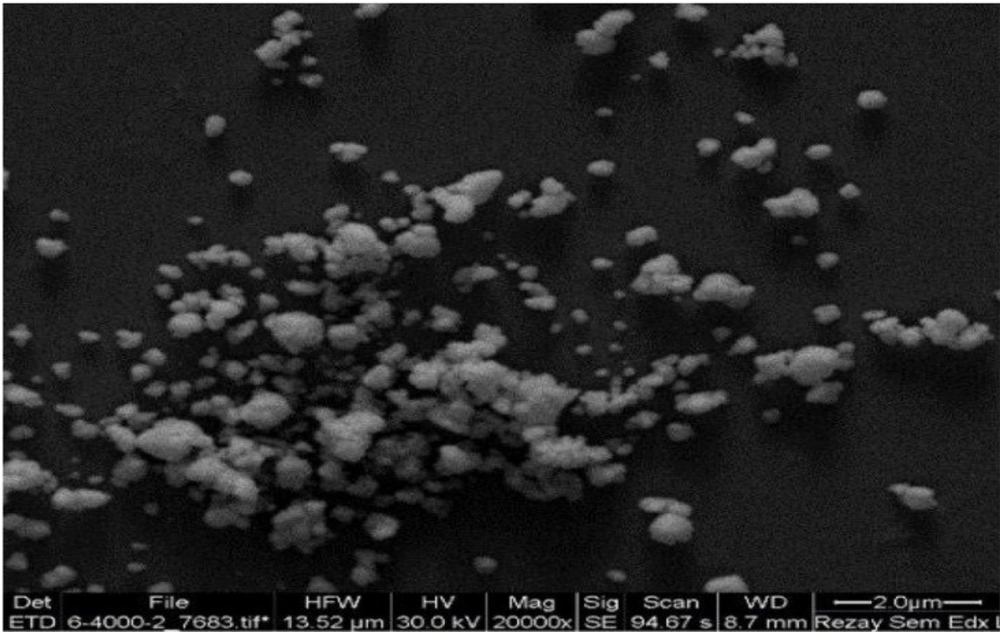
Different niosomes of vitamin C were designed and studied at the beginning of our study (
Table 1). Eventually, the niosome of vitamin C based on F1 formulation was used for in vitro study due to properties such as more possibility of cellular uptake, higher drug loading, and narrower particle size distribution than other formulations. To investigate the performance of the select niosome, we studied various parameters and compared them with those of the free drug, including zeta potential, particle size, loading rate, and entrapment efficiency percentage. Many studies have investigated the effect of zeta potential and the size of nanoparticles, indicating that nanoparticles with a smaller size could easily enter the cell and cause better efficiency for removing toxic radicals due to their absorption and accumulation in the target cell (
30). On the other hand, the zeta potential of nanoparticles has a vital role in the electrical constancy, along with their effect on cellular uptake, so that nanoparticles with higher electrical stability can prevent the niosomes aggregation and enlargement over time (
31). In this study, both mentioned parameters were examined for the select vitamin C niosome. The best particle size and zeta potential of the niosome were 163.2 ± 6.1 nm and 23.3 ± 3.5 mV, respectively. Our findings are in line with previous studies, indicating that the increased absolute value of zeta potential of nanoparticles up-regulates the cellular uptake (
32).
Drug loading was another effective parameter evaluated for the vitamin C niosome. The designed niosome, in addition to high stability, needs a high load capacity in the body to maintain its properties and increase the absorption and activity of the drug for removing xenobiotics and toxins in the target tissue (
33,
34). In this study, many attempts were made for optimizing the percentage of cholesterol to the surfactant to obtain the highest drug loading so that the percentage of drug loading in the optimal formulation was 1.97. In line with our study, Varshosaz et al. reported that the percentage of loading efficiency was lower for α-tocopherol molecules than for ascorbic acid because of its hydrophobicity (
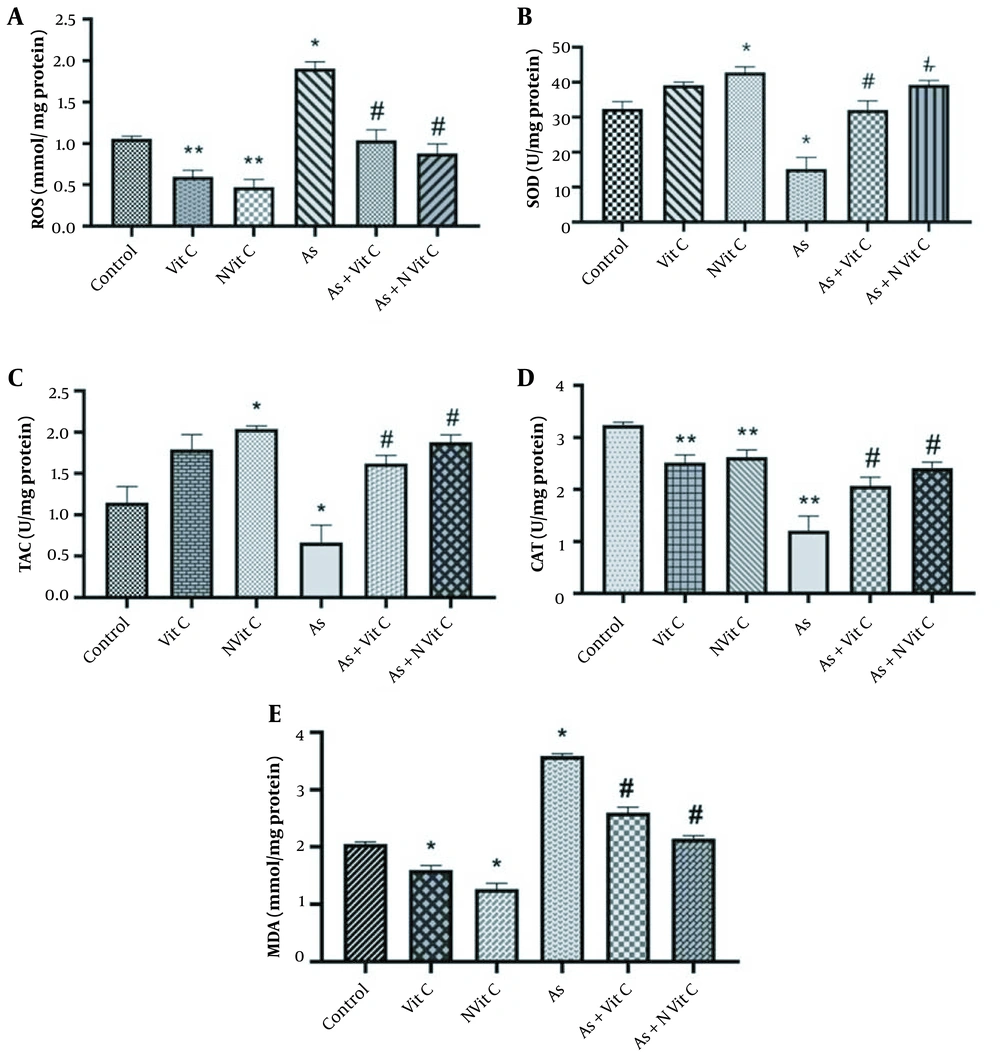
19). After selecting the best formulation for making vitamin C niosome, our study investigated the protective effect of vitamin C niosome compared to vitamin C against As-induced OS in the HEK-293 cell line. According to our results (
Figure 6A and
B), the MDA and ROS levels were significantly higher in cells treated with As than in the control group.
Meanwhile, As reduced CAT, SOD, and TAC activities in these cells. Arsenic can produce various ROS such as superoxide radicals (O
2), hydrogen peroxide (H
2O
2), nitric oxide, dimethyl As proxy radicals, dimethyl As radicals, and perhydroxyl radicals in cells (
35). The free radicals can react with most biomolecules such as DNA, lipids, and proteins and damage them (
36). According to previous research (
37), As via OS can consume and deplete antioxidant systems (enzymatic and non-enzymatic). Arsenic can attenuate antioxidant systems such as CAT and TAC, which are the most significant antioxidant enzymes against the reduced forms of oxygen, thereby conquering OS. These enzymes convert toxic oxygen species into less injurious or inoffensive products (
38,
39). Several research studies approved the role of OS in As toxicity. For example, Ting et al. expressed that ROS has an essential role in mediating cellular damage induced by As through the induction of OS and diminishment of antioxidant systems (
37). Consistent with our results, Karasavvas et al. concluded that As can produce high levels of H
2O
2 and other ROSs in HL60 and U266 cells (
40). In another in vivo study, Roy et al. showed that As induced genotoxicity and OS (
26). According to some previous studies, As can induce toxic effects by OS-induced mechanisms, and various antioxidants could ameliorate the toxic effects in HEK-293 cells (
1,
41).
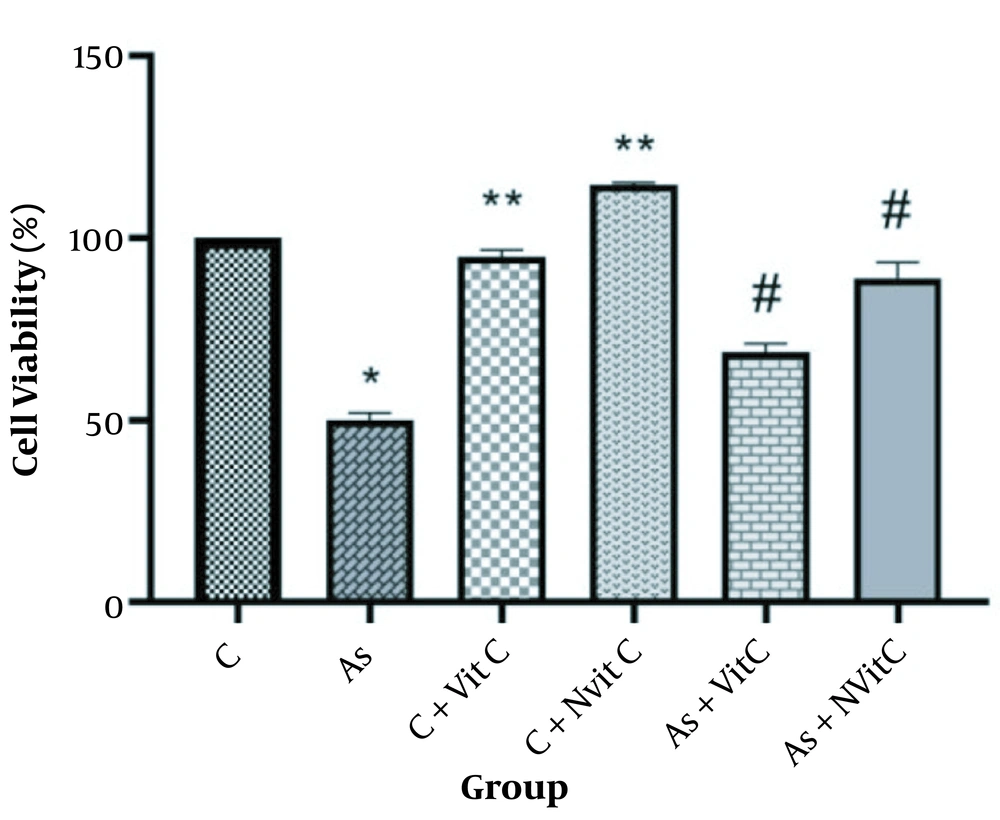
The current study used vitamin C and vitamin C niosome against As-induced OS. The obtained data confirmed that vitamin C and vitamin C niosome decreased oxidative cell markers (i.e., MDA and TOS) while improving antioxidant systems (i.e., CAT, SOD, and TAC) compared to the As group. It should be noted that these effects were more significant in cells receiving the vitamin C niosome. This effect can be related to its antioxidant properties (
42). Based on the evidence, vitamin C neutralizes the generated free radicals inside and outside the cells to combat cell damage. Free radicals tend to connect electrons to regain their stability, and vitamin C is a rich source of electrons. Therefore, it can donate electrons to various free radicals such as superoxide and hydroxyl radicals and suppress their reactivity (
43). El-Gendy et al. (
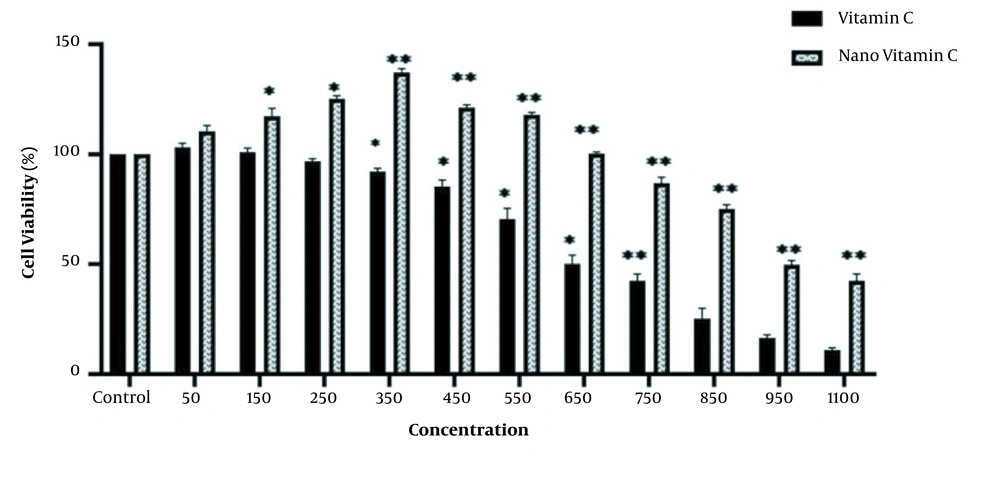
11) revealed that vitamin C significantly increased HEK-293 cell survival dose-dependently, in line with our results. The obtained results from another research showed that vitamin C could ameliorate imidacloprid-induced oxidative damage by reducing the MDA level and altering antioxidant defense activity in animals (
11). Likewise, Vineetha et al. investigated the therapeutic effects of vitamin C and α-tocopherol on As-induced toxicity in H9c2 cardiomyocyte cells by activating
Bcl2 and
Nrf2 transcription factors. They found that vitamin C and α-tocopherol alleviated As-induced OS in cardiac cells by increasing cell survival and preventing apoptosis (
44).
Similarly, Majumdar et al. reported that the co-administration of As with folic acid or vitamin B12 could reduce oxidative damage such as MDA and OH levels and thus restore SOD and CAT activities (
45). Based on the findings of another study, vitamin E could reduce the risk of As-related urothelial carcinoma (
46). Chung et al. also indicated that vitamin C could improve mitochondrial functions in the cells of As-exposed rats (
46). Based on biochemical tests, the vitamin C niosome had a better performance in improving redox status than vitamin C, and also it was obtain that changes between the forms of niosome drug and the free form of niosome drug were significant. Consistent with our study, other studies demonstrated that drug formulation in a novel form increases absorption and stability and doubles the effectiveness (
20,
47). Therefore, our proposed formulation improved AS-induced OS by increasing SOD, CAT, and TAC levels and reducing ROS, and could be considered a supportive treatment for As toxicity.
5.1. Conclusion
The vitamin C niosome was more effective than vitamin C in treating As-induced toxicity. It should be mentioned that, extensive studies along with more techniques, can be beneficial to increase our knowledge regarding nanoparticles and their use in the treatment of high toxicity induced by different toxicants.