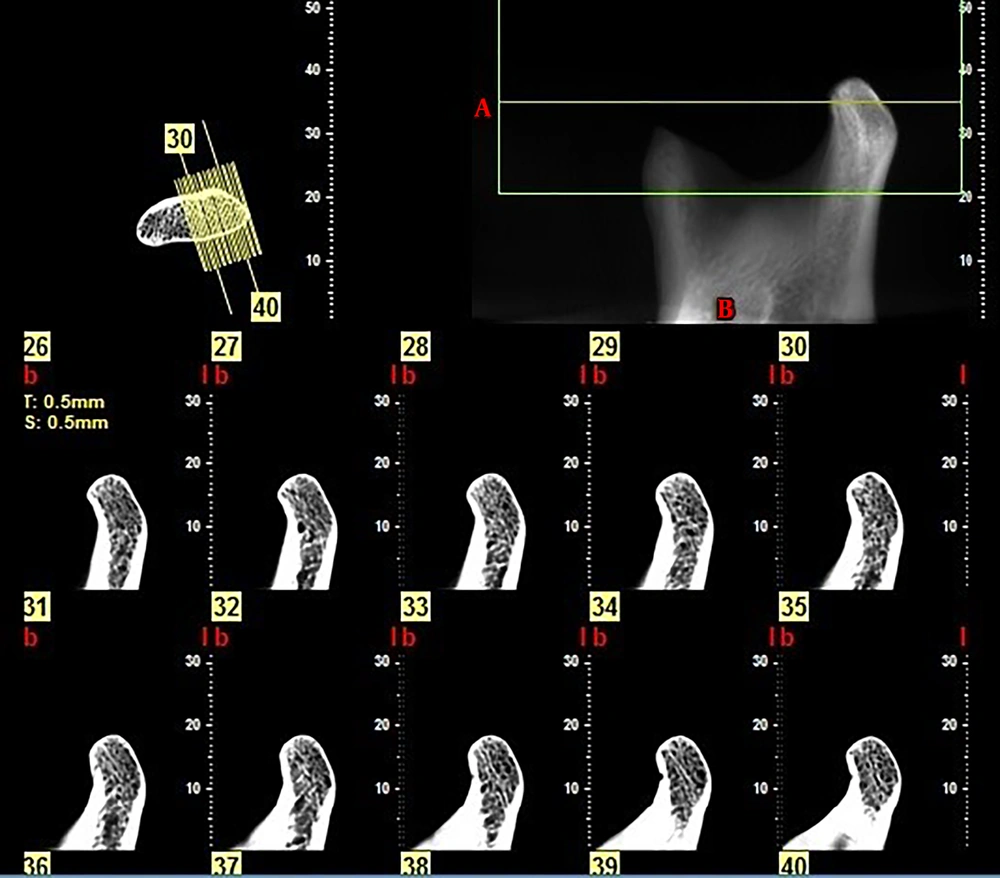
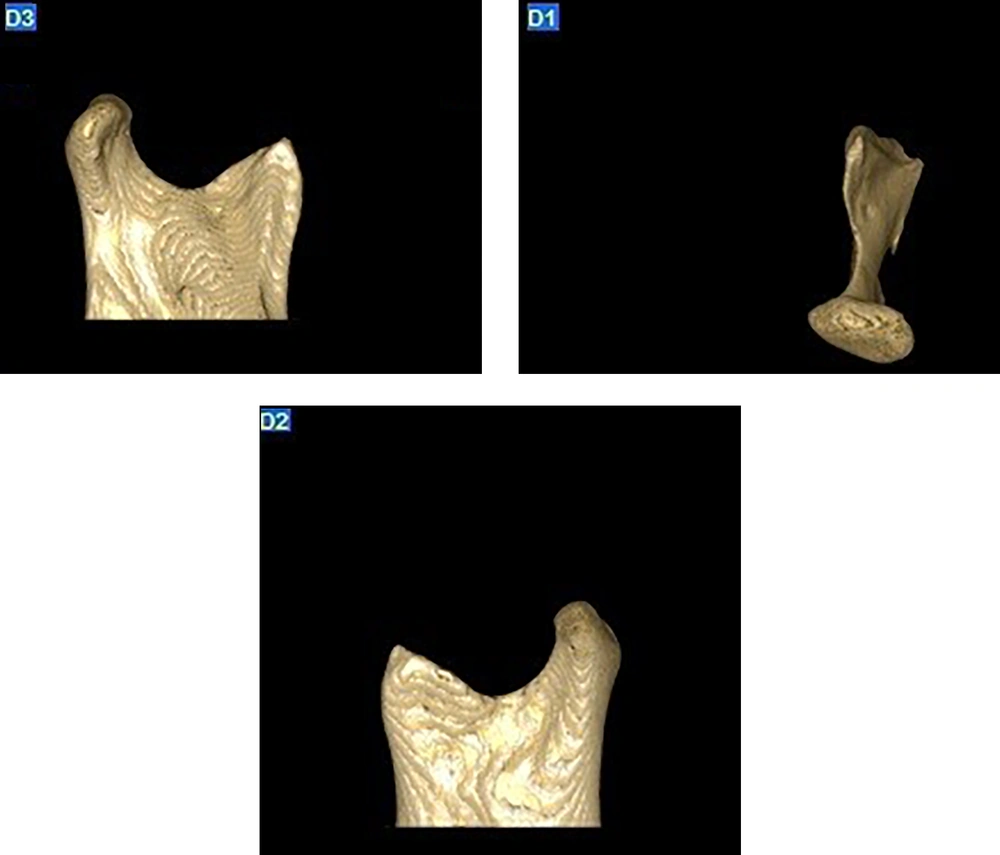
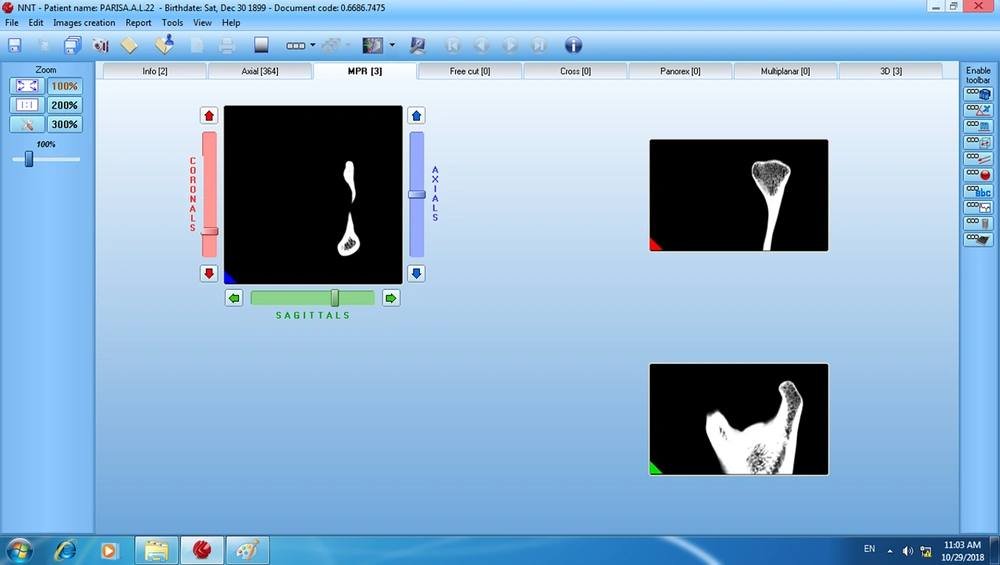
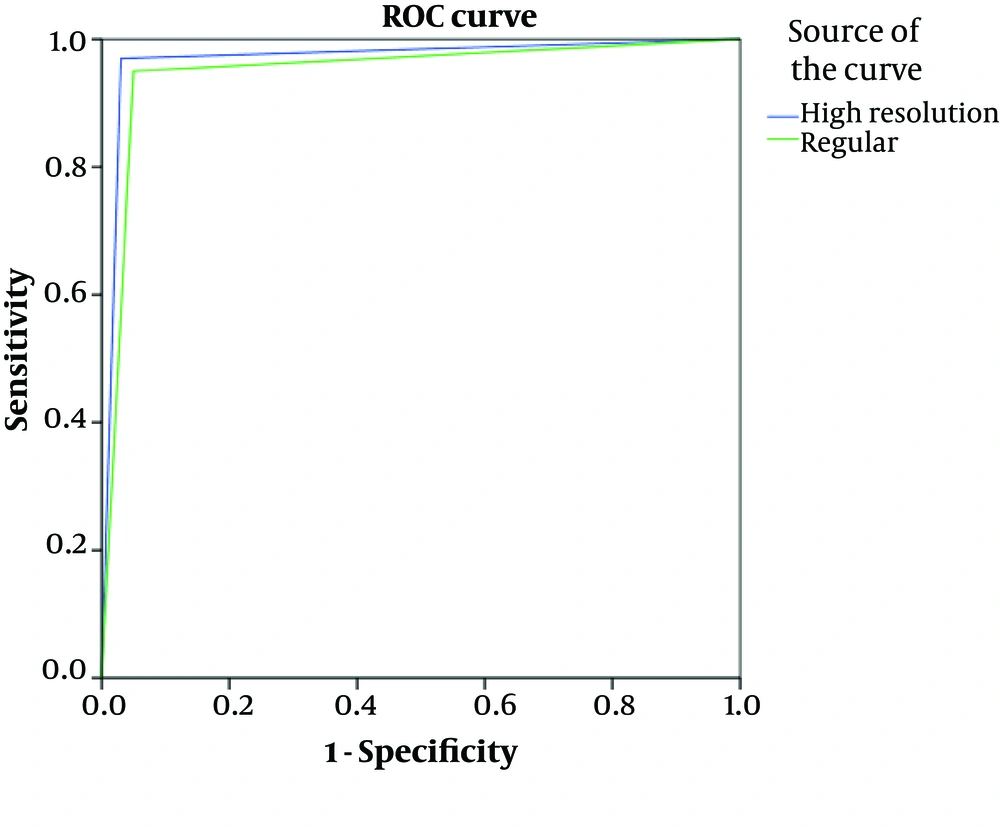
The objective of the present research was to evaluate different aspects and dimensions of FOV and different resolutions of CBCT for the diagnosis of mandibular condyle erosions. The aim was to find a solution for decreasing patient’s absorbed dose together with preserving the image quality and diagnostic value.
One of the goals of this research was to analyze whether the increase of voxel size causes trouble in the diagnosis of mandibular condyle erosions. If no, some measurements should be done to detect mandibular condyle erosions by increasing voxel size, and consequently decreasing the received dose by the patient in CBCT examinations.
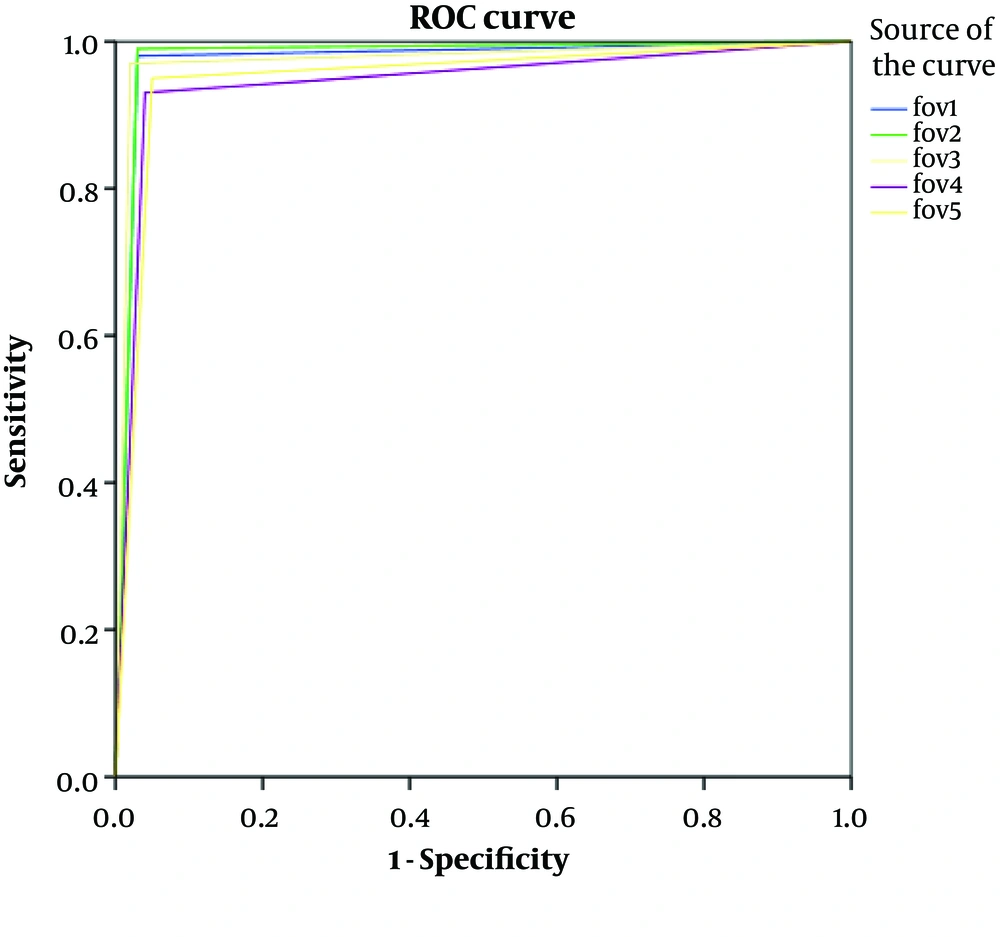
Based on this study, there was no significant difference between high resolution modes (voxel size 0.125 and 0.15) and the methods using regular resolution (voxel size 0.25 and 0.3). However, the best diagnostic power was related to FOV 8 × 8. Most likely, this is due to voxel size, which among the five different modes has the minimum voxel size. Yet, since there is no statistically significant difference, it is possible to use regular resolutions instead of higher resolutions, which accordingly decreases the patient’s absorbed dose and at the same time has an optimum diagnostic value.
Since the sensitivity difference of all modes was not statistically significant, it could be concluded that CBCT with any FOV and resolution is a suitable technique to diagnose mandibular condyle erosions. It is possible to consider CBCT as a suitable technique for the diagnosis of mandibular condyle erosions, even in cases in which the resolution is lower (larger voxel sizes); the results, nonetheless, could be trusted.
When the specificity is in lower level, because the false positive is higher, there is the probability of a wrong diagnosis. Due to low specificity, the normal mandibular condyle is reported to have erosion and the therapeutic process would be distorted. Considering the findings which show the specificity differences in high resolution modes (voxel size 0.125 and 0.15) and the methods with regular resolutions (voxel size 0.25 and 0.3) and also different FOVs is not significant, even in the cases that the resolution is lower (larger voxel sizes), it is possible to ensure that the condyle is normal and does not have any problem.
In the present study, the high resolution modes (8 × 8 FOV, voxel size 0.125 mm and 12 × 8 FOV, voxel size 0.150) were related to the condition with the highest sensitivity, specificity, PPV, and NPV. Between these two high resolution modes, 8 × 8 FOV had the highest sensitivity, specificity, PPV, and NPV; however, it was not significant.
No other similar study in this field exists. Here some researches have been reviewed about the analysis of FOV and different resolutions in dentomaxillofacial problems.
Amintavakoli et al. have conducted a research entitled “The effect of CBCT voxel size on the diagnosis of vertical and horizontal root fractures: an in-vitro study”. Results have shown that CBCT accuracy in voxel size under 300 micrometer was better. The highest sensitivity, PPV, and accuracy was in 0.1 voxel size and the highest specificity and NPV was in 0.76 mm voxel size; however, it was not significant (
12). The fact that voxel size does not have any effect on the detection of root fracture and the difference between voxel sizes were not significant, was in line with the result of the present research.
Moreover, Ozer have analyzed the effect of voxel size (0.4, 0.3, 0.2, and 0.125) on the diagnosis of vertical fractures of the root. Based on the results of their study, both 0.2 and 0.125 voxel sizes had more sensitivity and specificity although it was not significant (
14). Considering the fact that the smallest voxel size was selected, the results are in line with the result of the present research. Although they were analyzing teeth problems (as opposed to our study which is about erosion in the condyle), different resolutions did not have any effect on the diagnosis of the problem.
In a study conducted by Liedke et al., 0.2, 0.3, and 0.4 voxel sizes were used for the root’s external resorption analysis. Results indicate that there was no statistically significant difference between the voxel sizes. Nevertheless, according to their study, the best voxel size was 0.3 (
15). Similar to our study, they concluded that there is no significant difference between different voxel sizes, but their size of choice was not the smallest one. Regarding the use of larger voxel size by Liekde (compared to the use of small voxel size in our study and Amintavakoli and Ozer), it seems the results they reached in their studies were due to the absence of small voxel size. Furthermore, their studies explored dental problems which is in contrast with our study evaluating the bony erosion.
Nikneshan et al. conducted a research entitled “Effect of voxel size on diagnosis of external root resorption defects using cone beam computed tomography”. Artificial defects were prepared in the buccal and lingual surfaces of the roots and CBCT scans were obtained with different voxel sizes. Their results showed similar diagnostic efficacies of all voxel sizes. Accordingly, they suggest that larger voxel size could be used with adequate efficacy for diagnosis of root resorption with minimal patient’s dose and the shortest scanning time (
16). The result of their study is in line with the current study in which we suggest using larger voxel size to reduce patient’s dose.
The present study has analyzed the effect of FOV’s size on the diagnosis of mandibular condyle erosions. Among 6 × 6 FOV (voxel size 0.150), 8 × 8 FOV (voxel size 0.125), 8 × 12 FOV (voxel size 0.150) with high resolution, the highest amount of sensitivity, specificity, PPV, NPV and accuracy was attributed to 8 × 8 FOV with high resolution. However, the difference between these FOVs was not significant. Because the settings of the device, 8 × 8 FOV with high resolution has the lowest voxel size which can have a great effect on the diagnosis of final image details.
Costa et al. conducted a research entitled “the application of large-volume cone-beam computed tomography in diagnosis and localization of horizontal root fracture in the presence and absence of intracanal metallic post” in Brazil. Findings have shown high accuracy in the group without metallic post which indicates a considerable statistical difference in the group which had metallic post. It was reported that CBCT with small FOV has high accuracy (73% - 88%) in the diagnosis of horizontal fractures of the root in cases that did not have metallic posts (
17). The mentioned factor was in line with the result of the present research. However, no teeth problem was analyzed in this study and it is different from the present study in that it analyzed bone disorders. However, the result confirms the use of small FOV (i.e. it is not necessary to use the large FOV for the diagnosis of teeth problem) which is in line with the results of the present study.
Eskandarlou et al. conducted a research entitled “comparison between cone beam computed tomography and multislice computed tomography in diagnostic accuracy of maxillofacial fractures in dried human skull”. In this research, they used a saw with 20 mm scalpel to create a small fracture in human dry skull. Results have shown that sensitivity, specificity, PPV, NPV, and CBCT diagnosis accuracy of 6 × 6 FOV was more than that of 15 × 15 FOV; however this difference was not significant (
11). Although this study is about a different problem, it has a similar outcome with the present research. FOV’s smaller size results in a more exact record of teeth or maxillofacial problem but there is no statistically significant difference.
It is obvious that almost all of the studies above could not find a significant difference between FOV and resolution. However, it is necessary to have more research in this field. It seems that it is not necessary to impose extra dose to the patient. Although CBCT with small voxel size and a high spatial resolution is suitable for diagnostic evaluations (including details like mandibular condyle erosions), since smaller voxel sizes result in higher patient dose and considering the fact that there is not a significant difference between the results of different voxel sizes and different FOVs, it is possible to detect mandibular condyle erosions with methods that decrease the patient’s absorbed dose.
Our limitation in this study was finding a human cadaver. We suggest to other authors to evaluate this condition in vivo. Also, assessment of other FOVs is suggested for similar researches. Evaluation of other TMJ diseases is also recommended.