ACE1-I/D Polymorphism in Patients With Severe COVID-19
Authors
Abstract
Background: In several studies, insertion/deletion (I/D) polymorphism in the angiotensin-converting enzyme 1 (ACE1) gene is described as a genetic risk factor for coronavirus disease 2019 (COVID-19) infection. However, in some studies, this contribution is not confirmed. Therefore, this study aimed to evaluate the genotypic and allelic frequency of ACE1-D/I in Kurdish patients with severe COVID-19 in Iran. Methods: A total of 95 patients with PCR positive-COVID-19 were enrolled in this cross-sectional study. Genomic DNA was extracted from peripheral blood leucocytes using the salting out method. All cases were genotyped for ACE1-I/D polymorphism using polymerase chain reaction (PCR). Death percentage from COVID-19 after two months? follow-up was analyzed.?Results: Of?the 95 patients, 48 were female (50.5%) and 47 were male (49.5%) with a mean age of 61.9?18.7 years. The ID genotype was the most prevalent (52.6%) followed by DD (32.6%) and II (14.7%). The D and I allele frequencies were 58.9%, and 41.1%, respectively. The D allele frequency was higher in patients with SpO2?90% (P = 0.048). The mortality percentage was 18.9% (8 females and 10 males). The frequency of the DD, ID, and II genotypes in patients who died from COVID-19 was 27.7%, 61,1%, and 11.1%. Conclusions: Our results indicated that the ACE1- D allele can be a genetic risk factor in COVID-19 patients. Further studies on different ethnicities and geographical regions are needed to evaluate this polymorphism in COVID-19 infection.
Highlights
Copyright
© 2023, Author(s). This open-access article is available under the Creative Commons Attribution 4.0 (CC BY 4.0) International License (https://creativecommons.org/licenses/by/4.0/), which allows for unrestricted use, distribution, and reproduction in any medium, provided that the original work is properly cited.
Similar Articles
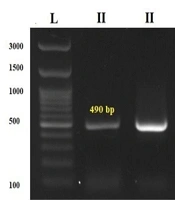
ACE Polymorphism and Clinical Outcomes in Iranian Patients with COVID-19
Soltani S, Tabibzadeh A, Yousefi P, Farahani A, Didehdar M, et al. ACE Polymorphism and Clinical Outcomes in Iranian Patients with COVID-19. Jundishapur J Microbiol. 2026;19(8):e172133. doi: https://doi.org/10.5812/jjm-172133
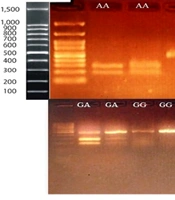
A Multicentric Study of ACE2 rs2285666 Polymorphism: The Association with COVID-19 in the Iranian Population
Razavi Nikoo H, Fatahi SM, Taheri M, Jamshidi M, Safarzadeh A, et al. A Multicentric Study of ACE2 rs2285666 Polymorphism: The Association with COVID-19 in the Iranian Population. Jundishapur J Microbiol. 2024;17(10):e153765. doi: https://doi.org/10.5812/jjm-153765

Effect Of Angiotensin-Converting Enzyme Inhibitors And Angiotensin Receptor Blockers On the Clinical Outcome In COVID-19 Patients With Hypertension
Fakhrae Z, Bitaraf S, Nashibi R, Ahmadi F, Khosravi S, et al. Effect Of Angiotensin-Converting Enzyme Inhibitors And Angiotensin Receptor Blockers On the Clinical Outcome In COVID-19 Patients With Hypertension. J Cell Mol Anesth. 2021;6(4):e149739. doi: https://doi.org/10.22037/jcma.v6i4.35596
ACE2 in SARS-CoV-2-Mediated COVID-19: A Brief Review
Safarzadeh Kozani P, Dashti Shokoohi S, Baharifar N, Sheikhi S, Khalaf Shamsabadi F, et al. ACE2 in SARS-CoV-2-Mediated COVID-19: A Brief Review. J Adv Immunopharmacol. 2022;2(4):e130682. doi: https://doi.org/10.5812/tms-130682
Biochemical Risk Factors of Atherosclerosis in Patients with Severe and Non-severe COVID-19
Shahali M, Alamdary A, Gholami A, Moukhah R, Mousavi-Nasab SD, et al. Biochemical Risk Factors of Atherosclerosis in Patients with Severe and Non-severe COVID-19. Arch Clin Infect Dis. 2024;19(4):e144661. doi: https://doi.org/10.5812/archcid-144661
- Scopus by DOI: 2
Last Update: 2 weeks ago
- Scopus by Title: 0
Last Update: 2 weeks ago
- Scopus by Title (Ref): 0
Last Update: 2 weeks ago
- CrossRef: 0
Last Update: 38 minutes ago
- OpenAlex: 0
Last Update: 1 day ago
- OpenCitations: 0
Last Update: 4 days ago

