
1. Introduction
Cerebral palsy (CP) is the most common cause of lifelong physical disability originating in childhood and comprises a heterogeneous group of permanent disorders of movement and posture resulting from non-progressive injury to the developing fetal or infant brain. In addition to motor impairment, many affected children experience cognitive, sensory, behavioral, and communication disorders that substantially increase healthcare utilization, educational needs, and long-term social support. Consequently, CP represents a major public health challenge with lifelong clinical, social, and economic consequences (1, 2).
Despite considerable advances in obstetric and neonatal care, the burden of cerebral palsy remains substantial worldwide. The persistence of CP despite improvements in neonatal survival suggests that biological factors alone cannot fully explain its occurrence. Increasing attention has therefore focused on the role of social determinants of health, recognizing that prenatal and perinatal risks are shaped by broader social and environmental contexts that influence maternal health, pregnancy outcomes, access to healthcare, and early child development (3, 4).
Socioeconomic status (SES) is among the most influential yet multidimensional social determinants of health. Rather than reflecting a single attribute, SES encompasses educational attainment, income, occupation, material resources, and neighborhood conditions, each of which may affect maternal and child health through interconnected pathways. Socioeconomic disadvantage has been associated with adverse pregnancy outcomes, maternal stress, environmental exposures, limited access to healthcare, preterm birth, and fetal growth restriction, all of which are established risk factors for cerebral palsy. Accordingly, SES may influence CP risk both directly and indirectly through complex biological and healthcare-related mechanisms (5, 6).
However, the association between socioeconomic status and cerebral palsy remains difficult to interpret because of substantial methodological heterogeneity across studies. Investigations have employed diverse indicators of socioeconomic position, including parental education, household income, occupational class, and area-level deprivation indices. Differences in study design, case ascertainment, confounder adjustment, and analytical strategies have produced inconsistent findings. Moreover, distinguishing socioeconomic status as an independent determinant from its role within the causal pathway of perinatal complications remains a major methodological challenge, particularly when intermediary variables are included in statistical models (7, 8).
Clarifying the contribution of socioeconomic inequality to cerebral palsy has important implications for both epidemiological understanding and public health policy. If socioeconomic disadvantage independently increases CP risk, preventive strategies should extend beyond improvements in clinical care to include interventions that address broader social inequities influencing maternal and child health. Such evidence would support more equitable healthcare planning and targeted prevention among socially vulnerable populations (2, 9).
Although numerous epidemiological studies have explored this relationship, the evidence remains fragmented because of variations in exposure definitions, study quality, and analytical approaches. A comprehensive synthesis of the available literature is therefore needed to evaluate the consistency of existing evidence, identify methodological limitations, and clarify the extent to which socioeconomic status contributes to the risk of cerebral palsy in children (10). Despite growing evidence, the relationship between socioeconomic status and cerebral palsy has not been comprehensively synthesized. This review addresses that gap by systematically evaluating the available evidence.
2. Objective
This systematic review aims to synthesize current evidence on the association between socioeconomic status and the risk of cerebral palsy in children, examine methodological sources of heterogeneity, and identify priorities for future research to strengthen causal inference and inform evidence-based strategies for reducing socioeconomic inequalities in childhood neurodevelopmental outcomes.
3. Methods
This study was conducted as a systematic review to comprehensively evaluate the association between socioeconomic status (SES) and the risk of cerebral palsy (CP) in children. The review was designed and reported in accordance with the PRISMA 2020 guidelines to ensure methodological rigor, transparency, and reproducibility throughout the review process (11).
This review synthesized evidence published between 2010 and 2026 to capture contemporary research on SES and CP. Eligible studies examined associations between individual- and area-level SES indicators, including parental education, household income, occupational status, and neighborhood deprivation, and the occurrence of CP in children. Methodological characteristics, exposure assessment, confounding adjustment, and consistency of findings were also evaluated.
The review was prospectively registered in PROSPERO (CRD420261443104). Methodological transparency was ensured through adherence to the PRISMA 2020 guidelines, predefined eligibility criteria, standardized data extraction, systematic quality assessment, and a clearly described narrative synthesis.
3.1. Information Sources
A comprehensive literature search was conducted across five major electronic databases to identify studies examining the association between SES and the risk of CP in children. The databases searched were PubMed, Scopus, Web of Science, Embase, and Google Scholar, which collectively provide broad coverage of biomedical, public health, epidemiological, and interdisciplinary research. These databases were selected to maximize the retrieval of relevant peer-reviewed studies and to ensure comprehensive coverage of the available evidence.
3.2. Search Strategy
The search strategy was tailored to each database by combining controlled vocabulary and relevant free-text terms with Boolean operators. It was designed to retrieve studies examining the association between SES and the risk of CP in children. Searches were performed using the native search platform of each database. Database-specific search strategies were developed using controlled vocabulary (e.g., MeSH and Emtree) and free-text terms, with appropriate adaptations for each source. The database-specific search strategies are presented in Table 1.
Table 1.
Search Terms
| Database | Search Strategy |
|---|---|
| PubMed | ("Cerebral Palsy"[Mesh] OR "cerebral palsy" OR CP) AND ("Socioeconomic Factors"[Mesh] OR "Socioeconomic Status" OR socioeconomic* OR "social class" OR income OR education OR occupation OR poverty OR deprivation OR "social determinants of health") AND (child* OR infant* OR newborn* OR pediatric*) |
| Scopus | TITLE-ABS-KEY ("cerebral palsy" OR CP) AND TITLE-ABS-KEY ("socioeconomic status" OR socioeconomic* OR income OR education OR occupation OR "social class" OR deprivation OR poverty OR "social determinants of health") AND TITLE-ABS-KEY (child* OR infant* OR newborn* OR pediatric*) |
| Web of Science | TS=("cerebral palsy" OR CP) AND TS=("socioeconomic status" OR socioeconomic* OR income OR education OR occupation OR "social class" OR deprivation OR poverty OR "social determinants of health") AND TS=(child* OR infant* OR newborn* OR pediatric*) |
| Embase | ('cerebral palsy'/exp OR 'cerebral palsy':ti,ab OR CP:ti,ab) AND ('socioeconomic status'/exp OR socioeconomic*:ti,ab OR income:ti,ab OR education:ti,ab OR occupation:ti,ab OR poverty:ti,ab OR deprivation:ti,ab OR 'social determinants of health':ti,ab) AND (child*:ti,ab OR infant*:ti,ab OR newborn*:ti,ab OR pediatric*:ti,ab) |
| Google Scholar | ("cerebral palsy" AND "socioeconomic status") OR ("cerebral palsy" AND income) OR ("cerebral palsy" AND education) OR ("cerebral palsy" AND deprivation) |
3.3. Eligibility Criteria
Studies were considered eligible for inclusion if they met all of the following criteria:
Population and Exposure: Studies involving children (from birth to 18 years of age) that examined the association between SES and the risk, incidence, or prevalence of cerebral palsy. SES indicators included, but were not limited to, parental education, household income, parental occupation, neighborhood deprivation, area-level socioeconomic indices, and composite measures of socioeconomic position.
Study Design: Original quantitative studies, including prospective or retrospective cohort studies, case–control studies, and cross-sectional studies. Population-based registry studies were also eligible. Review articles, editorials, conference abstracts, case reports, letters, and study protocols were excluded.
Outcomes: Studies reporting cerebral palsy as the primary outcome and providing quantitative estimates of the association between SES and cerebral palsy. The primary outcome was the association between SES (measured using individual- or area-level indicators) and the risk of cerebral palsy. Secondary outcomes included measures of disease severity and other reported clinical outcomes where available.
Timeframe: Articles published between January 2010 and January 2026.
Language: Studies published in English.
Publication Status: Only full-text, peer-reviewed articles were included. Duplicate publications, studies with overlapping populations (for which the most comprehensive report was retained), and studies lacking sufficient data for extraction were excluded.
3.4. Exclusion Criteria
Studies were eligible if they: (1) included children or adolescents (≤ 18 years) with cerebral palsy, or populations in which the risk or occurrence of cerebral palsy could be evaluated; (2) examined one or more indicators of SES (e.g., parental education, household income, occupation, area-level deprivation, or composite socioeconomic indices); (3) reported outcomes related to cerebral palsy, including risk, incidence, prevalence, disease severity, motor function, participation, access to healthcare or rehabilitation services, or other clinically relevant outcomes associated with SES; (4) used observational or systematic review study designs; and (5) were published in English.
Studies were excluded if they did not evaluate the relationship between SES and cerebral palsy–related outcomes; were conference abstracts, editorials, letters, case reports, study protocols, or animal studies; or did not provide sufficient data for extraction.
3.5. Data Extraction and Management
Data extraction was independently conducted by two reviewers using a standardized form to ensure consistency and accuracy. Extracted data included study characteristics, SES indicators, CP outcomes, and reported associations between SES and CP risk. Methodological details, including data sources, SES and CP assessment methods, adjusted covariates, statistical analyses, and effect estimates with 95% confidence intervals, were also collected when available. Retrieved records were managed in EndNote for reference organization and duplicate removal. The search strategy was developed by the lead author and refined with input from experienced systematic review researchers. Disagreements in study selection or data extraction were resolved through discussion or, when necessary, consultation with a third reviewer, ensuring methodological rigor and transparency throughout the review.
3.6. Quality Assessment
The methodological quality of the included observational studies was independently assessed by two reviewers using the Newcastle–Ottawa Scale (NOS). Disagreements were resolved through discussion until consensus was reached. Overall, the methodological quality of the included studies ranged from moderate to high. Most studies achieved good scores in participant selection and outcome assessment, whereas comparability was the domain with the greatest variability because of differences in adjustment for potential confounders. The quality assessment findings were considered during the synthesis and interpretation of the evidence.
3.7. Data Synthesis
Because of substantial heterogeneity in study design, socioeconomic measures, outcome definitions, and analytical approaches, a meta-analysis was not performed. Instead, a structured narrative synthesis was conducted. Studies were grouped according to the SES indicator and outcome evaluated. For each study, the direction of the association, the principal effect estimate (when available), the degree of statistical precision, and adjustment for potential confounding factors were considered. The overall conclusions were based on the consistency of findings across studies, methodological quality, and risk of bias, rather than on vote counting alone.
4. Results
The study selection process is summarized in the PRISMA 2020 flow diagram (Figure 1). A total of 2617 records were identified through database searching. After removing duplicates, records were screened by title and abstract. Following screening, 1909 full-text articles were assessed for eligibility, of which 89 were excluded for predefined reasons. Ultimately, 12 studies met the eligibility criteria and were included in the systematic review.
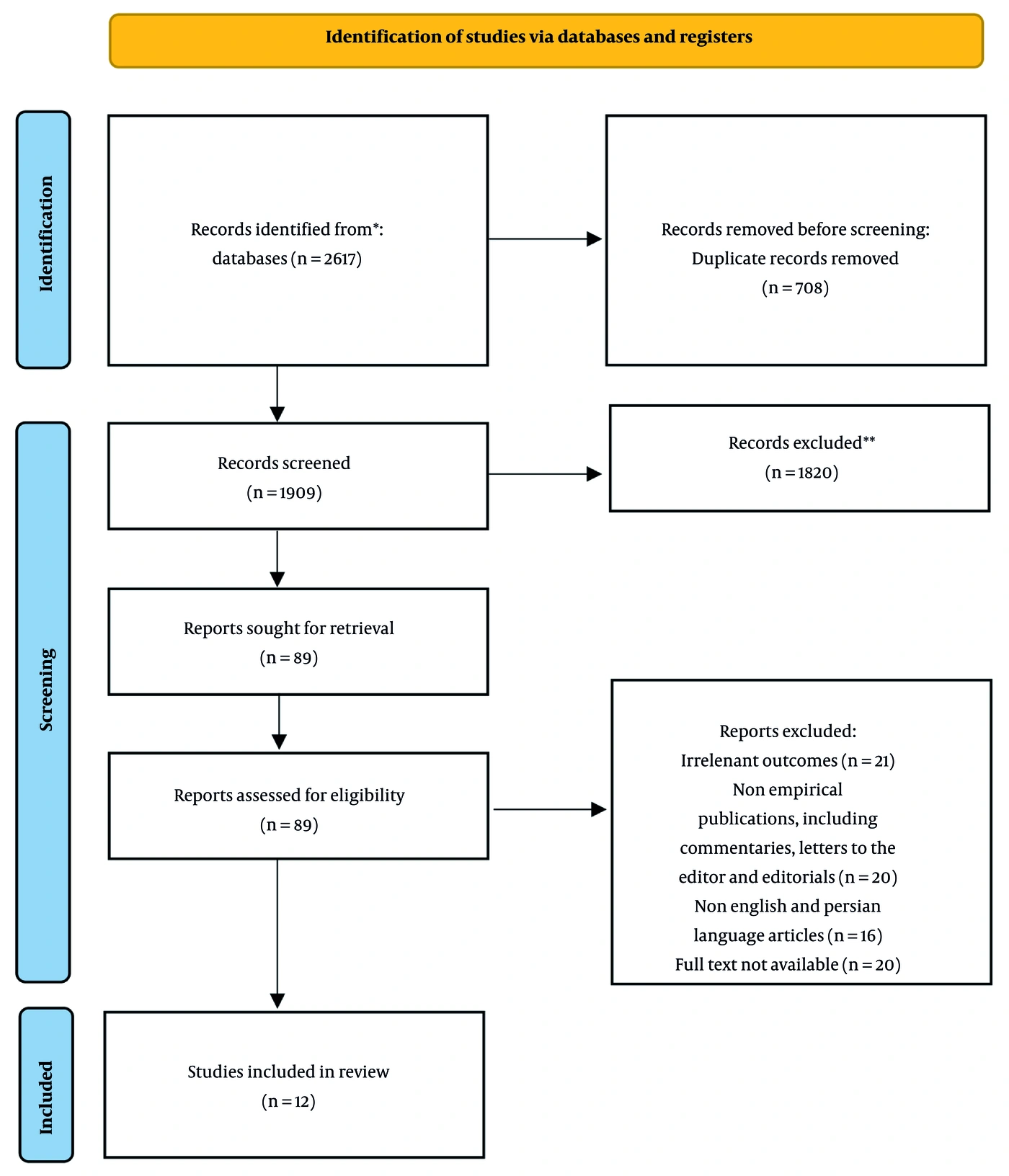
Figure 1.
PRISMA flow diagram
Table 2.
Thematic Synthesis of the Main Findings on the Association Between Socioeconomic Status and Cerebral Palsy
| Author/ Year | Country | Study Design | Population / Sample | SES Indicator(s) | Outcome | Main Findings |
|---|---|---|---|---|---|---|
| Tseng et al. 2018 / (13) | Taiwan | Cross-sectional | All children aged < 7 years in Taiwan | Family income; Urbanization level (urban, suburban, rural) | Prevalence of cerebral palsy (total and severe CP) | Children from low-income families had a higher prevalence of cerebral palsy (CP) than those from higher-income households. CP was also more common in rural areas and among boys. Overall, these findings indicate that socioeconomic disadvantage is associated with an increased risk of CP. |
| Petersen et al. 2019 / (22) | Denmark | Cohort study | children born 1981 - 2007 | Maternal education; household income; immigrant status; socioeconomic status (mediated analysis) | Risk of cerebral palsy (overall and subtypes) | No strong overall association between SES and CP risk. SES explained only a small part of differences between immigrant and non-immigrant groups. Higher risk of bilateral spastic CP observed in children of non-Western immigrants, but mediation by SES was minimal. |
| Dolk et al. 2010 / (12) | United Kingdom | Population-based register study (CP registers across 5 UK regions) | Children births (1984 - 1997) | Area-level deprivation index (quintiles) | Cerebral palsy prevalence (overall, subtypes) | Children from the most socioeconomically deprived groups had a higher prevalence of cerebral palsy (CP), with the strongest associations observed for postneonatal CP and severe disability. Although low birth weight partly explained this relationship, the association between socioeconomic disadvantage and CP remained after adjustment. |
| Chen et al., 2022 / (23) | Korea | Systematic review | Large national birth cohort | Household income quintiles; insurance status; area-level deprivation | Incidence/Risk of cerebral palsy | Children in lower socioeconomic groups had higher CP incidence. Association attenuated but often remained after adjustment for prematurity and low birth weight, suggesting partial mediation through perinatal factors. |
| Perra et al., 2026 / (15) | Northern Ireland | Population-based longitudinal retrospective study | Children with postneonatal cerebral palsy were identified through the Northern Ireland Cerebral Palsy Register. | Area-level deprivation | Postneonatal cerebral palsy, severity, intellectual disability, seizures | Postneonatal CP declined over time; however, socioeconomic inequalities persisted. Children from more deprived areas had higher odds of head injury-related postneonatal CP (OR = 2.72) and were more likely to have severe motor impairment, intellectual disability, and seizures, highlighting persistent deprivation-related disparities. |
| Forthun et al., 2018 / (16) | Denmark & Norway | Population-based cohort | Approximately 3.7 million children born in Denmark and Norway | Maternal education; paternal education; household income; parental relationship status | Risk of cerebral palsy | Lower parental education was consistently associated with increased CP risk. Household income showed weaker and less consistent associations. |
| Solaski et al., 2014 / (18) | Canada | Systematic review | Twelve observational studies published between 1980 and 2012 evaluating the association between socioeconomic status and cerebral palsy | Individual SES measures (parental education, income, occupation, marital status, prenatal care) and area-based SES measures (deprivation indices, neighborhood socioeconomic status) | Prevalence and risk of cerebral palsy | Among the 12 included studies, most reported that low socioeconomic status (SES) was associated with a higher risk or prevalence of cerebral palsy (CP). In several studies, this association persisted after adjustment for birthweight and gestational age, while area-level SES measures showed more consistent associations than individual-level indicators. |
| Wu et al., 2011 / (24) | United States | Population-based surveillance study | Children aged 8 years from the Autism and Developmental Disabilities Monitoring Network | Maternal education | Cerebral palsy prevalence | Lower maternal education was associated with a higher prevalence of CP. Adjustment for perinatal factors reduced but did not eliminate the association. |
| Durkin et al., 2015 / (17) | United States | Population-based surveillance study | 8-year-old children with cerebral palsy identified through the Autism and Developmental Disabilities Monitoring (ADDM) Network | Maternal education, neighborhood socioeconomic status, race/ethnicity, perinatal factors | Risk of cerebral palsy | Socioeconomic disadvantage contributed to racial disparities in CP risk. Adjustment for maternal education and perinatal factors reduced, but did not eliminate, the excess risk among Black children, indicating that SES and perinatal factors partially mediate disparities in CP occurrence. |
| Delobel-Ayoub et al., 2022 / (14) | France | Population-based Cross-sectional registry study | 252 children with pre/perinatal cerebral palsy born between 2000 and 2011, identified from the Haute-Garonne Childhood Disability Register at 8 years of age | Area-level socioeconomic deprivation measured using the European Deprivation Index (EDI) | Prevalence of cerebral palsy; severity of CP (gross motor impairment, intellectual disability, inability to walk) | Children living in the most deprived areas had the highest prevalence of cerebral palsy (CP). Socioeconomic deprivation was also associated with greater disease severity, particularly among preterm children, including more severe motor impairment and higher rates of intellectual disability. |
| Alazem et al., 2026 / (25) | Canada | Cross-sectional | Children already diagnosed with cerebral palsy recruited through the Canadian Cerebral Palsy Registry | Household income, parental education, neighborhood environment, environmental factors | Motor function and participation | Lower SES and less favorable environmental conditions were associated with poorer motor function and participation among children already diagnosed with CP. The study did not evaluate the risk, incidence, or prevalence of cerebral palsy. |
| LeBrun et al., 2019 / (26) | Nepal | Prospective observational study with a systematic review | Children with untreated cerebral palsy presenting to a tertiary rehabilitation center in Nepal | Household socioeconomic status (income, parental education, occupation, and other socioeconomic measures) | Functional severity of cerebral palsy (Gross Motor Function Classification System [GMFCS]) | Children from lower socioeconomic backgrounds had more severe untreated cerebral palsy (CP) and poorer access to timely care. Socioeconomic disadvantage was also associated with worse functional outcomes, although the included study did not assess CP risk, incidence, or prevalence. |
4.1. Characteristics of the Included Studies
The included studies comprised population-based cohorts, national registry analyses, surveillance studies, cross-sectional studies, and systematic reviews conducted mainly in high-income countries across Europe, North America, and Asia. Sample sizes ranged from regional cohorts to nationwide birth registries. Socioeconomic status (SES) was assessed using indicators such as parental education, household income, occupational status, neighborhood deprivation, urbanization, and composite deprivation indices.
The available evidence suggests that socioeconomic disadvantage is associated with several cerebral palsy–related outcomes. However, the strength and consistency of these associations varied across studies, and the observational nature of the evidence precludes firm causal conclusions. Most included studies reported an association between socioeconomic disadvantage and cerebral palsy risk or related outcomes, whereas a small number found weak or no statistically significant associations. Findings also varied according to the socioeconomic indicator and outcome evaluated.
4.2. Association Between Socioeconomic Deprivation and Cerebral Palsy
Most included studies reported an inverse relationship between socioeconomic position and the occurrence of CP. Population-based investigations from the United Kingdom demonstrated a clear socioeconomic gradient, with higher CP prevalence observed among children living in the most deprived neighborhoods (12). Similar associations were identified in Taiwan, where lower household income and residence in less urbanized regions were associated with increased CP prevalence (13). Registry-based studies from France and Northern Ireland also documented higher rates of CP among children residing in socioeconomically disadvantaged areas (14, 15).
Although the magnitude of the association differed across studies, the direction of the relationship remained largely consistent, with socioeconomic disadvantage being associated with increased CP occurrence across diverse populations and healthcare settings.
4.3. Individual-Level Socioeconomic Indicators
Parental educational attainment was the individual-level socioeconomic indicator most consistently associated with CP. Large nationwide cohort studies from Denmark and Norway reported increased CP risk among children born to parents with lower educational attainment (16). In contrast, associations between household income and CP were less consistent. Several studies observed attenuation of income-related associations after adjustment for maternal characteristics and perinatal factors, whereas educational differences generally remained evident in adjusted analyses (16). Studies conducted in the United States similarly reported that maternal educational attainment accounted for part of the socioeconomic differences observed in CP, although disparities persisted after multivariable adjustment (17).
4.4. Area-Level Socioeconomic Measures
Area-based measures of socioeconomic disadvantage demonstrated relatively consistent associations across the included studies. Investigations using neighborhood deprivation indices or composite regional deprivation measures reported higher CP prevalence or incidence among children living in disadvantaged communities (12, 14, 15). The systematic review by Solaski et al. (18) likewise reported that area-level indicators yielded more consistent findings than several individual-level socioeconomic measures. Across studies, area-based indicators were evaluated using different methodologies, including national deprivation indices and the European Deprivation Index, limiting direct comparison of effect estimates while demonstrating broadly comparable trends (18).
4.5. Socioeconomic Status and Clinical Severity
Several studies extended their analyses beyond disease occurrence by evaluating clinical characteristics among children diagnosed with CP. Registry data from France showed that children residing in the most deprived areas had higher frequencies of severe motor impairment, intellectual disability, epilepsy, and inability to walk independently than those living in less deprived areas (14). Similarly, analyses from Northern Ireland demonstrated higher rates of postneonatal CP associated with preventable head injuries among children from deprived communities, accompanied by greater neurological impairment (15). These findings indicate that socioeconomic differences were observed not only in CP occurrence but also across several indicators of disease severity reported in individual studies.
4.6. Influence of Perinatal Factors
Several investigations evaluated whether the association between SES and CP persisted after adjustment for established perinatal risk factors. Adjustment for gestational age, birth weight, maternal complications, and related variables reduced the magnitude of the observed associations in multiple studies; however, statistically significant socioeconomic differences frequently remained (16, 17). Similarly, the systematic review by Solaski et al. (18) reported that several included studies identified independent associations between socioeconomic disadvantage and CP after accounting for major perinatal confounders. The extent of attenuation varied according to study design, socioeconomic indicator, and adjustment strategy (18).
4.7. Methodological Heterogeneity
Considerable heterogeneity existed across the included studies in design, CP ascertainment, SES measures, confounder adjustment, and statistical methods. Socioeconomic status was assessed using multiple indicators, while outcomes included CP incidence, prevalence, postneonatal CP, and disease severity. Although this variability limited direct comparison of effect estimates, most studies reported consistent overall associations.
4.8. Overall Synthesis
Most included studies reported a higher occurrence of cerebral palsy (CP) among socioeconomically disadvantaged children. Parental education and neighborhood deprivation showed the most consistent associations, and several studies also linked socioeconomic disadvantage to greater neurological severity. Despite methodological differences, the overall evidence supports socioeconomic disparities in both the occurrence and clinical severity of CP.
5. Discussion
This systematic review identified a consistent association between socioeconomic disadvantage and both a higher occurrence and greater clinical severity of cerebral palsy (CP). Despite differences in study design, populations, and socioeconomic status (SES) measures, the observed social gradient remained consistent, suggesting that SES is an important determinant of biological, environmental, and healthcare-related factors influencing early neurodevelopment (8, 16).
A key implication of these findings is that the relationship between socioeconomic disadvantage and CP should not be interpreted within a simple exposure–outcome framework. CP is a multifactorial neurodevelopmental disorder whose pathogenesis reflects interactions between genetic susceptibility and prenatal, perinatal, and early postnatal insults. Socioeconomic disadvantage is therefore unlikely to act as an independent etiological factor. Instead, it appears to structure the accumulation of multiple adverse exposures that converge on common neurodevelopmental pathways (16, 19). Maternal comorbidities, nutritional inadequacy, chronic psychosocial stress, environmental pollutants, limited access to high-quality antenatal care, and adverse obstetric conditions are socially patterned and frequently coexist rather than occur in isolation. Their cumulative interaction may lower the threshold for fetal brain injury, providing a biologically plausible explanation for the remarkably stable socioeconomic gradient observed across geographically diverse populations (20, 21).
This interpretation is further supported by the observation that adjustment for established perinatal risk factors attenuated but rarely eliminated the association between SES and CP. These findings suggest that gestational age, birth weight, pregnancy complications, and neonatal morbidity explain only part of the observed inequality (12, 19). The main characteristics and findings of the included studies are summarized in Table 2.
Importantly, many of these variables are themselves influenced by socioeconomic conditions and may therefore represent intermediate mechanisms rather than independent confounders. Treating them solely as variables requiring statistical adjustment risks underestimating the broader influence of structural disadvantage on neurodevelopment. The persistence of socioeconomic differences after adjustment indicates that existing biomedical models do not fully capture the causal architecture underlying CP and that social determinants continue to exert effects through pathways extending beyond conventional clinical risk factors (17, 27).
The differential performance of socioeconomic indicators also provides important conceptual insight. Across the included studies, parental education showed more consistent associations with CP than household income. This pattern suggests that the influence of SES extends beyond material deprivation alone (25).
Educational attainment reflects health literacy, cognitive resources, problem-solving capacity, and the ability to engage effectively with healthcare systems. These characteristics shape health behaviors throughout pregnancy, influence adherence to preventive recommendations, facilitate early recognition of complications, and improve access to specialized care. Income, by contrast, is inherently more dynamic and is more strongly influenced by labor markets and welfare policies. Consequently, education may more accurately capture the enduring social processes through which inequalities in neurodevelopment are generated (22, 28).
Equally important is the consistency of findings derived from area-level measures of deprivation. Neighborhood disadvantage likely represents the cumulative expression of contextual characteristics, including healthcare infrastructure, environmental quality, social cohesion, educational opportunities, and access to developmental services, that cannot be adequately measured at the individual level. This ecological dimension suggests that CP risk is influenced not only by parental characteristics but also by the environments in which pregnancy, childbirth, and early childhood occur. The findings therefore reinforce contemporary perspectives in life-course epidemiology, in which biological vulnerability emerges through continuous interaction with social and physical environments rather than through isolated clinical events (29).
Socioeconomic disparities were evident not only in the occurrence of CP but also in its clinical severity. Children from disadvantaged backgrounds were more likely to have severe motor impairment, epilepsy, intellectual disability, and poorer functional outcomes. These findings suggest that socioeconomic disadvantage may influence long-term development through unequal access to early diagnosis, rehabilitation, assistive services, and ongoing specialized care, contributing to cumulative functional disadvantage over time (14, 16, 30).
Although methodological heterogeneity was substantial, the convergence of findings across diverse populations strengthens confidence in the robustness of the observed associations. Variability in SES definitions, CP ascertainment, and analytical strategies would ordinarily be expected to weaken consistency if the observed relationships reflected methodological artifacts. Instead, similar socioeconomic gradients emerged regardless of whether SES was measured by parental education, income, neighborhood deprivation, or composite deprivation indices. Such reproducibility across different methodological approaches suggests that the underlying phenomenon is genuine, even if its precise magnitude varies according to context and measurement strategy. Several included studies adjusted for perinatal variables such as birth weight and gestational age. These factors may represent confounders or intermediates in the pathway linking socioeconomic status to CP. Therefore, their role should be interpreted cautiously, and the reported associations should not be considered evidence of direct causality (12, 13, 22, 23).
These findings indicate that SES should be considered a structural determinant of CP rather than merely a background characteristic. SES may influence biological vulnerability, access to healthcare, and early developmental opportunities, thereby contributing to inequalities in neurological outcomes. Reducing the burden of CP will therefore require integrated strategies that combine high-quality maternal and neonatal care with policies addressing poverty, educational inequality, environmental disadvantage, and equitable access to early intervention services. The findings demonstrate a linear association between socioeconomic disadvantage and the risk of cerebral palsy, indicating that social inequalities may substantially contribute to disease burden. Reducing socioeconomic disparities should therefore be considered in strategies aimed at improving maternal and child health (23, 26). Future research should move beyond repeatedly documenting socioeconomic gradients and instead prioritize elucidating the causal mechanisms linking structural disadvantage to impaired neurodevelopment, thereby identifying intervention points capable of reducing both the incidence and long-term consequences of CP. These findings highlight the need to integrate socioeconomic considerations into maternal and child health policies. Promoting equitable access to prenatal care and early intervention may help reduce disparities in CP outcomes. Although most included studies were of moderate to high methodological quality, the observational design and potential risk of residual confounding should be considered when interpreting the reported associations.
5.1. Limitations
This review has several limitations. First, only English-language publications were included, which may have resulted in language bias. Second, considerable heterogeneity existed in the definition and measurement of SES across studies, limiting direct comparison of findings and precluding quantitative meta-analysis. Third, most included studies were conducted in high-income countries, potentially limiting the generalizability of the findings to low- and middle-income settings.
5.2. Conclusions
The evidence synthesized in this review indicates that socioeconomic disadvantage is consistently associated with inequalities in both the occurrence and clinical expression of CP across diverse populations. Rather than acting as an isolated risk factor, SES appears to shape neurodevelopment through interconnected pathways that influence biological vulnerability, perinatal health, healthcare access, and early developmental opportunities. This interpretation suggests that socioeconomic inequalities are embedded within the causal context of CP rather than existing as a peripheral demographic characteristic.
The persistence of these disparities across different healthcare systems and after adjustment for major perinatal factors underscores the importance of integrating social determinants into contemporary models of CP research and prevention. Accordingly, reducing the burden of CP is likely to require strategies that extend beyond advances in clinical care and address the structural conditions that generate unequal exposure to neurodevelopmental risk. Future research should focus on clarifying the causal pathways linking socioeconomic disadvantage to CP and identifying intervention points capable of reducing both disease occurrence and long-term functional inequalities.