1. Background
Hepatitis B, C and HIV infections constitute serious healthcare problems worldwide. HBV and HCV infections can result in chronic liver diseases, including cirrhosis and hepatocellular carcinoma, while HIV infection can result in severe opportunistic diseases (1). According to the world health organization (WHO), more than 240 million people with HBV infection and 150 million people with HCV infection, have chronic liver infections worldwide (2, 3). There were approximately 35.3 million people infected with HIV in 2012 (4), and 10% of the patients with HIV infection in Europe and America are co-infected with HBV, and almost one third of the patients with HIV infection are co-infected with HCV (5).
The prevalence of HBV in the world varies according to the geographical region, and it is classified into three endemic zones as low (< 2%), medium (2% - 7%) and high (≥ 8%) (6). The high endemic areas, such as southeast Asia and sub-Saharan Africa, are defined as the areas where 8% or more of the population are HBsAg positive, and around 45% of the world’s population live in the high endemic regions. Mediterranean countries and Japan are considered as areas with moderate endemicity (2% - 7% of the population is HBsAg positive), and it constitutes 43% of the world’s population. Around 12% of the world’s population live in regions of low endemicity, defined as areas where lower than 2% of the population are positive for HBsAg such as Western Europe and North America (7). The mean frequency of HCV infection in the world is about 3%. Anti-HCV frequency in the developed countries ranges from 1% to 2% (8).
The prevalence of blood-borne hepatitis is usually higher among injection drug users than in the other population. These individuals play a role as a reservoir and source of viral transmission (9). The most important route in transmission of these viruses among drug users is the use of drug in injectable form. Among drug users, risky sexual behavior and sharing contaminated drug preparation equipment are common; thus, viral transmission is facilitated by either parenteral or sexual route (10). Additionally, a study carried out on chronic intranasal drug users showed that it has implications for potential transmission of HCV through contact with contaminated nasal secretions (11). Drug users are a potential source of infection, and represent a serious threat for their environment. Therefore, it is extremely important to investigate infected persons to prevent further transmission of these infections by preventive measures and appropriate control.
2. Objectives
There are a limited number of studies regarding the prevalence of these infections among the drug addicts in Turkey. Therefore, the current study aimed to determine the frequency of HBV, HCV and HIV infections among drug addicts treated in a drug addiction treatment centre in Elazig, Turkey.
3. Patients and Methods
3.1. Subjects
The current retrospective study was conducted in the mental health hospital from September 2011 to October 2012 in Elazig, Turkey. The 488 bed hospital has a drug addiction treatment center that provides social support and medical care for drug users. Two hundred-thirty-five drug addicts treated at the drug addiction treatment centre were included in this study. The study was approved by the Firat university ethical committee (code: 05092013-03/12).
3.2. Serological Analysis
Five mL blood samples were collected from drug users, and centrifuged at 5000 rpm for five minutes at clinical laboratory of the hospital. HBsAg, anti-HBs, anti-HCV (GBC, Taiwan, R.O.C.) and anti-HIV ½ (BioMerieux, Marcy-I’Etoile, France) tests were conducted by the Triturus system (Grıfols, Parets del Valles, Spain) based on enzyme linked immunosorbent assay (ELISA) technique. The positive and negative controls were included in each run. Specimens with cutoff index < 1 were considered as negative; cutoff index ≥ 1 were considered as positive for HBsAg, anti-HCV and anti-HIV tests. Samples less than 10 mLU/mL were considered as negative, and values above 10 mLU/mL were considered as positive for anti-HBs. Initially reactive assays were repeated in duplicate. If HIV tests were repeatedly positive, they were confirmed by Western blot test.
3.3. Drug Analysis
Urine samples obtained from drug users were analyzed for cannabis, opiate and cocaine metabolites in the clinical laboratory of the hospital. Cannabis, opiate and cocaine tests (CEDIA, Fremont, USA) were conducted by the Olympus AU 400. (Diamond Diagnostics, Holliston, USA) by cloned enzyme donor immunoassay (CEDIA) technique.
3.4. Statistical Analysis
Statistical analyses were conducted using the SSPS version 21 (SPSS Inc, Chicago, IL, USA). The differences in susceptibility results were evaluated by the Chi-square test. P < 0.05 was considered statistically significant.
4. Results
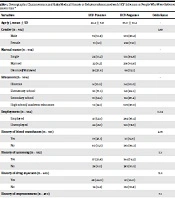
All the 235 drug users were male, and their mean age was 30.69 ± 9.494 years (range 15 - 58 years). As shown in Table 1, 47.7% of them were in the age group ranging 20 - 29 years (P < 0.05).
Table 1.
Distribution of HBV, HCV Markers, Cannabis and Opiate Users Regarding the Age a
| Characteristics | No Tested | HBsAg Positive | Anti-HBs Positive | Anti-HCV Positive | Cannabis Positive | Opiate Positive |
|---|---|---|---|---|---|---|
| Overall | 235 | 6 (2.6) | 90 (38.3 ) | 22 (9.4) | 113 (48.1) | 115 (48.9) |
| Age, y | ||||||
| < 20 | 14 (6) | 0 | 10 (11.1 ) | 0 | 4 (3.5) | 10 (8.7) |
| 20 - 29 | 112 (47.7) | 2 (33.3) | 35 (38.9 ) | 5 (22.7) | 70 (61.9) | 42 (36.5) |
| 30 - 39 | 68 (28.9) | 2 (33.3 ) | 25 (27.8 ) | 7 (31.8) | 27 (23.9) | 38 (33) |
| 40 - 49 | 26 (11.1) | 1 (16.7 ) | 13 (14.4 ) | 5 (22.7) | 7 (6.2) | 17 (14.8) |
| 50 - 59 | 15 (6.4) | 1 (16.7 ) | 7 (7.8 ) | 5 (22.7) | 5 (4.4) | 8 (7) |
a Data are presented as No (%).
Of 235 drug addicts, 113 and 115 were only cannabis and opiate users, respectively. In urine samples of seven drug addicts both cannabis and opiate metabolites were detected. Cocaine was detected in none of the urine samples. A high proportion (58.7%) of the cannabis users were younger than 30 years (P < 0.001), while 57.8% of the opiate users were older than 30 years (P < 0.01). The frequencies of HBsAg, anti-HBs and anti-HCV among drug addicts were 2.6%, 38.3%, and 9.4%, respectively. None of the drug addicts was positive for HIV. Among the drug addicts with HBsAg positive, anti-HBs was negative.
The frequency of HBV and HCV markers in cannabis and opiate users is shown in Table 2. Of the 20 patients with anti-HCV positive, 18 were opiate users, and two were cannabis users. Anti-HCV was more prevalent in opiate users than in cannabis users: 15.7% vs. 1.8% (P < 0.001). However, there was no significant difference in the positive test results of HBsAg and anti-HBs between opiate and cannabis users. On the other hand, the frequency of anti-HCV tended to decrease among subjects lower than 29 years old and increase among those above 30 years old (P < 0.05).
Table 2.
Frequency of HBV and HCV Markers in Cannabis and Opiate Users a
| HBV and HCV Markers | Cannabis Users, n= 113 | Opiate Users, n= 115 | P Value |
|---|---|---|---|
| HBsAg | |||
| Negative | 109 (96.5) | 113 (98.3) | |
| Positive | 4 (3.5) | 2 (1.7) | > 0.05 |
| Anti-HBs | |||
| Negative | 68 (60.2) | 74 (64.3) | |
| Positive | 45 (39.8) | 41 (35.7) | > 0.05 |
| Anti-HCV | |||
| Negative | 111 (98.2) | 97 (84.3) | |
| Positive | 2 (1.8) | 18 (15.7) | < 0.001 |
a Data are presented as No (%).
5. Discussion
It is estimated that there are 161 million cannabis, 16 million opiate and 16 - 21 million cocaine users in the worldwide. The most widely consumed drug in the world is cannabis (12, 13). The majority of injection drug users constitute opiate users, and opiate use may be associated with prevalence of HCV and HIV infection. A study indicated that drug injection is the highest risk factor for acquisition of HBV, HCV and HIV infections (14). Turkey is considered a region with intermediate endemicity for HBV (2 - 7%) and low endemicity for HCV (< 2%) (15). The current study found a low rate of HBsAg positivity (2.6%) in drug addicts, whereas the rate of anti-HCV was high (9.4%). Yenen et al. (16) in 1993, reported that the prevalence of HBsAg and anti-HCV among drug addicts in Istanbul, Turkey, was 7.3% and 54.8%, respectively, which were considerably higher than the rates observed in the current study. In Turkey, vaccination against HBV began in the early 1990s, and a nationwide HBV vaccination program has been implemented since 1998 (17). Consequently, the prevalence of HBV declined in Turkey in the recent years. Furthermore, the current study rates compared to those of the study carried out in 1993 indicate that nowadays, people comply with hygiene rules while using injectable drugs, and avoid high-risk behavior.
Studies on hepatitis and HIV prevalence in Turkey are mostly conducted among blood donors, health care workers or high-risk groups such as patients on hemodialysis, and blood transfusion recipients. The current study was the first hepatitis and HIV prevalence study conducted among cannabis and opiate users in Turkey. The frequency of HBsAg among opiate users was not higher than that of the cannabis users in Elazig. However, the frequency of HCV marker was higher among opiate users. In the current study, the opiate group presented a relatively low frequency of HBsAg positivity when compared to the studies carried out in other countries (18, 19). As expected, the frequency of anti-HCV (15.7%) was high in the opiate group, but the global prevalence of this infection among drug addicts is higher (10, 18, 19). One of the reasons why HCV is common among drug addicts could be that HCV infection becomes chronic in about 75% -85% of cases, whereas HBV infection becomes chronic in only 5%. Thus, people infected by HCV may transmit the infection over a long period.
The prevalence of HIV infection in Turkey is still comparatively low, and the reasons are mostly unknown (15). In the current study, HIV antibody was detected in none of the 235 drug addicts, whereas in neighboring Greece, Bulgaria, Russia and Iran, the prevalence of HIV among drug addicts are 20.4%, 8.9%, 31.9% and 18.4%, respectively (12, 20-22). The lower rates of HIV prevalence compared to HCV may be explained by lower viral infectivity of HIV. In drug addicts above 30 years old, a progressive rise was found in seropositivity of anti-HCV. A similar result was determined in another study, and this increase was attributed to drug use over longer duration (23). Drug use over longer duration may lead to sharing more syringes and other equipment, and result in a greater likelihood of transmission.
The current study had several limitations. First, all drug users in the study were male. There are fewer female drug users in Turkey, especially in the area that the study was carried out, which may be due to cultural values, socioeconomic status and religious beliefs in this region. Therefore, data for female users were not available. Second, the tests separating the active and chronic infections were not performed. Finally, the study was retrospective, and it could not determine HBV and HCV transmission risk factors in the drug addicts.
Further studies are needed to determine the true prevalence of hepatitis and HIV among drug addicts in Turkey. The current study findings showed that HCV infection is an alarming problem among opiate users in the eastern part of Turkey. Therefore, rapid diagnosis of infected persons is suggested to prevent further transmission of these infections by adopting preventive and appropriate control measures.