1. Background
Social media (SM) applications and websites provide an online space that facilitates interactions and enables instant information sharing regardless of location (1). Undoubtedly, it is one of the most influential communication tools today. It is widely used by medical students to share both personal and academic information (1).
Students worldwide spend a significant amount of time online using mobile computing devices, such as smartphones and tablets. Almost 90% of medical students use mobile devices, and the majority of them access SM frequently (2). Pratama stated that 55.49% of students spend more than 5 hours on their phones daily (3). Similarly, 88.3% of undergraduate medical students in Pakistan were discovered to spend 1 to 5 hours on SM sites on a weekly basis (4). Likewise, in Turkey, Avci et al. stated that 93.4% of medical students used SM (5).
Since the awareness of how students interact and learn is crucial in planning teaching interventions (6), the concern is not whether to use SM in medical education or not but rather how and to what extent SM can be utilized to enhance the learning experience (7). Studies have highlighted the advantages of SM in medical education, which in the end, aids in the knowledge gaining process directly or indirectly. For instance, SM was observed to be an important source of medical information (7). In addition, SM creates a supportive network for students taking troublesome courses, alleviates anxieties, and makes communication easier (6). The SM also enhances deep learning and promotes students’ motivation and engagement (8). Moreover, social networking websites and applications help undergraduate students to discuss issues more openly (9). It was also stated in previous studies that SM helps postgraduate physicians acquire new knowledge (10, 11).
Nevertheless, the literature still lacks randomized comparative studies in the area of implementing SM in medical education (7). Further research is needed to advance the use of SM in medical schools and develop new activities to encourage the use of internet-based applications in health profession education (8, 12). Furthermore, in a meta-analysis of the current literature, Sutherland and Jalali stated that there is a rarity in studies that focus on linking the use of SM and the performance results (13). Therefore, further outcome-based trials are required to investigate the relationship between the use of SM and knowledge-gaining measures (7, 13).
2. Objectives
By using the significant amount students spent on SM applications and seeking to fill in some of the previously mentioned gaps in the literature, this study aimed to develop a new particular approach to using internet-based applications in medical schools. This study also intended to assess the aftereffect of methods by looking into the final test results. Furthermore, the present study aimed to evaluate the medical students’ opinions about this new teaching method.
3. Methods
Omdurman Islamic University is a governmental university with two campuses, one for male students and the other for female students, both located in Khartoum, Sudan. The Faculty of Medicine at this university was founded in 1989 and is recognized as one of the top medical schools in Sudan. This research was a quasi-experimental study with a two-group design. The study population included female students who are participating in the orthopedics and traumatology course. The students who attended less than 75% of the course were all excluded. The mean age of the participants was 21.07 years. The orthopedics and traumatology course is a three-week course within an eighteen-week semester in the fourth year and consists of a theoretical element and a clinical element.
Traditionally, learning in the clinical element and in 5 out of 10 theoretical topics was carried out in small groups. Lectures were used for the other five theoretical subjects only. The final examination was held in three different sessions. The students sat for 60 multiple-choice questions (MCQs) in the first session and for 40 Structured short-answer questions in the second session. Both of these components represented 60% of the final examination score. On a different day, they went through 10 objective structured clinical examination stations that represented the remaining 40%. The total examination score was 80 marks; the pass mark was 50%; the distinction mark was 80% or higher.
Before the course initiation, all of the students who met the inclusion and exclusion criteria (n = 182) were divided into 19 small groups. Each small group of 8 - 10 students was allocated to an orthopedic surgeon from the faculty academic staff (the tutor). The students were divided into study and control groups by their first names in alphabetical order. The control group consisted of 11 small groups with a total of 104 students. The experiment group contained 8 small groups with a total of 78 students. Efforts were made to make both groups equal; however, the academic staff willing to participate in applying SM was not enough. Teaching was conducted through the traditional approach for the control group; nevertheless, an SM application-based discussion was an additional educational method in the study group.
The student coordinators of the small groups in the study group were instructed to create either a WhatsApp or Telegram group and add their tutor to it. During the course, the tutor wrote 3 to 7 questions related to a specific topic. Then, the students were asked to discuss their ideas about each question individually within 24 hours. Afterward, the tutor provided his/her feedback and discussed the answers. All the questions were related to the course learning objectives. No specific type of question was adopted, and the tutors were free to select their preferred type. Therefore, the used questions were a mix of MCQs, extended matching questions, and short-answer questions. This process was repeated for all five topics taught using lectures only in the control group.
At the end of the course, students’ final examination grades were collected and observed to be normally distributed and then analyzed using student’s t-test under the hypothesis that utilizing SM would improve the exam scores. All the statistical analyses were performed using R version 1.1.456. In addition, the students’ experience of using SM applications in learning was evaluated through a voluntary online survey (SmartSurvey). A Likert scale with five options was used in this study. The questionnaire was reviewed, and its validity and reliability were confirmed. The results were collected from the SmartSurvey’s website.
4. Results
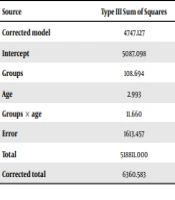
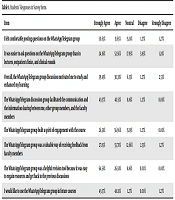
The mean values of final examination scores in the study and control groups were 71.5 ± 7.42 and 70 ± 7.49, respectively, which were statistically insignificant (P = 0.23). Furthermore, no significant difference was observed in the success rates or outstanding scores. All 78 students in the study group completed the questionnaire, with the results presented in Table 1. The results showed that 82.28% of the students agreed that they felt comfortable asking questions in the online forum. A slightly lower percentage of students (77.01%) felt it was easier to ask questions in the SM group than during other learning activities. Overall, 89.87% of the students agreed that SM-based discussion motivated them to study and enhanced their learning; however, only 3.8% of the students disagreed.
Table 1.
Students’ Responses to Survey Items
| Item | Strongly Agree (%) | Agree (%) | Neutral (%) | Disagree (%) | Strongly Disagree (%) |
|---|---|---|---|---|---|
| I felt comfortable posting questions on the WhatsApp/Telegram group | 50.63 | 31.65 | 15.19 | 1.27 | 1.27 |
| It was easier to ask questions on the WhatsApp/Telegram group than in lectures, outpatient clinics, and clinical rounds | 24.36 | 52.56 | 17.95 | 3.85 | 1.28 |
| Overall, the WhatsApp/Telegram group discussion motivated me to study and enhanced my learning | 59.49 | 30.38 | 6.33 | 1.27 | 2.53 |
| The WhatsApp/Telegram discussion group facilitated the communication and the information sharing between me, other group members, and the faculty members | 49.37 | 40.51 | 8.86 | 1.27 | 0.00 |
| The WhatsApp/Telegram group built a spirit of engagement with the course | 26.58 | 56.96 | 15.19 | 1.27 | 0.00 |
| The WhatsApp/Telegram group was a valuable way of receiving feedback from faculty members | 27.85 | 55.70 | 12.66 | 2.53 | 1.27 |
| The WhatsApp/Telegram group was a helpful revision tool because it was easy to regain resources and get back to the previous discussions | 64.56 | 26.58 | 8.86 | 0.00 | 0.00 |
| I would like to use the WhatsApp/Telegram group in future courses | 49.37 | 48.10 | 1.27 | 0.00 | 1.27 |
The general consensus (89.88%) was that WhatsApp and Telegram academic forums facilitated communication and information sharing between tutors and students. Moreover, 83.54% of the students felt that the online discussion forum built a spirit of engagement with the course. In addition, most of the students (83.55%) viewed the SM group as a valuable tool for receiving feedback from faculty members. Nevertheless, only 3.8% of students did not view the SM group as a valuable tool in this regard. Furthermore, 91.65% of the students found this teaching method to be a helpful revision tool; however, the remaining 8.86% offered a neutral response. Finally, 97.47% of the students reported that they would like to use similar forums in future courses.
5. Discussion
This study evaluated the role of WhatsApp and Telegram as tools to enhance the learning of fourth-year medical students. Numerous studies have studied the utilization of SM in medical education. However, few studies have investigated it as a knowledge-gaining measure (10). This study carried out the analysis of examination grades as a knowledge-acquisition measure. However, no statistical relationship was observed between SM-based discussion and examination scores. This finding could be due to the absence of borders in SM. In other words, the students in the study group might have shared all the discussion posts with their mates in the control group using the same internet-based applications. However, the authors did not discourage such behaviors as they promote academic information sharing among students, which is the desired outcome.
More than three-quarters of the students used SM applications comfortably. The students also stated that queries were easier to bring up in the group than asking tutors directly. In addition, participating in discussions motivated most of the students to learn. The aforementioned findings correspond to the findings of a study performed by Ravindran et al. when they evaluated Facebook as an online medical teaching forum (14). Similarly, the findings of the present study regarding the potential advantages of SM applications in promoting student engagement and collaboration are comparable to the results of previously published articles (15-17).
The results of the current study suggest that WhatsApp and Telegram forums are valuable feedback-providing tools. The students could easily reflect their opinions on different aspects of the learning process. For instance, they posted their views on the course conduction and the teaching methods in these forums. Furthermore, the students found the online groups valuable in terms of saving the academic content; accordingly, it can be easily accessed when needed. The academic content includes discussions, photos, links, and other helpful resources. None of the students disagreed with the usefulness of these SM application groups in the revision of lessons before the exam.
The present study has some limitations. First, only female students were studied because the clinical medical courses are conducted at different times for male and female students. Another limitation is that only online discussion groups were implemented in the learning process of specific topics, which represented only a small percentage of the examination blueprint. Probably, this was one of the reasons why it was impossible to link the contribution in the online discussions to superior examination grades. Additionally, the lack of pretest and the unavailability of its results represented an additional limitation that affected the proper evaluation of the effect of the intervention and the amount of change in the students’ knowledge.
5.1. Conclusions
The SM-based discussion groups represent a potential new teaching method that boosts students’ commitment and promotes learning. The SM-based discussion groups provide a setting where it is easier to ask questions and offer feedback and are beneficial revision tools. However, the effect of these groups on the improvement of students’ examination performance was not significant. Further studies are required to determine the association between SM utilization and measures of knowledge acquisition.